

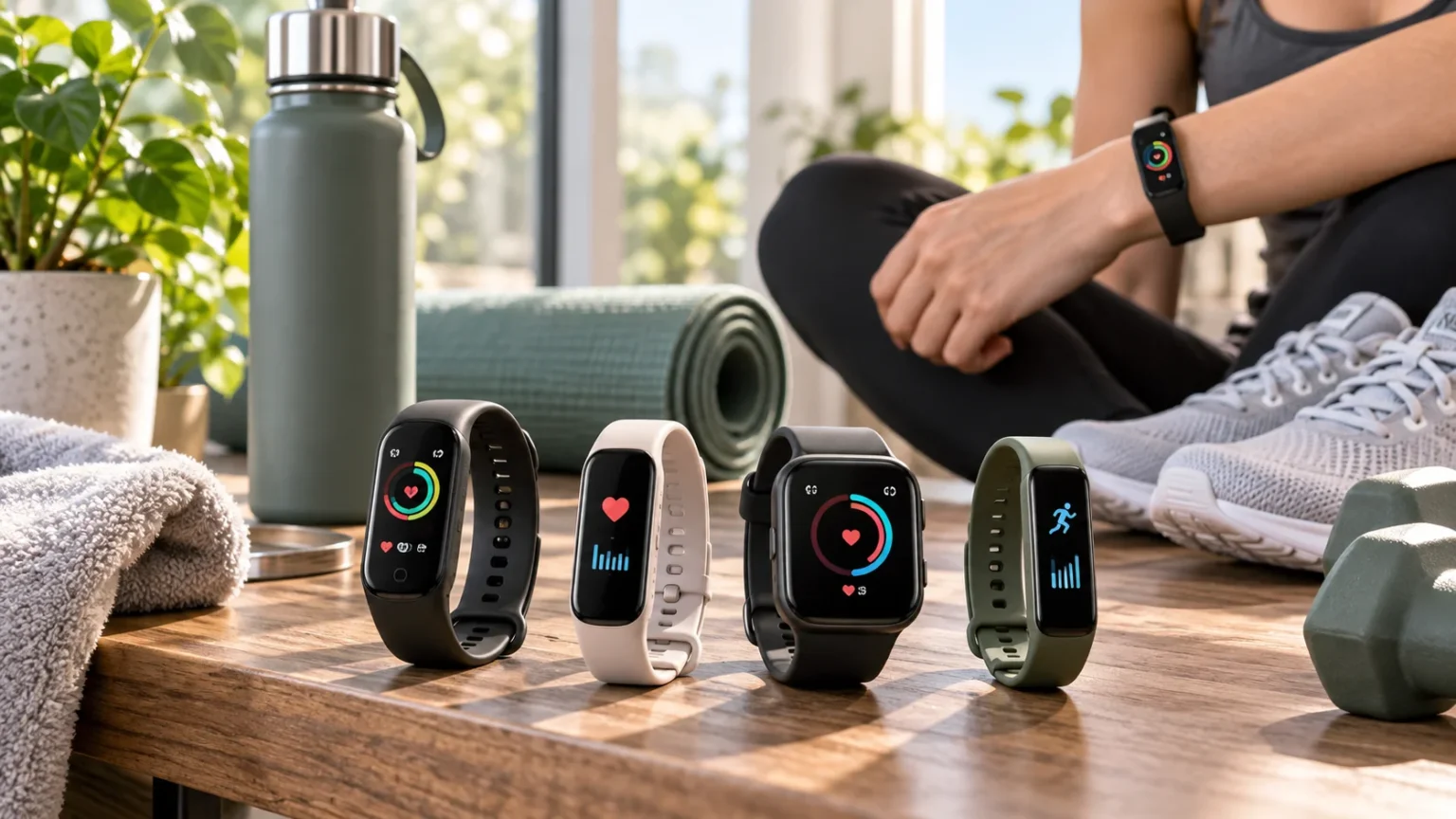

Fitness trackers have become useful everyday tools for people who want a clearer picture of movement, sleep, heart rate, workouts, and general wellness habits. Modern bands and rings can quietly collect useful trends throughout the day without feeling as bulky or distracting as a full smartwatch. The best options balance accurate tracking with comfort, battery life, and an app that makes the data understandable.
Choosing the right fitness tracker depends on what you actually want to monitor. Some people mainly need steps, activity minutes, and sleep, while others want built-in GPS, workout heart rate, recovery insights, stress tracking, or more detailed health metrics. A simple device you wear consistently often provides more practical value than a feature-heavy wearable that spends most of its time charging.
Current options from Fitbit, Samsung, Xiaomi, Garmin, and Oura cover a wide range of needs and budgets. Some use bright displays, while newer products such as Fitbit Air take a screenless approach to reduce distractions. The following fitness trackers stand out for everyday health monitoring, comfort, useful insights, and manageable battery requirements in 2026.
What to Look for in a Fitness Tracker
Start with the health and activity metrics you genuinely plan to use. Basic trackers usually cover steps, heart rate, sleep, and exercise, while more advanced devices may add built-in GPS, blood oxygen estimates, stress indicators, skin-temperature trends, or ECG-related features. Remember that consumer wearables can provide useful wellness information but should not replace professional medical evaluation or diagnosis.
Battery life also affects how consistently you can collect data. A tracker lasting a week or longer is easier to wear overnight because you do not need to remove it for charging every day. Sleep monitoring becomes less useful if the device is regularly sitting on a charger at bedtime, so consider realistic battery performance alongside the number of advertised features.
Comfort, app quality, water resistance, and phone compatibility matter just as much. A lightweight tracker is easier to wear throughout the day and night, while a well-designed app helps turn raw measurements into understandable trends. Before purchasing, also check whether important features require a subscription, since ongoing costs can change the long-term value of an otherwise affordable wearable.
Fitbit Charge 6 for Balanced Everyday Tracking
The Fitbit Charge 6 remains a capable option for people who want traditional fitness-band convenience combined with more advanced tracking tools. It includes an AMOLED screen, optical heart-rate sensor, built-in GPS, SpO2 sensors, temperature sensing, and electrical sensors that support features such as ECG and EDA scanning where available. Google rates battery life at up to seven days.
Built-in GPS is particularly useful for walking, running, and cycling because you can record routes without relying entirely on your phone. The tracker also supports more than 40 exercise modes and can connect with selected fitness machines and apps for real-time heart-rate information. Google Maps and Google Wallet add practical everyday functions without turning the device into a full smartwatch.
For everyday wellness, the Charge 6 suits people who want a visible screen, workout tracking, sleep information, and a relatively compact wristband. It is water resistant to 50 meters and works with compatible Android and iOS devices. Some wellness insights and software features depend on account, region, or service availability, so check current support before purchasing.
Google Fitbit Air for Screen-Free Health Tracking
Google introduced Fitbit Air in 2026 for users who want fitness tracking without another screen demanding attention. The lightweight device monitors metrics such as heart rate, resting heart rate, heart-rate variability, sleep stages, sleep duration, SpO2, and activity. Its screenless design places detailed information inside the Google Health app instead of constantly displaying numbers on your wrist.
Battery life reaches up to about a week under Google’s stated conditions, making the device suitable for continuous day-and-night tracking. Automatic workout detection reduces the need to manually start every activity, while compatibility with both Android and iOS broadens its usefulness. The minimal design may particularly appeal to people who find larger smartwatches distracting, uncomfortable, or unnecessarily complicated.
Fitbit Air also connects closely with Google’s newer Health ecosystem, which includes coaching and personalized wellness tools. Some more advanced guidance requires a Google Health Premium membership, so buyers should consider subscription costs alongside the hardware price. It is best viewed as a discreet wellness tracker for people who prefer checking trends intentionally rather than watching metrics throughout the day.
Samsung Galaxy Fit3 for Android Users
The Samsung Galaxy Fit3 offers a useful combination of affordability, a large display, long battery life, and everyday activity tracking. Its 1.6-inch AMOLED screen provides substantially more space than many narrow fitness bands. Samsung lists support for sleep tracking, heart-rate monitoring, stress measurements, blood oxygen estimates, automatic workout detection, and more than 100 exercise types.
Battery life is rated at up to 13 days with the always-on display disabled, although actual runtime changes according to tracking features and usage. The band can also recharge to around 65% in approximately 30 minutes under Samsung’s test conditions. This longer battery performance makes it easier to keep the tracker on during sleep instead of charging it every evening.
The main limitation is phone compatibility, because the Galaxy Fit3 is designed for Android rather than iPhone users. It also does not offer ECG or body-composition measurement, despite those features appearing on some Samsung smartwatches. For Android users primarily interested in steps, exercise, sleep, heart rate, notifications, and straightforward wellness tracking, it remains a practical option.
Xiaomi Smart Band 10 for Long Battery Life
The Xiaomi Smart Band 10 is a lightweight fitness tracker with a bright 1.72-inch AMOLED display and a slim aluminum body. Xiaomi includes optical heart-rate and blood-oxygen sensors, an accelerometer, gyroscope, electronic compass, and ambient-light sensor. The tracker supports more than 150 sports modes, making it useful for people who enjoy recording different types of everyday exercise.
Battery life is one of the strongest reasons to consider the Band 10. Xiaomi advertises up to 21 days under certain usage conditions, reducing how frequently the device needs to be removed for charging. The 5ATM water-resistance rating also makes it appropriate for swimming and other suitable shallow-water activities when used within the manufacturer’s guidelines.
At approximately 15.95 grams without the strap, the standard version is light enough for comfortable daily wear. It supports Android and iOS through the Mi Fitness app, making it more flexible than trackers restricted to one phone platform. People who prioritize battery endurance, a large display, lightweight construction, and broad activity tracking may find it especially appealing.
Garmin Vivosmart 5 for Simple Fitness Tracking
The Garmin Vivosmart 5 takes a straightforward approach to fitness tracking and works well for users who prefer a slim band over a full-size sports watch. Garmin’s ecosystem is particularly useful for activity, exercise, and wellness trends, allowing users to review movement and fitness information without carrying around the larger design associated with many dedicated running watches.
Battery life reaches up to seven days under Garmin’s stated conditions, depending on enabled features and usage patterns. The band also carries a 5ATM water rating, meaning it is built to handle suitable swimming and everyday water exposure. Longer battery performance makes it practical for overnight monitoring because charging does not need to become a daily routine.
The Vivosmart 5 is most suitable for someone who values Garmin’s software environment but does not need the advanced mapping or training features of a larger multisport watch. Its simple form keeps attention on basic daily wellness and activity rather than extensive smartwatch functions. For casual exercise and everyday tracking, that simplicity may actually make the device easier to use consistently.
Oura Ring 4 for Sleep and Recovery Insights
The Oura Ring 4 provides a different approach by placing wellness tracking in a ring rather than on the wrist. It tracks movement, heart-rate-related measurements, body-temperature variations, and sleep-related information while maintaining a discreet jewelry-like appearance. This design can appeal to people who dislike wearing watches overnight but still want continuous health and recovery trends.
Oura states that Ring 4 typically delivers around five to eight days of battery life depending on ring size, settings, sensor usage, battery age, and other factors. That endurance makes it practical for continuous sleep and recovery monitoring without daily charging. Recent testing guidance from Oura confirms that actual battery duration can vary noticeably according to enabled features.
The trade-off is cost because Oura’s full experience includes an ongoing membership for many insights. It is therefore less suitable for people who simply want affordable step counting or basic exercise statistics. However, users who prioritize sleep, recovery patterns, unobtrusive design, and overnight comfort may prefer a smart ring to a screen-based fitness band.
Fitness Trackers for Sleep and Daily Recovery
Sleep tracking can reveal patterns in bedtime consistency, wake periods, sleep duration, and overnight heart-rate trends. These measurements are estimates rather than clinical sleep studies, but they can still help users recognize habits over time. A tracker may show, for example, that sleep tends to be shorter on certain days or that late routines consistently affect rest.
Comfort becomes particularly important when tracking sleep. A heavy smartwatch may feel noticeable during the night, while lighter bands such as Fitbit Air or compact rings such as Oura may be easier for some people to wear continuously. Battery life also matters because overnight data cannot be collected when your device needs charging every evening.
Focus on long-term patterns rather than becoming concerned about one unusual night. Consumer trackers use algorithms to estimate sleep and recovery, and readings can vary due to fit, movement, sensor contact, or software. If you repeatedly experience significant sleep problems, fatigue, breathing concerns, or other symptoms, wearable data should support a conversation with a healthcare professional rather than replace one.
Heart Rate, Steps and Activity Tracking
Step counting remains one of the simplest ways fitness trackers encourage daily movement. Setting an achievable activity goal can remind you to take short walks, move during work breaks, or gradually increase your overall activity. However, step totals should be treated as a general movement indicator rather than a complete measurement of health or physical fitness.
Continuous heart-rate tracking can provide additional context about exercise intensity and resting patterns. During workouts, heart-rate zones may help users understand whether activity feels light, moderate, or vigorous. Sensor accuracy can change according to movement, skin contact, placement, temperature, and exercise type, so wrist-based readings should not automatically be treated as medical measurements.
The most useful tracker is the one that motivates sustainable habits rather than constant competition with numbers. Daily movement, sleep, recovery, strength training, and other health behaviors all matter. Use wearable information to notice trends and support realistic goals instead of treating every metric as a score that must continuously improve.
Choosing a Fitness Tracker as a Tech Gift
Fitness trackers can make useful gifts because they combine practical technology with everyday wellness features. A lightweight band may suit someone beginning a walking routine, while a smart ring could appeal to a person more interested in sleep and recovery. If you are comparing wearables with other electronics, browsing tech gifts can provide additional ideas for gadget-focused presents.
Before buying a tracker for someone else, check their phone platform and preferences. An Android-only device may not suit an iPhone user, while a screenless band could disappoint someone who wants notifications and workout statistics directly on their wrist. Subscription requirements are also important because gifting hardware that creates an unexpected recurring cost may not be ideal.
Sizing and comfort deserve attention as well. Rings usually require more precise sizing than wristbands, and some people prefer narrow fitness bands over larger displays. When possible, choose a model with replaceable straps or flexible sizing and make sure the recipient can exchange the device if the fit or ecosystem does not suit them.
Best Practices for Everyday Fitness Tracking
Wear the tracker consistently but give your skin regular breaks when needed. Keep both the sensor area and band clean, especially after sweaty workouts or swimming, and dry the device before putting it back on. A secure but comfortable fit generally helps optical sensors maintain contact without requiring the strap to feel excessively tight.
Review trends periodically rather than checking every measurement repeatedly throughout the day. Weekly or monthly patterns in movement, sleep, exercise frequency, and resting heart rate can often be more informative than small short-term fluctuations. Adjust goals gradually so that the tracker supports sustainable routines instead of creating unrealistic pressure around daily numbers.
Finally, remember the limits of consumer wearable technology. Fitness trackers can help organize wellness information and encourage activity, but they cannot independently diagnose health conditions or determine why a metric has changed. Seek qualified medical advice when you have persistent symptoms, concerning measurements, or health questions that require individualized evaluation.
Conclusion
The best fitness trackers for everyday health combine comfortable design, useful wellness information, dependable battery life, and understandable apps. Fitbit Charge 6 offers a broad collection of tracking features, while Fitbit Air provides a newer screen-free approach. Samsung Galaxy Fit3 and Xiaomi Smart Band 10 offer accessible display-based alternatives with particularly strong battery performance.
Garmin Vivosmart 5 is useful for people who prefer Garmin’s activity ecosystem in a smaller format, while Oura Ring 4 takes a more discreet approach focused heavily on sleep and recovery trends. Each design involves different trade-offs in screen access, subscription costs, workout features, and battery life, so the right option depends on your daily priorities.
Choose a tracker you can comfortably wear and understand rather than automatically selecting the model with the longest feature list. Consistent use matters more than collecting every possible measurement. When combined with sensible movement, sleep, nutrition, and professional healthcare when necessary, fitness trackers can provide useful context for building healthier everyday habits.
FAQs
What is the best fitness tracker for everyday use?
Fitbit Charge 6, Fitbit Air, Galaxy Fit3, Xiaomi Smart Band 10, Garmin Vivosmart 5, and Oura Ring 4 all suit different everyday needs. The right choice depends on features, phone compatibility, and budget.
Are fitness trackers accurate for health monitoring?
Fitness trackers can provide useful estimates and long-term wellness trends, particularly for activity and heart rate. However, readings vary by device and conditions and should not replace professional medical testing or diagnosis.
Which fitness tracker has good battery life?
Xiaomi Smart Band 10 advertises up to 21 days under certain conditions, while Galaxy Fit3 can reach up to 13 days. Real-world battery life varies significantly with settings and usage.
Can fitness trackers help improve sleep?
They can help identify sleep-duration and routine patterns that may support better habits. Their sleep stages are algorithmic estimates, however, so persistent sleep problems should be discussed with a qualified healthcare professional.
Do I need a smartwatch or just a fitness tracker?
Choose a fitness tracker if activity, sleep, heart rate, and long battery life are your priorities. A smartwatch makes more sense when apps, calls, messaging, navigation, and extensive phone-like features matter more.