


Is Rite Aid Going Out of Business? What Happened to the Pharmacy Chain
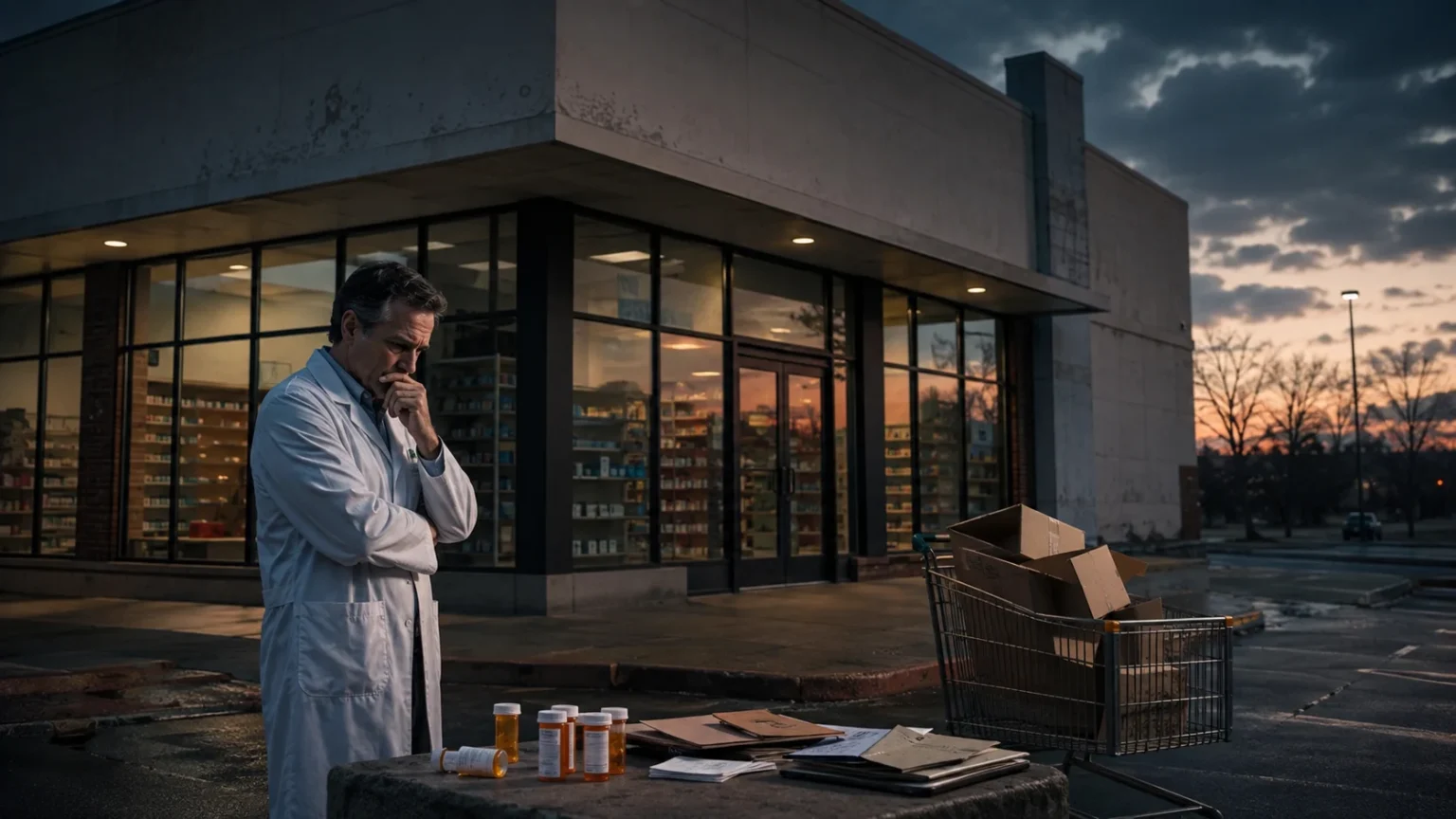
If you are asking, “Is Rite Aid going out of business?”, the situation has moved beyond future store closures. Rite Aid has already shut down its remaining retail stores following its second Chapter 11 bankruptcy filing. The pharmacy chain filed for bankruptcy again in May 2025 and spent the following months selling pharmacy assets, transferring prescriptions, liquidating inventory, and closing locations across the United States. By October 2025, all remaining Rite Aid stores had closed.
For longtime customers, the disappearance of Rite Aid represents a major change in the American pharmacy landscape. The company had served communities for more than six decades and once operated thousands of locations across the country. Its familiar stores provided prescriptions, vaccines, health products, beauty items, household essentials, and convenience-store merchandise, making Rite Aid an everyday destination for millions of consumers.
The company’s collapse did not happen because of one single problem. Rite Aid struggled with significant debt, declining pharmacy profitability, expensive legal challenges, intense competition, changing shopping habits, and a retail network that became increasingly difficult to support. Its first bankruptcy restructuring reduced debt and closed hundreds of locations, but those measures ultimately were not enough to create a sustainable business.
Understanding what happened to Rite Aid requires looking at the chain’s two bankruptcy filings, store closures, prescription transfers, financial pressures, and changing competitive environment. Below, we break down why Rite Aid went out of business, when its stores closed, where customer prescriptions went, and what its collapse means for the broader retail pharmacy industry.
Is Rite Aid Going Out of Business in 2026?
No—Rite Aid is no longer merely “going” out of business. As of 2026, the company’s traditional retail pharmacy operation has already shut down. Rite Aid announced that all of its remaining stores had closed after months of liquidation following its second bankruptcy case. That makes older articles suggesting only selected locations are closing outdated for anyone searching for Rite Aid’s current status.
The shutdown followed Rite Aid’s May 2025 Chapter 11 filing, its second bankruptcy in less than two years. At that point, the company still had roughly 1,200 stores and planned a court-supervised process to sell its pharmacy assets and other parts of the business. Buyers acquired prescription files and some locations while stores gradually stopped operating.
By late September 2025, only a small number of Rite Aid locations remained compared with the company’s former national footprint. Those final stores subsequently closed, completing a dramatic decline for a pharmacy brand that had once operated thousands of locations. Customers searching for a nearby Rite Aid today should therefore not expect to find an operating traditional Rite Aid retail pharmacy.
The Rite Aid name may still appear online because the company’s website provides information related to previous customers, prescription records, and transfers. However, the continued existence of a website should not be confused with the continued operation of the former retail chain. The physical Rite Aid pharmacy network that consumers knew has closed.
When Did Rite Aid Go Out of Business?
Rite Aid’s final shutdown was the result of a process rather than a single-day closure. The most important turning point came on May 5, 2025, when the company entered Chapter 11 bankruptcy for the second time. That filing allowed Rite Aid to pursue sales of its assets while continuing operations temporarily so prescription services could be transitioned.
During the months that followed, Rite Aid progressively closed stores across its remaining markets. Pharmacy files were sold or transferred to competitors, merchandise was liquidated, and individual stores closed according to different schedules. That is why customers in one state may have lost their Rite Aid several months before customers elsewhere.
By early October 2025, Rite Aid confirmed that all of its stores had closed. The shutdown effectively ended the physical retail operations of one of America’s best-known drugstore brands. Reports at the time described the closure as the end of more than six decades of Rite Aid retail operations.
For SEO searchers asking “when is Rite Aid closing?”, the most useful answer is therefore that the closing process has already been completed. Individual closure dates varied during 2025, but there are no remaining traditional Rite Aid stores operating as they did before the bankruptcy.
Why Did Rite Aid Go Out of Business?
Rite Aid went out of business because several long-running challenges combined to make the company financially unsustainable. One of the largest problems was debt. Even after its first restructuring eliminated a substantial amount of debt, Rite Aid continued struggling financially and eventually returned to bankruptcy court only months after emerging from its previous Chapter 11 case.
The economics of running a retail pharmacy also became difficult. Pharmacies earn money not only from products sold in their stores but also from filling prescriptions, and pressure on prescription reimbursement and pharmacy margins affected Rite Aid’s ability to generate sufficient profits. This challenge was particularly serious for a company already carrying heavy financial obligations.
Competition added another layer of difficulty. Rite Aid faced larger pharmacy rivals such as CVS and Walgreens while also competing against Walmart, supermarkets, warehouse clubs, independent pharmacies, and increasingly convenient online and mail-order options. Consumers could purchase many non-prescription products online or at discount retailers, reducing the importance of traditional drugstores for everyday shopping.
Legal expenses and litigation also contributed to the pressure surrounding the company. Rite Aid faced claims connected with opioid prescriptions along with broader financial and operational challenges. Taken together, debt, legal exposure, changing pharmacy economics, competition, store-performance problems, and shifting consumer behavior created a situation that the company’s restructuring efforts could not ultimately solve.
Rite Aid’s First Bankruptcy Explained
Rite Aid first filed for Chapter 11 bankruptcy protection in October 2023. At the time, the company was attempting to address substantial debt, financial losses, legal claims, and an oversized store network. Bankruptcy allowed Rite Aid to negotiate with creditors while closing weaker stores and reorganizing major parts of the business.
Hundreds of Rite Aid store closures occurred during this restructuring period. The company reduced its physical footprint considerably as it attempted to concentrate on stronger markets and improve its financial position. It also sold Elixir, its pharmacy benefit management business, as part of the broader restructuring strategy.
The restructuring appeared to offer Rite Aid another opportunity to continue. The company emerged from its first Chapter 11 process in September 2024 after eliminating nearly $2 billion of debt. It also became a privately held company rather than returning to the public stock market in its previous form.
However, reducing debt did not automatically fix the fundamental challenges facing the chain. Rite Aid still operated in a highly competitive pharmacy market with thin margins, substantial operational expenses, and continuing pressure on store profitability. Within less than a year of emerging from Chapter 11, the company was back in bankruptcy.
Why Did Rite Aid File for Bankruptcy Again?
Rite Aid filed for bankruptcy for a second time in May 2025 because the business continued experiencing financial problems after its first restructuring. Although billions in debt had been removed during the previous bankruptcy, the remaining operation was still not strong enough to generate a sustainable turnaround.
The second filing was particularly significant because Rite Aid was no longer simply attempting another traditional store-by-store restructuring. The company entered a sale process designed to find buyers for pharmacy assets and other parts of the business while maintaining prescription services for customers during the transition.
Rite Aid had already shrunk dramatically by this point. It operated around 2,000 pharmacies when it entered its first bankruptcy in 2023, but only roughly 1,240 remained when the company filed again in May 2025. The shrinking store base illustrated how aggressively Rite Aid had already tried to reduce expenses before the second filing.
Ultimately, the second bankruptcy became the mechanism through which Rite Aid’s remaining retail business was wound down. Instead of emerging again as a smaller nationwide pharmacy chain, assets and prescription files were transferred to buyers while stores closed permanently.
How Many Rite Aid Stores Closed?
Rite Aid’s store count declined over several years, but closures accelerated dramatically during its bankruptcy proceedings. When the company entered Chapter 11 for the first time in October 2023, it operated around 2,000 pharmacies. Numerous locations were subsequently closed as part of efforts to reduce expenses and restructure the company.
When Rite Aid returned to bankruptcy court in May 2025, approximately 1,200 locations remained. Those stores were spread across about 15 states, with particularly notable operations in markets such as Pennsylvania, New York, and California. From there, the remaining footprint was progressively dismantled.
Some stores closed directly, while assets connected to other locations were purchased by competing pharmacy companies. The process occurred in waves, meaning the number of operating Rite Aid locations continued falling throughout the summer and early fall of 2025 rather than disappearing simultaneously.
By October 2025, however, the distinction no longer mattered for customers looking for a Rite Aid store. All remaining locations had closed, bringing the chain’s physical retail footprint to zero under its traditional operation.
What Happened to Rite Aid Prescriptions?
One of the most important concerns during the shutdown involved patients who depended on Rite Aid pharmacies for medications. Because abruptly losing access to prescription records could create serious disruption, Rite Aid’s bankruptcy process included selling and transferring pharmacy files to other operators.
A bankruptcy court approved sales of many Rite Aid pharmacy assets in May 2025. Buyers included large pharmacy and grocery companies, with CVS acquiring prescription files associated with hundreds of Rite Aid locations as part of the process. Other buyers included Walgreens, Albertsons, Kroger, and additional pharmacy operators.
This means former Rite Aid customers did not necessarily have their prescriptions transferred to the same chain. The receiving pharmacy depended largely on the location of the individual Rite Aid store and which company acquired or received its prescription files. Customers therefore need to identify where records from their specific pharmacy were transferred.
Rite Aid’s website continues to provide guidance for former pharmacy customers trying to locate transferred prescriptions. Consumers who previously used Rite Aid should confirm their new pharmacy before requesting a refill rather than assuming their records automatically moved to a particular nearby CVS or Walgreens.
Did CVS Buy Rite Aid?
CVS did not simply purchase the entire Rite Aid company and convert every Rite Aid store into a CVS. Instead, CVS became an important buyer of certain pharmacy assets during Rite Aid’s second bankruptcy. The distinction is important because headlines about asset sales can make it sound as though one competitor acquired the whole chain.
In May 2025, the bankruptcy court approved sales involving prescription files from hundreds of Rite Aid locations. Reuters reported that CVS was the largest buyer in that process, acquiring prescription files associated with approximately 650 locations as well as dozens of physical stores.
Other pharmacy and grocery companies also acquired Rite Aid assets. Walgreens, Kroger, Albertsons and additional buyers participated in the process, meaning Rite Aid’s former customer relationships and pharmacy assets were divided among multiple companies rather than transferred to one single successor.
Therefore, saying “CVS bought Rite Aid” is an oversimplification. CVS purchased a significant portion of Rite Aid’s pharmacy assets, but Rite Aid itself was wound down through bankruptcy rather than surviving as an intact company owned entirely by CVS.
Did Walgreens Buy Rite Aid?
Walgreens also obtained some Rite Aid prescription assets during the bankruptcy process, but it did not acquire the entire business. Like CVS and other participating companies, Walgreens became part of the broader transition designed to move customer prescriptions away from stores that were preparing to close.
Interestingly, Walgreens and Rite Aid have a history that predates the final bankruptcy. Years earlier, Walgreens had pursued a much larger acquisition involving Rite Aid, although the original full-merger plan did not ultimately happen in that form. Walgreens instead purchased thousands of Rite Aid stores in a separate transaction completed years before the final collapse.
During the 2025 shutdown, the situation was different. Rite Aid was selling pharmacy records, locations, inventory, and other assets under bankruptcy supervision rather than negotiating a traditional merger intended to preserve the company as an operating national chain.
Former customers should therefore not automatically assume that their prescription went to Walgreens. Depending on the individual Rite Aid location, records may have been transferred to CVS, Walgreens, a supermarket pharmacy, or another local provider.
What Happened to Rite Aid Employees?
The collapse also had a major impact on Rite Aid employees. Store closures meant pharmacists, pharmacy technicians, cashiers, managers, distribution workers, corporate employees, and many other staff members faced job losses as the company’s physical operations were wound down.
The scale of the impact increased as the second bankruptcy moved toward liquidation. Closing more than a thousand remaining stores required significant workforce reductions, even though Rite Aid initially emphasized that it wanted to preserve jobs wherever buyers were able to acquire ongoing pharmacy operations or store locations.
Some employees may have found opportunities with companies acquiring Rite Aid assets, particularly in areas where another pharmacy took over prescription records or physical locations. However, transferring customer files does not necessarily mean every former employee automatically receives a position with the acquiring company.
For communities, the workforce impact extended beyond individual jobs. A Rite Aid location could employ pharmacy professionals and retail workers while also supporting landlords, maintenance providers, delivery businesses, vendors, and nearby commercial activity. Losing a store therefore had economic consequences beyond the chain itself.
Why Couldn’t Rite Aid Compete With CVS and Walgreens?
Scale matters significantly in modern pharmacy retailing. Larger companies can spread technology, logistics, marketing, purchasing, administration, and digital investments across larger customer bases. Rite Aid was smaller than CVS and Walgreens, making it more difficult to absorb financial shocks while keeping stores competitive.
CVS also developed a broader healthcare ecosystem involving pharmacy services, insurance, pharmacy benefit operations, clinics, and other healthcare assets. That diversification gave it sources of revenue beyond traditional retail drugstores. Rite Aid attempted to compete through its own pharmacy and healthcare businesses but lacked the same overall scale.
Walgreens has faced challenges of its own, demonstrating that Rite Aid’s problems were not simply the result of poor execution at one company. Traditional drugstores across the United States have been adapting to pressure from lower pharmacy reimbursement, changing consumer shopping behavior, online competition, staffing costs, and weaker demand for some front-of-store products.
The difference is that Rite Aid entered these difficult industry conditions from a weaker financial position. Heavy debt and previous losses reduced its ability to invest aggressively in a turnaround. Once declining profitability, legal exposure, and competitive pressure were combined, the chain had much less room for error.
Did Online Shopping Contribute to Rite Aid’s Problems?
Online shopping was not the sole reason Rite Aid went out of business, but it changed how consumers purchased many products traditionally sold by drugstores. Toiletries, cosmetics, supplements, household essentials, personal care items, and other everyday merchandise can now be ordered online quickly and often at competitive prices.
Retail pharmacy chains historically relied on more than prescription sales. Customers picking up medications might also purchase drinks, snacks, beauty products, cleaning supplies, greeting cards, and other merchandise. When consumers shift those purchases to Amazon, Walmart, discount stores, or specialized online retailers, pharmacy stores lose valuable additional revenue.
Digital pharmacy services have also become more important. Consumers increasingly expect mobile prescription management, automated refills, home delivery, transparent pricing, and convenient healthcare services. Keeping technology competitive requires investment, something that can be particularly challenging for a company already trying to control debt and expenses.
However, Rite Aid’s failure cannot reasonably be explained as simply “Amazon killed Rite Aid.” Its collapse involved interconnected financial, legal, operational, and industry pressures. Ecommerce was one component of a much broader transformation affecting traditional retail pharmacies.
Was Rite Aid’s Debt a Major Problem?
Debt was one of the most important elements of Rite Aid’s financial difficulties. Companies with high debt loads must dedicate cash to interest and repayment obligations, leaving less flexibility to renovate stores, invest in technology, improve employee compensation, reduce prices, develop services, or respond to competitive threats.
Rite Aid’s first bankruptcy was specifically designed in part to address this problem. The restructuring ultimately eliminated nearly $2 billion of debt, which was a substantial reduction and gave the company an opportunity to operate with a healthier balance sheet.
Unfortunately, reducing debt did not automatically make the underlying stores sufficiently profitable. When Rite Aid filed for bankruptcy again in May 2025, the company still entered the process with substantial financial obligations while continuing to face challenging operating conditions. Reuters reported that the company had more than $2 billion in debt during the second bankruptcy process.
This highlights an important business lesson from the Rite Aid bankruptcy. Financial restructuring can give a struggling company more time and flexibility, but eliminating debt cannot permanently save a business if its remaining operations still fail to produce sustainable cash flow.
Did Opioid Lawsuits Cause Rite Aid to Close?
Opioid litigation contributed to Rite Aid’s financial pressures, but it would be inaccurate to describe it as the only reason the pharmacy chain failed. Rite Aid faced government claims and other litigation related to its handling of controlled-substance prescriptions while simultaneously dealing with debt and weak operating performance.
In 2024, the U.S. Department of Justice announced a settlement involving Rite Aid and allegations related to controlled substances and False Claims Act violations. The settlement occurred during the company’s first bankruptcy proceedings and included both an immediate payment and a substantial bankruptcy claim.
Legal disputes can be particularly difficult for a financially strained retailer because they create potential liabilities, professional expenses, management distractions, and uncertainty. For Rite Aid, these problems arrived when the company already had significant debt and faced difficult conditions in the pharmacy and retail markets.
A more accurate explanation is therefore that opioid litigation was part of a larger group of pressures. Rite Aid’s collapse ultimately reflected financial weakness, legal challenges, competitive pressure, changing retail behavior, prescription economics, and an inability to establish a sustainable turnaround.
Why Didn’t the First Rite Aid Turnaround Work?
When Rite Aid exited its first bankruptcy in September 2024, the company was much smaller and carried substantially less debt. On paper, those changes created an opportunity to rebuild around stronger stores while operating with fewer financial obligations.
The challenge was that store closures and debt reduction did not fundamentally transform the economics of the business. Rite Aid still needed its remaining pharmacies to generate enough revenue and profit to pay suppliers, employees, landlords, lenders, technology providers, and other operating costs.
The turnaround also had very little time to produce results. Rite Aid emerged from Chapter 11 in September 2024 and filed again in May 2025—only around eight months later. Such a short period between restructurings demonstrated how quickly financial pressures returned.
The second bankruptcy effectively showed that making Rite Aid smaller was not enough. Without sufficient profitability and financial flexibility, the reduced company still could not support itself, leading management and creditors toward asset sales rather than another conventional long-term retail turnaround.
What Happened to Rite Aid’s Inventory and Assets?
During the second bankruptcy, Rite Aid began winding down inventory while exploring sales of pharmacies and other assets. Stores continued operating temporarily, but the company stopped purchasing new merchandise as it normally would, causing some locations to have increasingly limited shelves as closure dates approached.
Prescription files were particularly valuable because they represented ongoing customer relationships and recurring pharmacy demand. Competing pharmacy businesses therefore had strong incentives to acquire these records and potentially retain former Rite Aid customers after their local stores closed.
Physical store locations, leases, equipment, intellectual property, brands, inventory, and other assets could also have value independent of the Rite Aid retail operation. Bankruptcy allows these assets to be sold or transferred in ways intended to recover value for creditors while completing an orderly shutdown.
Rite Aid’s Thrifty Ice Cream brand, for example, was among the assets sold during the winding-down process. This demonstrates why a company disappearing from retail does not necessarily mean every individual brand, customer relationship, or piece of property connected with it becomes worthless.
What Should Former Rite Aid Customers Do?
Former Rite Aid pharmacy customers should first determine which pharmacy received their prescription records. The destination differs by location, so relying on assumptions could create delays when a refill is needed. Rite Aid’s remaining online resources include assistance intended to help former customers understand where prescriptions were transferred.
Once you identify the receiving pharmacy, verify your medications, available refills, contact information, insurance details, and preferred notification settings. This is especially important for people who take several prescriptions or use medications that require closer coordination with a healthcare provider.
Customers should also choose whether they want to remain with the pharmacy that received their records. A transfer completed during Rite Aid’s bankruptcy does not necessarily mean that pharmacy will be the most convenient long-term choice. Consider location, insurance coverage, opening hours, medication availability, delivery options, and customer service.
If you are unable to locate a prescription or have an urgent medication need, contacting your healthcare provider or the receiving pharmacy directly may help resolve the transition. Avoid waiting until the final dose of an important medication before confirming where your current prescription information is held.
What Does Rite Aid’s Collapse Mean for U.S. Pharmacies?
Rite Aid’s disappearance reduces the number of major national drugstore chains operating in the United States. Former customers are likely to shift prescriptions and everyday purchases toward CVS, Walgreens, grocery pharmacies, Walmart, independent pharmacies, mail-order services, and other healthcare retailers.
In some communities, particularly areas with limited pharmacy choices, store closures can create inconvenience. Customers may need to travel farther to fill prescriptions or compete with larger customer volumes at the pharmacies receiving transferred Rite Aid records.
The collapse also highlights broader pressure on physical pharmacy stores. Even major competitors have closed underperforming locations as companies reconsider how many stores they need and which healthcare services customers expect from modern pharmacies.
Rite Aid’s failure should not necessarily be interpreted as evidence that physical pharmacies are disappearing entirely. Prescription medications, vaccines, pharmacist consultations, and immediate healthcare needs continue to create demand for local pharmacy access, but the business model surrounding those services continues to evolve.
Could Rite Aid Ever Come Back?
The disappearance of Rite Aid’s retail stores does not make it impossible for the name or intellectual property to appear in another form someday. Well-known retail brands are sometimes purchased after bankruptcy and revived as online businesses, smaller concepts, licensed brands, or entirely new operations.
However, consumers should distinguish between a brand name returning and the original nationwide pharmacy chain returning. Rebuilding thousands of stores would require enormous capital, new pharmacy operations, suppliers, employees, licenses, distribution infrastructure, and customer relationships.
As of 2026, there is no traditional Rite Aid store network comparable to the one consumers knew before the bankruptcy. The practical answer for customers remains that Rite Aid’s former physical pharmacy business has closed rather than merely paused operations.
Searches asking whether Rite Aid will reopen should therefore be treated cautiously unless supported by a new official announcement. A website, trademark, or purchased brand name alone would not mean the former pharmacy chain had returned.
Is Rite Aid Completely Out of Business?
For consumers using the phrase “out of business” to mean whether they can still walk into a Rite Aid pharmacy and shop as before, the answer is yes. All remaining Rite Aid retail stores closed in 2025 following the second bankruptcy.
There are still administrative and digital traces of the company because closing a large corporation involves more than locking store doors. Bankruptcy proceedings, prescription records, asset transfers, legal matters, websites, trademarks, and other corporate obligations can continue after physical retail operations stop.
That distinction explains why someone searching online may still encounter a Rite Aid website or other materials using the brand name. These should not be interpreted as evidence that Rite Aid continues operating a nationwide retail pharmacy business.
The simplest answer to “Is Rite Aid going out of business?” in 2026 is therefore: Rite Aid already went out of business as a traditional retail pharmacy chain, and all of its stores have closed. Customers who previously filled prescriptions there should now use the pharmacy that received their records or select another provider.
Final Thoughts: Is Rite Aid Going Out of Business?
Yes—but more accurately, Rite Aid has already completed the shutdown of its traditional retail stores. The company entered its second Chapter 11 bankruptcy in May 2025 after a previous restructuring failed to produce a sustainable turnaround, and the remaining locations were progressively closed or sold during the following months.
By October 2025, all remaining Rite Aid stores had closed. That marks the end of the physical pharmacy chain that generations of customers recognized across American communities. Prescription records and certain assets were transferred to competitors, allowing many customers to continue receiving medications elsewhere.
Rite Aid’s failure resulted from a combination of heavy debt, weak pharmacy economics, legal challenges, intense competition, changing consumer behavior, and operational difficulties. Its first bankruptcy reduced debt and stores but was not enough to establish a financially sustainable business.
For customers searching “is Rite Aid going out of business in 2026?”, there is no longer uncertainty about the store network. Rite Aid’s nationwide retail operation has ended, making the story less about upcoming closures and more about what happened to the company, its customers, employees, prescriptions, and place in America’s changing pharmacy industry.
Frequently Asked Questions
Is Rite Aid still in business in 2026?
Rite Aid no longer operates its traditional retail pharmacy chain. All remaining Rite Aid stores closed by October 2025 following the company’s second bankruptcy process.
Why did Rite Aid go out of business?
Rite Aid struggled with debt, declining pharmacy profitability, strong competition, legal challenges, and changing consumer shopping behavior. Its first restructuring was unable to create a sustainable turnaround.
Are all Rite Aid stores permanently closed?
Yes. Rite Aid confirmed that all of its remaining retail stores had closed after its 2025 bankruptcy and liquidation process.
What happened to prescriptions at Rite Aid?
Prescription records were transferred or sold to other pharmacies, including CVS, Walgreens and other operators. The receiving pharmacy varies depending on the former Rite Aid location.
Did CVS buy Rite Aid?
CVS did not buy the entire Rite Aid company. It acquired prescription files from hundreds of Rite Aid locations and some physical stores as part of the bankruptcy asset-sale process.