

Herpes Outbreak Pictures: Signs, Stages & Symptoms
Herpes outbreak pictures are commonly searched by people trying to understand whether a blister, sore, bump, or irritated patch could be caused by herpes simplex virus. Although photographs can help people recognize general patterns, herpes does not look identical in every person or at every stage of an outbreak. Classic lesions may begin as small red or skin-colored bumps before becoming groups of fluid-filled blisters, painful open sores, and eventually healing areas. Genital herpes can occur around the penis, vulva, vagina, cervix, anus, buttocks, or nearby skin, while oral herpes commonly appears around the lips or mouth. Some infections are so mild that they resemble pimples, razor burn, ingrown hairs, or minor skin irritation. A picture alone therefore cannot confirm whether a lesion is herpes.
Herpes simplex virus type 1, or HSV-1, and herpes simplex virus type 2, or HSV-2, can both cause genital herpes. HSV-1 is also a major cause of oral cold sores, although either virus can infect oral or genital areas depending on exposure. Many people who carry HSV have no obvious symptoms and may never recognize an outbreak. When symptoms occur, the first noticeable episode can be more extensive than later recurrences, but this pattern is not universal. Laboratory testing from a fresh lesion is much more reliable than comparing the skin with online images. Understanding the common visual stages, accompanying symptoms, and conditions that can mimic herpes can help people decide when professional testing is appropriate.
What Does a Herpes Outbreak Look Like?
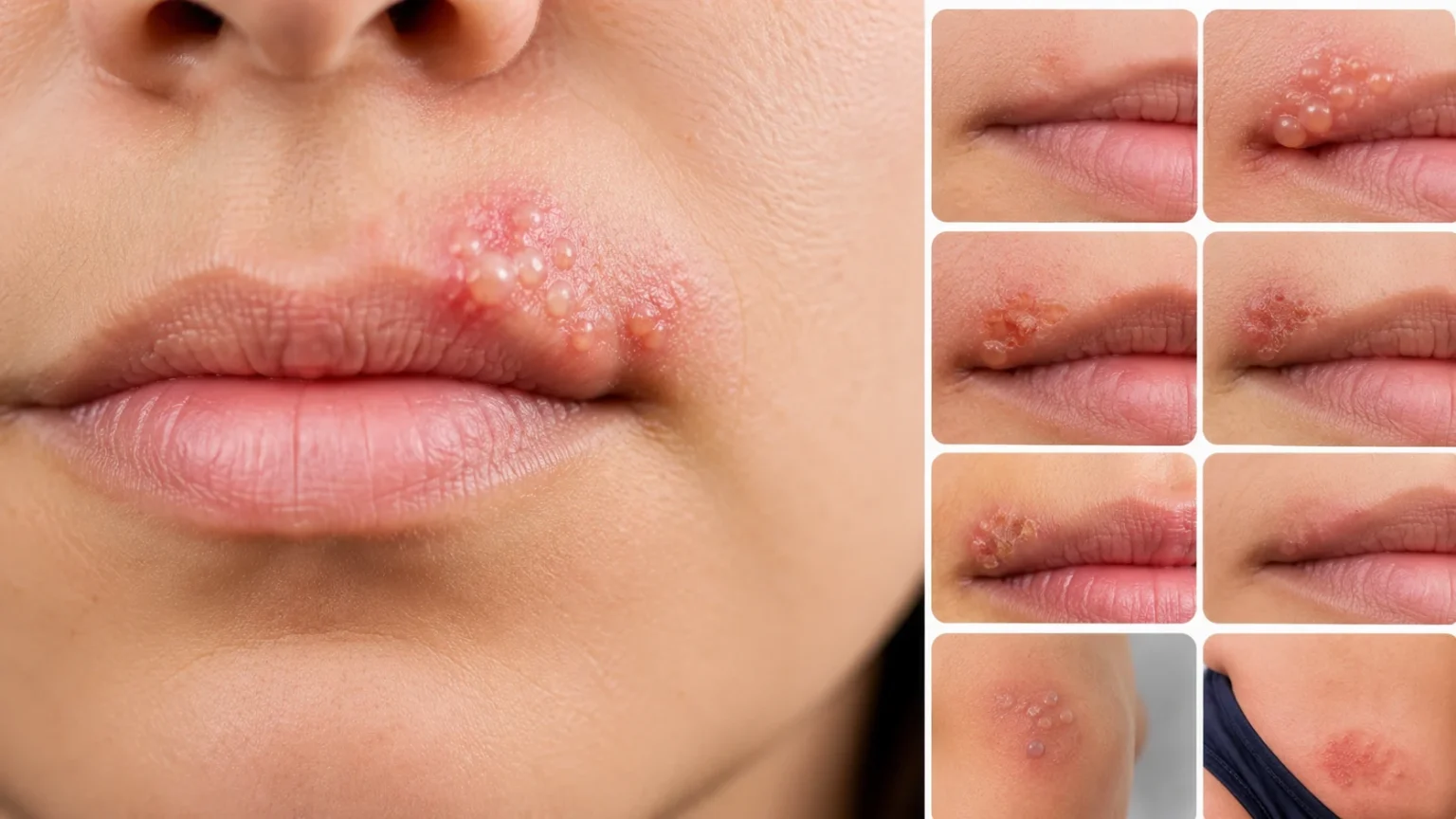
A classic herpes outbreak often appears as one or more small blisters grouped closely together on a reddened or irritated area of skin. The individual blisters may be tiny and contain clear or cloudy fluid, making them resemble miniature water-filled bubbles. As the lesions develop, they may merge, break open, or form shallow painful ulcers. The surrounding skin can appear pink, red, darker than usual, swollen, or inflamed depending on a person’s natural skin tone. Herpes lesions are often tender, burning, itchy, or painful rather than simply visible. WHO describes symptomatic genital herpes most commonly as painful sores, vesicles, or ulcerations affecting genital or oral areas.
Real herpes outbreaks do not always match textbook pictures showing obvious clusters of perfect blisters. Some people develop only one small lesion, a shallow crack, a mildly irritated patch, or bumps that disappear before they are recognized as herpes. Others experience redness and burning without noticing intact blisters because the vesicles rupture quickly. Genital anatomy can also make lesions difficult to see, particularly when they occur inside the vagina, on the cervix, near the anus, or between skin folds. Hair, friction, moisture, and shaving irritation can further change their appearance. CDC guidance emphasizes that classic painful vesicular or ulcerative lesions may be absent when an infected person is examined, which is one reason visual diagnosis can be difficult.
Herpes can look different on light, medium, and dark skin tones. Redness that is obvious in some photographs may appear purple, brown, grayish, or simply darker than the surrounding skin in people with more deeply pigmented skin. Swelling, blister formation, broken skin, and tenderness may therefore be more useful visual clues than looking specifically for bright redness. Healing lesions can also leave temporary discoloration that remains visible after pain and active ulceration have resolved. This discoloration does not necessarily mean the outbreak is still active. Online image collections frequently show only limited skin tones, so comparing color alone can be particularly misleading when trying to identify genital or oral herpes.
The location also influences what an outbreak looks like. Oral herpes commonly causes cold sores along the lip border, although lesions can occur around the nose, chin, or other nearby areas. Genital HSV can affect external genital skin, the perineum, anus, buttocks, and upper thighs, and internal genital lesions may not be visible without clinical examination. Friction in moist areas can cause blisters to rupture before a person ever sees the fluid-filled stage. Lesions around hair-bearing areas may be mistaken for folliculitis or ingrown hairs. Because genital herpes can appear in several locations, the absence of sores directly on the genitals does not necessarily exclude an outbreak affecting nearby skin.
Pictures are therefore most useful for learning broad patterns rather than making a diagnosis. A photograph cannot reveal whether a lesion contains HSV, and several unrelated conditions can look remarkably similar. Even trained clinicians may confirm suspected genital herpes with laboratory testing rather than relying only on appearance. CDC recommends type-specific virologic testing from a lesion when genital sores are present, with nucleic acid amplification testing such as PCR being particularly sensitive. Testing is generally more informative when a fresh blister or ulcer is available than after the area has largely healed. Anyone with a new unexplained genital sore should consider clinical evaluation instead of assuming an online image provides a definitive answer.
Stages of a Herpes Outbreak
A herpes outbreak may begin with a prodrome, which refers to warning sensations occurring before visible sores appear. People can experience tingling, itching, burning, tenderness, or an unusual nerve-like sensation in the area where lesions later develop. Genital outbreaks may also cause aching or shooting sensations around the buttocks, hips, thighs, or genital area in some individuals. Not everyone experiences a recognizable prodrome, and these sensations can have many causes besides herpes. For people with established recurrent herpes, however, a familiar prodrome can sometimes signal that another episode is beginning. Recognizing these early sensations can be particularly useful when a clinician has already prescribed episodic antiviral medication to be started promptly during recurrence.
The next stage may involve small areas of redness, swelling, or raised bumps. These early lesions can initially resemble pimples, insect bites, irritated hair follicles, or razor bumps. Over hours or a short period, some bumps develop into small fluid-filled vesicles. Several vesicles may appear close together, creating the clustered appearance commonly associated with herpes pictures. Other outbreaks remain subtle and never develop a dramatic blister cluster. The number of lesions can range from one to many, particularly during a first recognized episode. Because this early stage can resemble ordinary skin irritation, people sometimes continue shaving or applying harsh products, which can make the area more uncomfortable.
Blisters can then rupture and leave shallow, raw ulcers. At this stage, the lesions may appear like small circular or irregular open sores rather than recognizable blisters. The ulcers may be painful when touched and can sting significantly when urine contacts genital lesions. Moist genital areas may stay ulcerated rather than forming the obvious dry crust commonly seen with cold sores on the lips. Several nearby sores can merge into a larger irritated area, particularly during a more extensive first outbreak. WHO describes the classic symptomatic presentation as papules, vesicles, or ulcerations, illustrating how the same outbreak can look quite different depending on when it is observed.
Healing begins as inflammation decreases and new skin forms over the ulcerated area. Oral cold sores often become drier and develop a crust or scab because they are exposed to air. Genital lesions may heal without forming a prominent crust due to moisture and friction in the region. Tenderness gradually decreases, although temporary discoloration or sensitivity may remain after the skin surface has closed. Picking at scabs or repeatedly touching sores can increase irritation and potentially introduce secondary bacterial infection. The visible disappearance of lesions does not remove HSV from the body because herpes establishes lifelong infection within nerve tissue. After healing, the virus becomes inactive for variable periods before another recurrence may occur.
The duration of an outbreak varies according to whether it is a first episode or recurrence, the person’s immune response, treatment timing, and other factors. First recognized episodes can involve more lesions and more systemic symptoms than typical recurrences. Recurrent outbreaks are often shorter and more localized because the immune system has encountered the virus previously. Antiviral treatment can reduce the duration or severity of symptomatic episodes when appropriately used, particularly if episodic therapy begins early. However, there is no visual stage at which someone can assume transmission risk has disappeared completely because HSV can also shed without visible sores. Understanding stages is therefore helpful for symptom recognition but does not provide a perfect measure of infectiousness.
First Herpes Outbreak Symptoms
A first recognized genital herpes outbreak can be considerably more uncomfortable than later recurrences, although some people experience only mild symptoms. Lesions may appear in several areas at once and can be accompanied by substantial tenderness, itching, or burning. People may notice multiple blisters or ulcers around the genitals, anus, buttocks, or upper thighs. Urination can become painful when urine passes over open sores, particularly with lesions around the vulva or urethral opening. Internal vaginal or cervical lesions may cause discomfort without being easily visible. Other people have such subtle symptoms that they mistake their first outbreak for shaving irritation, a yeast infection, or another minor skin problem.
Systemic symptoms can occur during a first symptomatic episode because the immune system is responding to a newly recognized infection. These may include fever, headache, fatigue, muscle aches, chills, or swollen lymph nodes around the groin. Not everyone experiences these flu-like symptoms, so feeling otherwise well does not rule out herpes. Likewise, fever and body aches alone are too nonspecific to identify HSV because many infections can cause them. The combination of painful genital ulcers and systemic illness can increase suspicion for a first outbreak, but laboratory confirmation remains valuable. Clinical evaluation is particularly important when pain is severe, lesions are extensive, or someone has difficulty maintaining normal hydration or urination.
The timing of a first recognized outbreak can also be confusing. Symptoms appearing shortly after a new sexual exposure may represent a recently acquired infection, but herpes can remain unrecognized for a long time. A person can therefore experience their first obvious outbreak months or potentially much longer after acquiring HSV. This means the appearance of symptoms does not reliably identify when infection occurred or which partner transmitted it. Attempting to determine relationship timelines solely from the first outbreak can create incorrect assumptions. Laboratory typing can determine whether HSV-1 or HSV-2 is present, but it generally cannot identify the exact date of infection or the particular person from whom the virus was acquired.
First episodes can be caused by either HSV-1 or HSV-2. Genital HSV-1 has become increasingly recognized, while HSV-2 remains an important cause of recurrent genital herpes. The type matters because recurrence patterns differ. CDC guidance states that genital HSV-2 generally produces more frequent recurrences and subclinical viral shedding than genital HSV-1. Someone diagnosed with genital HSV-1 may therefore have fewer future genital outbreaks than someone with symptomatic HSV-2, although individual experiences vary. Laboratory testing that types the virus can provide information useful for counseling and expectations. A visual photograph cannot determine whether a genital sore contains HSV-1 or HSV-2 because lesions caused by the two viruses can appear essentially identical.
Prompt medical care is worthwhile during a suspected first outbreak because fresh lesions provide an opportunity for diagnostic swabbing and because first episodes are generally treated with antiviral medication when genital herpes is diagnosed. A healthcare professional can also check whether another sexually transmitted infection could explain the lesions. Syphilis, for example, can cause genital ulcers but requires completely different treatment. People experiencing a first genital outbreak may understandably feel anxious, but herpes is a manageable infection and treatment can reduce symptoms and recurrence burden. The most useful next step is accurate diagnosis rather than repeatedly comparing lesions with pictures. Knowing the HSV type can also help guide future expectations and discussions with partners.
What Recurrent Herpes Outbreaks Look Like
Recurrent herpes outbreaks are often less extensive than a person’s first symptomatic episode. Someone who previously developed several clusters may later notice only one or two small groups of lesions in a familiar area. Warning tingling, itching, burning, or tenderness may appear before the skin changes become obvious. The blisters can be smaller and may rupture quickly, making the outbreak look more like several shallow cuts or irritated spots than textbook vesicles. Many recurrences also heal more quickly than initial episodes. Because symptoms become predictable for some individuals, people with established herpes often learn to recognize subtle signs that would be difficult for someone experiencing their first unexplained lesion.
Recurrent genital HSV-2 is generally more common than recurrent genital HSV-1. CDC notes that almost all people with symptomatic first-episode HSV-2 genital herpes subsequently experience recurrent genital lesions, although frequency differs greatly. Some people have several episodes each year, others have infrequent outbreaks, and recurrence frequency may decrease over time. Genital HSV-1 tends to recur less frequently, with genital shedding also decreasing relatively quickly after infection. These differences make virus typing useful after diagnosis. Someone looking only at an outbreak photograph cannot determine the recurrence pattern likely to follow because HSV type, immune response, and individual biology all influence future episodes.
Potential outbreak triggers are commonly discussed, although triggers are not identical for everyone. Illness, psychological stress, sleep disruption, local friction, sexual activity, menstruation, or other physiological stresses may coincide with recurrences in some individuals. Sun exposure is a particularly familiar trigger for recurrent oral herpes around the lips. A perceived trigger does not mean someone caused their outbreak through personal behavior. HSV periodically reactivates from nerve tissue, and episodes can occur even when no clear trigger is identifiable. Keeping a simple symptom diary may help people with frequent recurrences identify personal patterns, but restrictive diets or elaborate trigger-avoidance routines are rarely a substitute for medical management.
Recurrent outbreaks may be so mild that they are overlooked. A person might notice a small fissure, brief itching, a tender bump, or an area that feels irritated for a few days and then disappears. These subtle presentations contribute to the number of people who have HSV without realizing it. They also demonstrate why transmission can occur between recognized outbreaks. HSV can shed from skin or mucous membranes when no lesions are visible, meaning the absence of sores does not guarantee that transmission is impossible. This aspect of herpes is clinically important because people can acquire the virus from partners who have no obvious outbreak at the time of contact.
People with frequent recurrent HSV-2 have treatment options beyond simply waiting for each outbreak to heal. Episodic antiviral therapy can shorten recurrent episodes when started promptly, while daily suppressive therapy can substantially reduce recurrence frequency. CDC reports that suppressive therapy can reduce recurrences by approximately 70% to 80% among people with frequent outbreaks and can also reduce HSV-2 transmission risk in certain circumstances. A healthcare professional can help determine whether episodic or suppressive treatment better matches a person’s outbreak frequency, relationships, and preferences. Repeated severe outbreaks despite treatment, unusual lesion patterns, or symptoms in someone with significant immune suppression deserve further medical evaluation.
Oral Herpes Pictures and Cold Sore Signs
Oral herpes commonly appears as a cold sore near the border of the lips. Before the lesion becomes visible, a person may notice tingling, itching, burning, or tightness in a familiar spot. The area can then become slightly swollen or red before several small fluid-filled blisters appear. These blisters may merge into one larger-looking sore and eventually rupture. Because the lips are exposed to air, oral lesions commonly dry and develop a yellowish or brownish crust during healing. Cold sores can be uncomfortable or painful, especially while eating, drinking, speaking, or stretching the affected lip. HSV-1 is a common cause, although HSV-2 can also infect oral tissues.
Cold sores should be distinguished from canker sores. Canker sores generally develop inside the mouth on soft tissues such as the inner lips, cheeks, or tongue and are not caused by herpes simplex virus. They often appear as round shallow ulcers with a pale center and red border rather than as clusters of external fluid-filled blisters. Oral herpes can involve mucosal tissues in some circumstances, particularly during initial infection, so location alone is not perfect. Nevertheless, a recurring blister at the outer lip margin has a different typical pattern from an isolated recurrent canker sore inside the mouth. A dentist or healthcare professional can evaluate unusual, severe, or persistent oral lesions when the cause is unclear.
An initial oral HSV infection can look different from a routine recurrent cold sore. Some people, particularly children, can develop widespread painful inflammation of the gums and multiple sores inside and around the mouth during primary herpetic gingivostomatitis. Fever, reduced appetite, swollen lymph nodes, and substantial discomfort may occur. Difficulty drinking can become a concern because painful oral lesions increase the risk of dehydration. Not everyone with a first HSV-1 infection develops this dramatic presentation, and many infections produce no obvious symptoms. Severe mouth pain, inability to drink, extreme sleepiness, or signs of dehydration should prompt medical attention rather than reliance on pictures.
Oral herpes is contagious when active lesions are present and can also spread when symptoms are absent because asymptomatic shedding occurs. Direct contact with a cold sore, saliva, or infected oral tissues can transmit HSV-1. Oral-to-genital contact is one reason HSV-1 can cause genital herpes even in someone who has never experienced genital exposure to HSV-2. Avoiding kissing or oral sexual contact during an obvious cold-sore outbreak can reduce risk, but it cannot completely eliminate the possibility of transmission at other times. People should also avoid touching a lesion and then touching the eyes, particularly because herpes infection of the eye can be serious.
A sore near the mouth is not automatically herpes. Angular cheilitis can cause painful cracks at the corners of the lips, acne can create isolated inflamed bumps, impetigo can produce crusted bacterial lesions, and contact irritation can cause redness or peeling. A picture may suggest one pattern without revealing the true cause. Recurrent sores in the same lip area with a recognizable tingling prodrome increase suspicion for oral herpes, but a clinician can assess atypical lesions. Eye pain, sensitivity to light, redness, or vision changes occurring with suspected herpes deserves urgent evaluation because ocular HSV can threaten the cornea and vision. Facial herpes should never be intentionally spread, picked, or treated near the eye without appropriate medical advice.
Genital Herpes Pictures and Symptoms
Genital herpes lesions may appear on the vulva, labia, penis, scrotal area, perineum, anus, buttocks, or surrounding upper thighs. Small clustered vesicles are considered classic, but genital friction and moisture often cause the blisters to break quickly. As a result, someone examining the area may see only shallow ulcers, irritated patches, tiny fissures, or healing spots. The lesions can be painful, itchy, tender, or burning, although some are surprisingly mild. Swelling around affected genital tissues can also occur during more extensive episodes. WHO describes symptomatic genital HSV as painful sores, vesicles, or ulcerations, but many infections are asymptomatic or atypical.
In people with vulvas, herpes lesions can occur on external skin or inside areas that are difficult to examine without a mirror or clinical examination. Sores around the urethral opening can make urination extremely painful when urine contacts raw skin. Vaginal or cervical involvement may not produce visible external blisters, and symptoms can sometimes resemble another vaginal or urinary condition. Discharge is not considered the defining visual sign of herpes, so unusual discharge should be evaluated for other causes as well. Swelling and tenderness can make sitting, walking, or sexual activity uncomfortable during an active outbreak. Severe urinary difficulty is a reason to contact a healthcare professional promptly.
In people with penises, lesions can appear on the shaft, glans, foreskin, base of the penis, scrotal region, pubic area, anus, buttocks, or thighs. Herpes can be mistaken for shaving bumps when lesions appear in hair-bearing areas. Folliculitis usually centers around individual hair follicles and may contain pus rather than forming groups of delicate clear vesicles, but appearance alone is not always reliable. Friction from sexual activity can also cause superficial abrasions that resemble broken herpes lesions. A fresh swab provides much more useful information than trying to decide whether an individual bump looks sufficiently “herpetic.” New painful genital sores deserve appropriate assessment, particularly after a potential sexual exposure.
Anal and perianal herpes can produce painful blisters or ulcers around the anus and may cause significant discomfort with bowel movements. Internal rectal infection can cause pain, discharge, bleeding, or the sensation of needing to pass stool, although several other infections and gastrointestinal conditions can cause similar symptoms. People sometimes assume genital herpes must appear only on external genital organs, which can delay recognition of lesions around the buttocks or anus. HSV remains in regional nerve tissue, so recurrent lesions may appear in nearby areas rather than the exact same spot every time. Location therefore provides useful context but cannot confirm diagnosis independently.
Genital herpes images can also create unnecessary anxiety because many completely unrelated genital findings are normal or harmless. Fordyce spots, pearly penile papules, vestibular papillomatosis, visible sebaceous glands, and normal skin texture may be mistaken for sexually transmitted infections when someone searches photographs online. These findings generally do not follow a blister-to-ulcer healing cycle. If a bump has been unchanged for months or years, that history may be different from a herpes outbreak that develops and heals over a shorter period. When uncertainty is causing significant worry, clinical examination is often more reassuring and accurate than comparing dozens of internet images that may not even have confirmed diagnoses.
Conditions That Can Look Like Herpes
Ingrown hairs and folliculitis are among the most common conditions mistaken for genital herpes. They frequently develop after shaving, waxing, sweating, or friction and usually involve inflammation around individual hair follicles. A bump may look red or darker than the surrounding skin and can contain visible pus or a trapped hair. Herpes lesions are more classically grouped delicate vesicles that become shallow ulcers, although mild HSV can still resemble folliculitis. Squeezing or picking either type of lesion can worsen irritation and make later assessment more difficult. When a new genital bump cannot be clearly identified, avoiding further shaving and obtaining examination while the lesion is fresh can improve diagnostic accuracy.
Acne-like bumps can also occur in the groin, buttocks, or surrounding areas where oil glands and hair follicles become blocked. Friction, tight clothing, exercise, and sweating can contribute to these lesions. Unlike herpes, an ordinary pimple often develops a firmer base and white or yellow center and does not typically progress through a cluster of thin-walled blisters. However, these distinctions are not absolute enough for self-diagnosis. Hidradenitis suppurativa can cause recurrent painful deep nodules around the groin and armpits and may be repeatedly mistaken for infections. Persistent deep lumps, drainage, or scarring deserve medical evaluation because treatment differs substantially from herpes management.
Syphilis is particularly important because it can cause genital ulceration and requires antibiotic treatment. A primary syphilis sore is classically described as painless, while herpes ulcers are often painful, but real presentations do not always follow textbook rules. Other sexually transmitted infections and noninfectious conditions can also produce genital ulcers. WHO notes that syphilis often presents initially with a solitary painless ulcer, contrasting with the more commonly painful vesicular or ulcerative lesions of HSV. Someone with a new genital ulcer should therefore avoid assuming that lack of pain means the sore is harmless. STI testing may need to evaluate more than herpes depending on sexual history and examination findings.
Contact dermatitis can produce redness, itching, burning, swelling, or tiny irritated bumps after exposure to soaps, lubricants, detergents, condoms, fragrances, wipes, or other products. Yeast infections can also cause marked genital redness, itching, fissures, and irritation without producing the classic herpes blister cycle. Mechanical friction from intercourse, exercise, or tight clothing may create superficial cracks or raw skin that resembles a healing ulcer. These conditions are treated differently, which is another reason photographs are insufficient. Applying strong topical products before diagnosis can sometimes worsen irritation. If symptoms persist, recur, or involve sores rather than simple itching, a healthcare professional can help clarify the cause.
Other possibilities include molluscum contagiosum, genital warts caused by HPV, mpox, bacterial skin infections, traumatic abrasions, cysts, and several inflammatory skin disorders. Each condition has its own typical pattern, but overlap is substantial enough that even clinicians sometimes use laboratory testing. A lesion’s appearance should be interpreted alongside pain, duration, recurrence, sexual exposure, location, and accompanying symptoms. The CDC specifically notes that clinical diagnosis of genital herpes can be difficult because characteristic lesions may not be present during examination. This makes online picture matching even less dependable for people without clinical training. The safest conclusion from an unfamiliar genital lesion is often “this deserves identification” rather than immediately labeling it herpes or ruling herpes out.
How Herpes Is Tested and Diagnosed
When an active blister or ulcer is present, testing material directly from the lesion is generally the most useful way to confirm genital herpes. CDC guidance recommends type-specific virologic testing when lesions are available. Nucleic acid amplification tests, including PCR-based methods, are the most sensitive tests for HSV from genital ulcers or other mucocutaneous lesions. These tests can usually distinguish HSV-1 from HSV-2, providing useful information about future recurrence patterns and counseling. A healthcare professional rubs or swabs the lesion to collect viral material. Testing a fresh lesion is generally preferable to waiting until the area has almost completely healed.
Viral culture can also be performed in some settings, but it is less sensitive than modern molecular testing. Its ability to detect HSV declines as lesions begin healing and can be especially limited during recurrent outbreaks. A negative culture from an older lesion therefore does not necessarily exclude herpes. Even highly sensitive lesion tests can be negative if viral material is no longer present in the sampled area. This is why timing and lesion selection matter. A clinician may advise returning promptly if another fresh blister develops when initial testing is inconclusive. Random genital swabs taken when no lesion is present are not recommended as a reliable method for ruling out HSV because viral shedding is intermittent.
Blood testing looks for antibodies against HSV rather than detecting virus directly from a sore. Type-specific HSV-2 antibody testing can be useful in selected circumstances, including recurrent suspicious symptoms with negative lesion testing, a clinical diagnosis that was never laboratory confirmed, or a partner with genital herpes. However, blood testing has limitations and is not recommended as routine population screening for everyone without symptoms. False-positive results can occur, particularly with some low-positive index values, and confirmatory testing may sometimes be necessary. HSV-1 antibody results also cannot tell whether an infection is oral or genital because the same antibody response can follow infection at either site.
Timing matters with antibody testing because the immune system needs time after infection to develop detectable antibodies. CDC’s patient testing guidance notes that after exposure, current blood tests can require up to 16 weeks or more to detect infection reliably. Testing immediately after a recent exposure may therefore produce a negative result even if infection was acquired. A clinician can recommend the appropriate timing based on the exposure and symptoms. If a fresh lesion appears in the meantime, lesion testing may provide a more direct answer. People should avoid repeatedly ordering unsupervised blood tests without understanding how results are interpreted because confusing borderline results can create significant unnecessary anxiety.
A diagnosis should combine laboratory results with clinical context rather than photographs alone. Someone who already has laboratory-confirmed herpes may become skilled at recognizing their personal recurrent outbreaks without needing testing every episode. A person with a first unexplained genital lesion, however, benefits from confirmation because several infections require different treatment and counseling. Testing also determines whether HSV-1 or HSV-2 is responsible when virus is detected from a lesion. Accurate diagnosis can reduce uncertainty, guide treatment, and help people communicate more confidently with partners. It is far more informative than trying to decide whether a bump is “90 percent similar” to a picture found through an image search.
When Herpes Symptoms Need Medical Attention
A suspected first genital herpes outbreak should generally be medically evaluated, particularly when multiple painful sores are present. This provides an opportunity for lesion testing before the sores heal and allows antiviral treatment to be considered promptly. Severe pain, extensive ulceration, fever, or substantial swelling can make self-care difficult. People who cannot urinate normally because of severe pain or swelling need prompt medical assessment. Dehydration can become a concern when someone avoids drinking because urination is painful. The goal is not only confirming herpes but also ensuring that another infection or complication is not responsible for the symptoms.
Eye symptoms require special caution because herpes simplex can infect the eye and damage the cornea. Eye redness accompanied by pain, blurred vision, sensitivity to light, excessive tearing, or a foreign-body sensation should be evaluated urgently, particularly when someone has active facial or oral herpes. Contact lenses should not be used to ignore or cover significant eye discomfort. People should also wash their hands after touching the mouth or applying cold-sore medication. Herpes keratitis is different from an ordinary cold sore and requires professional treatment. Waiting for eye symptoms to resolve on their own can risk vision when the cornea is involved.
Pregnancy is another situation where genital herpes deserves direct medical discussion. Transmission of HSV to a newborn during delivery can cause neonatal herpes, a rare but potentially severe infection. Risk is particularly important when genital HSV is acquired near the end of pregnancy because there may be less time for protective maternal antibodies to develop. Pregnant people with a history of genital herpes should inform their obstetric care team even if they have no current sores. New genital lesions, tingling, or suspected exposure during pregnancy should be discussed promptly. Delivery planning and antiviral management depend on individual circumstances and should not be guided by online outbreak photographs.
People with significantly weakened immune systems can experience more severe, persistent, or unusual herpes infections. This includes some people receiving chemotherapy, transplant-related immune suppression, or other treatments or illnesses that substantially affect immune function. Lesions may become larger, last longer, or spread more extensively than typical recurrent outbreaks. Severe headache, neck stiffness, confusion, neurological symptoms, or widespread illness can also signal complications requiring urgent assessment. HSV can rarely cause serious infections involving the nervous system or other organs. Anyone who is immunocompromised should have a lower threshold for contacting their healthcare team when suspicious lesions or systemic symptoms appear.
Medical attention is also appropriate when a presumed herpes lesion behaves unusually. A sore that does not heal, repeatedly bleeds, becomes increasingly swollen, produces pus, or develops spreading redness could have another diagnosis or a secondary bacterial infection. Similarly, persistent genital pain without visible lesions may result from conditions unrelated to HSV. People should not continue repeated antiviral or home treatment indefinitely without reassessment when symptoms do not follow the expected pattern. An accurate diagnosis protects against both undertreatment and unnecessary treatment. Photographs can provide a useful record of how a lesion changed over time, but a clinician and appropriate testing should interpret that information.
Living With and Recognizing Future Herpes Outbreaks
After diagnosis, many people become increasingly familiar with how their own outbreaks begin and heal. A particular tingling sensation, localized tenderness, or recurrent spot may become recognizable long before obvious blisters develop. Keeping brief notes about timing, symptoms, and possible triggers can help distinguish recurrent herpes from unrelated skin irritation. Photographs taken privately for personal symptom tracking can also help show a clinician how lesions appeared before an appointment. However, personal images should be stored and shared thoughtfully because genital photographs contain highly private information. The objective is symptom documentation rather than constantly inspecting normal skin for signs of disease.
Antiviral medicines can make recurrent outbreaks more manageable. Acyclovir, valacyclovir, and famciclovir are commonly used antiviral options, with regimens varying according to whether treatment is for a first episode, episodic recurrence, or daily suppression. Episodic treatment works best when started promptly around the prodrome or beginning of lesion development. People with frequent recurrences may choose suppressive treatment to reduce how often outbreaks occur. CDC reports substantial recurrence reduction with suppressive therapy among people who experience frequent HSV-2 episodes. Medication decisions should be individualized according to outbreak frequency, kidney function, other medications, pregnancy, and personal preferences.
Transmission prevention remains important even when someone becomes skilled at recognizing visible outbreaks. Avoiding sexual contact involving affected skin during active genital sores or prodromal symptoms can reduce risk, while condoms can lower but not completely eliminate transmission because HSV can shed from uncovered skin. Daily suppressive antiviral therapy can also reduce transmission risk for HSV-2 in certain relationships. Communication with partners allows people to make informed choices together. Herpes transmission is possible in the absence of symptoms because asymptomatic viral shedding occurs. That reality should encourage practical prevention rather than fear, because no visual inspection can guarantee that shedding is not occurring.
Living with herpes also involves separating a manageable viral infection from unnecessary stigma. HSV is common, often mild, and frequently unrecognized. A diagnosis does not determine someone’s cleanliness, relationships, or personal character. Anxiety can be particularly intense when people first see outbreak photographs online because the most severe images tend to receive disproportionate attention. Individual outbreaks may be far less dramatic than those examples. Accurate information about recurrence, treatment, and transmission usually makes the condition more manageable over time. People experiencing significant distress after diagnosis can discuss concerns with a knowledgeable healthcare professional or counselor rather than relying on alarming online forums.
Ultimately, herpes outbreak pictures should be used as educational examples rather than diagnostic tests. Herpes may appear as grouped blisters, painful ulcers, tiny fissures, mild irritation, or sometimes no visible symptoms at all. The appearance changes throughout an outbreak and varies by body location, skin tone, HSV type, and whether the episode is initial or recurrent. Several other genital and oral conditions can closely mimic these signs. Fresh-lesion PCR or another appropriate clinical test provides far greater certainty when diagnosis is needed. Recognizing general patterns can help someone know when to seek testing, but the safest approach is to confirm an unfamiliar outbreak rather than relying exclusively on visual comparison.
Frequently Asked Questions About Herpes Outbreaks
What does a herpes outbreak usually look like?
A herpes outbreak commonly appears as small grouped blisters that may break open and become shallow painful sores or ulcers. However, some outbreaks resemble tiny cracks, irritated bumps, razor burn, or mild redness, which is why appearance alone cannot confirm herpes.
What are the stages of a herpes outbreak?
An outbreak may begin with tingling, itching, or burning, followed by raised bumps or fluid-filled blisters. The blisters can rupture into ulcers before gradually healing, with external cold sores sometimes developing crusts or scabs.
Can herpes look like a pimple or ingrown hair?
Yes, mild herpes lesions can sometimes resemble pimples, folliculitis, or ingrown hairs. Because several conditions look similar, a fresh lesion can be swabbed for HSV testing when the diagnosis is uncertain.
How can you know for sure if a sore is herpes?
Visual inspection cannot provide complete certainty. When a fresh blister or ulcer is present, CDC recommends type-specific testing from the lesion, with molecular tests such as HSV NAAT or PCR being particularly sensitive.
Do herpes sores always appear in clusters?
No. Although grouped blisters are considered a classic appearance, some people develop only one lesion, a small fissure, mild irritation, or no recognizable sores at all. Many people with HSV have mild or unrecognized infections, so the absence of a classic blister cluster does not completely exclude herpes.