

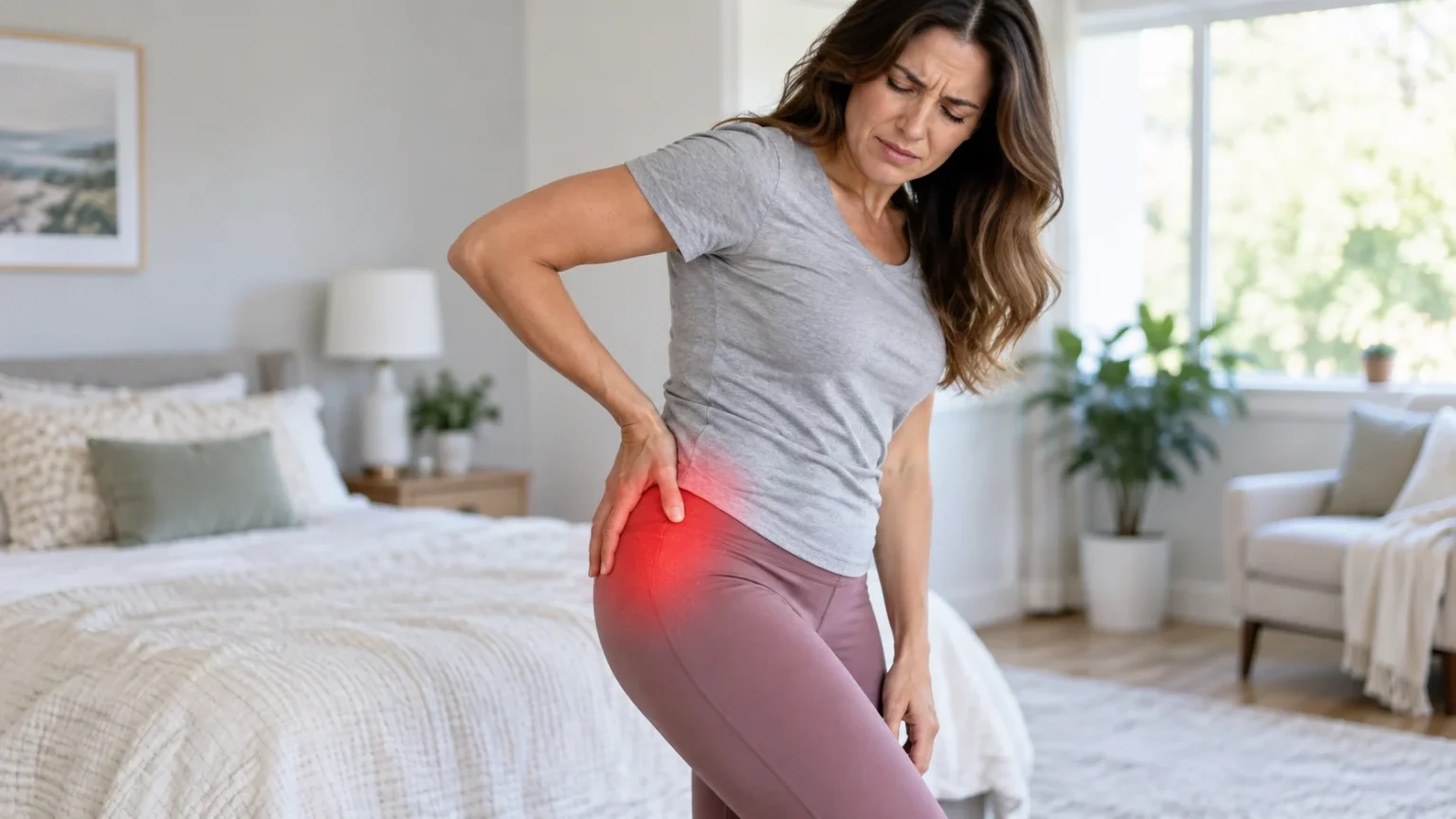

Hip pain in women can develop for many reasons, ranging from temporary muscle strain to joint problems, tendon irritation, pregnancy-related changes, or pain referred from the lower back. The location of the discomfort often provides useful clues. Pain may appear in the groin, outer hip, buttock, upper thigh, or deep inside the joint.
Some causes of female hip pain improve with rest, gentle movement, and changes to daily activity. Others may require medical evaluation, especially when pain is severe, persistent, or accompanied by weakness, fever, swelling, or difficulty walking. Understanding the pattern of your symptoms can help you decide what steps to take next.
Hip pain can affect women at any age, but certain problems become more common during pregnancy, menopause, or later adulthood. Hormonal changes, bone health, activity levels, and previous injuries can all influence hip function. Knowing the common causes and warning signs can make it easier to find appropriate relief without ignoring symptoms that need professional attention.
Where Do Women Usually Feel Hip Pain?
Pain coming directly from the hip joint is often felt in the groin or front of the hip. It may become more noticeable when walking, climbing stairs, getting into a car, or rotating the leg. Some women describe stiffness, clicking, catching, or a deep aching sensation inside the joint.
Pain on the outside of the hip may involve tendons or the tissues surrounding the greater trochanter, the bony area on the side of the upper thigh. This discomfort can become worse when lying on the affected side, walking long distances, or standing on one leg. Tenderness when pressing the outer hip is also common.
Pain felt mainly in the buttock or back of the hip may sometimes come from the lower back, sacroiliac joint, or surrounding muscles rather than the hip joint itself. Symptoms can occasionally travel down the leg when nerves are involved. Because several conditions overlap, location alone cannot always identify the exact cause.
Common Causes of Hip Pain in Women
Muscle strain is one of the simplest explanations for temporary hip pain. Sudden exercise, heavy lifting, repetitive movement, or doing more activity than usual can overload muscles around the hips and pelvis. The discomfort typically increases with certain movements and may improve gradually with lighter activity and recovery.
Tendon irritation is another common source of pain, especially around the outer hip. Gluteal tendinopathy can develop when tendons connecting the glute muscles to the hip become irritated or overloaded. Running, frequent stair climbing, prolonged standing, or sudden changes in exercise intensity may contribute to symptoms.
Joint conditions can also cause persistent pain and stiffness. Osteoarthritis, labral injuries, hip impingement, and inflammatory conditions may affect movement and make everyday activities more difficult. The likelihood of certain joint problems increases with age, previous injury, repetitive loading, or structural differences in the hip.
Hip Bursitis and Outer Hip Pain
Outer hip pain is often associated with greater trochanteric pain syndrome, a term that includes irritation of tendons and surrounding tissues near the side of the hip. People sometimes refer to this problem as hip bursitis. The pain can feel sharp during movement or achy after prolonged activity.
Sleeping on the painful side may become particularly uncomfortable because body weight places direct pressure over sensitive tissues. Sitting with the legs crossed, standing with weight shifted onto one hip, or walking uphill may also aggravate symptoms. Some women experience pain that travels slightly down the outside of the thigh.
Relief usually involves reducing activities that repeatedly irritate the area while maintaining gentle movement. Gradual strengthening of the glute and hip muscles can improve how the pelvis is supported during walking and standing. Persistent outer hip pain should be evaluated if it continues despite activity changes and appropriate self-care.
Arthritis and Age-Related Hip Pain
Hip osteoarthritis occurs when cartilage and other joint structures gradually change over time. Women may notice stiffness after sitting, aching in the groin, reduced hip movement, or pain during longer walks. Symptoms often develop gradually rather than appearing suddenly after one specific event.
Morning stiffness may improve somewhat after gentle movement, while prolonged or demanding activity can sometimes increase discomfort later in the day. Some women also find it harder to put on socks, tie shoes, climb stairs, or get in and out of low chairs. These limitations can become more noticeable as joint mobility decreases.
Age does not automatically mean that severe hip pain is unavoidable. Staying active, maintaining muscle strength, modifying aggravating activities, and working with a healthcare professional can help many people remain mobile. Medical treatment may be considered when pain becomes persistent or significantly affects sleep, walking, work, or everyday independence.
Can Pelvic Conditions Cause Hip Pain in Women?
Not every pain around the hip originates from muscles or joints. Conditions affecting the pelvis can sometimes cause discomfort that feels close to the hip, groin, lower abdomen, or lower back. Menstrual cramps and pelvic muscle tension may also create pain that spreads into nearby areas.
Endometriosis is one example of a condition that can cause pelvic pain, which may sometimes be felt around the hips, lower back, or upper thighs. Symptoms may become more noticeable around menstruation and can occur alongside painful periods, painful intercourse, or bowel and bladder discomfort. Persistent cyclical pain deserves medical evaluation.
Pelvic floor muscle problems may also contribute to discomfort near the hips and pelvis. These muscles interact closely with the abdominal, gluteal, and deep hip muscles, so excessive tension or poor coordination can influence surrounding areas. A clinician can help distinguish pelvic pain from true hip joint or tendon problems.
Pregnancy and Postpartum Hip Pain
Hip and pelvic discomfort can become more common during pregnancy as body weight increases and posture changes. Hormonal changes also affect ligaments and joint mobility as the body prepares for childbirth. These factors may place additional stress on the hips, sacroiliac joints, pelvic muscles, and lower back.
Sleeping can become difficult when side lying increases pressure on an already sensitive hip. Placing a pillow between the knees may help keep the pelvis more neutral, while another pillow can support the abdomen if needed. Gentle walking and pregnancy-appropriate mobility exercises may also help some women remain comfortable.
Postpartum hip pain can continue while muscles recover and daily movement patterns change. Carrying a baby repeatedly on one side, prolonged feeding positions, and reduced core strength may increase uneven loading. Pain that is severe, worsening, or interfering with walking should be assessed rather than simply attributed to pregnancy or recovery.
Can Lower Back or Nerve Problems Cause Hip Pain?
Lower back conditions can sometimes produce pain that feels like it is coming from the hip. Irritated nerves may cause aching, burning, tingling, numbness, or shooting pain that travels from the lower back or buttock into the thigh. Symptoms may change depending on spinal position, sitting duration, or movement.
Sciatic nerve irritation commonly affects the buttock and back of the leg, although symptoms vary depending on which nerve structures are involved. Unlike many local hip problems, nerve-related pain may travel farther down the leg. Weakness, altered sensation, or pins-and-needles can provide additional clues that a nerve may be involved.
The sacroiliac joint can also refer discomfort around the buttock, lower back, and nearby hip area. Because hip, spinal, and pelvic problems can feel similar, guessing based on pain location alone may be misleading. Persistent radiating pain or neurological symptoms should be professionally evaluated to identify the underlying source.
How to Relieve Hip Pain at Home
Relative rest can help when hip pain appears after unusual activity or mild overuse. This does not usually mean staying completely inactive, because prolonged immobility can increase stiffness and weakness. Instead, temporarily reduce movements that clearly aggravate symptoms while continuing comfortable walking and daily movement when possible.
Heat may help when muscles around the hip feel stiff or tense, while a cold pack may feel better after an activity that causes soreness or irritation. Use either option for short periods and protect the skin with a cloth barrier. Choose the method that feels most comfortable rather than assuming one works best for everyone.
Daily habits can also influence symptoms. Avoid sitting in the same position for hours, repeatedly leaning onto one hip, or suddenly increasing exercise intensity. Supportive footwear, gradual activity progression, and regularly changing position may reduce unnecessary stress through the hips, knees, pelvis, and lower back.
Gentle Exercises for Hip Pain Relief
Gentle strengthening can improve support around the hip when muscle weakness or poor movement control contributes to symptoms. Glute bridges, clamshells, side-lying leg raises, and controlled sit-to-stand exercises are common starting options. Movements should feel manageable and should not create sharp, catching, or progressively worsening pain.
As strength improves, exercises can become more challenging through controlled single-leg movements and functional patterns. For example, properly performed split squats can strengthen the glutes, quadriceps, and other muscles that help control the hips and pelvis. They should be introduced gradually and may not be suitable during an active painful flare.
Stretching may help when surrounding muscles feel stiff, but more flexibility is not always the answer to hip pain. Aggressive stretches can irritate sensitive tendons or joints, particularly when performed repeatedly at the end of the available range. Focus on comfortable mobility and controlled strengthening instead of forcing the hip into painful positions.
When Should You Worry About Hip Pain?
Hip pain deserves medical evaluation when it persists for several weeks, repeatedly returns, or gradually becomes more severe. Pain that prevents normal walking, regularly wakes you from sleep, or significantly limits daily activities should also be assessed. These patterns may indicate a problem that needs more than basic home management.
Seek prompt medical care after a significant fall or injury if you cannot bear weight, the leg appears deformed, or the hip becomes suddenly very painful. Severe swelling, redness, warmth, fever, or feeling generally unwell can also require urgent assessment. These symptoms should not be managed only with stretching or exercise.
Emergency evaluation is important if hip or back pain occurs with new loss of bladder or bowel control, numbness around the groin, or significant weakness in the legs. These symptoms can indicate serious nerve involvement. Sudden unexplained pain combined with chest pain, breathing difficulty, or other severe symptoms also requires immediate medical attention.
Conclusion
Hip pain in women can come from muscles, tendons, joints, the lower back, nerves, or nearby pelvic structures. Pregnancy, hormonal changes, activity levels, previous injuries, and aging can also influence symptoms. The location and pattern of pain can provide clues, but persistent discomfort often deserves proper assessment.
For mild symptoms, temporary activity modification, gentle movement, comfortable strengthening, heat or cold, and better daily movement habits may provide relief. Avoid repeatedly pushing through sharp pain or using aggressive stretches when you do not know the underlying cause. Gradual progress is usually safer than trying to fix hip pain with one intense exercise session.
Pay attention to symptoms that become severe, interfere with walking, occur after major trauma, or appear with fever, weakness, numbness, or bladder and bowel changes. These warning signs require timely medical attention. When in doubt, a healthcare professional or physical therapist can help determine what is causing the pain and which treatment approach is appropriate.
FAQs
What is the most common cause of hip pain in women?
Common causes include muscle strain, gluteal tendon irritation, greater trochanteric pain syndrome, and osteoarthritis. The most likely cause depends on age, pain location, activity level, and accompanying symptoms.
Why does my hip hurt when I sleep on my side?
Side sleeping can place direct pressure on irritated tissues around the outer hip. Gluteal tendon problems and greater trochanteric pain syndrome commonly become more uncomfortable when lying on the affected side.
Can hormonal changes cause hip pain in women?
Hormonal changes can influence joints, ligaments, and bone health, particularly during pregnancy and menopause. However, persistent hip pain should not automatically be blamed on hormones without considering other possible causes.
Is walking good for hip pain?
Gentle walking can help maintain mobility when it does not significantly worsen symptoms. Start with comfortable distances and reduce the duration if pain becomes noticeably stronger during or after walking.
When should hip pain be considered serious?
Seek medical attention for severe pain after trauma, inability to bear weight, fever, major swelling, progressive weakness, numbness, or loss of bladder or bowel control. Persistent unexplained pain should also be evaluated.