
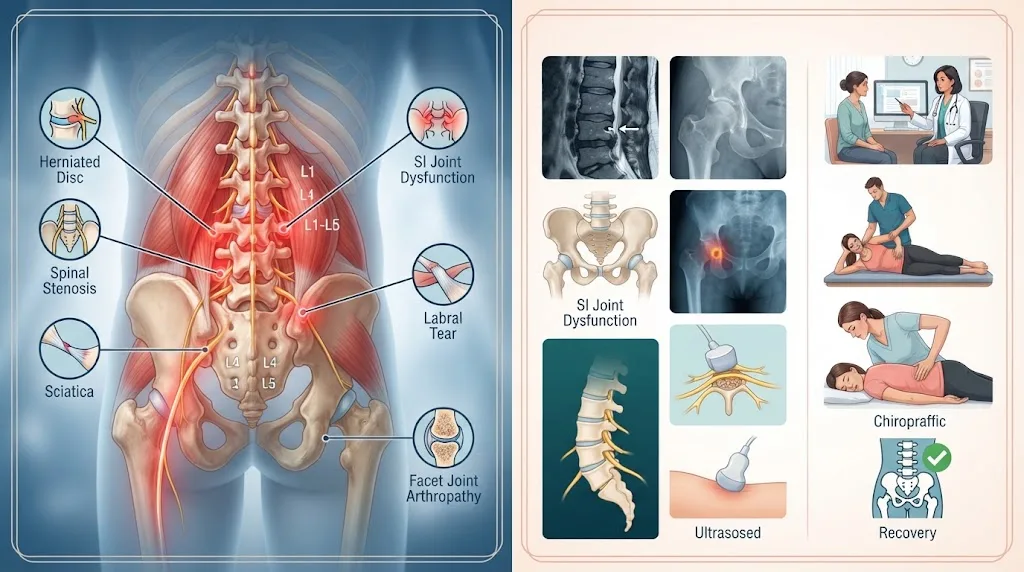

Lower back and hip pain often occur together because the spine, pelvis, hips, muscles, and nerves work as one connected movement system. A problem in one area can change how the others move and absorb force. This is why pain that feels like it comes from the hip may sometimes begin in the lower back, and vice versa.
Daily activities such as sitting, walking, lifting, bending, and climbing stairs require coordinated movement through the lumbar spine and hips. When one region becomes stiff, weak, or irritated, surrounding structures may compensate. These changes can create aching, tightness, or sharper pain around the lower back, buttocks, groin, or outer hip.
The location of pain alone does not always reveal the exact cause. Symptoms can originate from muscles, joints, discs, tendons, or nerves, and several conditions can produce similar sensations. Paying attention to what movements trigger the pain, where it travels, and whether numbness or weakness occurs can provide useful clues.
Muscle Strain and Overuse Can Cause Pain in Both Areas
Muscle strain is one of the most common explanations for sudden lower back and hip discomfort. Lifting something heavy, twisting awkwardly, exercising harder than usual, or spending hours in an unfamiliar position can irritate muscles around the spine and pelvis. Pain may feel sore, tight, or tender and often becomes more noticeable during specific movements.
The gluteal muscles, hip flexors, lower back muscles, and other stabilizers all contribute to controlling the pelvis. If these tissues become fatigued or overloaded, the body may compensate by shifting more work to neighboring muscles. This can make discomfort feel widespread rather than limited to the exact tissue that was initially irritated.
Mild muscular pain often improves with relative rest, gentle movement, and gradual return to activity. Complete bed rest is usually unnecessary for uncomplicated strain and can contribute to stiffness when prolonged. If pain becomes severe, continues worsening, or is associated with weakness or neurological symptoms, a simple muscle strain may not explain everything.
Sciatica and Nerve Irritation May Cause Radiating Pain
Sciatica refers to symptoms caused by irritation or compression affecting nerve roots that form the sciatic nerve. Pain often begins in the lower back or buttock and travels down the back or side of the leg. Some people experience burning, electric, shooting, or tingling sensations rather than a simple muscular ache.
A herniated disc, narrowing around spinal nerves, or other spinal changes may contribute to nerve-related symptoms. Pain can become worse during prolonged sitting, coughing, bending, or certain movements, although patterns vary considerably. Numbness, pins and needles, or weakness in the leg may also occur when a nerve is more significantly affected.
Not every pain traveling through the buttock is sciatica. Hip joints, muscles, and tendons can also refer discomfort into nearby areas without true nerve compression. Persistent radiating pain, worsening weakness, or significant numbness should be assessed by a healthcare professional so the likely source can be identified more accurately.
Sacroiliac Joint Pain Can Mimic Hip Problems
The sacroiliac joints sit where the lower spine connects with the pelvis. Irritation around one of these joints can cause pain near the lower back, upper buttock, or side of the pelvis. Symptoms are sometimes felt more strongly on one side and may be mistaken for hip pain because the painful area lies close to the hip.
Sacroiliac discomfort may become noticeable when standing from a chair, climbing stairs, rolling in bed, or standing on one leg. Long periods of sitting or standing can also aggravate symptoms in some people. Pregnancy, previous injury, altered movement patterns, and certain inflammatory conditions may influence the joint and surrounding tissues.
Diagnosing sacroiliac joint pain can be difficult because other lower back and hip conditions create similar symptoms. A clinician may use the history, physical examination, and several movement tests rather than relying on one finding. Treatment can include activity modification, strengthening, mobility work, and management of any underlying contributing condition.
Hip Osteoarthritis Can Refer Pain Toward the Lower Back
Hip osteoarthritis develops when the joint undergoes gradual changes that can affect cartilage and surrounding tissues. Pain commonly appears in the groin, front of the thigh, or buttock, but some people describe discomfort near the lower back as well. Stiffness after rest and difficulty putting on shoes or getting into a car may also occur.
As hip movement becomes limited, the lower back may compensate during walking, bending, or everyday tasks. That extra movement can make the lumbar region feel sore even when the hip joint is an important part of the problem. Reduced hip rotation and persistent stiffness can therefore affect more than the joint itself.
Osteoarthritis does not always require surgery, and many people manage symptoms with exercise, weight management when appropriate, activity adjustments, and pain-relief strategies. A healthcare professional can help confirm whether the hip joint is involved. Imaging may sometimes be recommended when symptoms and physical findings suggest significant joint changes.
Gluteal Tendinopathy Can Cause Outer Hip and Back Discomfort
Pain along the outer side of the hip may come from the gluteal tendons, which connect important hip muscles to the upper thigh bone. Gluteal tendinopathy often causes tenderness near the side of the hip and can become worse when lying on that side. Walking, climbing stairs, and prolonged standing may also provoke symptoms.
People sometimes describe the discomfort as hip bursitis because the painful region is similar. In many cases, however, the tendons play an important role in the symptoms. Weakness or reduced tolerance in the hip muscles can also change how the pelvis is controlled, which may contribute to secondary aching around the lower back.
Treatment usually focuses on reducing irritating compression and gradually rebuilding hip strength. Aggressive stretching directly into outer hip pain may not always help, especially when it increases tendon compression. A progressive strengthening program can improve load tolerance, while temporary activity changes allow irritated tissues to settle without completely avoiding movement.
Poor Movement Habits Can Increase Back and Hip Strain
Long hours of sitting can contribute to stiffness and discomfort, especially when you remain in the same position without regular movement. The problem is not necessarily that one posture is always harmful. Staying in any position for too long can increase stiffness, reduce movement variety, and make the first few steps after standing feel uncomfortable.
Try changing position regularly rather than attempting to maintain a supposedly perfect posture all day. Standing, walking briefly, stretching gently, and adjusting your chair or desk can reduce prolonged loading on the same tissues. People who work at computers may also benefit from positioning the screen, keyboard, and chair so they can sit without excessive reaching or slumping.
Musculoskeletal discomfort can occur in several regions when daily movement becomes repetitive or limited. For example, upper-back symptoms such as rhomboid pain may also be influenced by prolonged postures and muscle loading. Looking at whole-body movement habits can therefore be more useful than focusing only on one painful spot.
Disc Problems Can Cause Lower Back and Hip-Like Pain
Spinal discs sit between the bones of the lower spine and help distribute loads during movement. A disc can sometimes become irritated or develop changes that contribute to lower back pain. In certain cases, disc-related problems may also affect nearby nerve roots, causing symptoms that spread into the buttock, hip region, or leg.
Disc problems do not always produce dramatic symptoms, and imaging findings can exist in people without pain. This means an MRI result alone does not automatically prove what is causing discomfort. Clinicians usually consider the symptom pattern, physical examination, functional limitations, and imaging only when it is likely to meaningfully influence treatment decisions.
Many people with disc-related lower back pain improve without surgery. Remaining reasonably active, gradually rebuilding strength, and avoiding prolonged fear-based movement restriction can support recovery. Surgery may be considered in selected cases involving severe nerve compression, progressive neurological problems, or symptoms that remain disabling despite appropriate non-surgical treatment.
Kidney and Internal Conditions Can Sometimes Mimic Back Pain
Not every pain around the lower back comes from the muscles or spine. Kidney stones or kidney infections can sometimes cause pain near the side or back below the ribs, and discomfort may spread toward the groin. These problems often produce symptoms that feel different from pain triggered mainly by bending, lifting, or changing position.
Kidney infection may occur with fever, chills, painful urination, urinary changes, nausea, or feeling generally unwell. Kidney stones can cause severe waves of pain that may move as the stone passes through the urinary tract. These symptoms require medical evaluation rather than stretching or treating the problem as an ordinary back strain.
Other abdominal or pelvic conditions can occasionally refer pain toward the lower back or hip region as well. Persistent unexplained pain, significant abdominal symptoms, fever, urinary changes, or unexplained weight loss should not be ignored. A clinician can determine whether the pattern appears musculoskeletal or whether investigation of another body system is appropriate.
What You Can Do at Home for Mild Back and Hip Pain
For mild pain without warning signs, gentle activity is often better than staying completely still. Short walks, comfortable range-of-motion exercises, and frequent position changes can help prevent unnecessary stiffness. Avoid movements that clearly produce sharp or rapidly worsening pain, but try not to become afraid of all movement because of temporary soreness.
Heat may help when muscles feel stiff or tense, while a wrapped cold pack may temporarily relieve pain after an irritating activity. Use whichever feels more comfortable and avoid extreme temperatures. Over-the-counter pain medicine may also help some people, but it should be used according to label directions and personal medical considerations.
As symptoms settle, gradual strengthening can improve how the hips, glutes, trunk, and legs handle everyday loads. Bridges, controlled squats, walking, and other basic exercises may be appropriate depending on the cause and severity of pain. If an exercise consistently worsens symptoms, reduce the difficulty or seek guidance before repeatedly forcing through the pain.
When Lower Back and Hip Pain Needs Medical Attention
Seek medical advice if pain is severe, persists for several weeks, repeatedly returns, or significantly limits walking and daily activities. Professional assessment is also useful when the source is unclear or several areas hurt at once. A physical examination can help determine whether symptoms are more likely to originate from the spine, hip joint, tendons, muscles, or nerves.
Urgent evaluation is important if pain follows major trauma or is accompanied by fever, unexplained weight loss, significant weakness, or rapidly worsening neurological symptoms. People with a history of cancer, serious infection risk, or certain medical conditions should also discuss new persistent back pain with a healthcare professional rather than assuming it is muscular.
Emergency care is required if lower back pain occurs with new loss of bladder or bowel control, numbness around the groin or saddle region, or rapidly developing weakness in both legs. These symptoms can indicate severe nerve compression and should not be managed at home while waiting to see whether they improve.
Conclusion
Lower back and hip pain can come from several different structures, including muscles, spinal discs, nerves, sacroiliac joints, hip joints, and gluteal tendons. Because these areas work closely together, one problem can easily create symptoms in another region. The exact location of pain therefore does not always identify the true source.
Mild symptoms often improve with sensible activity modification, gentle movement, gradual strengthening, and avoiding long periods in one position. Persistent pain deserves a more individualized approach, especially when numbness, weakness, severe stiffness, or significant limitations are present. Identifying the likely cause helps prevent unnecessary treatments and directs rehabilitation toward the right tissues.
Most episodes of lower back and hip pain are not emergencies, but warning signs should never be ignored. Seek prompt medical care when pain is severe, follows major trauma, or appears with significant neurological or systemic symptoms. A proper assessment is the safest way to understand what ongoing pain could mean and how it should be treated.
FAQs
Why do my lower back and hips hurt at the same time?
The lower back, pelvis, and hips work together during movement. Muscle strain, hip problems, sacroiliac irritation, spinal issues, or nerve compression can therefore create pain across both regions.
Can sciatica feel like hip pain?
Yes. Sciatica can cause pain in the buttock and hip region before traveling down the leg. Tingling, numbness, burning, or electric pain may suggest that a nerve is involved.
Is walking good for lower back and hip pain?
Gentle walking can help many people with uncomplicated back and hip pain by maintaining movement and reducing stiffness. Stop or reduce activity if walking causes severe or rapidly worsening symptoms.
How do I know if my pain comes from my hip or back?
Hip problems often cause groin or outer hip pain, while spinal problems may involve the lower back and radiating symptoms. Because patterns overlap, persistent pain may require a professional examination.
When should I worry about lower back and hip pain?
Seek medical care for severe or persistent pain, major weakness, fever, trauma, or unexplained weight loss. Loss of bladder or bowel control or saddle-area numbness requires emergency evaluation.