

Upper back pain can be difficult to pinpoint because several muscles, joints, and nerves sit close together around the shoulder blades. Rhomboid muscle pain usually feels like aching, tightness, or tenderness between the spine and the inner edge of the shoulder blade. It may appear after exercise, long hours at a desk, repetitive pulling, or an awkward movement.
In many cases, rhomboid discomfort comes from muscle overuse or a mild strain and improves with activity changes and gradual movement. However, pain in the same region can sometimes originate from the neck, ribs, shoulder, or other nearby structures. Understanding the pattern of your symptoms can help you decide whether simple self-care is reasonable or professional evaluation is needed.
What Are the Rhomboid Muscles?
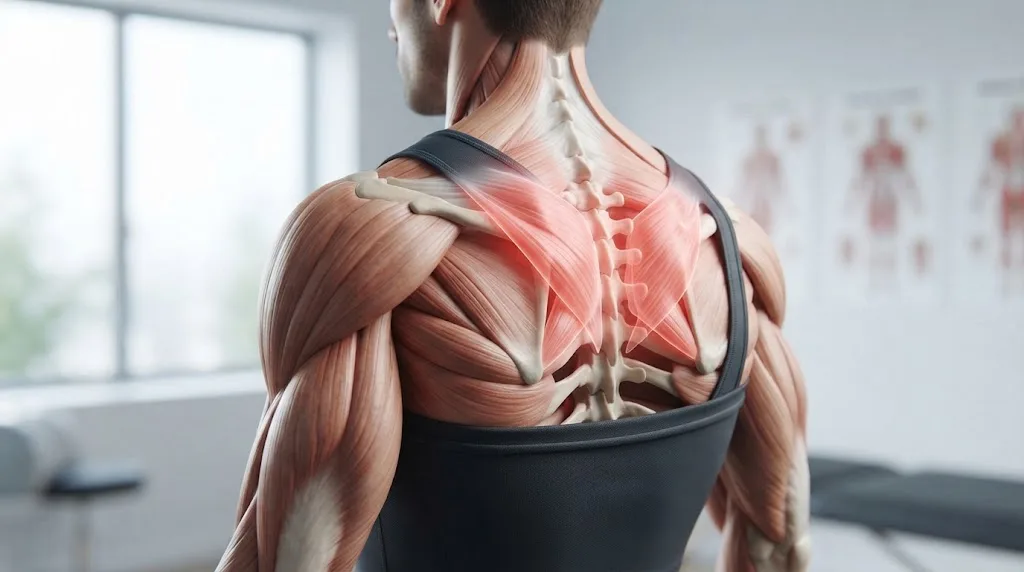
The rhomboids are two upper-back muscles called the rhomboid major and rhomboid minor. They sit beneath the trapezius and run from the spine toward the inner border of the shoulder blade, or scapula. Their location makes them important for controlling shoulder-blade position during reaching, pulling, lifting, and many everyday arm movements.
These muscles help retract the shoulder blades, meaning they draw them toward the spine. They also contribute to scapular stability and downward rotation, which supports coordinated movement between the shoulder blade and upper arm. When the rhomboids become tired, tight, or irritated, discomfort may develop around the medial border of the scapula.
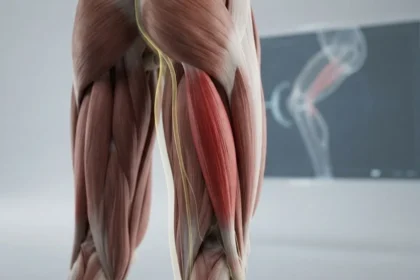
Learning basic anatomy can make muscle pain easier to understand because symptoms often follow the location and function of the affected tissue. This approach can also help when learning about muscles in other areas of the body. For comparison, our guide to biceps femoris anatomy explains how another major muscle contributes to movement and how its location relates to common symptoms.
What Does Rhomboid Muscle Pain Feel Like?
Rhomboid pain often feels like a dull ache, tight knot, burning sensation, or localized tenderness between the spine and shoulder blade. Some people notice discomfort on only one side, while others feel tension across both sides of the upper back. Pressing around the area may reproduce soreness when the muscle itself is irritated.
Certain movements can make the discomfort more noticeable. Pulling the shoulder blades together, reaching forward, lifting an object, rowing, or rotating the upper body may increase symptoms. Long periods of sitting can also make the area feel stiff, especially when the shoulders remain rounded or the upper back stays in one position.
Muscle-related pain generally changes with movement, posture, or pressure, although this pattern is not absolute. Sharp pain, numbness, tingling, marked weakness, or symptoms that travel down an arm may point toward another cause. Paying attention to what triggers and relieves the pain can provide useful information when deciding what to do next.
Common Causes of Rhomboid Muscle Pain
Overuse is a frequent reason the rhomboids become sore, particularly after physically demanding activities. Repeated pulling, rowing, carrying, climbing, or overhead work can fatigue the muscles that stabilize the shoulder blades. A sudden increase in workout volume or physical workload may produce soreness even when no single injury occurred during the activity.
A muscle strain can develop when rhomboid fibers are stretched or loaded beyond their current capacity. This may happen during heavy lifting, an abrupt pulling movement, a fall, or an awkward twist. The pain can range from mild tenderness to sharper discomfort with movement, depending on how much tissue irritation occurred.
Daily habits also matter because the upper back works continuously to support shoulder position. Extended computer use, frequent phone use, driving, or repetitive one-sided tasks can contribute to muscle fatigue. Stress may also cause some people to hold their shoulders tense, making existing upper-back discomfort feel more persistent or intense.
Can Poor Posture Cause Rhomboid Pain?
Posture can contribute to rhomboid discomfort, but it is rarely as simple as one posture being permanently “bad.” Staying in any position for a long time can create fatigue and stiffness. A rounded upper back with the shoulders resting forward may require the muscles around the shoulder blades to work differently and can become uncomfortable over time.
Desk setup may influence how long you remain in strained or unsupported positions. A screen placed too low, a keyboard that encourages reaching, or a chair that offers little support can make the upper body work harder. Small adjustments that allow the elbows, shoulders, and head to rest comfortably can reduce unnecessary muscular effort.
Movement variety is usually more useful than trying to hold a perfectly upright posture all day. Changing position, standing periodically, walking, and gently moving the shoulders can interrupt long periods of static loading. If pain repeatedly appears during desk work, frequent short movement breaks may be more practical than constantly forcing the shoulders backward.
Exercise and Workout-Related Rhomboid Pain
Rows, pull-ups, deadlifts, reverse flyes, and other pulling exercises recruit muscles around the shoulder blades. After an unfamiliar or demanding workout, the rhomboids may feel tender as part of normal delayed-onset muscle soreness. This type of soreness usually develops gradually after exercise rather than as a sudden sharp pain during a repetition.
Technique and training load can affect how much stress reaches the upper back during exercise. Using excessive weight, jerking through repetitions, or repeatedly forcing the shoulder blades together may irritate tired tissues. Rapidly increasing sets, resistance, or weekly training frequency can also exceed what the muscles are currently prepared to tolerate.
Normal post-workout soreness should gradually settle rather than become progressively worse. Stop or modify an exercise if it produces sharp pain, significant weakness, or a sudden pulling sensation near the shoulder blade. Returning with lighter resistance and controlled form is usually more sensible than repeatedly testing painful movements with heavy loads.
Rhomboid Strain vs. Other Upper-Back Problems
A rhomboid strain tends to cause localized discomfort that relates to muscle use. The area may be tender when pressed, and movements involving shoulder-blade retraction or upper-back effort can increase the pain. Mild strains often follow a recognizable event, such as heavy pulling, sudden twisting, or an unusually demanding training session.
Neck problems can create pain around the shoulder blade even when the rhomboid itself is not injured. Irritated joints, muscles, or nerves in the cervical region may refer discomfort toward the upper back. Neck stiffness, tingling, numbness, or pain traveling into the arm makes a neck-related source more important to consider.
Problems involving the shoulder joint, ribs, or surrounding muscles may produce similar symptoms as well. Because the rhomboids sit among several overlapping structures, location alone cannot confirm the diagnosis. Pain that persists, repeatedly returns, or does not respond as expected to simple activity changes may deserve assessment by a qualified healthcare professional.
How to Relieve Mild Rhomboid Muscle Pain
Reducing the activity that clearly aggravates the area can give irritated muscles time to settle and recover. This does not necessarily require complete rest, because gentle movement is often more comfortable than remaining completely still. Temporarily decrease heavy rows, loaded carries, repetitive reaching, or other tasks that consistently increase the pain.
Cold or warmth can be used according to comfort. Some people prefer a cold pack shortly after an irritating activity, while others find warmth more relaxing for stiffness and muscle tension. Protect the skin with a layer of fabric and keep the temperature comfortable rather than applying extreme heat or cold directly.
Gentle walking, shoulder movement, and normal daily activity within a comfortable range may help prevent excessive stiffness. Avoid aggressively stretching or pressing into a recently injured area if doing so increases pain. Symptoms should generally trend toward improvement; worsening pain or declining function is a reason to reconsider self-care and seek advice.
Gentle Stretches for Rhomboid Tightness
One simple stretch involves reaching both arms forward and gently allowing the shoulder blades to move apart. You may feel a mild stretch across the upper back between the shoulder blades. Keep the movement relaxed and controlled, and stop if it causes sharp pain, numbness, tingling, or an uncomfortable pulling sensation.
A cross-body arm stretch can also create gentle movement around the back of the shoulder and upper scapular region. Bring one arm across the chest and support it with the opposite arm without forcing the position. Breathe normally and keep the shoulder relaxed instead of shrugging it toward the ear.
Stretching should feel mild rather than intense, especially when the area is already sensitive. More pressure is not necessarily more effective, particularly when the muscle is irritated from a strain or heavy exercise. If stretches repeatedly make symptoms worse, focus on comfortable movement and consider professional guidance before continuing a self-directed flexibility routine.
Strengthening the Rhomboids and Upper Back
Strengthening the upper back can improve tolerance for pulling, lifting, and prolonged shoulder-blade control during daily activities. Light rows, resistance-band exercises, and controlled scapular movements are commonly used to train this region. The appropriate starting level depends on your current strength, pain level, training background, and the reason symptoms developed.
Use slow, controlled repetitions instead of squeezing the shoulder blades together as hard as possible throughout every exercise. The goal is coordinated movement through a comfortable range, not maximum tension during every repetition. Keeping resistance manageable also makes it easier to avoid compensating with excessive shrugging, trunk movement, or momentum.
Progress gradually by changing one training variable at a time, such as resistance, repetitions, or total sets. A large jump in workload can recreate the same overload that caused discomfort initially. If strength work produces increasing pain during or after sessions, reduce the workload and allow more recovery before progressing again.
How to Prevent Rhomboid Pain From Returning
Regular movement throughout the day can reduce the amount of time your upper back spends in one position. People who work at computers may benefit from changing posture, standing, walking briefly, or performing comfortable shoulder movements at intervals. These small habits can reduce prolonged static loading without requiring complicated corrective routines.
Exercise programs should balance pushing, pulling, shoulder, and upper-back work according to your individual training needs. Warm up before demanding sessions and increase training volume gradually rather than making abrupt jumps. Adequate recovery between difficult workouts gives muscles time to adapt and may lower the chance of recurring irritation.
Pay attention to early signs of overload, such as persistent tightness, reduced performance, or soreness that lasts longer than usual. Adjusting workload early is often easier than recovering after symptoms become severe or persistent. Good lifting technique, realistic progression, adequate sleep, and recovery all contribute to better tolerance for repeated upper-back activity.
When Should You See a Healthcare Professional?
Seek assessment when upper-back pain is severe, persistent, unexplained, or significantly restricts normal movement. Pain that follows a major fall, collision, or lifting injury also deserves more caution. A clinician can evaluate the neck, shoulder, ribs, muscles, and nerves to determine whether the symptoms actually originate from the rhomboid region.
Numbness, tingling, progressive weakness, loss of coordination, or pain traveling into the arm should not automatically be treated as a simple muscle knot. These symptoms may involve nerve irritation or another condition that requires a different approach. Increasing swelling, substantial bruising, fever, or unexplained systemic symptoms also warrant medical attention.
Emergency care may be appropriate when upper-back or shoulder-blade pain occurs with chest pressure, severe shortness of breath, fainting, sudden sweating, or other alarming symptoms. Not all pain near the rhomboids comes from the musculoskeletal system. When symptoms feel unusual or severe, it is safer to seek prompt medical evaluation.
Conclusion
Rhomboid muscle pain commonly appears as aching, tightness, or tenderness between the spine and shoulder blade. Overuse, muscle strain, prolonged positions, and demanding pulling exercises are frequent triggers. However, discomfort in this region can also come from the neck, shoulder, ribs, or nearby nerves, so location alone does not identify the cause.
Mild muscle-related symptoms often improve with temporary activity modification, comfortable movement, gentle stretching, and a gradual return to strengthening. Preventing recurrence usually involves sensible workload progression and changing position regularly rather than chasing perfect posture. Paying attention to early signs of fatigue can help you adjust activity before discomfort becomes more persistent.
Pain that worsens, lasts longer than expected, or comes with neurological or other unusual symptoms should be professionally evaluated. Significant trauma and severe loss of function also require more than routine home care. Understanding the likely causes and warning signs helps you respond appropriately while protecting normal shoulder and upper-back movement.
FAQs
How long does rhomboid muscle pain usually last?
Mild soreness may improve within several days, while a strain can take longer depending on its severity. Persistent or worsening pain should be assessed rather than assumed to be simple muscle tightness.
Where is rhomboid pain usually felt?
Rhomboid pain is commonly felt between the spine and the inner edge of the shoulder blade. It may feel like aching, tightness, tenderness, or a localized knot in the upper back.
Can sleeping position cause rhomboid pain?
An awkward or prolonged sleeping position may contribute to temporary upper-back stiffness or muscle discomfort. Repeated morning pain, severe symptoms, or pain lasting through the day may have another underlying cause.
Is massage good for rhomboid muscle pain?
Gentle massage may feel soothing when discomfort comes from mild muscle tension. Avoid aggressive pressure over an acute injury, significant bruising, swelling, or pain that becomes sharper when the area is pressed.
Can rhomboid pain come from the neck?
Yes. Neck muscles, joints, or irritated nerves can refer pain toward the shoulder blade and mimic rhomboid discomfort. Tingling, numbness, arm pain, or weakness makes professional assessment particularly important.