

The pigeon stretch is a popular hip-opening movement often used in yoga, mobility routines, and post-workout stretching. It mainly targets the glutes, deep hip rotators, and surrounding tissues while placing the front leg in external rotation. When performed with good control, it can help improve hip mobility and reduce the feeling of stiffness after long periods of sitting or physical activity.
Although the pose looks simple, it can feel intense if your hips are tight or your mobility is limited. The key is not to force your front leg into a perfect angle or push your hips aggressively toward the floor. Good form means staying supported, breathing comfortably, and working within a range that feels like a stretch rather than pain.
Pigeon stretch variations can be adapted for beginners and more flexible exercisers alike. Props such as cushions, yoga blocks, or folded towels can make the position more comfortable and reduce unnecessary pressure on the knees. Understanding the correct setup, common mistakes, and potential benefits can help you use the stretch more effectively.
What Is the Pigeon Stretch?
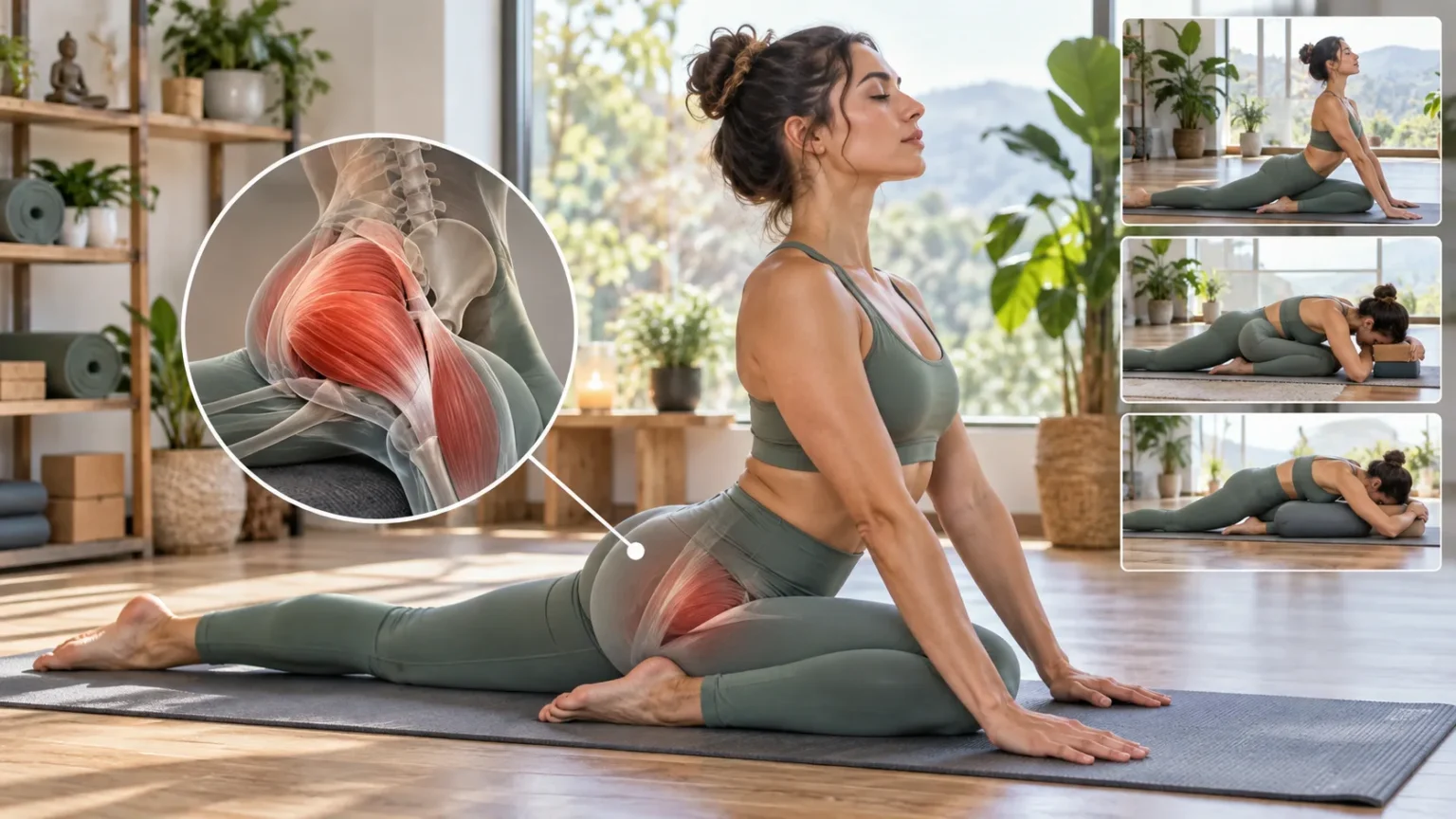
The pigeon stretch is a floor-based mobility exercise that places one leg in front of the body while the other extends behind. The front hip moves into external rotation, while the back hip remains more extended. This combination creates a deep stretch through the glutes and outer hip of the front leg while also opening the front of the opposite hip.
The movement is commonly seen in yoga, where it is often called pigeon pose or Eka Pada Rajakapotasana in more advanced forms. Fitness and rehabilitation settings usually use a simpler version focused on hip mobility rather than the full yoga posture. You do not need advanced flexibility to benefit from the basic stretch.
The pigeon stretch should feel controlled and sustainable. If you feel sharp knee pain, pinching in the hip, numbness, or intense joint pressure, the position should be modified or stopped. A supported variation can often provide the same general mobility benefit without forcing your body into an uncomfortable range.
What Muscles Does the Pigeon Stretch Target?
The primary stretch is usually felt through the gluteal muscles and deep external rotators of the front hip. These muscles help control the position of your thigh and pelvis during walking, running, squatting, and other lower-body movements. The exact sensation can vary depending on your anatomy, flexibility, and front-leg position.
The back leg can also create a gentle stretch through the hip flexors, particularly if you keep your pelvis relatively square and avoid rotating excessively to one side. Your lower back and surrounding hip muscles may also feel involved because they help stabilize your torso. The goal is not to stretch every area as deeply as possible.
Your core and trunk muscles provide support while you hold the position. Keeping your body stable can prevent you from collapsing into the stretch or twisting excessively. This combination of mobility and control makes pigeon stretch useful as part of a broader routine that includes strengthening, movement practice, and general flexibility work.
How to Do the Pigeon Stretch Correctly
Start on your hands and knees, then bring your right knee forward toward your right wrist. Move your right foot slightly toward the left side of your body while extending your left leg behind you. Keep the back of the left leg facing the floor and allow your hips to settle only as far as feels comfortable.
Try to keep your pelvis relatively level instead of allowing one side to collapse completely toward the floor. Place a cushion or yoga block underneath the hip of the front leg if there is a large gap between your body and the ground. This support can reduce strain and help you relax into the position more naturally.
Stay upright at first and take several slow breaths. If the position feels comfortable, you can gradually lean forward over the front leg while keeping your spine long and your breathing relaxed. Hold the stretch without bouncing, then return slowly to your starting position and repeat on the other side.
How Long Should You Hold the Pigeon Stretch?
Beginners can start by holding pigeon stretch for around 20 to 30 seconds on each side. This is usually long enough to become familiar with the position without placing excessive stress on unfamiliar tissues. Over time, you may gradually increase the hold if the stretch remains comfortable and your breathing stays relaxed.
For a general mobility routine, holding the stretch for 30 to 60 seconds per side is often practical. Longer holds are not automatically better, particularly if your body starts tightening or your knee becomes uncomfortable. Quality matters more than duration, so leave the position if your form begins to deteriorate.
You can repeat the stretch one or two times on each side depending on your routine. Some people prefer using it after exercise, while others include it in a separate mobility session. Avoid using a deep static stretch immediately before explosive exercise if it makes your muscles feel temporarily loose or less prepared for powerful movement.
Key Benefits of the Pigeon Stretch
One of the main benefits of pigeon stretch is improved hip mobility. The front-leg position encourages external rotation, which is useful in many everyday and athletic movements. Regular mobility work may help you feel more comfortable during squats, lunges, sitting positions, and other activities that require the hips to move through different angles.
The stretch can also reduce the sensation of tightness around the glutes and outer hips. People who sit for long periods sometimes feel stiff through these areas, particularly after work or travel. Gentle stretching can provide temporary relief and make movement feel easier, although persistent tightness may also benefit from strengthening and more regular activity.
Pigeon stretch may also support better body awareness. Holding the position gives you an opportunity to notice differences between your left and right hips, breathing patterns, and areas where you tend to brace. Recognizing these differences can help you adjust your mobility routine instead of automatically stretching both sides with the same intensity.
Pigeon Stretch for Runners and Active People
Runners place repeated demand on the hips, glutes, and surrounding muscles with every stride. Pigeon stretch can be useful after running because it gently targets areas that may feel stiff following repetitive lower-body activity. However, stretching alone cannot correct every movement issue or prevent all running-related injuries.
Hip mobility contributes to comfortable lower-body movement, but running also depends on strength, coordination, balance, and training load. Understanding your gait pattern can provide useful context for how your hips, knees, ankles, and feet work together during walking or running. Mobility is only one part of that larger movement system.
Active people should combine stretching with strength work rather than relying on flexibility alone. Exercises such as squats, lunges, step-ups, and hip-strengthening movements can help the surrounding muscles tolerate activity more effectively. A balanced routine usually provides more practical benefit than spending large amounts of time stretching one specific area.
Common Pigeon Stretch Mistakes
One common mistake is forcing the front shin to become perfectly parallel with the front edge of a yoga mat. Not everyone has the hip mobility or anatomy for that position comfortably. Your front foot can remain closer to your body if that allows you to feel a gentle hip stretch without creating pressure in the knee.
Another mistake is letting the pelvis drop heavily to one side without support. This may cause you to twist rather than stretch the intended hip comfortably. Using a yoga block, folded blanket, or cushion beneath the front hip can make the position more stable and reduce the urge to compensate.
Many people also push too deeply because they assume discomfort means the stretch is working. Sharp pain, pinching, numbness, or joint pressure are not goals of flexibility training. A productive stretch should feel like manageable tension that allows you to breathe normally and relax rather than something you must endure.
Beginner-Friendly Pigeon Stretch Modifications
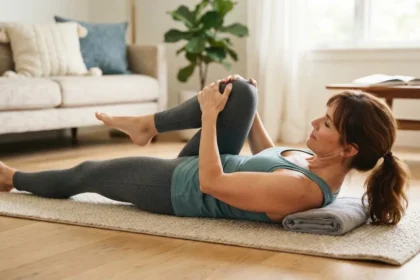
If traditional pigeon stretch feels too intense, try a reclined figure-four stretch instead. Lie on your back, cross one ankle over the opposite thigh, and gently bring the supporting leg toward your chest. This position creates a similar hip-opening effect while keeping your spine and pelvis supported by the floor.
You can also perform pigeon stretch with your front hip elevated on a cushion or yoga block. The added support reduces the amount of hip rotation required and helps keep your pelvis more level. As your comfort improves, you can gradually use less support without forcing the body deeper before it is ready.
Another option is an elevated pigeon stretch using a bench or sturdy surface. Place the front leg on the surface and lean forward gently while keeping the movement controlled. This version is often easier for people who find getting down to the floor uncomfortable or have difficulty supporting themselves in the traditional position.
When Should You Avoid the Pigeon Stretch?
People with active knee injuries should be cautious because pigeon stretch places the front leg in a rotated position. If you feel pressure primarily in the knee rather than the hip, do not force the posture. A figure-four variation or another gentle hip stretch may be more appropriate until you know what movement your knee tolerates.
Hip injuries can also make the stretch unsuitable in some situations. Deep pinching in the front of the hip, sharp groin pain, or symptoms that worsen after stretching should not be ignored. These sensations may require assessment rather than repeated attempts to increase flexibility through the same position.
You should also stop if the stretch produces numbness, tingling, sudden weakness, or pain traveling down the leg. These symptoms may involve structures other than ordinary muscle tightness. A healthcare or rehabilitation professional can help determine whether stretching is appropriate and suggest alternatives based on the cause of your symptoms.
How to Get More From Your Hip Mobility Routine
Pigeon stretch works best as one part of a broader mobility routine rather than the only exercise you use for your hips. Include movements that explore hip flexion, extension, rotation, and side-to-side motion. Different positions can help maintain comfortable movement without repeatedly stressing the same tissues.
Strength is equally important because greater mobility is most useful when you can control it. Glute bridges, split squats, lateral steps, and single-leg exercises can complement stretching by strengthening the muscles that stabilize your hips. You do not need an extremely complicated program to improve lower-body movement.
Consistency matters more than occasional intense stretching sessions. A few minutes of comfortable mobility work several times per week may be easier to maintain than one very long session. Track how your body responds and gradually adjust your routine rather than chasing deeper positions every time you stretch.
Pigeon Stretch vs Figure-Four Stretch
Both pigeon stretch and figure-four stretch target the glutes and external hip rotators, but they place the body in different positions. Pigeon stretch is performed closer to the floor with one leg extended behind, while figure four is commonly performed lying on your back. The better option is the one you can perform comfortably and with good control.
Figure-four stretch is often easier for beginners because the floor supports the back and pelvis. It also makes it easier to adjust intensity by changing how closely you draw the leg toward your chest. People with sensitive knees or limited hip mobility may prefer this version before progressing to pigeon stretch.
Pigeon stretch can provide a stronger combined hip-opening position because the back leg also moves into extension. However, greater intensity does not automatically mean greater benefit. Both stretches can be useful, and you can alternate between them depending on your flexibility, comfort, and goals.
Conclusion
Pigeon stretch is a useful hip-opening exercise that mainly targets the glutes, deep hip rotators, and surrounding tissues. It can help improve mobility, reduce the sensation of hip tightness, and support more comfortable lower-body movement. The stretch can be useful for runners, active people, and anyone who spends long periods sitting.
Correct form is more important than achieving an advanced-looking position. Keep your front leg within a comfortable angle, support your hip when needed, and avoid forcing your pelvis toward the floor. Slow breathing and controlled movement should remain possible throughout the stretch.
Use pigeon stretch as part of a balanced routine that also includes strength, general mobility, and regular movement. Stop if you experience sharp knee pain, deep hip pinching, numbness, or worsening symptoms. When performed comfortably and consistently, pigeon stretch can be a practical tool for maintaining healthy hip mobility.
FAQs
What does the pigeon stretch stretch?
Pigeon stretch mainly targets the glutes and deep external rotators of the front hip. The back-leg position may also create a gentle stretch through the hip flexors and surrounding tissues.
How long should I hold pigeon stretch?
Beginners can start with about 20 to 30 seconds per side. If the position remains comfortable, you can gradually work toward 30 to 60 seconds while maintaining relaxed breathing.
Is pigeon stretch good for tight hips?
It can help reduce the feeling of tightness around the glutes and outer hips. However, persistent tightness may also require strengthening, activity changes, or professional assessment depending on the underlying cause.
Why does pigeon pose hurt my knee?
Knee discomfort may occur when the hip cannot comfortably provide enough rotation, causing extra stress to shift toward the knee. Modify the front-leg angle or use a supported figure-four stretch instead.
Can I do pigeon stretch every day?
Gentle pigeon stretching can be performed regularly if it feels comfortable and does not worsen symptoms. Avoid forcing deep holds every day, and combine mobility work with strengthening and normal physical activity.