

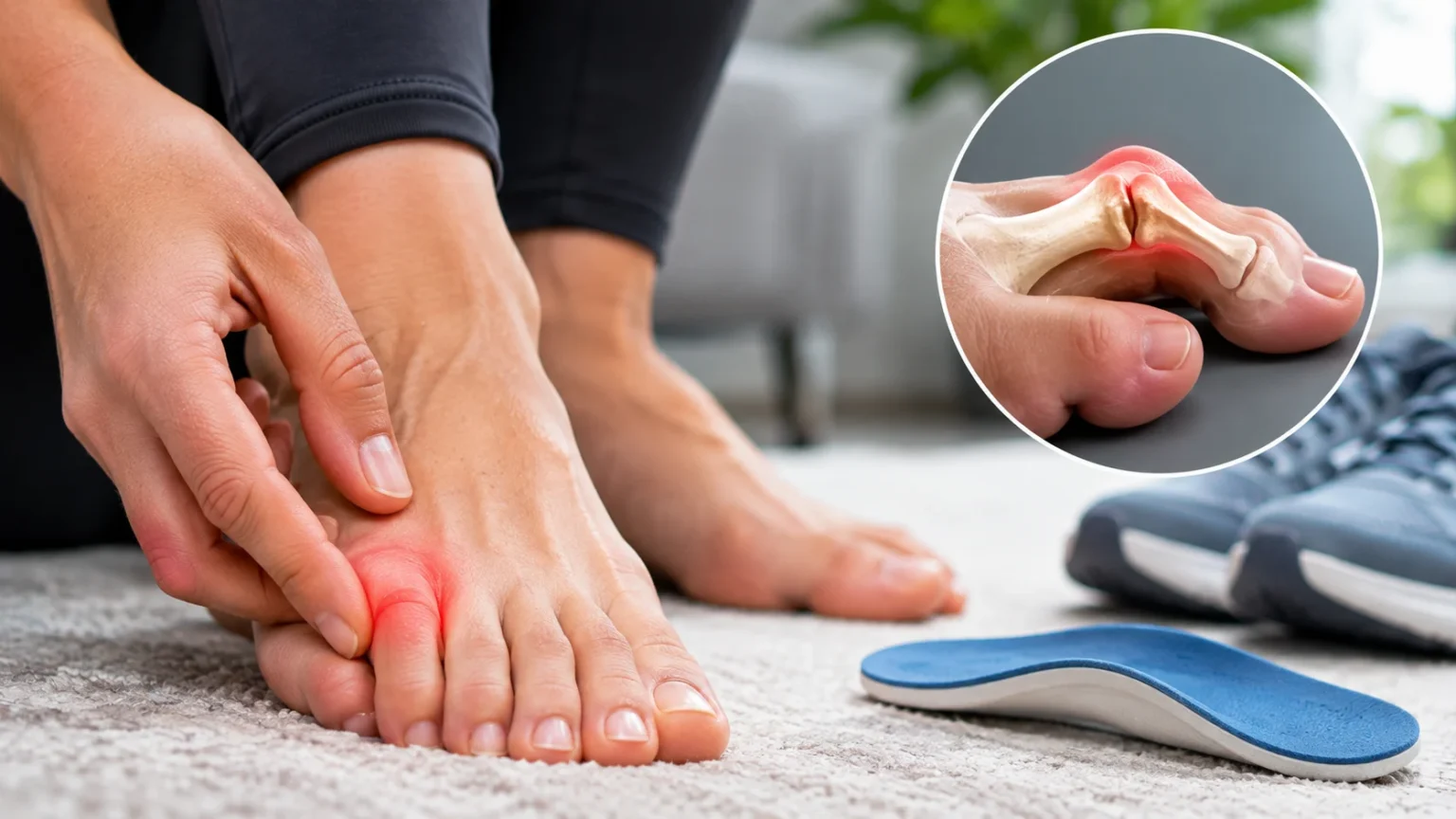

Mild hammer toes are a common foot condition that can affect the shape, movement, and comfort of your toes. The condition develops when a toe begins bending abnormally at its middle joint, creating a raised or curled appearance. During the early stages, the affected toe may remain flexible and cause only minor discomfort. However, recognizing mild hammer toes early can help prevent unnecessary pressure, irritation, and worsening symptoms.
Hammer toes most commonly affect the second, third, or fourth toes. They may develop because of muscle imbalances, footwear pressure, foot structure, or certain medical conditions. Although mild cases often respond to conservative care, persistent symptoms should be evaluated by a healthcare professional. This guide explains hammer toe symptoms, causes, treatment options, exercises, footwear choices, and practical ways to maintain comfortable foot movement.
What Are Mild Hammer Toes?
Mild hammer toes are an early form of a toe deformity in which the middle joint bends more than normal. This joint is called the proximal interphalangeal joint. The abnormal bend creates a hammer-like appearance when viewed from the side. In mild cases, the toe often remains flexible and can still be gently straightened.
The condition usually develops gradually rather than appearing suddenly. At first, a person may notice that one toe looks slightly raised or bent. Discomfort may occur only when wearing certain shoes or walking for extended periods. Some people experience no pain during the early stages.
Mild hammer toes can become more rigid over time, although progression is not inevitable for everyone. Early management focuses on reducing pressure, maintaining comfortable movement, and addressing contributing factors. A flexible hammer toe is generally easier to manage without surgery than a fixed deformity. However, treatment should reflect the actual symptoms and examination findings.
Common Symptoms of Mild Hammer Toes
One of the earliest signs of mild hammer toes is a noticeable bend in the middle joint of an affected toe. The toe may appear slightly raised compared with neighboring toes. This change can be subtle during the early stages. Some people notice the appearance before experiencing any significant discomfort.
Another common symptom is irritation where the raised joint rubs against the inside of a shoe. Repeated friction can cause redness, tenderness, or thickened skin. Corns may develop over the affected joint, while calluses can form beneath areas experiencing increased pressure. These changes may make certain footwear uncomfortable.
Stiffness and difficulty moving the affected toe may also develop. In mild cases, the toe often remains flexible, particularly when the foot is relaxed. However, increasing pain, reduced flexibility, or skin breakdown should not be ignored. A podiatrist or another qualified healthcare professional can determine whether the symptoms indicate hammer toe or a different condition.
What Causes Mild Hammer Toes?
Mild hammer toes often develop when the muscles and tendons controlling toe movement become imbalanced. These structures normally work together to bend and straighten the toes. When their forces become uneven, a toe may gradually adopt an abnormal position. The process can be influenced by foot structure, footwear, and certain medical conditions.
Shoes that compress the toes may contribute to pressure and discomfort. Narrow toe boxes can restrict natural toe positioning, while high heels shift more pressure toward the front of the foot. These conditions may aggravate an existing deformity. However, footwear is not the only cause, and hammer toes can develop even in people who usually wear comfortable shoes.
Other contributing factors include inherited foot characteristics, previous injuries, and certain neuromuscular conditions. Changes involving the joints or tendons may also influence toe alignment. The exact cause can vary between individuals. Understanding these factors helps guide management rather than assuming that every case results from wearing the wrong shoes.
Which Toes Are Most Commonly Affected?
Hammer toes most frequently involve the smaller toes rather than the big toe. The second toe is commonly affected, although the third and fourth toes can also develop similar changes. The condition may involve one toe or several toes. Its pattern depends on individual foot structure and contributing factors.
A second toe that is relatively long or experiences pressure from nearby structures may be more susceptible to certain alignment problems. However, toe length alone does not determine whether hammer toe will develop. Muscle balance, joint stability, and footwear all influence the final position. Some people have naturally different toe shapes without experiencing any medical problem.
Hammer toes can occur in one foot or both feet. Symptoms may also differ between sides, with one toe causing discomfort while another remains painless. A clinical examination helps identify the affected joints and whether the deformity is flexible. This information is useful when choosing footwear adjustments, protective devices, or other treatments.
Flexible vs. Rigid Hammer Toes
Hammer toes are often described as flexible or rigid based on how easily the affected joint can move. A flexible hammer toe can still be straightened with gentle assistance. This is common during the earlier stages of the condition. The surrounding muscles, tendons, and joints retain some movement.
A rigid hammer toe cannot be fully straightened through gentle movement. This may develop when the joints and surrounding soft tissues become less adaptable over time. Rigid deformities can produce persistent pressure against footwear. However, stiffness does not always develop at the same rate, and the progression varies among individuals.
The distinction between flexible and rigid hammer toes influences treatment decisions. Flexible deformities may respond to footwear changes, padding, and selected exercises that improve comfort and mobility. Rigid deformities may require different protective measures or specialist evaluation. Determining flexibility is therefore an important part of a professional foot assessment.
How Mild Hammer Toes Affect Walking
Mild hammer toes may change the way pressure is distributed across the front of the foot. When a toe remains bent, certain areas may contact footwear or the ground differently. This can produce localized tenderness or friction. However, some people continue walking normally without noticeable symptoms.
Discomfort may become more apparent during longer walks or activities that place repeated pressure on the forefoot. A raised toe joint may rub against the upper part of a shoe. The toe tip or ball of the foot may also experience additional pressure in some cases. These changes depend on the individual deformity and footwear.
People sometimes adjust their walking pattern to avoid uncomfortable pressure. Although this may temporarily reduce irritation, persistent discomfort can affect other areas of the foot. Properly fitted footwear and appropriate professional advice can help address the underlying problem. The goal is comfortable movement rather than forcing the foot into an unnatural position.
How Doctors Diagnose Mild Hammer Toes
Diagnosing mild hammer toes usually begins with a physical examination of the feet. A podiatrist or another qualified clinician may observe toe alignment while the person is standing and sitting. They may also ask about discomfort, footwear, and symptom duration. These details help distinguish hammer toe from other toe conditions.
During the examination, the clinician may gently assess whether the affected toe can straighten. They may also check for corns, calluses, joint tenderness, and changes in skin condition. Foot movement and the position of neighboring toes can provide additional information. These observations help determine whether the deformity is flexible or rigid.
X-rays are not always necessary for mild hammer toes. However, imaging may be recommended when symptoms are persistent, the diagnosis is uncertain, or surgery is being considered. X-rays can help evaluate joint alignment and associated structural changes. The appropriate investigation depends on symptoms and clinical findings rather than appearance alone.
Can Mild Hammer Toes Be Corrected Without Surgery?
Many mild hammer toes can be managed without surgery, particularly when they remain flexible. Conservative treatment focuses on reducing discomfort, improving footwear fit, and limiting pressure over the affected joints. These measures may help prevent further irritation. However, they do not guarantee that an established deformity will permanently disappear.
Footwear changes are often an important starting point. Shoes with sufficient toe room reduce contact between bent joints and the upper material. Protective pads may also help manage localized pressure. In some cases, a healthcare professional may recommend exercises or supportive devices to address specific functional problems.
The effectiveness of nonsurgical care varies according to flexibility, symptoms, and the underlying cause. Some people experience substantial relief even when the toe’s shape changes very little. Others may continue to have discomfort despite conservative measures. The main objective is improving function and comfort while avoiding unnecessary treatment.
Best Shoes for Mild Hammer Toes
Appropriate footwear can make a significant difference when managing mild hammer toes. Shoes with a roomy, adequately deep toe box allow the toes to rest without excessive pressure. The front of the shoe should accommodate the natural shape of the foot. Comfortable fit matters more than choosing a particular brand or style.
Soft or flexible upper materials may reduce rubbing over raised toe joints. Shoes should also provide suitable support for the intended activity. Extremely tight footwear can aggravate tenderness, while poorly fitted oversized shoes may create other problems. Trying footwear while standing can help determine whether the toes have enough space.
High heels and narrow pointed shoes may increase forefoot pressure and worsen symptoms for some individuals. Choosing alternatives with better toe accommodation can improve everyday comfort. However, no single shoe design works for everyone. A podiatrist can recommend specific features when deformity, pain, or other foot conditions make footwear selection difficult.
Toe Exercises for Mild Hammer Toes
Gentle toe exercises may help maintain flexibility and support comfortable movement when hammer toes remain flexible. Exercise does not reliably reverse an established structural deformity. However, selected movements can improve awareness and function of the small foot muscles. The appropriate approach depends on individual symptoms and joint mobility.
One gentle activity involves attempting to straighten and relax the toes within a comfortable range. Another involves spreading the toes without forcing the joints. These movements encourage controlled muscle activity. They should not cause sharp pain or require pulling forcefully on a bent toe.
A physical therapist or podiatrist may recommend additional exercises based on the condition of the foot. For example, some individuals benefit from movements that improve toe control or foot muscle coordination. Progress should remain gradual and comfortable. If exercises cause increasing pain, swelling, or irritation, they should be stopped and reassessed.
Can Toe Spacers and Pads Help?
Toe spacers and protective pads are sometimes used to reduce friction and improve comfort. Their usefulness depends on which joints are affected and how the toes are positioned. Soft padding may reduce contact between a raised joint and the inside of a shoe. However, these devices do not necessarily correct the underlying deformity.
Some people use silicone toe sleeves or protective cushions to reduce irritation. Others may benefit from specially selected footwear inserts. The device should fit comfortably without increasing pressure on surrounding toes. Poorly fitted products can cause additional rubbing or make shoes feel too tight.
People with diabetes, reduced foot sensation, or circulation problems should obtain professional guidance before using pads or toe devices. They may be less able to recognize harmful pressure or developing skin injuries. Even without these conditions, any device that causes pain or discoloration should be removed. Comfort and skin protection are more important than forcing alignment changes.
How to Relieve Mild Hammer Toe Pain at Home
Home care for mild hammer toe discomfort generally focuses on reducing unnecessary pressure and irritation. Wearing shoes that provide adequate toe space is often one of the most useful adjustments. Avoid activities or footwear that repeatedly aggravate the affected joint. Comfortable movement can usually continue when it does not increase symptoms.
If rubbing has caused mild tenderness, changing footwear and protecting the irritated area may help. Do not attempt to cut away corns or calluses with sharp tools. This can damage the skin and increase infection risk. A podiatrist can provide appropriate treatment for persistent thickened skin or painful pressure areas.
Home remedies should not involve forcefully straightening the toe or applying tight splints without guidance. These approaches may cause additional discomfort or tissue injury. Persistent pain, increasing swelling, or skin changes deserve medical evaluation. Conservative care works best when it addresses the cause of pressure rather than merely covering symptoms.
Can Mild Hammer Toes Get Worse Over Time?
Mild hammer toes can become more pronounced over time, particularly when contributing mechanical or medical factors persist. A flexible deformity may gradually become less flexible as surrounding tissues adapt. Increased pressure can also lead to corns, calluses, and persistent discomfort. However, progression is not inevitable for every person.
The rate of change varies depending on foot structure, joint health, muscular control, and other conditions. Some people have stable mild deformities for years. Others experience more noticeable changes that affect footwear comfort. Regular observation can help identify increasing stiffness or new areas of pressure.
Early assessment may help individuals understand which changes deserve attention. Footwear modifications and appropriate conservative treatment can reduce irritation and support function. However, no exercise or device can guarantee that a hammer toe will never progress. Ongoing symptoms should be reviewed by a qualified clinician rather than managed through increasingly restrictive home devices.
Mild Hammer Toes vs. Claw Toes
Hammer toes and claw toes are different types of toe deformities that can appear similar at first. Hammer toe primarily involves bending at the middle toe joint. Claw toe typically involves upward extension at the joint connecting the toe to the foot, combined with bending at the smaller toe joints. This creates a more claw-like appearance.
Both conditions may cause pressure, corns, and discomfort inside shoes. However, their underlying mechanics and associated medical conditions may differ. Claw toes can sometimes be associated with neurological or muscular disorders. The appearance alone does not establish the cause or severity of either condition.
Another related deformity is mallet toe, which primarily affects the joint near the tip of the toe. Distinguishing these conditions helps guide treatment recommendations. A podiatrist can evaluate joint positions and flexibility during an examination. Correct identification is more useful than assuming all bent toes require the same exercises or supportive devices.
Mild Hammer Toes and Other Foot Conditions
Mild hammer toes may occur alongside other foot conditions that influence pressure and alignment. Bunions, for example, can affect the position of neighboring toes. Changes in joint mobility or foot structure may also influence how forces are distributed during walking. These relationships vary between individuals.
Certain inflammatory conditions, including rheumatoid arthritis, can affect the joints and soft tissues of the feet. Neurological disorders may also influence muscle control and toe positioning. However, having a hammer toe does not automatically indicate a serious underlying disease. Most evaluations begin by considering symptoms, medical history, and physical examination findings.
When several toes change shape or symptoms develop rapidly, professional assessment becomes particularly useful. The clinician may investigate associated conditions when examination findings suggest them. Treatment should address the broader foot problem when necessary. Focusing only on the visibly bent toe may overlook other factors contributing to discomfort.
When Is Surgery Considered for Hammer Toes?
Surgery is generally considered when hammer toe symptoms remain significant despite appropriate conservative treatment. Persistent pain, difficulty wearing suitable footwear, or recurring pressure-related skin problems may influence the decision. The toe’s flexibility and joint condition are also important. Mild, painless hammer toes usually do not require surgery.
Different surgical procedures address different anatomical problems. Some involve tendon adjustments, while others may require correction of joint alignment. The appropriate technique depends on the deformity and individual circumstances. Surgery also involves recovery time, possible complications, and the need for postoperative care.
A foot and ankle specialist can explain whether surgery is appropriate and what outcomes are realistic. Conservative measures are commonly explored first when symptoms are mild. Decisions should consider daily function and personal goals rather than appearance alone. An informed discussion helps patients understand the potential benefits, limitations, and risks of treatment.
How to Help Prevent Hammer Toe Discomfort
Preventing discomfort often begins with selecting footwear that allows sufficient space for natural toe positioning. Shoes should not repeatedly compress or rub against the toes. Proper fit is particularly important during activities involving prolonged walking or standing. Comfortable footwear may reduce irritation even when a mild deformity is already present.
Regular foot observation can help identify changes in joint position, tenderness, or skin condition. People who notice recurring corns or pressure marks may benefit from early podiatric advice. Gentle foot movements can support mobility when appropriate. However, exercise and footwear choices cannot prevent every hammer toe because structural and medical factors also play a role.
Individuals with diabetes, neuropathy, or circulation problems may need additional foot care precautions. They should follow professional recommendations for footwear and skin monitoring. Early attention to irritation helps reduce the likelihood of more serious complications. A practical prevention strategy emphasizes comfort, appropriate medical care, and avoiding unnecessary pressure.
When Should You See a Podiatrist?
A podiatrist can evaluate mild hammer toes when discomfort becomes persistent or begins affecting walking and footwear choices. Increasing stiffness, recurring corns, or difficulty straightening a toe may also justify an appointment. Early assessment can clarify whether conservative treatment is appropriate. Not every visible toe bend requires medical intervention.
Seek prompt medical attention if a toe develops spreading redness, significant swelling, increasing warmth, or signs of infection. Open wounds, unusual discoloration, or sudden severe pain should not be ignored. People with diabetes or reduced foot sensation should be particularly careful about pressure-related skin changes. These conditions can increase the risk of complications.
A professional examination can also help distinguish hammer toe from fractures, inflammatory joint conditions, and other deformities. Treatment recommendations may include footwear adjustments, protective devices, exercises, or additional investigation. The most suitable approach depends on symptoms and examination findings. Addressing persistent problems early can help maintain comfort and everyday foot function.
Conclusion
Mild hammer toes develop when a toe begins bending abnormally at its middle joint. Early symptoms may include a noticeable change in toe position, mild stiffness, rubbing, or tenderness inside shoes. The condition commonly affects the smaller toes and may remain flexible during its early stages. Recognizing these changes can help people take appropriate steps to reduce discomfort.
Conservative treatment often focuses on roomy footwear, pressure reduction, and selected exercises or protective devices. These measures may improve comfort and mobility, although they do not guarantee permanent correction of the deformity. Some mild hammer toes remain stable, while others become more rigid over time. Regular assessment is useful when symptoms change.
Maintaining foot comfort is more important than trying to achieve a particular toe appearance. Avoid forceful stretching, tight devices, and footwear that repeatedly creates pressure. Seek professional advice for persistent pain, skin problems, or increasing stiffness. With suitable management and individualized care, many people with mild hammer toes can continue their everyday activities comfortably.
Frequently Asked Questions
What do mild hammer toes look like?
Mild hammer toes usually appear slightly bent at the middle toe joint, creating a raised shape. The affected toe often remains flexible and may cause little or no discomfort initially.
Can mild hammer toes straighten naturally?
Flexible hammer toes may be manually straightened, but an established deformity does not always correct itself permanently. Footwear changes and appropriate exercises may improve comfort and mobility without fully reversing the shape.
What causes mild hammer toes?
Common contributing factors include muscle and tendon imbalances, foot structure, footwear pressure, previous injuries, and certain medical conditions. The exact cause varies between individuals.
What is the best treatment for mild hammer toes?
Conservative treatment often includes properly fitted shoes, pressure-relieving pads, and suitable mobility exercises. A podiatrist can recommend individualized care based on toe flexibility, symptoms, and underlying causes.
Can walking make mild hammer toes worse?
Walking does not automatically worsen mild hammer toes, but repeated pressure from poorly fitted shoes may increase discomfort and irritation. Supportive footwear and appropriate management can help maintain comfortable movement.