

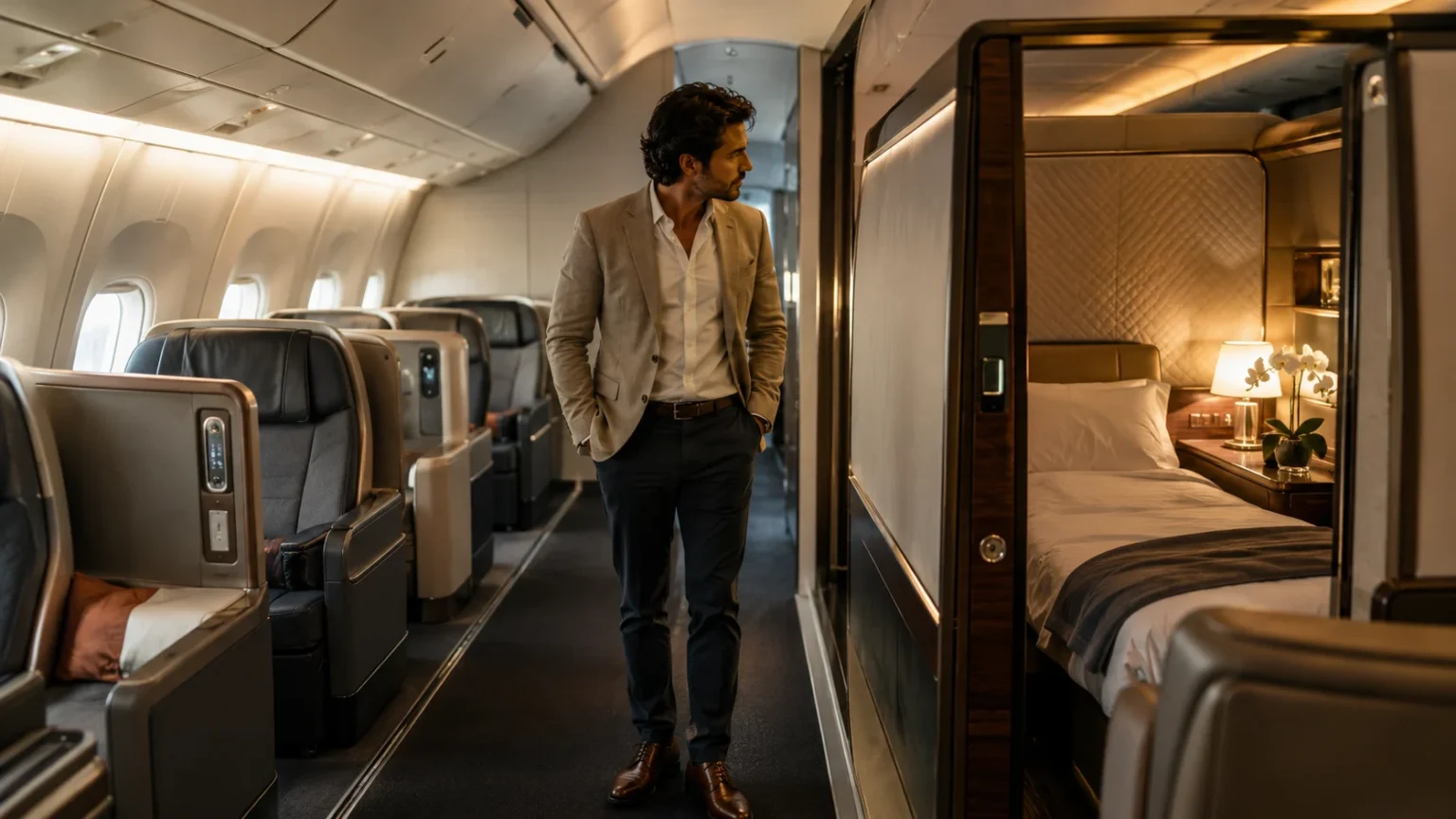

Is Business Class First Class? Key Differences Explained
If you are booking a premium flight for the first time, you may wonder, is business class first class, or are they two completely different types of airline tickets? The simple answer is that business class and first class are generally separate cabin classes. Both provide a more comfortable and premium travel experience than economy, but first class is normally positioned above business class when an airline offers both. The exact differences depend on the airline, aircraft, route, and cabin configuration, so one carrier’s business-class experience can sometimes feel more luxurious than another airline’s older first-class product.
Modern business class has improved dramatically, particularly on long-haul international flights. Many airlines now provide spacious seating, lie-flat beds, airport lounge access, priority check-in, enhanced meals, larger entertainment screens, increased baggage allowances, and more personalized service. These features have made business class luxurious enough that many travelers may feel they are already receiving a first-class-style experience. However, true first class generally goes further by offering greater privacy, fewer passengers, more individualized service, premium dining, larger suites, and more exclusive airport services.
The distinction can become confusing because not every airline offers a first-class cabin. Some airlines operate economy, premium economy, and business class without offering first class at all. On those flights, business class becomes the highest travel class available even though it is still technically called business class. This means the most expensive and luxurious cabin on a particular aircraft is not automatically “first class.” Travelers should look at the actual cabin name and included services rather than assuming the highest-priced ticket must be first class.
Understanding the difference matters because premium airline tickets can represent a significant travel expense. A business-class fare may already provide everything you need for a comfortable overnight journey, while first class may offer additional luxury that is difficult to justify unless privacy, personalized service, or exclusivity matters greatly to you. This guide explains first class vs business class in detail, including seating, beds, dining, airport lounges, baggage, service, privacy, prices, and how to decide which premium cabin provides better value for your trip.
Is Business Class the Same as First Class?
Business class is not generally the same as first class. Airlines that operate both cabins usually position first class as their highest level of service, followed by business class, premium economy where available, and economy. British Airways, for example, describes First as its most luxurious way to fly, while airlines such as Lufthansa separately list First Class and Business Class within their travel-class offerings. The fact that both are premium cabins does not make them interchangeable because each is designed around a different level of exclusivity, privacy, and service.
Business class is designed primarily around comfort, productivity, rest, and improved service for travelers willing to pay considerably more than economy fares. On long-haul routes, modern business-class seats may convert into flat beds, and passengers often receive lounge access, priority airport services, upgraded meals, and increased privacy. Lufthansa, for example, currently describes its long-haul Business Class seating as converting into an almost two-meter-long bed. These features can make business class feel extremely luxurious compared with economy travel.
First class normally adds another level of space and personal attention. Depending on the airline and aircraft, passengers may receive enclosed suites, more elaborate dining, more exclusive lounges, additional ground services, or highly personalized cabin service. Emirates demonstrates the distinction particularly clearly: its Business Class includes lie-flat comfort and premium amenities, while certain First Class aircraft offer private suites and additional luxury features such as an onboard shower spa. Those features are aircraft- and route-dependent rather than universal across every airline.
The easiest way to think about the difference is that business class prioritizes premium comfort and efficiency, while first class usually emphasizes maximum luxury and exclusivity. However, airline products vary dramatically, so cabin names alone do not tell you everything. A newly designed business-class suite with a privacy door may feel more impressive than an older first-class seat operated by another airline. Before paying for either ticket, compare the actual aircraft, seat design, lounge access, meal service, and ground benefits available on your specific flight.
Why Do People Confuse Business Class With First Class?
One major reason for the confusion is that modern business class has become much more luxurious than it was in the past. Long-haul business-class passengers can now encounter flat beds, direct aisle access, premium bedding, restaurant-style meals, sophisticated entertainment systems, and attractive airport lounges. These features were once associated more strongly with the highest levels of air travel. As competition between airlines increased, carriers invested heavily in premium cabins, reducing the visible gap between high-end business class and traditional first class on some routes.
Another reason is that many airlines simply do not operate first class. If business class is the highest cabin on the aircraft, passengers may casually refer to it as the airline’s “first-class” experience because there is nothing above it. Technically, however, the ticket remains business class. Cabin naming affects fare rules, mileage programs, upgrade options, airport access, and expectations, so the distinction still matters. The absence of first class does not transform business class into a differently named cabin; it simply makes business class the carrier’s highest available level of service on that flight.
Regional differences can also make the terminology confusing. Business class on a short flight may consist primarily of improved airport benefits, enhanced service, and additional personal space rather than a large lie-flat seat. Lufthansa notes, for example, that its short- and medium-haul Business Class keeps the middle seat empty, whereas its long-haul product provides a seat that converts into a nearly two-meter bed. This demonstrates why the same cabin name can represent very different experiences depending on route length and aircraft.
Marketing language adds another layer of complexity because airlines use terms such as suites, clubs, executive cabins, flagship products, and premium cabins rather than always emphasizing simple class labels. Travelers may also encounter business-class products with doors and private spaces that visually resemble first-class suites. The safest approach is therefore to ignore assumptions based solely on marketing names. Check the airline’s seat map, aircraft type, cabin description, lounge policy, and included services before booking so you understand exactly what your ticket provides.
What Is Business Class?
Business class is a premium airline cabin positioned above economy and, where offered, premium economy. It was historically designed to meet the needs of corporate travelers who wanted more space, flexibility, comfort, and productivity during flights. Today, the cabin attracts both business and leisure passengers, especially on long international journeys where a flat bed and better airport experience can significantly improve comfort. The actual business-class product varies widely, with the strongest differences typically appearing between short-haul and long-haul flights.
On long-haul flights, business-class seats increasingly focus on allowing passengers to sleep comfortably. Airlines may provide flat-bed seating, privacy dividers, bedding, charging points, storage, large entertainment displays, and direct aisle access depending on the aircraft. Lufthansa currently highlights privacy and nearly two-meter-flat-bed seating on long-haul Business Class, while Emirates describes lie-flat comfort among its Business Class cabin features. Travelers should still verify aircraft details because airline fleets can contain multiple seat generations with different layouts.
Airport benefits are another important part of the business-class experience. Eligible passengers commonly receive priority check-in, faster boarding, increased baggage allowances, and access to designated lounges depending on the airline and airport. Lounges can provide quieter seating, food, drinks, Wi-Fi, showers in some locations, and workspace before departure. These benefits become particularly valuable during long connections because passengers can rest away from crowded terminal areas. Exact access rules vary by fare, airline, alliance status, and airport.
Dining is usually upgraded significantly compared with economy class. Business-class passengers may receive multi-course meals, better tableware, wider beverage selections, and greater flexibility in meal service depending on the carrier. Cabin crews generally serve fewer passengers per crew member than in economy, allowing for more attentive service. However, business class still operates at a larger scale than most first-class cabins. The emphasis is premium comfort and convenience rather than the highly individualized service that defines the strongest international first-class experiences.
What Is First Class?
First class is traditionally the highest passenger cabin offered by a commercial airline. Where available, it generally provides more space, greater privacy, more personal service, and a more exclusive ground and onboard experience than business class. Airlines operating international first class typically use relatively small cabins so fewer passengers share the space. British Airways describes First as its most luxurious way to experience flight, illustrating how carriers position the cabin above other travel classes rather than simply treating it as another version of business class.
Seating is one of the most obvious differences. First-class products may offer larger enclosed or semi-enclosed suites rather than conventional seats arranged throughout an open cabin. Emirates currently markets private First Class suites on selected aircraft, and its Boeing 777 product includes fully enclosed suites on applicable configurations. Lufthansa’s Allegris First Class similarly centers its experience around suites designed for greater comfort and privacy. Specific features vary considerably by aircraft, making it important to confirm the exact plane operating your route.
First-class dining can also become more flexible and personalized. Rather than simply choosing from a scheduled meal service, premium first-class cabins may provide more extensive menus, higher-end beverages, improved presentation, and greater freedom regarding when passengers want to eat. Some airlines also provide exclusive first-class lounges or separate lounge spaces from business-class travelers. British Airways lists exclusive lounge access among aspects of its First experience, while Emirates offers distinctive First Class features that go beyond those advertised for Business Class.
What passengers are ultimately paying for is not only a larger seat but greater control over the entire journey. Privacy, quiet, personalized attention, premium dining, spacious suites, and exclusive airport handling can make long flights feel significantly less demanding. The value of these features is subjective, however. Travelers who already sleep comfortably in a lie-flat business-class seat may gain relatively little practical benefit from spending substantially more for first class, while someone seeking maximum privacy and luxury may consider the difference worthwhile.
Business Class vs. First Class Seats
Seat design is often the first thing travelers compare when choosing between business and first class. Modern long-haul business-class seats can provide considerable personal space and often convert into fully or nearly fully flat sleeping surfaces. Some newer designs even include privacy doors, storage compartments, wireless charging, and multiple seat positions for working, dining, and sleeping. These improvements have reduced one of first class’s historical advantages because passengers no longer always need the highest cabin simply to obtain a comfortable flat bed.
First-class seating normally expands the concept from a seat into a more private personal environment. Instead of one seat surrounded by partitions, passengers may receive large suites with doors, additional surfaces, greater storage, larger displays, and considerably more room around the seat itself. Emirates markets private suites in First Class and, on certain Boeing 777 configurations, fully enclosed suites. This illustrates how high-end first-class design prioritizes isolation and personal territory as much as the comfort of the seat itself.
Privacy has become one of the areas where the line between cabins is increasingly blurred. New business-class cabins can provide individual doors, while some older first-class products remain relatively open. This means travelers should not automatically assume that the word “First” guarantees the most private seat available across every airline. Aircraft age and cabin generation matter enormously. Looking at current cabin photographs and seat maps for your exact aircraft is more useful than comparing class names in isolation when privacy is one of your main priorities.
For sleeping, both cabins can be excellent on strong long-haul products. Business class may provide a flat bed with quality bedding, while first class can offer additional width, more personal space, enhanced bedding, and fewer disturbances from nearby passengers. If your main goal is simply to sleep through an overnight flight, a good business-class seat may provide excellent value. If you want a spacious private suite where you can dine, work, relax, and sleep with minimal exposure to the rest of the cabin, first class generally has the advantage.
Business Class vs. First Class Dining
Business-class dining is designed to feel considerably more refined than standard airline meals. Depending on the carrier, passengers may choose from several main courses, receive multiple meal courses, enjoy improved tableware, and select from alcoholic and non-alcoholic beverages. Meals are usually presented more carefully and served individually rather than through a simple economy-style tray service. On premium long-haul airlines, the quality can approach restaurant-style presentation, although the limitations of preparing and serving food inside an aircraft still remain.
First class generally raises the level of choice and personalization. Airlines may offer larger menus, premium ingredients, more elaborate beverage selections, and flexible dining schedules that allow passengers to eat closer to when they prefer rather than following one fixed cabin schedule. Emirates currently highlights fine dining at any time as part of its First Class experience on applicable aircraft. Such flexibility can be especially valuable on overnight journeys when a traveler would rather sleep immediately after departure and eat several hours later.
Service style also differs because first-class cabins usually contain fewer passengers. Cabin crew can therefore provide more individual attention and remember passenger preferences more easily. Business-class service can still be excellent, but a larger cabin means crew members are responsible for more travelers. For many passengers, this difference is relatively minor because a good business-class meal already feels highly premium. Others value the slower, personalized dining experience enough that it becomes an important reason for booking first class.
Whether first-class dining justifies the extra fare depends heavily on your priorities. Airline food is only one part of a journey, and travelers who prefer sleeping may skip significant portions of the meal service anyway. Business class often provides more than enough food and beverage quality for most passengers. First class becomes more compelling when you view dining as part of the luxury experience itself rather than simply a meal required during transportation. The greatest value comes from using the features that actually matter to you.
Business Class vs. First Class Lounge Access
Airport lounge access is one of the most useful benefits associated with premium travel because it improves the journey before passengers even board the aircraft. Business-class travelers commonly receive access to eligible airline or partner lounges when their ticket and itinerary qualify. These lounges can provide comfortable seating, meals, beverages, Wi-Fi, charging points, workspace, and sometimes showers. During a long connection, having a quiet place to eat or work can significantly improve the overall travel experience compared with waiting in a busy terminal.
First-class passengers may receive access to more exclusive facilities when an airline operates dedicated First lounges or reserved sections. These spaces are generally designed for fewer passengers and may offer enhanced dining, premium beverages, personal assistance, and quieter surroundings. British Airways includes exclusive lounge access within its First offering, reinforcing the idea that the distinction between premium cabins begins on the ground rather than only after boarding. Availability nevertheless depends on the departure airport, airline, and route.
The difference becomes less important at airports where an airline operates only one premium lounge. In that situation, business- and first-class passengers may share many of the same facilities even if their onboard experiences remain different. Airline alliances and frequent-flyer status can complicate matters further because some travelers gain premium lounge access through status rather than cabin class. This is another reason to check the rules for your exact itinerary instead of assuming first class always means a completely separate airport experience.
For many travelers, business-class lounge access provides most of the practical value they need. A comfortable chair, meal, shower, Wi-Fi, and quiet workspace can make a connection much easier regardless of whether the lounge carries a first-class label. Dedicated first-class lounges mainly add exclusivity, higher service levels, and specialized amenities. If your trip involves several hours on the ground, those additions may matter more. For a short connection, however, you might barely have enough time to use them.
Business Class vs. First Class Service and Privacy
Business-class service is usually more personalized than economy because there are fewer passengers and a higher crew-to-passenger ratio. Crew members can spend more time handling meal preferences, drinks, bedding, and individual requests. The cabin is also quieter and less crowded, which helps travelers work or rest. For most passengers, this already creates a significant sense of exclusivity. A well-trained business-class crew can deliver an experience that feels genuinely luxurious without requiring the passenger to purchase the airline’s highest cabin.
First class usually goes further because the cabin contains even fewer travelers. A small number of passengers allows crews to anticipate preferences, respond quickly to requests, and tailor service more individually. Privacy also tends to increase because first-class seating often uses larger partitions or enclosed suites. Emirates’ current First Class products demonstrate this approach with private suites on selected aircraft. The objective is to create an environment in which passengers feel removed from the normal activity of a commercial aircraft.
However, service quality can vary from flight to flight even within the same airline. A highly experienced and attentive business-class crew may create a better personal experience than an inconsistent first-class crew elsewhere. Similarly, cabin design can affect privacy more than the class name itself. A modern business seat with a closing door may provide more visual separation than an older open first-class seat. Travelers should therefore compare the specific products they are considering rather than assuming every first-class experience automatically dominates every business-class option.
The practical question is how much privacy you actually need. Business class already provides enough personal space for many travelers to sleep, work, or relax comfortably without feeling crowded. First class appeals more strongly to passengers who value maximum separation from other travelers, highly personalized service, and a quieter cabin. On a twelve-hour overnight journey, that difference can feel meaningful. On a shorter daytime flight, the additional privacy may provide less value relative to the increased ticket cost.
Is Business Class the Highest Class on Some Airlines?
Yes. Business class can be the highest cabin available when an airline does not offer first class on the relevant aircraft or route. This is an important distinction because some travelers assume every major international airline operates a traditional first-class cabin across its entire network. In reality, premium cabin configurations vary. Even an airline that offers first class on selected aircraft may operate other routes with business class as the highest available option, depending on fleet deployment and commercial demand.
When business class is the highest cabin, airlines often invest heavily in the product because it needs to attract their most valuable premium travelers. This has contributed to the rise of business-class suites, privacy doors, improved lounges, flat beds, and increasingly sophisticated dining. A carrier can therefore deliver an extremely luxurious flagship experience while continuing to call the cabin business class. The terminology reflects its position within that airline’s product structure rather than an industry-wide minimum or maximum standard.
Even airlines that currently operate first class may offer it only on selected aircraft or routes. Emirates, for example, identifies specific First Class features as dependent on aircraft type, model, configuration, and route availability. This highlights why travelers should verify the cabin offered on their exact flight rather than assuming that booking with a particular airline guarantees access to every premium product shown in advertising.
If business class is the highest cabin, you are not necessarily receiving an inferior experience simply because the words “First Class” do not appear on the ticket. What matters is the seat, privacy, food, lounge, service, baggage policy, and overall price. Some travelers intentionally prefer airlines with excellent business-class products because they can obtain most of the comfort they value without paying the additional premium associated with traditional international first class.
Is Business Class Better Than Premium Economy?
Business class is generally positioned above premium economy and provides a more substantial upgrade, particularly on long-haul flights. Premium economy focuses on improving the economy experience through additional seat space, greater recline, better dining, and selected priority benefits depending on the airline. Business class typically goes much further with premium airport services, lounge access where eligible, significantly larger seats, and flat-bed capability on many long-haul products. The difference can be particularly noticeable on overnight journeys where sleep becomes a major priority.
Premium economy can nevertheless offer excellent value for travelers who primarily want more space without paying business-class prices. The seat is usually still structured more like an airline seat than a bed, but the cabin may have fewer passengers and feel quieter than economy. For daytime flights, that additional comfort may be enough. Travelers should consider how much they value sleep, airport lounge access, privacy, and premium service because these are usually the areas where business class creates a substantially different experience.
Business class becomes especially attractive on long overnight flights when arriving rested has real value. A flat bed can allow several hours of relatively comfortable sleep, helping a traveler begin work or vacation with less fatigue. For a short daytime flight, the difference between premium economy and business may feel less dramatic. Route length therefore plays a major role in deciding whether the additional cost is worthwhile. Paying for luxury makes more sense when you have enough time to actually use the benefits.
The comparison also depends on fare differences because airline pricing changes constantly according to demand, route, booking date, and fare conditions. Sometimes an attractive business-class sale or mileage redemption can narrow the gap enough to make upgrading an easy decision. At other times, business class may cost several times more than premium economy. Rather than asking which cabin is universally “best,” compare the benefits you will actually use with the additional amount you need to pay.
Is First Class Worth More Than Business Class?
First class can be worth paying more when you place a high value on privacy, personal space, exclusive service, and the most luxurious travel experience available. The difference is particularly meaningful on airlines that operate enclosed suites, dedicated First lounges, individualized dining, or unique amenities unavailable to business-class passengers. Emirates, for example, currently offers distinctive First Class features on selected aircraft that include private suites and, on its A380 First product, a shower spa.
For many travelers, however, business class represents the better balance between luxury and practical value. A lie-flat bed, good lounge, quality meal, priority airport handling, and comfortable personal space already solve most of the problems associated with long-distance flying. Paying substantially more for first class may improve each element, but the difference may feel incremental rather than transformational. Travelers concerned primarily with getting good sleep and arriving refreshed can often accomplish that goal perfectly well in a strong business-class seat.
Mileage and loyalty-program redemptions can change the calculation. If first class requires only a modest increase in points over business class, trying the higher cabin may offer excellent experiential value. When paying cash, the gap can be much more difficult to justify. Premium fares vary widely, so there is no universal price relationship. Travelers should compare the exact fare, redemption cost, taxes, aircraft, and included benefits rather than assuming first class always represents either excellent or poor value.
The duration of the flight matters as well. Spending extra for a highly luxurious suite becomes easier to appreciate on a fourteen-hour journey than on a four-hour flight where much of the service cannot be fully used. A long connection may also increase the value of exclusive lounge benefits. The best premium cabin is therefore not simply the one with the highest label. It is the one whose additional features match your priorities closely enough to justify the additional money or points required.
Who Should Choose Business Class?
Business class is an excellent choice for travelers who value comfort but still want to think carefully about cost. It can be particularly worthwhile for long-haul overnight journeys, where a flat bed may allow meaningful sleep and reduce fatigue after arrival. Corporate travelers may also value workspace, priority airport handling, lounge access, and flexible fare conditions where included. Leisure travelers increasingly choose the cabin as well, especially for honeymoons, milestone trips, or long flights where comfort becomes an important part of the vacation experience.
Travelers who do not need maximum privacy can often obtain nearly everything they want from a high-quality business-class product. Modern cabins may provide direct aisle access, excellent entertainment, strong dining, substantial personal space, and lie-flat sleeping. Emirates and Lufthansa both currently advertise premium long-haul Business Class experiences built around comfort and flat-bed or lie-flat seating. The exact product should still be verified because aircraft configurations can differ.
Business class also makes sense when you would rather allocate your travel budget across several trips instead of concentrating it on one extremely expensive flight. The difference between business and first can sometimes fund hotels, activities, additional destinations, or another premium flight. Travelers should consider the entire trip rather than evaluating the cabin in isolation. A beautiful first-class experience might be memorable, but it is not automatically the most enjoyable way to use a limited travel budget.
For most travelers seeking premium comfort, business class is the natural starting point. It delivers the largest functional improvements over economy, especially through more personal space and the possibility of sleeping flat on suitable long-haul aircraft. First class adds luxury on top of those improvements. If you care primarily about arriving rested, eating comfortably, and avoiding the crowded economy experience, business class may provide everything necessary without requiring the highest possible fare.
Who Should Choose First Class?
First class is best suited to travelers who want the most exclusive experience an airline offers and are comfortable paying for benefits beyond basic comfort. These passengers may value highly private suites, exceptional personal attention, more elaborate dining, dedicated lounges, additional space, and unique onboard amenities. For them, flying is not merely transportation between two cities but part of the luxury experience itself. A memorable cabin, personalized service, and premium airport journey can therefore justify the additional expense.
Privacy-conscious travelers may find first class particularly appealing. Executives working with confidential information, public figures wanting greater separation, or passengers who simply dislike being visible to strangers can benefit from enclosed or highly private suites where available. Emirates’ fully enclosed First Class Suite on selected Boeing 777 configurations illustrates the level of isolation certain modern first-class products can provide. Availability remains aircraft-specific, so passengers should confirm the exact configuration before paying a premium for that feature.
First class can also make sense for special occasions. A honeymoon, anniversary, milestone birthday, or once-in-a-lifetime trip may justify paying more because the flight itself becomes part of the celebration. Travelers using points may find it easier to rationalize the experience than those paying a very high cash fare. The emotional value of a special journey cannot be measured purely through seat dimensions or meal quality, which is why some travelers choose First even when business class would satisfy every practical transportation need.
However, first class should not be viewed as automatically necessary for comfortable travel. If you rarely use lounges, plan to sleep through most of the flight, do not care about premium dining, and already have a private flat-bed business-class seat, the improvement may not matter enough. Understanding your own priorities is more useful than following the assumption that the highest cabin is always the smartest purchase. Luxury provides value only when you appreciate and use the features included with it.
How to Compare Business Class and First Class Before Booking
Begin by identifying the exact aircraft scheduled for your flight because cabin products can vary dramatically within the same airline. An airline may operate several business- or first-class seat designs across different aircraft. Search the airline’s current seat information and review the seat map before paying. Pay particular attention to whether the seat lies fully flat, whether you have direct aisle access, whether the suite has a door, and how many passengers share the cabin. These details often matter more than the marketing name.
Next, compare airport benefits. Check which lounge you can use, whether first-class passengers receive a separate lounge, and whether priority security, dedicated check-in, or additional ground services are included. Not every airport offers the same facilities, so a benefit advertised generally by an airline may not exist at your departure location. If you have a long connection, lounge quality can become a major part of the experience. If you arrive shortly before departure, onboard comfort may matter much more than ground services.
Compare baggage allowances, fare flexibility, seat-selection rules, Wi-Fi, dining, and mileage earning as well. Two premium tickets can look similar while having significantly different fare conditions. A discounted business fare may have stricter change rules than a flexible ticket, while first class may include additional baggage or other benefits depending on the airline. The value of those differences depends on your travel needs. Someone carrying only one small suitcase may care far less about baggage than a traveler transporting several checked items.
Finally, compare the total price or points required with the length of the flight. Calculate what you are paying to move from business to first and ask which benefits you actually gain. If the additional amount buys a private suite, dramatically better lounge, and several hours of luxury on a long journey, you may consider it worthwhile. If both cabins already provide flat beds and the first-class premium is enormous, business class may offer substantially better value. Make the decision based on your specific flight rather than cabin labels alone.
Final Answer: Is Business Class First Class?
So, is business class first class? No, business class and first class are generally different airline cabins. When an airline offers both, first class is normally positioned above business class and provides additional space, privacy, individualized service, and luxury. Business class remains a premium cabin and can include excellent benefits such as lie-flat seating, airport lounges, priority services, improved dining, and increased baggage allowances. Airlines such as British Airways and Lufthansa currently identify First and Business as distinct travel products.
The confusion comes largely from how luxurious modern business class has become. On strong international products, a business-class passenger may sleep in a flat bed, enjoy premium meals, relax in an airport lounge, and receive attentive service. Those features can feel first class compared with ordinary economy travel. Yet true first class generally adds another level of exclusivity. Private suites, smaller cabins, more personalized dining, dedicated lounges, and distinctive luxury services can separate the two when the airline invests heavily in its First product.
Business class can nevertheless be the highest class available on a flight when first class is not offered. In that situation, business is the airline’s top cabin on that aircraft or route, but it is still business class rather than technically becoming first class. Travelers should therefore focus on actual features rather than hierarchy alone. Aircraft configuration, seat type, privacy, lounge availability, dining, and fare rules provide a much more accurate picture of what the premium ticket offers.
For most passengers, modern business class provides an excellent balance between comfort and price, particularly on long-haul flights. First class is better suited to travelers who want maximum privacy, exclusivity, and personalized luxury and are prepared to pay for those additional benefits. Neither cabin is automatically the right choice for every trip. Compare the specific aircraft and services, consider how long you will be flying, and decide whether the additional first-class benefits genuinely improve the parts of travel that matter most to you.
Frequently Asked Questions
Is business class considered first class?
No. Business class and first class are generally separate premium cabins. When both exist on the same airline or aircraft, first class is usually positioned above business class.
Is first class better than business class?
First class normally offers more privacy, space, personalized service, and exclusivity. However, modern business class can already provide flat beds, lounges, quality dining, and excellent comfort.
Is business class the highest airline class?
Sometimes. On airlines or aircraft that do not offer first class, business class can be the highest cabin available even though it remains officially classified as business class.
Does business class have flat-bed seats?
Many long-haul business-class products provide seats that convert into flat or nearly flat beds, although the exact seat depends on the airline, aircraft, route, and configuration.
Is first class worth paying more than business class?
It depends on your priorities and the fare difference. First class can be worthwhile for greater privacy and luxury, while business class often offers better value for travelers mainly seeking comfort and sleep.