


What Is Net Zero and How Does It Work?
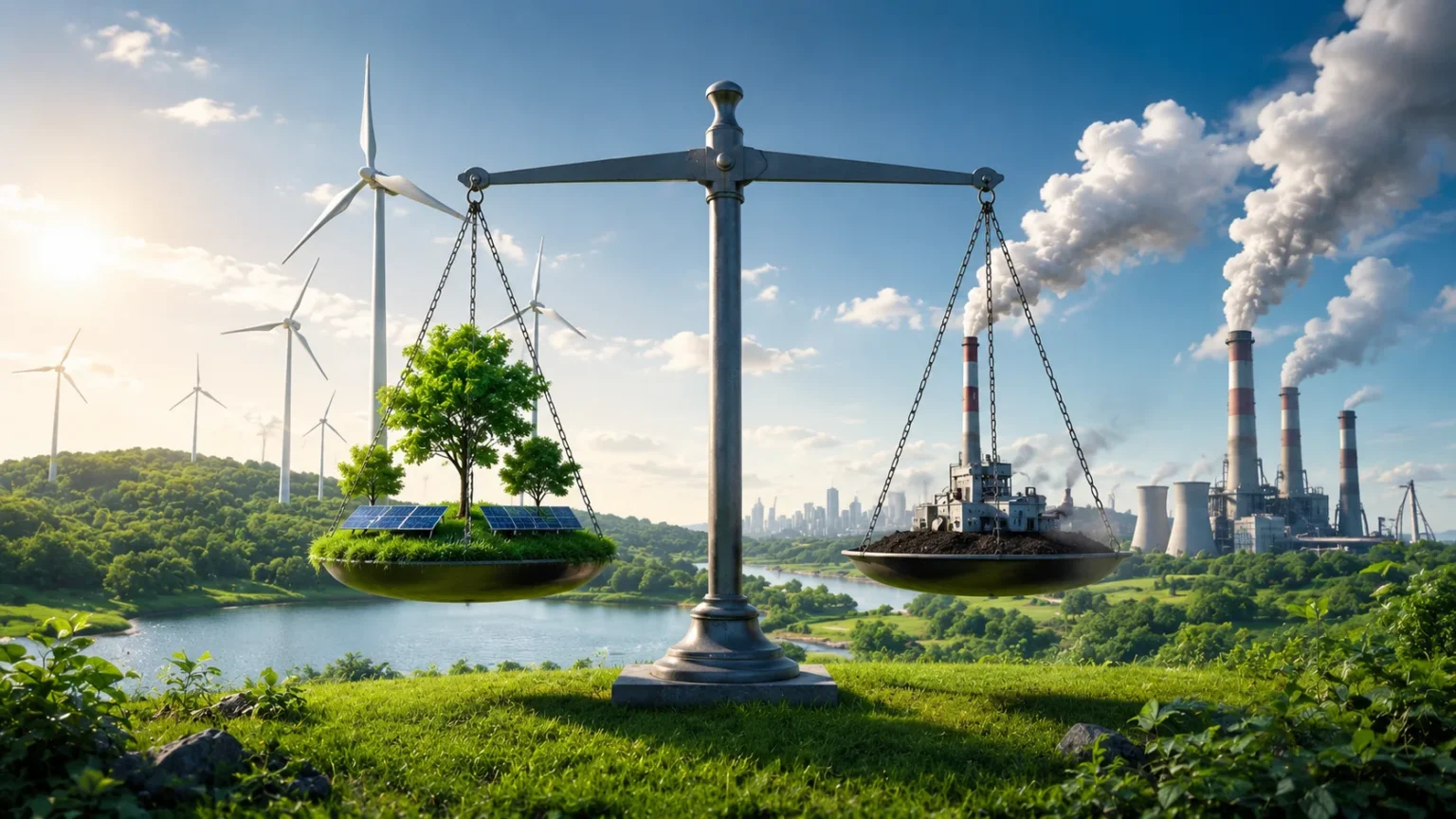
Net zero is a climate goal focused on balancing the greenhouse gases released into the atmosphere with the greenhouse gases removed from it. In practical terms, it means cutting emissions as deeply as possible and then addressing the small amount that remains through credible carbon removal. The idea has become central to climate strategies adopted by governments, businesses, cities, universities, and other organizations. Net zero does not mean stopping every activity that produces emissions overnight. Instead, it describes a long-term transition toward very low emissions, supported by cleaner energy, more efficient systems, better land management, and technologies that remove carbon dioxide from the atmosphere.
Understanding what net zero is and how it works is important because the term is often used alongside phrases such as carbon neutral, zero emissions, decarbonization, climate neutral, and carbon negative. These ideas are related, but they are not always identical. A credible net-zero strategy usually starts with measuring emissions, setting reduction targets, changing how energy and materials are used, reducing emissions across supply chains, and dealing carefully with unavoidable residual emissions. The quality of a net-zero plan depends far more on actual emissions reductions than on simply buying offsets. That distinction is essential for separating meaningful climate action from vague environmental marketing.
What Does Net Zero Mean?
Net zero means reducing greenhouse gas emissions to a very low level and balancing any remaining emissions with an equivalent amount of greenhouse gas removal. The goal is usually expressed in terms of carbon dioxide equivalent, which allows different greenhouse gases such as carbon dioxide, methane, and nitrous oxide to be compared within one measurement framework. A company or country may continue producing some residual emissions even after major reductions, but those emissions must be balanced by credible removals if it wants to claim net zero. The emphasis should remain on cutting emissions first rather than relying heavily on compensating measures.
The concept is based on the fact that global warming is strongly influenced by the total amount of greenhouse gases accumulating in the atmosphere. As long as humanity adds more greenhouse gases than natural and technological systems remove, atmospheric concentrations continue increasing. Net zero aims to stop that long-term accumulation. Reaching global net zero for carbon dioxide would mean human-caused carbon dioxide emissions are balanced by human-caused removals. Other greenhouse gases may require different treatment because they behave differently in the atmosphere and have different lifetimes.
Net zero is often presented as a final destination, but it is better understood as the result of a long process of decarbonization. Energy systems need to shift away from high-emission fuels, buildings need to become more efficient, transportation needs cleaner technologies, and industrial production needs lower-carbon alternatives. Agriculture, waste, and land use also have important roles. Each sector has different technical challenges, so there is no single path to net zero. The overall goal is common, but the route varies by industry, geography, and economic structure.
A credible net-zero target should also specify which emissions are included. For businesses, this often means considering direct emissions from operations, indirect emissions from purchased energy, and emissions from suppliers, customers, transportation, and product use. A company that reduces emissions inside its offices while ignoring most supply-chain emissions may not be addressing the largest part of its footprint. Clear boundaries help prevent misleading claims. Transparency about what is included and excluded is therefore a basic part of credible climate planning.
Net zero also depends on timing. A target set for 2050, for example, only has value if it is supported by near-term reductions along the way. Delaying action for decades and then promising dramatic reductions at the end creates unnecessary climate risk. Shorter-term milestones provide accountability and show whether the organization or country is actually moving toward its goal. The path to net zero matters almost as much as the final year in which the target is supposed to be reached.
How Does Net Zero Work?
Net zero works by combining emissions reduction with carbon removal. The first and most important step is to reduce the greenhouse gases being produced. This can involve replacing fossil-fuel electricity with renewable energy, improving energy efficiency, electrifying vehicles and heating systems, reducing methane leaks, changing industrial processes, and redesigning products. The more emissions that are eliminated directly, the fewer removals are required later. This is why most serious climate strategies describe reduction as the core of the plan rather than treating offsets as an easy substitute.
After deep reductions, some emissions may remain difficult to eliminate completely. Heavy industry, aviation, shipping, agriculture, and certain chemical processes are examples of sectors where residual emissions can be technically challenging or expensive to remove. Net-zero frameworks generally allow these remaining emissions to be balanced with greenhouse gas removals. Removals can include biological methods such as restoring forests or soils and technological methods such as direct air capture with permanent carbon storage. The removal must be additional, measurable, durable, and appropriately verified if it is being used to support a net-zero claim.
Measurement is another essential part of how net zero works. Organizations first need to calculate a baseline emissions footprint and identify the biggest sources. That inventory makes it possible to prioritize actions with the largest potential impact. Electricity use, fuel consumption, purchased materials, employee travel, logistics, waste, and product use may all contribute. Without a reliable baseline, a business can reduce small visible emissions while missing much larger hidden ones. Good data is therefore fundamental to a meaningful net-zero strategy.
Targets then translate the broad goal into a timetable. An organization might aim to reduce operational emissions by a certain percentage by 2030, switch entirely to renewable electricity, electrify part of its vehicle fleet, and reduce supply-chain emissions over the same period. These milestones allow management and stakeholders to monitor progress. A target without an implementation plan is mostly a statement of intent. A working net-zero program connects emissions data with budgets, technology decisions, supplier requirements, and long-term investment.
The final element is ongoing review. Technologies, regulations, energy markets, and climate standards change over time, so net-zero strategies need regular updates. A plan that looked ambitious ten years ago may become inadequate as cleaner technologies improve. Organizations should therefore measure emissions repeatedly, review whether reductions are happening as expected, and adjust investments when necessary. Net zero works best as a continuous management system rather than a one-time sustainability announcement.
Why Is Net Zero Important?
Net zero matters because greenhouse gases accumulate in the atmosphere and contribute to long-term warming. Carbon dioxide can remain in the climate system for a very long time, meaning continued emissions add to the total amount of warming pressure. Reaching net zero would stop the net addition of carbon dioxide from human activities. The goal is therefore closely linked to limiting the scale of future climate change. Without deep reductions in global emissions, temperatures and climate-related risks are expected to continue increasing.
Climate change can affect heat extremes, rainfall patterns, drought, wildfires, sea levels, ecosystems, agriculture, and infrastructure. The severity of these impacts depends partly on how much additional warming occurs. Net zero provides a framework for reducing the amount of future greenhouse gas accumulation. It does not instantly reverse existing climate change, but it can help stabilize the long-term temperature trend. Further cooling would generally require net negative emissions, meaning more greenhouse gases are removed than emitted.
Net zero also matters economically because energy and industrial systems are gradually being redesigned around lower-carbon technologies. Renewable electricity, batteries, electric vehicles, heat pumps, energy-efficient buildings, hydrogen, and carbon-management technologies are creating new investment opportunities. Companies that adapt early may reduce exposure to future carbon costs, changing regulations, and high fossil-fuel prices. Those that delay may face higher transition costs later. Climate strategy is increasingly connected to long-term business resilience rather than being only an environmental issue.
For countries, net-zero planning can also influence energy security. Greater reliance on domestic renewable energy can reduce exposure to imported fossil fuels and volatile international fuel markets. Improving building efficiency lowers energy demand, while electrification can shift transportation and heating toward domestic power systems. These benefits vary by country, and the transition itself requires large investments in electricity networks, storage, infrastructure, and manufacturing. Net zero is therefore both an environmental and an energy-system transformation.
Consumers and investors are also paying closer attention to corporate climate claims. Businesses increasingly face questions about their emissions, supply chains, and transition plans. A credible net-zero strategy can improve transparency, while weak claims can create reputational and legal risk. This has made the quality of climate commitments more important. The phrase net zero has value only when it is connected to measurable reductions and clear evidence of progress.
Net Zero vs Carbon Neutral
Net zero and carbon neutral are often used interchangeably, but they can describe different levels of ambition. Carbon neutrality generally means that the amount of carbon emissions associated with an activity, organization, or product is balanced through reductions, offsets, or removals. A company could theoretically claim carbon neutrality by calculating its emissions and purchasing enough carbon credits to compensate for them. Depending on the standard used, it may not need to reduce its own emissions as deeply before making that claim.
Net zero usually places greater emphasis on deep emissions reduction before neutralizing what remains. The goal is to transform the underlying activities that produce greenhouse gases rather than continuing business as usual and buying compensation elsewhere. Most credible net-zero approaches expect organizations to reduce the majority of emissions within their own value chains. Carbon removals are then reserved primarily for residual emissions that cannot reasonably be eliminated. This hierarchy is one of the most important distinctions between strong net-zero strategies and simple offsetting.
The scope can differ as well. Carbon-neutral claims sometimes focus only on carbon dioxide or a specific product, event, or operational boundary. Net-zero strategies commonly address a broader set of greenhouse gases and larger organizational boundaries. For a company, this may include emissions from electricity, suppliers, logistics, product use, and end-of-life treatment. The broader scope makes net-zero planning more difficult but also more representative of real climate impact.
A carbon-neutral event provides a simple example. An organization might calculate emissions from travel, electricity, and venue operations, then buy carbon credits equal to those emissions. That can create a carbon-neutral claim for the event without permanently changing how future events are run. A net-zero approach would instead try to reduce travel emissions, use cleaner electricity, improve efficiency, and redesign logistics first. Only the remaining emissions would then be addressed through high-quality removals.
Neither term should be judged only by its name. The details behind the claim matter more than the label. A highly transparent carbon-neutral program that aggressively reduces emissions may be more credible than a weak net-zero announcement with no implementation plan. Consumers should therefore look for emissions data, reduction targets, timelines, and information about how residual emissions are handled. Climate terminology is most useful when it is supported by evidence.
Net Zero vs Zero Emissions
Zero emissions generally means that an activity produces no direct greenhouse gas emissions during operation. An electric car, for example, produces no exhaust emissions from its tailpipe. That does not necessarily mean its entire lifecycle has zero emissions, because electricity generation, battery manufacturing, vehicle production, and material extraction may still create greenhouse gases. Zero-emission claims therefore need a clearly defined boundary. The phrase can be accurate within one part of a system while the wider system still has emissions.
Net zero allows some residual emissions to remain as long as they are balanced with equivalent removals. This makes it different from absolute zero emissions. Some sectors may struggle to eliminate every last tonne of greenhouse gases because chemical reactions or biological processes produce emissions inherently. Net zero provides a framework for dealing with these difficult residual emissions. However, it should not become an excuse to preserve avoidable emissions simply because removals are theoretically available.
The distinction is especially relevant for businesses. A company could operate a zero-emission office building powered entirely by renewable electricity while its supply chain still produces substantial emissions. Its building might legitimately be described as zero operational emissions, but the company itself would not necessarily be net zero. Broader organizational claims require broader accounting. This is why boundaries and lifecycle thinking are central to climate reporting.
Some technologies are also called zero-emission even though their manufacturing creates greenhouse gases. Solar panels and wind turbines produce very little or no direct emissions while generating electricity, but building and transporting them still requires energy and materials. Their total lifecycle emissions are generally much lower than fossil-fuel alternatives, but they are not literally impact-free. Understanding this distinction helps prevent overly simplistic climate debates.
Absolute zero emissions may be achievable in certain activities, but at the scale of the global economy, net zero is currently the more widely used long-term concept. The aim is still to push actual emissions as close to zero as technically and economically possible. Removals should handle the difficult remainder rather than become the primary strategy. That hierarchy preserves the environmental meaning of the target.
What Are Scope 1, Scope 2 and Scope 3 Emissions?
Companies commonly divide greenhouse gas emissions into Scope 1, Scope 2 and Scope 3 categories. Scope 1 covers direct emissions from sources owned or controlled by the company. This can include fuel burned in company boilers, furnaces, manufacturing equipment, and vehicles. A logistics company using diesel trucks, for example, would count those vehicle emissions within Scope 1. Reducing them might involve electrification, alternative fuels, route optimization, or efficiency improvements. These emissions are usually relatively straightforward to measure because the company controls the source directly.
Scope 2 covers indirect emissions associated with purchased energy, particularly electricity, heating, steam, or cooling. A company may not operate the power plant producing its electricity, but its consumption creates demand for that generation. Switching to renewable electricity can therefore reduce Scope 2 emissions substantially. Energy-efficiency improvements can reduce them further by lowering overall electricity demand. For many office-based businesses, Scope 2 may represent a significant part of operational emissions even when direct fuel use is small.
Scope 3 includes other indirect emissions across the company’s value chain. This category can include purchased goods and services, employee commuting, business travel, shipping, investments, waste, use of sold products, and disposal at the end of product life. Scope 3 is often the largest and most difficult category to measure. A clothing company, for example, may have relatively modest office emissions while the production of fabric, manufacturing, transport, consumer washing, and disposal create a much larger footprint.
Scope 3 matters because reducing only direct operations can create a misleading picture of climate performance. A technology company may run offices on renewable electricity but depend on carbon-intensive manufacturing in its supply chain. A bank may have tiny operational emissions while financing projects associated with substantial greenhouse gas emissions. A credible net-zero strategy therefore needs to identify which Scope 3 categories are material to the organization and develop methods for reducing them.
Managing Scope 3 usually requires collaboration rather than direct control. Companies may work with suppliers to switch to renewable energy, redesign products with lower-carbon materials, change transportation methods, or establish procurement requirements. Better data can also improve emissions estimates over time. Scope 3 is difficult precisely because one organization’s emissions are connected to many other organizations. Net zero therefore becomes a value-chain challenge rather than something businesses can achieve entirely within their own buildings.
How Businesses Can Reach Net Zero
The first step for a business is establishing a reliable greenhouse gas inventory. This means measuring direct fuel use, electricity consumption, transportation, purchased materials, waste, business travel, and other relevant sources. The company should identify where the largest emissions occur rather than assuming highly visible activities are automatically the most important. For a manufacturing company, production and materials may dominate. For a financial institution, financed emissions may be much more significant. Good measurement allows investment to focus on areas where it can produce real reductions.
Energy efficiency is often one of the fastest opportunities. Businesses can improve insulation, lighting, heating, cooling, motors, industrial equipment, and energy management. These measures can reduce both emissions and operating costs. Efficiency is especially valuable because every unit of energy avoided reduces the need for clean-energy generation elsewhere. Digital monitoring can help companies identify energy waste and track improvements. Some upgrades require capital investment, while others involve better operating practices.
Switching to lower-carbon electricity is another major strategy. Companies may install solar generation, purchase renewable electricity, enter long-term power agreements, or locate operations in regions with cleaner grids. Electrifying heating, transportation, and industrial processes can expand the impact when electricity itself becomes cleaner. This creates an important relationship between corporate net-zero strategies and national electricity systems. A company can decarbonize more easily when clean electricity is widely available.
Supply chains often require deeper collaboration. Businesses can choose lower-carbon materials, reduce packaging, redesign products, improve logistics, and work with suppliers that have credible emissions targets. Procurement policies can make climate performance part of supplier selection. Large companies can influence entire industries by creating demand for low-carbon steel, cement, shipping, agriculture, and manufacturing. Supply-chain decarbonization is difficult, but it is essential for businesses whose Scope 3 emissions dominate their footprint.
Only after reducing emissions aggressively should businesses address unavoidable residual emissions through carbon removal. The quality of removal matters, including how long carbon remains stored and whether the project would have happened without climate finance. Transparent reporting should explain how much of the net-zero claim comes from actual reductions and how much depends on removals. A strong business strategy gradually shrinks residual emissions rather than building a permanent business model around offset purchases.
How Countries Reach Net Zero
Countries face a much larger challenge because national emissions come from electricity, transportation, buildings, industry, agriculture, waste, and land use. Reaching net zero therefore requires changes across the entire economy. Electricity is often a central starting point because cleaner power can support decarbonization elsewhere through electrification. Expanding renewable energy, transmission networks, storage, nuclear power where applicable, and other low-carbon generation can reduce electricity-sector emissions while supporting electric vehicles and heat pumps. Reliability and affordability must be maintained throughout the transition.
Transportation is another major area. Governments can encourage electric vehicles, expand public transport, improve rail networks, develop walking and cycling infrastructure, and support lower-carbon fuels for aviation and shipping. Urban planning also influences how much transportation energy people need. Compact cities with reliable public transit generally reduce car dependence compared with sprawling development. Heavy freight and aviation remain more difficult to decarbonize than passenger vehicles, so innovation is especially important in those sectors.
Buildings need both efficiency and cleaner heating. Better insulation, efficient appliances, heat pumps, building codes, and smart energy management can substantially reduce demand. Older buildings may require expensive retrofits, making finance and policy support important. The transition also needs enough skilled workers to install and maintain new technologies. Net-zero policy therefore includes labor and training issues as well as energy technology.
Heavy industry creates some of the most difficult emissions. Steel, cement, chemicals, and refining use large amounts of heat and sometimes produce carbon dioxide directly through chemical reactions. Solutions may involve electrification, hydrogen, recycled materials, alternative chemistries, carbon capture, and product redesign. These technologies can require major infrastructure and investment. Government policy can help create early markets for low-carbon industrial products until they become more competitive.
Agriculture and land use must also be considered. Methane from livestock, nitrous oxide from fertilizers, deforestation, and soil carbon changes all influence national emissions. Improved agricultural practices, reduced food waste, forest protection, restoration, and more efficient land management can help. Policies need to account for food security and rural livelihoods while reducing emissions. National net zero is therefore an economic transformation involving nearly every sector rather than an energy policy alone.
What Is Carbon Removal?
Carbon removal means taking carbon dioxide that is already in the atmosphere and storing it so it does not quickly return. Natural ecosystems perform carbon removal continuously through photosynthesis, with plants absorbing carbon dioxide and storing carbon in vegetation and soils. Human-directed removal can include reforestation, afforestation, improved soil management, wetland restoration, biochar, and other nature-based approaches. These methods can offer additional biodiversity and ecosystem benefits. However, stored carbon can be lost through wildfire, disease, land-use change, or poor management, so durability needs careful consideration.
Technological removal methods are also being developed. Direct air capture uses chemical processes to extract carbon dioxide directly from ambient air. The captured carbon can then be stored underground in geological formations or potentially incorporated into durable products. This approach can offer more measurable and potentially longer-lasting storage than some biological methods, but it currently requires significant energy and remains relatively expensive. Costs may fall as technology improves and deployment increases.
Bioenergy with carbon capture and storage is another proposed method. Plants absorb carbon dioxide while growing, the biomass is then used for energy, and the resulting carbon dioxide is captured and stored underground. In theory, this can create net negative emissions. In practice, land use, biomass sourcing, ecosystem effects, and supply-chain emissions determine whether the process actually removes carbon overall. Large-scale deployment could compete with food production or biodiversity if poorly managed.
Enhanced weathering is another developing approach in which certain minerals are spread or processed to accelerate natural chemical reactions that remove carbon dioxide from the atmosphere. Ocean-based removal methods are also being researched. Many of these technologies remain early in development and require careful study of environmental consequences. Net-zero scenarios often assume some future carbon removal, but relying on technologies that have not yet been deployed at massive scale creates planning risk.
This is why emissions reduction should remain the priority. Every tonne of carbon dioxide that is never emitted eliminates the need to remove it later. Carbon removal is most valuable for emissions that remain genuinely difficult to eliminate. Treating removal as an unlimited future resource can encourage delay. A credible net-zero strategy uses removal carefully rather than assuming future technologies will compensate for unlimited present-day emissions.
Carbon Offsets vs Carbon Removal
A carbon offset is generally a credit representing a reduction, avoidance, or removal of greenhouse gas emissions elsewhere. For example, an organization may fund a renewable-energy project, forest project, methane-reduction initiative, or carbon-removal activity and receive credits in return. The organization then uses those credits to compensate for its own emissions. Offset markets have supported useful climate projects, but the quality of credits can vary significantly. Some projects may overestimate how much emissions they actually avoid or remove.
Carbon removal is more specific because it requires physically removing greenhouse gases from the atmosphere. A forest-restoration project may provide removal if it increases carbon stored in trees and soils. Direct air capture is another clear example. An avoided-emission project, such as replacing fossil-fuel electricity with renewable power, can reduce future emissions but does not necessarily remove carbon already in the atmosphere. Both can help climate mitigation, but they do different things.
Additionality is one important quality issue. A carbon credit should ideally represent climate action that would not have happened without the financial support behind the credit. If a renewable project was already economically inevitable, claiming its emissions reduction as an offset may not create additional climate benefit. Demonstrating additionality can be difficult. This has been one of the major criticisms of some offset markets.
Permanence is another challenge, particularly for biological storage. A forest might store carbon for decades but later burn or be cut down. Geological storage can potentially hold carbon for much longer if well managed. This difference matters when balancing fossil carbon emissions, which can influence the atmosphere for extremely long periods. High-quality net-zero strategies therefore pay attention to the durability of removals rather than treating every credit as equivalent.
Offsets can play a limited role during the transition, but they should not allow organizations to postpone reducing their own emissions. A company that continues increasing fossil-fuel use while buying cheap offsets is not following the strongest interpretation of net zero. Reduction should happen first, with removals reserved for the remaining difficult emissions. This principle helps maintain environmental integrity.
The Role of Renewable Energy in Net Zero
Renewable energy is one of the foundations of many net-zero strategies because electricity generation is a major source of greenhouse gas emissions in many countries. Solar, wind, hydroelectric, geothermal, and other renewable technologies can generate electricity with far lower operational emissions than fossil-fuel power plants. Replacing coal and natural gas generation with low-carbon alternatives can therefore produce large emissions reductions. Clean electricity also enables other sectors to decarbonize through electrification.
Electric vehicles provide a good example. Replacing an internal-combustion car with an electric vehicle eliminates tailpipe emissions, but the overall climate benefit depends partly on how the electricity is generated. As electrical grids become cleaner, the emissions associated with operating electric vehicles decline. The same principle applies to electric heating and certain industrial processes. Decarbonizing the grid multiplies its effect across the wider economy.
Renewables also create challenges because solar and wind output changes with weather and time of day. Electricity systems need storage, flexible demand, transmission lines, interconnection, and other resources to maintain reliability. Batteries can shift electricity from times of high renewable production to periods of greater demand. Long-distance transmission can connect regions with different weather conditions. Other low-carbon sources may also contribute to maintaining stable electricity supply.
Energy efficiency works alongside renewables. A building that uses half as much electricity requires less renewable generation, storage, and grid infrastructure. Improving efficiency can therefore reduce both emissions and the cost of the transition. Efficiency measures include insulation, efficient motors, heat recovery, LED lighting, smart controls, and improved industrial processes. Net-zero strategies that focus only on producing more clean energy can miss the enormous value of reducing demand.
The transition also requires attention to material supply chains. Solar panels, wind turbines, batteries, and electricity networks use steel, copper, lithium, nickel, rare earth elements, and other materials. Mining and manufacturing these materials have environmental impacts. Recycling, improved extraction practices, material efficiency, and cleaner manufacturing will therefore become increasingly important. Renewable energy is central to net zero, but its own supply chain must also become more sustainable over time.
What Is Decarbonization?
Decarbonization means reducing the amount of greenhouse gas emissions produced by an activity, sector, or economy. It is the process that makes net zero possible. A company can decarbonize by using less energy, switching from fossil fuels to electricity, sourcing renewable power, reducing material use, or redesigning production processes. A country can decarbonize through similar changes at much larger scale. The term focuses on reducing emissions rather than simply compensating for them.
Electricity-sector decarbonization often means replacing fossil-fuel power stations with low-carbon generation. Transportation decarbonization may involve electric vehicles, public transit, sustainable fuels, and reduced travel demand. Industrial decarbonization can require new technologies such as green hydrogen or carbon capture. Agriculture may focus on methane reduction, efficient fertilizer use, and soil management. Each sector needs a different technical strategy.
Decarbonization can also occur through changes in consumption. Products designed to last longer can reduce material demand, while repair and recycling can lower the need for new production. Businesses can reduce unnecessary travel or move freight more efficiently. Consumers may choose more energy-efficient homes, vehicles, or appliances. Individual actions alone cannot deliver global net zero, but changes in demand can support broader technological and policy shifts.
Financial systems influence decarbonization as well. Banks, investors, governments, and insurers decide which infrastructure receives capital. Financing renewable energy, low-carbon industry, energy-efficient buildings, and clean transportation can accelerate the transition. Continued investment in high-emission assets can create future emissions that are difficult to reverse. Capital allocation is therefore an important but sometimes less visible part of climate strategy.
Decarbonization differs from carbon removal because it prevents emissions from entering the atmosphere in the first place. Preventing a tonne of carbon dioxide is generally more straightforward than emitting it and trying to remove it later. This is why reduction pathways should dominate net-zero plans. Removal is the final balancing tool rather than the core mechanism.
What Are the Biggest Challenges to Reaching Net Zero?
One of the biggest challenges is scale. Modern economies depend heavily on fossil fuels for electricity, transport, heating, industrial production, agriculture, and materials. Replacing this infrastructure requires trillions of dollars in investment and decades of coordinated work. Power plants, factories, buildings, ships, and transportation systems often operate for many years. Decisions made today can therefore lock in emissions far into the future.
Technology remains another challenge in sectors where low-carbon alternatives are not yet mature or cost competitive. Aviation, shipping, cement, steel, and certain chemical processes are especially difficult. Solutions exist or are being developed, but they may require new fuels, industrial redesign, carbon capture, or expensive infrastructure. Innovation can reduce costs, but waiting indefinitely for perfect technology would delay progress in areas where solutions already exist. Net-zero planning needs both deployment and research.
Political and social acceptance also matter. Energy transitions affect jobs, communities, consumer prices, land use, and regional economies. A poorly designed transition can place disproportionate costs on low-income households or communities dependent on fossil-fuel industries. Policies need to address affordability and provide opportunities for workers to move into new industries. Net zero is more likely to succeed when people see practical benefits rather than only costs.
Electricity-grid expansion can become a bottleneck. Building renewable projects is not enough if electricity cannot be transmitted to where it is needed. New transmission lines, substations, storage systems, and distribution upgrades can take many years to approve and construct. Electrification of vehicles and buildings also increases electricity demand. Grid planning therefore needs to anticipate future loads rather than simply respond after shortages appear.
Finally, weak climate claims can undermine trust. Businesses or governments may announce distant net-zero targets without credible near-term action. Heavy reliance on questionable offsets can create the appearance of progress while underlying emissions remain high. Transparent reporting and strong standards are necessary to distinguish meaningful transition plans from greenwashing. Credibility becomes increasingly important as net-zero terminology becomes more common.
What Is Greenwashing in Net-Zero Claims?
Greenwashing occurs when an organization presents itself as more environmentally responsible than its actions justify. In the context of net zero, this can happen when a company announces an ambitious target while making little effort to reduce actual emissions. Attractive sustainability campaigns can draw attention away from continued expansion of carbon-intensive activities. Consumers may struggle to evaluate whether claims represent genuine progress because climate accounting is complex.
Heavy reliance on offsets is one common warning sign. A company may claim that a product is carbon neutral or net zero while nearly all underlying emissions remain unchanged. If the claim depends almost entirely on inexpensive credits with questionable environmental value, the climate benefit may be much smaller than the marketing suggests. High-quality strategies show clear direct emissions reductions before using compensation.
Selective accounting can also create misleading claims. A company might report emissions only from offices while excluding factories, suppliers, shipping, or product use. If those omitted activities account for most of the footprint, the resulting claim can be technically framed but environmentally incomplete. Clear disclosure of Scope 1, Scope 2, and material Scope 3 emissions makes claims easier to evaluate.
Another warning sign is a distant target without near-term milestones. Promising net zero by 2050 sounds ambitious, but current management teams may face little accountability if no 2025, 2030, or 2035 goals exist. Interim targets reveal whether action is actually beginning. Capital spending and business strategy should also align with the target. A company cannot credibly claim rapid decarbonization while investing heavily in assets that guarantee rising emissions for decades.
Consumers and investors can evaluate net-zero claims by looking for emissions data, reduction percentages, baseline years, included scopes, independent verification, and information about removals. No climate plan will be perfect, but transparency allows progress to be judged. The strongest claims explain both successes and remaining challenges rather than relying only on slogans. Net zero should describe measurable transformation, not merely branding.
Can Individuals Help Achieve Net Zero?
Individuals cannot achieve global net zero by themselves, but personal choices influence energy demand, markets, and political priorities. Home energy efficiency is one practical area. Insulation, efficient heating and cooling, LED lighting, smart thermostats, and efficient appliances can reduce energy use. Where clean electricity is available, switching from fossil-fuel heating to electric heat pumps can reduce household emissions significantly. The financial benefits depend on local energy prices and available incentives.
Transportation choices can also matter. Walking, cycling, public transit, car sharing, and electric vehicles can reduce fossil-fuel consumption depending on local conditions. Avoiding unnecessary flights or choosing rail where practical can reduce travel emissions. Not every person has equal access to these choices, which is why infrastructure and policy remain important. Personal responsibility should not be used to ignore systemic barriers.
Food choices can influence emissions too. Reducing food waste is one of the most accessible actions because wasted food represents unnecessary agricultural production, transportation, refrigeration, and disposal. Diets with fewer high-emission foods can also reduce individual footprints for those who choose them. The exact impact varies by farming practice and geography. Sustainable food systems require changes from both producers and consumers.
Purchasing fewer products and using them longer can reduce emissions associated with manufacturing and transportation. Repairing electronics, buying durable goods, reusing materials, and recycling appropriately can all contribute. The largest climate benefit often comes from avoiding unnecessary production rather than simply recycling after purchase. Product design and business models need to support this behavior by making repair and durability practical.
Individuals also influence institutions through voting, employment, investment, and purchasing decisions. Supporting policies and companies with credible climate strategies can help accelerate larger structural changes. Household actions should therefore be seen as one part of a broader system. Net zero requires governments, businesses, infrastructure providers, and communities to act together. Individual choices matter most when they reinforce those wider transformations.
When Will the World Reach Net Zero?
Many national and corporate climate plans use 2050 as a target year for reaching net-zero emissions, although targets vary. The year is linked to climate pathways designed to limit long-term global warming by achieving deep emissions reductions over the coming decades. Some countries aim for earlier dates, while others have later targets based on development needs and economic circumstances. The exact global timeline will depend on how quickly emissions decline across major economies and sectors.
A target year should not be interpreted as permission to maintain current emissions until shortly before the deadline. Greenhouse gases accumulate, which means emissions released during the transition still affect the climate. Cutting emissions earlier reduces cumulative warming pressure. Near-term action is therefore essential even when the final target is decades away. The shape of the emissions pathway matters greatly.
Different sectors will probably reach low-emission conditions at different speeds. Electricity systems can decarbonize relatively quickly in regions with strong renewable or low-carbon resources. Passenger vehicles may transition rapidly as electric technology becomes more widespread. Aviation, shipping, agriculture, and heavy industry may take longer because technological alternatives are more difficult. Residual emissions are likely to become increasingly concentrated in these hard-to-abate areas.
Future carbon-removal capacity will also influence the timeline. If durable removal technologies become cheaper and can be scaled responsibly, they may help balance difficult emissions. However, infrastructure, energy demand, land requirements, and storage capacity create limits. Planning should therefore avoid assuming unlimited removal availability. Reducing emissions remains the safer strategy.
Whether the world actually reaches net zero by mid-century will depend on investment, policy, innovation, international cooperation, and public support. Targets have expanded rapidly, but implementation remains uneven. The next decade is particularly important because infrastructure built now can either accelerate or delay long-term decarbonization. Net zero is not guaranteed simply because many organizations have announced the goal.
The Bottom Line on Net Zero
Net zero means reducing greenhouse gas emissions as far as possible and balancing the remaining unavoidable emissions with credible greenhouse gas removal. The concept is designed to stop the long-term accumulation of human-caused greenhouse gases in the atmosphere. It does not mean that every activity immediately produces zero emissions. Instead, it provides a framework for transforming energy, transportation, industry, buildings, agriculture, and other parts of the economy.
The strongest net-zero strategies prioritize real emissions reduction. Renewable energy, energy efficiency, electrification, lower-carbon materials, methane reduction, supply-chain improvements, and changes in land use can all contribute. Carbon removal becomes important for residual emissions that remain difficult to eliminate. Relying primarily on offsets while continuing high emissions does not represent the strongest form of net-zero action.
Businesses need to consider Scope 1, Scope 2, and significant Scope 3 emissions when developing credible targets. Countries face an even broader challenge because they must transform entire economic systems while maintaining affordable energy, jobs, and reliable infrastructure. Both need clear interim targets and regular emissions measurement. A distant net-zero date without near-term action provides little assurance that the transition is actually happening.
Net zero differs from carbon neutrality and zero emissions. Carbon-neutral claims may rely more heavily on offsets, while zero emissions generally refers to activities producing no direct emissions within a defined boundary. Net zero combines deep reductions with balancing residual emissions through removals. Understanding these differences makes climate claims easier to evaluate.
Ultimately, net zero is not one technology or one policy. It is a long-term transition involving cleaner energy, innovation, infrastructure, finance, consumer choices, corporate strategy, and government policy. The idea only becomes meaningful when emissions decline measurably. The most credible net-zero plans therefore focus less on the label and more on what is actually changing today.
Frequently Asked Questions
What does net zero mean in simple terms?
Net zero means cutting greenhouse gas emissions as much as possible and removing enough greenhouse gases from the atmosphere to balance the small amount that remains.
Is net zero the same as carbon neutral?
Not exactly. Carbon neutrality can sometimes rely heavily on offsets, while net zero usually requires much deeper direct emissions reductions before balancing residual emissions with removals.
How can a company become net zero?
A company can measure its emissions, improve energy efficiency, use clean electricity, reduce supply-chain emissions, electrify equipment and transport, and use credible carbon removal for unavoidable residual emissions.
Why is 2050 often mentioned for net zero?
Many climate strategies use 2050 as a long-term target because global emissions need to decline substantially over the coming decades to limit future warming. Earlier reductions are still essential because greenhouse gases accumulate over time.
Can net zero stop climate change?
Reaching global net zero would help stop the continued rise in warming caused by ongoing net greenhouse gas accumulation. It would not instantly reverse existing climate impacts, and further cooling would generally require net negative emissions.