

What Is ADC? Understanding Its Meaning
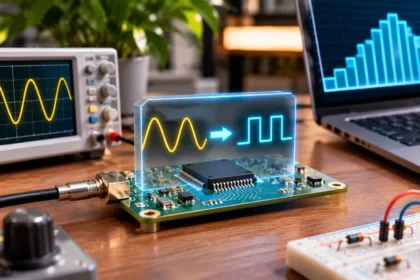
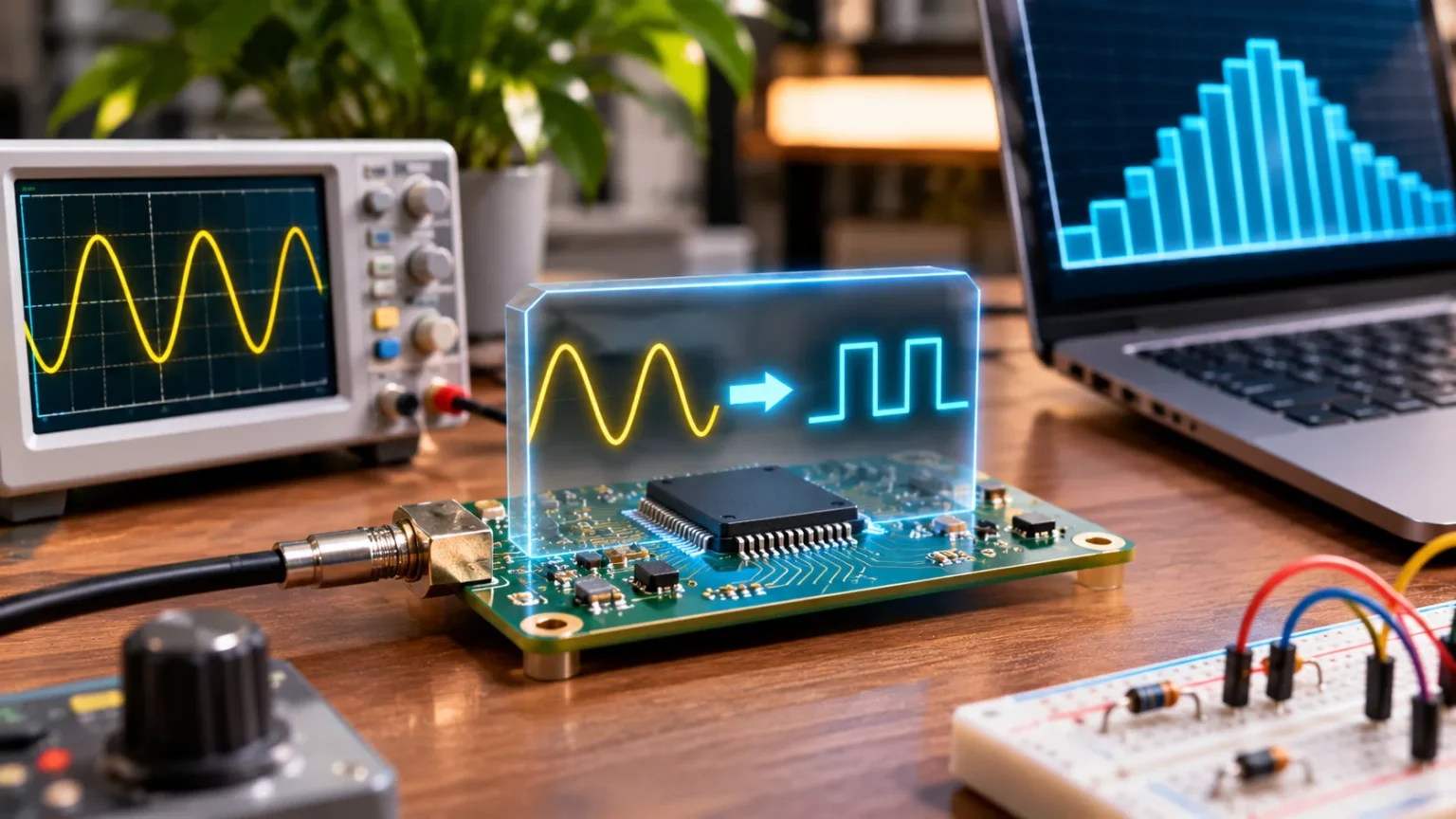
ADC meaning depends on the field in which the abbreviation is used. In electronics and technology, ADC stands for analog-to-digital converter, a component that transforms continuous analog signals into digital information. This conversion allows computers, smartphones, and other electronic devices to process real-world information such as sound, temperature, light, and electrical signals.
The abbreviation ADC also has different meanings in networking, healthcare, gaming, and other industries. For example, it can stand for Application Delivery Controller in computer networking or Antibody-Drug Conjugate in medical science. Understanding the context helps people identify the correct meaning and avoid confusion when reading technical documents or discussing specialized topics.
Among these definitions, analog-to-digital conversion is particularly important in modern electronics and digital communication. Many everyday devices depend on this technology to collect and process information from their surroundings. Learning how ADC technology works provides a useful foundation for understanding electronic sensors, digital audio systems, measurement equipment, and modern computing devices.
What Does ADC Mean in Electronics?
In electronics, an analog-to-digital converter is a circuit that converts continuous electrical signals into digital values. Analog signals can change smoothly over time, while digital systems process information using separate numerical values. An ADC creates a digital representation of the original signal, allowing electronic devices to analyze, store, and transmit the collected information.
For example, a microphone converts sound waves into an electrical signal that changes according to the captured sound. An ADC processes this analog signal and converts it into digital information that a computer can recognize. The resulting data can then be recorded, edited, compressed, or transmitted through different digital communication platforms.
Analog-to-digital converters are available as separate electronic components or as integrated features within larger circuits. Many microcontrollers and processors include built-in ADC capabilities to communicate with external sensors. These components help electronic systems connect physical measurements with digital processing, making them important for consumer electronics, industrial automation, scientific research, and communication technologies.
How Does an ADC Work?
The analog-to-digital conversion process begins with sampling, which involves measuring an analog signal at specific intervals. Each measurement captures the signal’s value at a particular moment in time. The frequency of these measurements determines how closely the resulting digital information can represent changes in the original signal within the system’s supported bandwidth.
After sampling, the ADC performs a process known as quantization, which assigns each measured value to an available digital level. Because the converter supports a limited number of levels, small differences can occur between the original measurements and their digital representations. These differences are called quantization errors and influence the overall accuracy of conversion.
The final stage involves encoding the quantized values into digital numbers that electronic systems can understand. These numbers are commonly represented using binary information consisting of zeros and ones. The digital output can then be processed by software, stored in memory, or transmitted to other devices for further analysis and practical applications.
Different Types of Analog-to-Digital Converters
Successive Approximation Register converters, commonly called SAR ADCs, are widely used because they provide a practical balance between conversion speed, accuracy, and power consumption. They determine digital values through a series of comparisons against an internal reference. These converters are commonly found in measurement instruments, embedded systems, and various portable electronic devices.
Flash ADCs use multiple comparators to convert analog input signals into digital values very quickly. Their high conversion speed makes them suitable for applications that require rapid signal processing, including certain communication systems and high-speed measurement equipment. However, their circuit complexity and power requirements generally increase significantly as their supported resolution becomes higher.
Sigma-delta ADCs use oversampling, noise shaping, and digital filtering to achieve high-resolution signal conversion. They are commonly used in digital audio equipment, precision sensors, and scientific measurement systems. Although they offer excellent accuracy for many applications, their conversion bandwidth and processing delay may make other ADC architectures more suitable for certain high-speed requirements.
ADC Resolution and Why It Matters
ADC resolution describes the number of separate digital levels available for representing an analog input signal. Resolution is commonly expressed in bits, with higher bit counts providing more possible measurement levels. For example, an 8-bit converter supports 256 levels, while a 12-bit converter supports 4,096 levels across its configured analog input range.
Higher resolution allows an ADC to represent smaller differences in the measured signal under suitable conditions. This capability is particularly useful in applications that require detailed measurements, including scientific instruments, environmental monitoring equipment, and professional audio systems. However, higher resolution does not automatically guarantee better accuracy because other factors also influence measurement quality.
Electrical noise, reference voltage stability, signal conditioning, and component quality can affect the actual performance of an analog-to-digital converter. An ADC with a high advertised resolution may still produce unreliable measurements if its surrounding circuit introduces significant errors. Selecting a converter therefore requires consideration of both its theoretical resolution and practical operating characteristics.
What Is ADC Sampling Rate?
The sampling rate of an ADC refers to the number of measurements it collects from an analog signal every second. This specification is usually expressed in samples per second and helps determine which signal frequencies can be represented accurately. Higher sampling rates are generally necessary when measuring signals that change rapidly over short periods.
In digital audio systems, sampling rates help determine the range of sound frequencies that can be captured and reproduced. For example, a sampling rate of 44.1 kHz is commonly associated with standard digital audio recordings. Suitable sampling and filtering allow audio equipment to represent sound within its intended frequency range without introducing unwanted distortions.
Choosing the correct sampling rate depends on the frequency content of the original signal and the requirements of the application. Insufficient sampling can introduce an effect called aliasing, which causes higher-frequency signals to appear incorrectly as lower-frequency information. Appropriate sampling rates and anti-aliasing filters help reduce this problem and improve the reliability of digital measurements.
Common Uses of ADC in Everyday Devices
Smartphones rely on analog-to-digital converters for several functions that involve collecting information from the surrounding environment. Microphones, light sensors, and various other electronic components may produce analog signals that require digital conversion. ADC technology allows these signals to become usable information for applications, operating systems, and different automated features within the smartphone.
Digital audio recording equipment also uses ADC technology to capture sound from microphones and musical instruments. The converter transforms analog audio signals into digital samples that can be stored and edited using computer software. This process supports activities such as podcast recording, music production, online communication, and the creation of various multimedia projects.
Digital thermometers and electronic measurement instruments frequently use analog-to-digital conversion to display information in a readable numerical format. Their sensors detect physical conditions and generate signals related to the measured values. An ADC converts these signals into digital information, allowing the device to calculate, display, and sometimes store the results for future use.
Uses of ADC in Industrial Automation
Industrial automation systems use analog-to-digital converters to collect measurements from sensors installed throughout manufacturing equipment. These sensors may monitor temperature, pressure, vibration, electrical current, and other important operating conditions. ADC technology converts their signals into digital information that industrial controllers can analyze to support production monitoring and automated decision-making.
For example, temperature sensors inside industrial machinery can generate analog signals that change according to operating temperatures. A converter allows the control system to interpret these measurements and identify changes that may require attention. This capability supports equipment monitoring and helps maintenance teams recognize potential operational problems before they develop into more serious failures.
ADC technology also contributes to quality control by allowing automated equipment to measure and compare physical product characteristics. Manufacturing systems can analyze digital measurements to identify variations from expected production standards. Reliable conversion and appropriate sensor calibration are essential for ensuring that these measurements provide meaningful information about product consistency and manufacturing performance.
ADC Meaning in Computer Networking
In computer networking, ADC stands for Application Delivery Controller, a system that helps manage traffic between users and applications. It can distribute incoming requests across multiple servers to improve application availability and responsiveness. These systems are particularly useful for organizations operating websites, cloud applications, and other services that handle significant volumes of network traffic.
Application Delivery Controllers often include load balancing capabilities that help prevent individual servers from becoming overwhelmed by excessive requests. They may also monitor server health and direct traffic toward available resources when problems occur. These features help organizations maintain application accessibility and reduce service interruptions caused by server failures or uneven traffic distribution.
Some ADC networking solutions provide additional capabilities such as traffic optimization, encrypted connection management, and application security features. These functions depend on the specific product, configuration, and network architecture. Unlike analog-to-digital converters, Application Delivery Controllers focus on managing application traffic rather than converting electrical signals, demonstrating how the abbreviation changes meaning across technological fields.
ADC Meaning in Healthcare and Medical Science
In medical science, ADC can stand for Antibody-Drug Conjugate, a type of targeted cancer treatment. These medicines combine an antibody with a therapeutic drug through a connecting structure known as a linker. The approach is designed to deliver a drug to cells carrying a particular biological target, although effects on healthy cells can still occur.
ADC also stands for Apparent Diffusion Coefficient in magnetic resonance imaging, particularly in diffusion-weighted imaging. It is a measurement associated with the movement of water molecules within biological tissues. Healthcare professionals may examine ADC values alongside other imaging findings when evaluating tissue characteristics and investigating different medical conditions in an appropriate clinical setting.
Although these medical definitions share the same abbreviation, they describe entirely different concepts and applications. Antibody-Drug Conjugates relate to specialized medical treatments, while Apparent Diffusion Coefficient relates to diagnostic imaging measurements. Understanding the surrounding medical terminology is important, and healthcare professionals should interpret these concepts within the relevant clinical context rather than relying on the abbreviation alone.
What Does ADC Mean in Gaming?
In multiplayer online battle arena games, ADC commonly stands for Attack Damage Carry, a term describing a particular team role. Characters associated with this role typically contribute sustained damage during matches, often through basic attacks. The exact responsibilities and characteristics of an ADC can vary depending on the game’s mechanics and available characters.
The term is particularly familiar to players of games such as League of Legends, where it has traditionally been associated with marksman characters. These characters often rely on teamwork, positioning, and in-game resources to perform their intended role. However, the terminology is not identical across every multiplayer game or competitive gaming community.
Understanding ADC meaning in gaming helps readers follow conversations about team composition, character selection, and multiplayer roles. It is completely different from the electronics, networking, and healthcare definitions of the abbreviation. Recognizing these contextual differences makes it easier to interpret gaming discussions without confusing them with unrelated scientific or technical terminology.
ADC vs DAC: What Is the Difference?
An analog-to-digital converter transforms continuous analog signals into digital information that computers and electronic systems can process. A digital-to-analog converter, commonly called a DAC, performs the opposite function by converting digital values into analog signals. Both components support communication between digital processing systems and the physical world, but they operate in different directions.
A practical example of this difference can be found in digital audio equipment used for recording and playback. An ADC converts microphone signals into digital audio files that can be stored and edited. A DAC converts stored digital audio information into analog electrical signals that can be amplified and reproduced through speakers or headphones.
Many electronic devices contain both ADC and DAC components because they need to receive and produce analog signals. Smartphones, audio interfaces, communication devices, and industrial control equipment frequently rely on both conversion methods. Understanding the distinction between these technologies helps explain how digital devices interact with real-world information during different input and output operations.
Conclusion
ADC meaning varies across industries, but analog-to-digital converter is one of its most important definitions in electronics and computing. This technology converts continuous signals into digital information that electronic systems can understand and process. Its applications range from everyday smartphones and audio equipment to industrial automation, environmental sensors, and specialized scientific measurement instruments.
Understanding concepts such as sampling rate, resolution, quantization, and conversion accuracy helps explain how ADC technology operates. Different converter architectures provide different combinations of performance, power efficiency, and measurement capabilities. Selecting an appropriate converter depends on the intended application, signal characteristics, required accuracy, and other technical limitations within the electronic system.
Beyond electronics, ADC can represent Application Delivery Controller, Antibody-Drug Conjugate, Apparent Diffusion Coefficient, and Attack Damage Carry. Each definition belongs to a different field and serves a distinct purpose. Paying attention to the surrounding context is the simplest way to understand the correct meaning and recognize how the abbreviation applies to a particular situation.
Frequently Asked Questions (FAQs)
What is the full form of ADC?
In electronics, ADC stands for analog-to-digital converter. Other full forms include Application Delivery Controller, Antibody-Drug Conjugate, Apparent Diffusion Coefficient, and Attack Damage Carry, depending on the context.
What is the main purpose of an ADC?
The main purpose of an ADC in electronics is to convert continuous analog signals into digital values that computers, microcontrollers, and other electronic systems can process and store.
What are some common examples of ADC devices?
Common examples include digital thermometers, audio recording equipment, smartphones, digital multimeters, and industrial monitoring systems. These devices use analog-to-digital conversion to process information collected from physical environments.
What is the difference between ADC and DAC?
An ADC converts analog signals into digital information, while a DAC converts digital information into analog signals. Both technologies connect digital electronic systems with real-world inputs and outputs.
Why is ADC resolution important?
ADC resolution determines how many digital levels are available to represent an analog signal. Higher resolution can help capture smaller signal differences when noise and other measurement errors are controlled.