

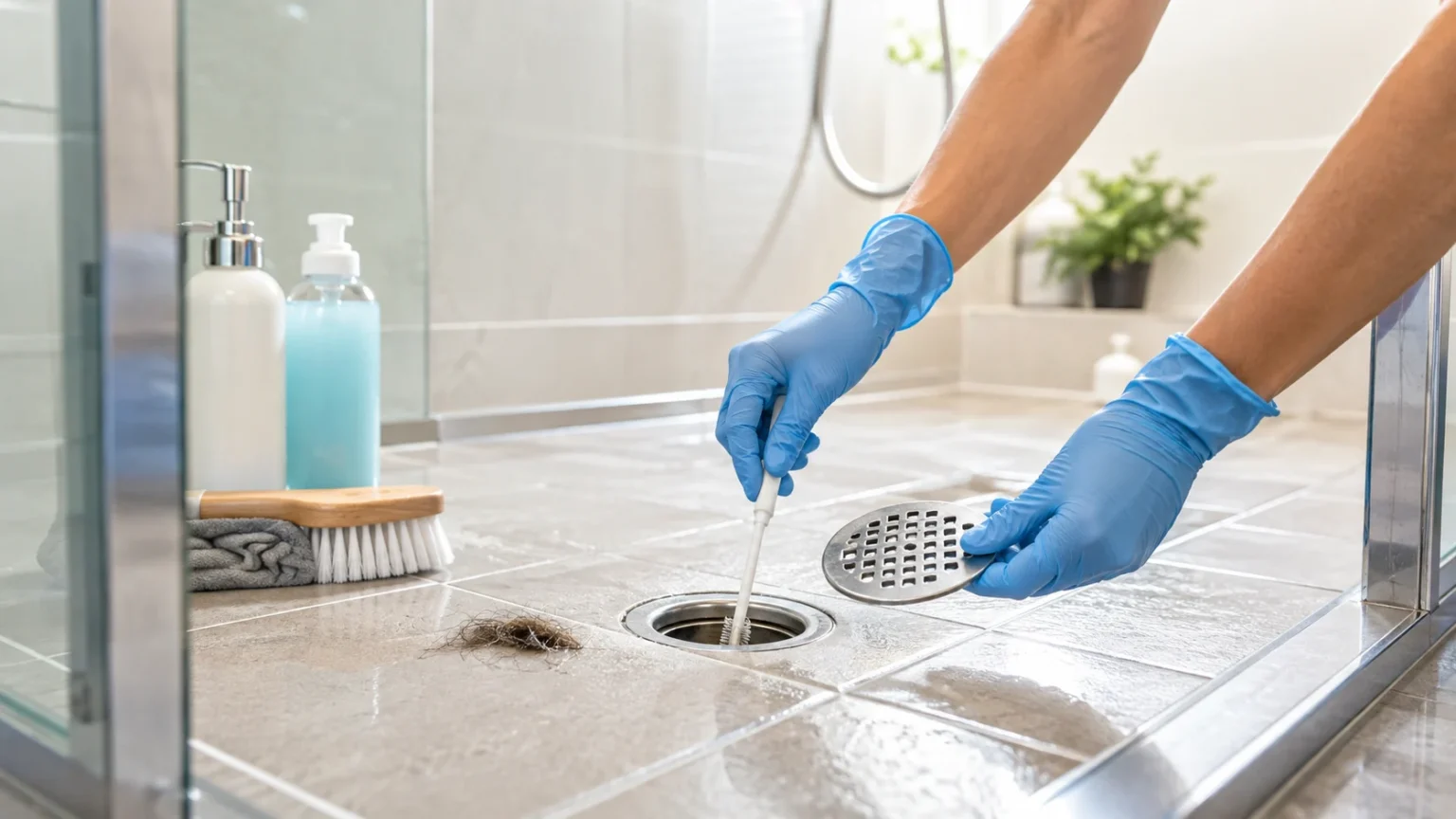

How to Clean a Shower Drain & Stop Clogs Fast
A slow or clogged shower drain can turn an ordinary shower into a frustrating experience as water begins collecting around your feet instead of disappearing quickly. Hair, soap residue, body oils, mineral deposits, dirt, and personal care products can gradually build up inside the drain until water has difficulty passing through. Fortunately, many minor shower drain clogs can be cleared at home without immediately calling a plumber or using aggressive chemical cleaners. Simple methods such as removing visible hair, using a drain snake, flushing with hot water, and cleaning the drain cover can often restore normal flow. The best method depends on where the blockage is located and what is causing it. Acting early can prevent a slow drain from developing into a completely blocked pipe.
Cleaning a shower drain is also an important part of routine bathroom maintenance, even when water still appears to drain normally. Small amounts of hair and soap scum can collect beneath the drain cover long before you notice standing water. Over time, that material can combine into a dense blockage that traps even more debris. Regular cleaning helps reduce odors, prevents recurring clogs, and makes major drain problems less likely. It also gives you an opportunity to notice unusual issues such as damaged drain covers, persistent sewer odors, or water backing up from other fixtures. A few minutes of preventive maintenance can save significantly more effort later.
You do not need specialized plumbing knowledge to handle many basic shower drain problems, but it is important to use methods that do not damage pipes or create additional hazards. Mixing household chemicals or combining commercial drain cleaners can produce dangerous reactions and should always be avoided. Repeatedly pouring harsh products into an unknown plumbing system may also damage certain materials or make future plumbing work more dangerous. Mechanical cleaning is often the best first approach because it physically removes the material causing the blockage. This guide explains how to clean a shower drain, clear hair clogs, remove odors, prevent buildup, and recognize when professional plumbing help is the safer option.
Why Shower Drains Get Clogged
Hair is one of the most common causes of shower drain clogs because loose strands naturally wash away during bathing. A few hairs may pass through the plumbing without creating a problem, but others become caught around the drain opening or inside the pipe. Once hair begins accumulating, it acts like a net that traps soap residue, skin cells, oils, and other debris. The blockage gradually becomes thicker until water begins draining more slowly. Long hair can create particularly stubborn clumps because strands twist together easily. Removing hair regularly is therefore one of the most effective ways to prevent shower drain problems.
Soap and personal care products can also contribute to clogged shower drains. Traditional bar soap may combine with minerals in hard water and form a sticky residue commonly known as soap scum. Shampoo, conditioner, shaving products, body oils, and thick creams can add additional material to the buildup. These substances may coat the inside of the drain pipe and create surfaces where hair and dirt can stick more easily. Over time, the interior diameter of the pipe can effectively become smaller. Even products that dissolve easily during use may contribute to residue when combined with other materials. Regular rinsing and physical cleaning can help reduce this accumulation.
Hard water can make shower drain maintenance more difficult because it contains dissolved minerals such as calcium and magnesium. As water evaporates or repeatedly flows through bathroom fixtures, mineral deposits can gradually form on drain covers and inside plumbing surfaces. These deposits may not create an immediate blockage, but they can make the pipe rougher and increase the likelihood that hair or soap residue will stick. Mineral buildup can also make drain covers harder to remove during cleaning. Homes in hard-water areas may therefore require more frequent bathroom maintenance. Treating visible mineral deposits before they become thick can help keep the drain easier to clean.
Dirt, dead skin, and small particles can also enter the drain every time someone showers. People who work outdoors, exercise frequently, have pets, or rinse muddy footwear and equipment in the shower may send considerably more debris into the plumbing. Although individual particles are small, they can become trapped inside existing hair and soap buildup. This creates a denser clog that becomes increasingly difficult for water to move through. Sand is particularly troublesome because it can settle inside horizontal sections of pipe. Keeping excessive dirt out of the shower when possible reduces the amount of solid material entering the drain.
Occasionally, repeated shower clogs are caused by something deeper than ordinary hair and soap buildup. A poorly sloped drain line, damaged pipe, tree-root intrusion, plumbing vent problem, or blockage farther along the drainage system may cause water to drain slowly even after the shower trap has been cleaned. If multiple fixtures begin backing up at the same time, the problem may involve a shared drain or main sewer line rather than the shower alone. Gurgling toilets or sinks can also indicate a larger plumbing issue. Repeatedly treating the shower opening will not solve those problems. Persistent or widespread drainage symptoms deserve professional investigation.
How to Clean a Shower Drain Step by Step
Begin by removing anything covering the drain opening so you can inspect what is happening underneath. Some drain covers lift out easily, while others are secured with screws that must be removed using a screwdriver. Wear household gloves because the material beneath the cover can contain hair, soap residue, and bacteria. Place the screws somewhere safe so they do not accidentally fall into the drain. Once the cover is removed, use a flashlight to look inside the opening. If you can already see a clump of hair close to the surface, you may be able to solve the problem without using any liquid cleaner.
Pull out visible debris using gloved fingers, tweezers, needle-nose pliers, or a plastic drain-cleaning tool. Work slowly so the hair comes upward rather than being pushed farther into the pipe. Hair clogs are often larger than they initially appear because much of the material may be hidden below the opening. Continue removing strands until you can no longer reach any obvious blockage. Place the waste directly into a trash bag instead of rinsing it into another sink or toilet. Physically removing the clog is preferable to simply breaking it apart because the material cannot immediately collect somewhere deeper in the plumbing.
After removing visible debris, clean the drain cover itself. Soap scum and hair can accumulate around holes in the cover and reduce water flow before the water even reaches the pipe. Wash the cover with warm water and dish soap, using an old toothbrush or small cleaning brush to reach narrow openings. If mineral deposits are present, soaking the removable cover in an appropriate mild cleaning solution may help loosen them, provided the solution is safe for the cover’s material. Rinse it thoroughly afterward. A clean drain cover allows water to enter the drain more freely and makes future hair buildup easier to spot.
Flush the drain with hot tap water after the major debris has been removed. Hot water can help soften ordinary soap residue and wash loosened material farther through the plumbing. Avoid using dangerously boiling water unless you know your plumbing material can tolerate it, because extreme heat can damage some plastic pipes or seals. Run hot water for several minutes while watching how quickly the shower drains. If water now disappears normally, the blockage was probably near the opening. If the flow remains slow, additional mechanical cleaning may be needed farther inside the drain.
Replace the drain cover only after you are satisfied that water is flowing properly. Make sure the cover sits securely and reinstall any screws without overtightening them. Run the shower briefly and observe whether water pools around the drain. This final test confirms whether your cleaning solved the immediate problem. If drainage improves but remains noticeably slower than normal, some material may still be located deeper in the pipe. In that situation, a drain snake or other manual cleaning method is usually the next logical step rather than immediately reaching for harsh chemicals.
How to Remove Hair From a Shower Drain
A simple plastic drain-cleaning strip can be extremely effective for removing hair clogs located just below the drain opening. These inexpensive tools usually have small barbs along their sides that catch hair when the strip is pushed into the pipe and pulled back out. Insert the tool gently rather than forcing it around sharp bends. Rotate or move it slightly if necessary, then pull it upward slowly. You may remove a surprisingly large amount of hair and soap residue. Repeat the process several times until the tool comes back relatively clean and water begins flowing more freely.
For deeper clogs, a small hand-operated drain snake can reach farther into the plumbing. Feed the cable slowly into the drain while rotating the handle according to the tool’s instructions. When you feel resistance, continue turning gently so the end of the snake can grab or break through the obstruction. Pull the cable back carefully and remove any hair or debris that comes out with it. You may need to repeat the process several times. Avoid using excessive force because aggressive pushing can damage fittings or cause the cable to become stuck inside the pipe.
Tweezers or needle-nose pliers can work well when a hair clog is visible but difficult to reach with your fingers. Choose a tool long enough to grip the material without requiring you to push your hand into the drain. Grab the hair near the highest reachable point and pull upward slowly. Sudden jerking can break the clump and leave most of it behind. If the material feels firmly stuck, loosen smaller sections rather than trying to remove the entire blockage at once. Cleaning the tool afterward with soap and hot water helps keep bathroom maintenance equipment sanitary.
Some people attempt to push hair clogs deeper into the drain using a stick or similar object, but this usually creates more problems than it solves. The goal should be to extract debris whenever possible rather than forcing it farther down the plumbing. A clog that moves deeper may become harder to reach and could eventually block a larger section of the pipe. Improvised objects can also break inside the drain and create a second obstruction. Purpose-built drain tools are usually inexpensive and far safer. Keeping one in the bathroom makes it easier to address small hair clogs before they become serious.
Once the hair has been removed, run hot water through the drain to carry away loosened soap residue. Watch the water flow for at least a minute rather than assuming the first quick disappearance means the pipe is clear. If the shower drains normally, clean the tool and reinstall the drain cover. If water still backs up, the blockage may extend farther than your tool can reach. At that point, repeating the same shallow cleaning method is unlikely to help much. A longer snake, trap access, or professional drain cleaning may be necessary depending on the plumbing layout.
How to Unclog a Shower Drain Naturally
Hot water is one of the simplest low-risk options for a shower drain that is only beginning to slow down. It works best when soap residue and oily buildup are contributing to the problem rather than a dense hair blockage. Run the hottest safe tap water through the drain for several minutes and observe whether the flow improves. If you have already removed visible hair, hot water may wash away softer material left behind. Do not expect water alone to dissolve a large tangled hair clog. Mechanical removal remains more effective when solid debris is physically blocking the pipe.
Dish soap can sometimes help when greasy personal care products contribute to residue inside the drain. Add a small amount of ordinary dishwashing liquid to the drain and follow it with hot tap water. The detergent may help loosen oily material that has collected around hair or pipe surfaces. Avoid pouring excessive amounts because too much soap can create unnecessary foam without improving the result. This approach is most useful as a mild maintenance method rather than a cure for a severe clog. If the water is standing completely still, you should remove the blockage mechanically first.
Baking soda and vinegar are frequently recommended for drain cleaning because their reaction creates visible fizzing. The bubbling can help loosen some surface residue, but it should not be considered a powerful replacement for physically removing hair. If you choose to use this method, first remove as much debris as possible from the drain. Add a modest amount of baking soda followed by vinegar, allow the reaction to finish, and then flush with warm or hot tap water. Never combine this mixture with commercial drain cleaners, bleach, or other chemicals. The most important safety rule is avoiding chemical mixtures whose reactions you cannot predict.
A plunger may also help if the clog is located relatively close to the shower drain. Add enough water to create a seal around the plunger cup and position it firmly over the drain. Use several controlled plunging motions rather than extremely aggressive force. The pressure changes may loosen a soft blockage or move trapped material enough to restore flow. If another nearby opening interferes with suction, the method may be less effective. Stop if plunging causes water to back up from another fixture, because that can suggest the blockage is deeper in the shared drainage system.
Natural methods are most useful for minor buildup and routine maintenance, not for every plumbing problem. Thick hair clogs, solid objects, damaged pipes, and main-line blockages will not disappear because vinegar or hot water was added to the shower drain. Home remedies should improve water flow reasonably quickly when the problem is simple. If several attempts produce little or no change, continuing to pour different substances down the drain is unlikely to help. Switch to a mechanical method or contact a plumber instead. Effective drain cleaning depends on removing the obstruction rather than repeatedly experimenting with liquids.
How to Clean a Smelly Shower Drain
A shower drain can smell unpleasant even when water still flows normally. Hair, soap residue, skin cells, and organic debris can remain trapped around the drain opening and provide material for bacteria to break down. The resulting odors may smell musty, sour, or generally dirty. Begin by removing the drain cover and physically cleaning everything you can reach. Hair clumps should be discarded, and visible slime should be scrubbed from the cover and surrounding area. Removing the material producing the odor is usually more effective than simply spraying fragrance into the drain.
Wash the drain cover with warm water and detergent before returning it to the shower. A small brush can help remove buildup from the underside, where residue is often overlooked. Clean around the rim of the drain opening as well because soap and grime can collect beneath the edges. If the cover contains mineral buildup, use a cleaner appropriate for its finish and material. Rinse all cleaning products thoroughly so residue does not remain inside the drain. A clean surface reduces the amount of organic material available for odor-producing microorganisms.
Flushing the drain with hot tap water after cleaning can help remove loosened residue deeper inside the pipe. A small amount of dish soap may help break up oily buildup if the odor appears connected to greasy products. Some homeowners also use baking soda followed by vinegar for light deodorizing and surface cleaning, but physical removal of debris remains the most important step. Do not pour bleach into a drain that may contain other cleaning chemicals. Combining bleach with acids, ammonia, or unknown drain cleaners can release dangerous gases. When you do not know what has recently been used in a drain, plain water and mechanical cleaning are safer choices.
A sewer-like smell requires different attention because the odor may not simply come from dirty hair. Plumbing traps are designed to hold water that blocks sewer gases from entering the home. If a shower is rarely used, the water in the trap may evaporate and allow odors to rise through the drain. Running water for several minutes can refill the trap and sometimes solve the problem. Persistent sewer odor in a frequently used shower may indicate a dry trap caused by another issue, a damaged seal, venting problem, or plumbing defect. These problems are better evaluated by a plumber than disguised with deodorizing products.
Mold and mildew around the shower can also be mistaken for drain odor. Check grout lines, silicone seals, shower mats, curtains, corners, and areas that remain damp after bathing. Cleaning only the drain will not eliminate a musty smell if moisture problems exist elsewhere. Improve ventilation by using an exhaust fan and allowing surfaces to dry between showers. Wash removable bathroom fabrics regularly and repair leaks that keep hidden areas damp. When the actual source of odor is identified correctly, you can treat the problem rather than repeatedly cleaning a drain that is not responsible.
Best Ways to Prevent Shower Drain Clogs
Installing a hair catcher is one of the easiest and most effective ways to prevent shower drain clogs. These simple covers sit over or inside the drain and trap loose hair before it enters the pipe. Choose a model that fits securely without slowing normal water flow. Empty it regularly rather than allowing a thick layer of hair to collect on top. Cleaning the catcher takes only a few seconds and is far easier than removing a compacted clog later. For households with several people or long-haired family members, a hair catcher can dramatically reduce the frequency of drain problems.
Remove visible hair from the shower floor after every few uses instead of rinsing it toward the drain. Hair often gathers naturally near the drain opening where it can be picked up and discarded. This small habit prevents strands from entering the pipe and becoming wrapped around existing debris. It also makes routine bathroom cleaning easier because you are dealing with small amounts rather than waiting for a large clog. Encourage everyone who uses the shower to follow the same habit. Drain prevention works best when the entire household avoids sending unnecessary material into the plumbing.
Rinse the drain periodically with hot tap water to help reduce ordinary soap and body-product residue. This maintenance is especially useful after cleaning visible hair from the opening. You can also remove and wash the drain cover every few weeks or months depending on how quickly buildup develops in your household. A heavily used family shower will naturally require more frequent cleaning than a guest bathroom used occasionally. There is no universal schedule that works for every home. The useful habit is cleaning before drainage becomes noticeably slow rather than waiting until water starts pooling.
Be mindful of thick products that can contribute to drain buildup. Heavy conditioners, body oils, shaving creams, scrubs, and certain bath treatments can leave residue behind when used in large amounts. You do not necessarily need to stop using these products, but rinse the shower thoroughly after use. Avoid washing wax, paint, excessive oils, pet hair, or large amounts of dirt down a shower drain. Plumbing drains are designed to handle ordinary wastewater, not every household material. Preventing inappropriate substances from entering the pipe reduces both clogs and unpleasant odors.
Pay attention to the earliest signs of slower drainage because small problems are much easier to fix. If water begins taking slightly longer to disappear, remove the cover and check for hair before a complete blockage develops. A five-minute cleaning at this stage may prevent the need for a drain snake or professional service later. Recurring slow drainage should also be documented because repeated clogs can indicate a deeper plumbing problem. Prevention is not only about catching hair. It also means recognizing when the same symptom keeps returning despite good maintenance.
Mistakes to Avoid When Cleaning a Shower Drain
One of the most dangerous mistakes is mixing different drain-cleaning chemicals. Bleach, ammonia, acids, commercial drain openers, vinegar, and other household products can react in ways that produce toxic gases, heat, splashing, or corrosive substances. Never assume that adding a second cleaner will make the first one work faster. If you have already poured a commercial product into the drain, follow its label instructions exactly and do not add anything else unless the manufacturer specifically directs you to do so. Tell a plumber what product was used if professional service becomes necessary. Chemical safety matters more than clearing a clog quickly.
Repeatedly using highly corrosive drain cleaners can also create problems. Some products generate heat or contain strong chemicals designed to break down organic material. Although they may clear certain clogs, frequent use can be hard on older plumbing, seals, or specific pipe materials. Chemical residue may also remain in standing water and create a hazard when someone later opens the drain or uses a snake. Mechanical removal is often a better first response to hair clogs because it directly removes the obstruction. Use any commercial cleaner only according to the label and never more frequently than recommended.
Another mistake is pushing visible hair deeper into the drain instead of pulling it out. A screwdriver, stick, or improvised wire may appear to clear the opening temporarily by forcing debris downward. Unfortunately, the material may simply lodge farther inside the pipe where it becomes more difficult to reach. Sharp tools can also scratch surfaces or damage components around the drain. Use a plastic hair-removal strip, pliers, or drain snake designed for plumbing. The goal is to remove as much debris as possible from the system rather than relocating the clog.
Using excessive physical force with a drain snake can damage plumbing or trap the tool inside the pipe. When the cable reaches a bend, resistance does not always mean you have found the clog. Feed the snake gradually and rotate it carefully according to the manufacturer’s instructions. If it refuses to move, do not repeatedly ram it forward. Pull it back slightly and try again with gentle rotation. Professional plumbers have specialized equipment for blockages located farther inside complex drainage systems. Damaging a pipe while trying to save a service call can turn a simple clog into a much more expensive repair.
Ignoring recurring clogs is another common mistake. If you clean the shower drain thoroughly and the problem returns every few weeks, something more than ordinary surface hair may be happening. Deeper buildup, poor drainage slope, damaged pipes, vent problems, or shared-line obstructions can create repeated symptoms. Continually treating the opening may temporarily improve flow without resolving the underlying problem. Keep track of whether other fixtures are also draining slowly or making unusual sounds. Repeated plumbing problems are useful information, and a professional diagnosis may ultimately be faster than performing the same temporary repair over and over.
When to Call a Plumber for a Clogged Shower Drain
Call a plumber when the shower remains blocked after you have removed visible hair and attempted reasonable mechanical cleaning. A clog located several feet inside the plumbing may require a longer professional snake or powered drain-cleaning equipment. Plumbers can often determine whether the obstruction consists of hair, mineral buildup, foreign material, or something farther along the drainage line. Continuing to force household tools into an inaccessible blockage may damage the plumbing. Professional equipment can reach areas that simple plastic drain tools cannot. When basic methods clearly fail, escalating to the appropriate service is usually more efficient.
Multiple slow drains are an important sign that the problem may extend beyond the shower. If a bathtub, sink, toilet, or floor drain begins backing up at the same time, a shared branch line or main sewer pipe could be restricted. You may also hear gurgling sounds when another fixture drains or notice water appearing in unexpected places. These symptoms should not be treated as a simple hair clog. Stop repeatedly running water if doing so causes wastewater to back up elsewhere. A plumber can identify where the shared blockage is located and determine the safest way to clear it.
Sewage backing up through the shower drain requires prompt professional attention. Wastewater can contain harmful microorganisms and should not be handled like ordinary shower water. Avoid using affected fixtures and keep children and pets away from contaminated areas. Depending on the extent of the backup, professional cleaning may also be necessary after the plumbing problem is repaired. Do not pour additional drain chemicals into standing sewage. The priority is stopping the backup and identifying whether the problem involves the home’s sewer line or a larger municipal system.
Persistent sewer odors can also justify a plumbing inspection. If the shower is used regularly and the trap should contain water, ongoing sewer smells may indicate a problem with a trap, seal, vent, drain connection, or nearby plumbing fixture. Odors that become worse when other fixtures are used can provide additional clues. Masking the smell with fragrance does not address the possibility that sewer gases are entering the bathroom. A plumber can inspect the system and test likely sources. Persistent unexplained sewer odor should therefore be treated as a plumbing issue rather than simply a cleaning problem.
Call a professional immediately if you suspect a damaged pipe, major leak, or structural plumbing failure. Water stains, soft flooring, damp walls, unusually high water bills, or visible moisture around the shower can indicate leakage rather than a simple drain clog. Hidden water can damage building materials and encourage mold growth if the problem continues. Drain cleaning will not repair a cracked pipe or failed waterproofing system. Early professional assessment can reduce the amount of damage that develops around the bathroom. Knowing when to stop DIY cleaning is an important part of maintaining a home safely.
How Often Should You Clean a Shower Drain?
A lightly used shower may require only occasional drain cleaning, while a busy household shower may need attention every few weeks. The right schedule depends on the number of users, hair length, personal care products, water hardness, and whether a hair catcher is installed. Instead of following a rigid calendar, monitor how quickly visible debris collects around the drain. Cleaning small amounts regularly is easier than waiting for water flow to slow. Households with long-haired users may benefit from checking the drain weekly. A quick inspection takes very little time and can prevent a much larger maintenance task.
Hair catchers should be emptied much more frequently than the drain itself needs deep cleaning. Depending on use, you may need to remove trapped hair after every few showers. Allowing the catcher to become covered can slow water flow and encourage soap residue to accumulate. Rinse the device and reinstall it once the hair has been discarded. If residue begins forming around the edges, wash it with warm water and soap. A clean catcher works more effectively and prevents hair from slipping underneath or around the barrier.
The drain cover and opening can usually be inspected during normal bathroom cleaning. Remove visible strands and scrub accessible soap buildup before it becomes thick. If the cover is difficult to remove, learn how it is attached rather than waiting until an emergency clog occurs. Keeping the screws clean and the drain accessible can make future maintenance much easier. Hard-water deposits should also be addressed before they make components difficult to remove. Routine cleaning is partly about preserving access to the plumbing as well as preventing blockages.
A deeper mechanical cleaning may only be necessary when water begins draining more slowly or when you know hair has passed through the catcher. There is no reason to insert a drain snake every week into plumbing that is flowing normally. Excessive maintenance can create unnecessary wear or accidental damage. Instead, use the least invasive method needed for the situation. Start with visible hair removal and routine cleaning, then move to deeper tools only when symptoms appear. This approach keeps maintenance simple while still preventing serious clogs.
Seasonal household maintenance is also a useful opportunity to check bathroom drains. During a deeper bathroom cleaning, run water and compare how quickly the shower drains with what you consider normal. Check for odors, loose covers, damaged seals, and recurring mineral deposits. If several drains throughout the home have become slower over time, consider whether a larger plumbing inspection is appropriate. Preventive attention often reveals minor changes before they become emergency problems. A shower drain that is cleaned regularly should generally require less effort and fewer aggressive interventions over its lifetime.
FAQs About Cleaning a Shower Drain
What is the fastest way to clean a clogged shower drain?
Start by removing the drain cover and pulling out visible hair with a plastic drain tool, tweezers, or pliers. Hair is one of the most common causes of shower clogs, so physical removal often restores drainage faster than pouring cleaners into the pipe.
Can baking soda and vinegar unclog a shower drain?
Baking soda and vinegar may help loosen light soap residue, but they are unlikely to remove a dense hair clog. Remove physical debris first and never combine the mixture with bleach or commercial drain-cleaning chemicals.
How do I stop hair from clogging my shower drain?
Install a properly fitted hair catcher and empty it frequently. Removing visible hair from the shower floor before it washes into the drain can further reduce buildup.
Why does my shower drain keep clogging?
Repeated clogs may result from heavy hair buildup, soap residue, mineral deposits, or a blockage deeper inside the plumbing. If the drain repeatedly slows soon after cleaning, a plumber may need to inspect the pipe for a larger underlying problem.
When should I call a plumber for a shower clog?
Call a plumber if basic hair removal and drain snaking do not restore flow, if several fixtures are backing up, or if sewage appears in the shower. Persistent sewer odors, leaks, and repeated clogs also deserve professional inspection.