

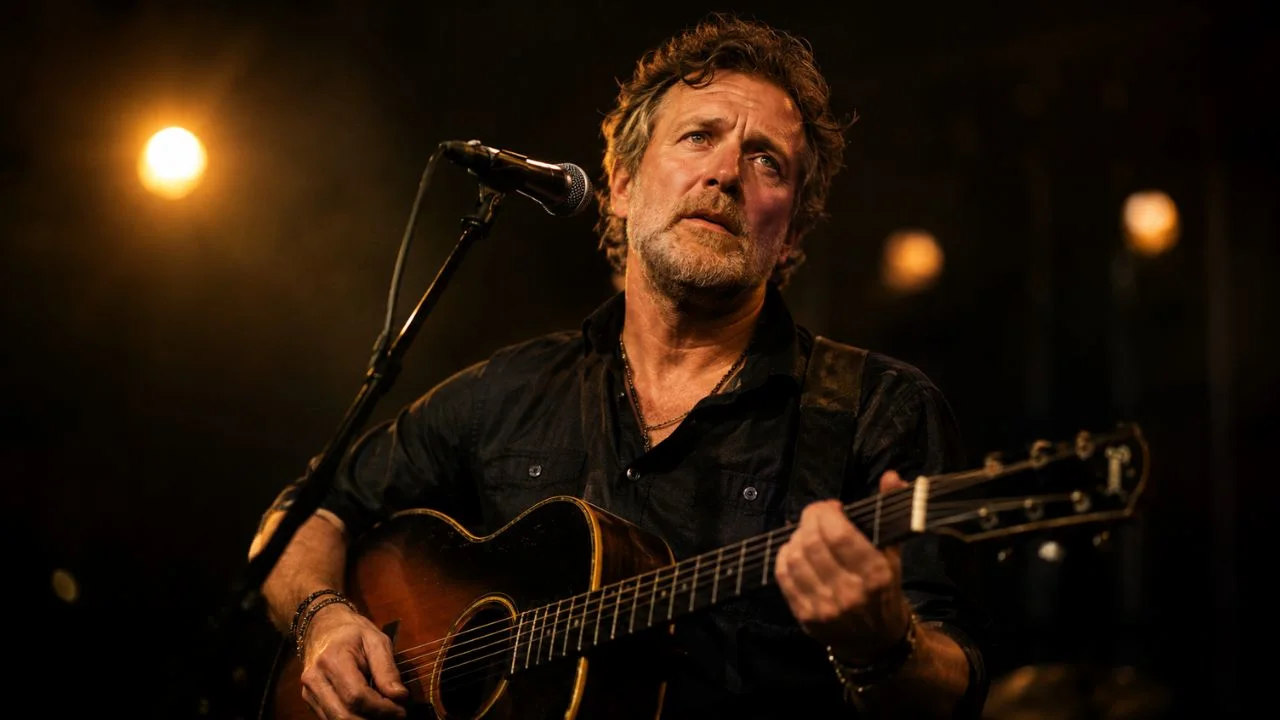

Glen Hansard was an Irish singer-songwriter, musician and actor whose emotionally direct music connected with listeners around the world. Best known as the frontman of The Frames and co-creator of The Swell Season, he built a career around passionate vocals, acoustic guitar and honest storytelling. His performances could move from a quiet whisper to an explosive release within a single song. That emotional range made his music feel personal, immediate and deeply human.
International audiences discovered Hansard through the independent musical film Once, in which he starred alongside Czech musician Markéta Irglová. Their song “Falling Slowly” became the emotional centre of the film and won the Academy Award for Best Original Song. The success introduced his work to millions of new listeners without separating him from his Dublin busking roots. He continued to value intimate performances, spontaneous collaboration and direct contact with audiences.
His career extended far beyond one famous film or award-winning song. Hansard recorded influential albums with The Frames, created two major records with The Swell Season and developed a varied solo discography. His music brought together folk, alternative rock, soul, traditional Irish influences and confessional songwriting. Songs such as “Revelate,” “When Your Mind’s Made Up,” “Bird of Sorrow” and “Her Mercy” demonstrated the breadth of his creative voice.
Hansard died in a motorcycle crash near Dublin on 29 July 2026, leaving behind more than three decades of recorded music and live performances. His sudden death led to tributes from musicians, actors, cultural figures and listeners whose lives had been shaped by his songs. This Glen Hansard biography explores his early life, bands, acting roles, solo albums and enduring musical legacy. It also explains why his work remains an essential part of modern Irish music.
Who Was Glen Hansard?
Glen James Hansard was born on 21 April 1970 in Dublin, Ireland, and grew up in the city’s Ballymun area. He became interested in music at an early age and found traditional education less engaging than playing songs and meeting other musicians. As a teenager, he left school and began performing on the streets of Dublin. Busking became both his musical education and his introduction to the realities of performing for an audience.
Hansard was widely recognised for his expressive singing voice, rhythmic acoustic guitar playing and emotionally open songwriting. Rather than hiding imperfections, he often allowed strain, breath and silence to become part of a performance. His songs explored love, regret, hope, ageing, commitment and the struggle to communicate honestly. This vulnerability helped listeners connect with him even when the stories behind individual songs were not directly explained.
He was the founding singer and guitarist of The Frames, one of Ireland’s most respected alternative rock bands. He later worked closely with Markéta Irglová in The Swell Season before establishing a successful career under his own name. His music appeared in films, theatre productions and collaborative projects with artists including Eddie Vedder. Each stage of his career expanded his sound without removing the emotional qualities that defined his earliest work.
Beyond recording and touring, Hansard became an important figure in Ireland’s cultural community. He supported charitable causes, participated in benefit performances and helped organise Christmas Eve busking events for people experiencing homelessness. Fellow artists frequently described him as generous, encouraging and committed to bringing musicians together. His public identity therefore reflected both his artistic achievements and his belief that music could serve a wider community.
Early Life and Dublin Busking Roots
Hansard grew up in a working-class part of north Dublin in a family where singing and music were familiar parts of everyday life. He did not follow a conventional path into professional music through formal lessons, conservatory training or industry connections. Instead, he learned by listening, experimenting and performing repeatedly in public spaces. The streets gave him immediate feedback because passers-by could stop, listen, contribute money or simply continue walking.
He began busking when he was around 13 years old, frequently performing on Dublin’s Grafton Street. Street performance required him to project his voice above traffic, conversation and changing weather without relying on a carefully controlled sound system. It also taught him how to read a crowd and adapt his delivery to hold people’s attention. These skills later became central to the intensity and spontaneity of a Glen Hansard live performance.
Busking introduced Hansard to a creative network of singers, instrumentalists, artists and writers. The people he met offered a different kind of education built around songs, books, conversations and shared performances. He encountered musicians with different styles and cultural backgrounds, encouraging him to listen beyond a single genre. This environment helped shape the mixture of folk storytelling, rock energy and Irish musical identity found throughout his career.
Even after achieving international recognition, Hansard continued to treat busking as an important musical practice rather than an embarrassing part of his past. He returned to street performances and informal sessions throughout his life, often appearing without the distance normally associated with celebrity. These performances reflected his belief that a song should work without elaborate staging. A voice, an instrument and a willing audience remained enough to create a meaningful musical experience.
The Frames and the Rise of an Irish Rock Band
Hansard formed The Frames in Dublin in 1990, beginning the musical partnership that would define the first major stage of his career. The band developed a distinctive alternative rock sound built around acoustic guitar, electric intensity, violin and carefully controlled dynamics. Their debut album, Another Love Song, arrived in the early 1990s and introduced Hansard as a forceful singer and songwriter. However, the band’s identity continued to develop across later recordings and years of touring.
Albums such as Fitzcarraldo, Dance the Devil and For the Birds helped The Frames establish a dedicated following in Ireland and other parts of Europe. Their music often moved between restrained verses and emotionally overwhelming choruses. Songs were not always built around predictable radio structures, allowing arrangements to expand naturally. This approach gave the band a recognisable sound while leaving room for experimentation and dramatic live interpretations.
“Revelate” became one of the most important early Glen Hansard songs and remains closely associated with The Frames. The track captures the band’s ability to turn private frustration into a large, communal release. Other fan favourites included “Fitzcarraldo,” “Lay Me Down,” “Star Star,” “Fake” and “Finally.” Together, these songs revealed a songwriter interested in emotional complexity rather than simple declarations of romance or heartbreak.
The Frames became especially respected as a live band because their concerts were rarely mechanical reproductions of studio recordings. Hansard frequently changed arrangements, shared stories and responded to the mood of the room. Songs could become quieter, louder or longer depending on the occasion. That unpredictability helped the band build long-term loyalty even when international commercial success developed more gradually than their reputation within the Irish music community.
The Swell Season, Markéta Irglová and Once
Hansard’s collaboration with Markéta Irglová led to the formation of The Swell Season, a folk-rock project named after a novel by Czech writer Josef Škvorecký. Their self-titled album combined Hansard’s weathered vocals and rhythmic guitar with Irglová’s piano playing and clear, delicate voice. The contrast between their styles created a natural musical conversation. Their songs often sounded like two people attempting to understand each other rather than delivering separate performances.
The partnership became closely connected with Once, the low-budget musical drama written and directed by John Carney. Hansard played an unnamed Dublin street musician who repaired vacuum cleaners in his father’s shop, while Irglová portrayed a Czech immigrant and pianist. The film followed their developing connection as they wrote, rehearsed and recorded music together. Its restrained storytelling allowed the songs to express emotions that the characters struggled to communicate directly.
Unlike conventional screen musicals, Once treated music as an ordinary part of its characters’ lives. Songs emerged in music shops, homes, recording studios and Dublin streets rather than through highly choreographed fantasy sequences. Hansard’s experience as a real busker gave the performance a sense of authenticity. Viewers could believe that the character had spent years testing songs in public and carrying his worn guitar around the city.
The film’s unexpected popularity transformed Hansard and Irglová from respected independent musicians into internationally recognised artists. However, the success did not depend on expensive production or celebrity casting. Audiences responded to the film’s emotional honesty, understated romance and memorable soundtrack. The Swell Season subsequently toured internationally and released Strict Joy, developing the musical partnership beyond the story that had introduced it to a worldwide audience.
“Falling Slowly,” the Oscar and Broadway Success
“Falling Slowly” was written by Glen Hansard and Markéta Irglová and became the defining song from the Once soundtrack. Its melody develops gradually, beginning with restraint before opening into a powerful shared chorus. The lyrics focus on uncertainty, emotional risk and the possibility of change. Instead of presenting love as an easy solution, the song captures two people trying to find courage while recognising their own limitations.
The song won the Academy Award for Best Original Song at the 2008 ceremony, giving Hansard and Irglová one of the most significant achievements of their careers. Their acceptance became memorable because it reflected the modest, independent nature of the film. The award brought greater attention to Once, The Swell Season and Hansard’s earlier catalogue. It also demonstrated that a simple acoustic song could compete successfully with music from much larger film productions.
Other songs from the film became important parts of the Glen Hansard discography. “When Your Mind’s Made Up” builds from quiet determination into an intense vocal climax, while “Say It to Me Now” captures the rawness of street performance. “If You Want Me,” led by Irglová, provides a quieter emotional perspective. Together, the soundtrack works as a complete narrative rather than a collection built around one successful single.
The film was later adapted into the stage musical Once, featuring music and lyrics by Hansard and Irglová and a book by Enda Walsh. The Broadway production used actor-musicians who played their own instruments, preserving the communal musical character of the original story. It won eight Tony Awards in 2012, including Best Musical. The adaptation allowed Hansard’s songs to reach theatre audiences long after the film’s original release.
Acting Career and Screen Appearances
Before Once, Hansard gained international attention through Alan Parker’s 1991 film The Commitments. He played Outspan Foster, the guitarist in a fictional Dublin soul band assembled by an ambitious young manager. The film became widely admired for its humour, energetic performances and portrayal of working-class Dublin musicians. Although Hansard later focused primarily on music, the role introduced him to audiences outside Ireland at an early stage.
His experience making The Commitments influenced his feelings about acting and the entertainment industry. He was reportedly uncomfortable with some aspects of sudden recognition and preferred developing his own music with The Frames. Rather than pursuing a conventional acting career, he returned to songwriting, touring and recording. This decision helped him establish an artistic identity that was not dependent on his first successful film role.
His performance in Once was different because the character closely reflected his own experience as a songwriter and Dublin busker. Hansard did not need to create the physical habits of a working musician because those habits were already part of his life. The worn guitar, street performances and uncertain relationship with the music industry felt natural. His lack of traditional acting polish supported the film’s realistic and intimate tone.
Hansard also contributed music to other screen projects and collaborated with established film artists. He worked with Eddie Vedder on songs connected with the 2021 drama Flag Day, directed by Sean Penn. His ability to express character and emotion through music made him a natural soundtrack contributor. Even when he was not visible on screen, his voice could create a strong narrative presence and emotional sense of place.
Glen Hansard’s Solo Career and Albums
Hansard released his first full-length solo album, Rhythm and Repose, in 2012 after decades of performing with bands and collaborators. The record presented a more reflective side of his songwriting, using carefully arranged folk, soul and orchestral elements. Tracks including “Love Don’t Leave Me Waiting,” “High Hope” and “Bird of Sorrow” balanced vulnerability with melodic confidence. The album showed that he could carry a project without relying on The Frames or The Swell Season.
His second solo album, Didn’t He Ramble, arrived in 2015 and earned a Grammy nomination for Best Folk Album. The record included “Winning Streak,” “Her Mercy,” “Lowly Deserter” and “McCormack’s Wall.” Its arrangements brought together brass, strings, acoustic instruments and traditional influences without overpowering the songs. The album strengthened his reputation as a mature songwriter capable of examining regret and gratitude within the same piece of music.
Between Two Shores, released in 2018, explored movement, separation and emotional transition. Songs such as “Roll On Slow,” “Wreckless Heart” and “Time Will Be the Healer” combined folk-rock foundations with touches of soul and Americana. Hansard’s voice remained central, but the production allowed instruments to establish atmosphere before his most forceful moments. The result felt more spacious than some of his earlier recordings.
He continued experimenting with This Wild Willing in 2019 and All That Was East Is West of Me Now in 2023. These albums incorporated darker textures, layered voices and less predictable arrangements. Rather than repeating the sound of Once, Hansard allowed his solo music to become stranger, heavier and more exploratory. His later work confirmed that emotional directness did not require him to remain inside a fixed acoustic folk style.
Best Glen Hansard Songs to Start With
“Falling Slowly” remains the most recognisable Glen Hansard song and is an essential starting point for new listeners. It represents the melodic accessibility, emotional uncertainty and collaborative harmony that made the Once soundtrack successful. However, it reveals only one part of his musical personality. Listeners who continue into his work with The Frames will discover a more forceful and unpredictable rock performer.
“Revelate” is a strong introduction to The Frames and the intensity of Hansard’s earlier songwriting. “Fitzcarraldo” demonstrates the band’s ability to create scale through repetition and gradual development, while “Lay Me Down” presents a gentler atmosphere. “Fake” combines melodic immediacy with emotional tension. These tracks show why The Frames developed such a loyal audience through live shows and word-of-mouth discovery.
From The Swell Season and Once, “When Your Mind’s Made Up” is one of Hansard’s most powerful vocal performances. “Say It to Me Now” captures the urgency of a musician demanding honesty, while “Leave” uses space and repetition to express emotional exhaustion. “The Moon” offers a quieter and more haunting experience. These songs demonstrate how his collaborative work could move beyond traditional romantic duets.
For his solo career, “Bird of Sorrow,” “Her Mercy,” “Winning Streak” and “Roll On Slow” provide an accessible overview. “The Feast of St. John” represents the darker energy of his later recordings, while “There’s No Mountain” offers a more uplifting sense of movement. Exploring songs from different periods is the best way to understand his development. His catalogue rewards listeners who move beyond the award-winning track that first made him internationally famous.
Musical Style, Voice and Influences
Glen Hansard’s music is commonly described as folk rock, but that label does not fully capture its range. His work included alternative rock, traditional Irish music, soul, acoustic balladry and experimental production. He could perform alone with a guitar or use strings, brass, electric instruments and layered voices. The arrangement changed, but the emotional centre of the song usually remained clear.
His voice was one of his most recognisable qualities because it could sound gentle, rough, exhausted and defiant within the same performance. Hansard frequently began songs in a conversational register before pushing towards a full-throated climax. This approach made emotional development audible rather than merely lyrical. The listener could hear hesitation turning into commitment or frustration becoming release as the song progressed.
His musical influences included major songwriters such as Bob Dylan, Leonard Cohen and Van Morrison. However, his identity was also shaped by Irish street music, pub sessions, rock bands and the practical experience of holding an audience without elaborate equipment. He valued songs that could survive in different environments. A strong composition needed to communicate in a theatre, on a record or beside a busy Dublin street.
Hansard’s lyrics often avoided highly decorative language in favour of direct emotional statements. He repeatedly returned to communication, personal responsibility, missed opportunities and the hope of beginning again. His narrators were frequently uncertain rather than heroic, making mistakes while trying to move forward. That imperfection allowed the songs to feel compassionate without becoming sentimental or offering unrealistic solutions to complicated relationships.
Live Performances and His Worn Acoustic Guitar
Live performance was central to Glen Hansard’s reputation because his concerts combined music, conversation and spontaneity. He regularly told stories about songs, invited unexpected collaborators and adjusted set lists according to the atmosphere in the venue. A quiet acoustic performance could suddenly expand into a full-band climax. This unpredictability made each concert feel like a shared event rather than a rehearsed presentation.
Hansard was closely associated with a visibly worn Takamine acoustic guitar featuring a large hole near the soundboard. Years of forceful strumming gradually damaged the instrument’s surface, turning it into a recognisable symbol of his career. The guitar reflected the physical nature of his playing and the number of performances behind it. Its imperfect appearance matched his preference for character, history and usefulness over polished presentation.
He was capable of performing without amplification when the room allowed it, using the vocal projection developed during his busking years. These moments reduced the distance between the stage and audience, requiring listeners to become quiet and attentive. The absence of technology could make a large venue temporarily feel intimate. It also demonstrated his confidence in the strength of the song and the natural power of his voice.
Hansard’s concerts often included songs by other writers, traditional pieces and unexpected audience requests. Rather than treating cover versions as brief entertainment, he approached them with the same emotional commitment as his own work. His performances of songs connected with Leonard Cohen, Van Morrison and Irish musical tradition revealed the breadth of his listening. They also placed his personal catalogue within a larger community of songwriters and storytellers.
Charity Work and Contribution to Irish Culture
Hansard’s connection with Dublin extended beyond the city’s influence on his songs. He regularly participated in benefit events and used public performances to support organisations working with vulnerable communities. His Christmas Eve charity busking became particularly well known, bringing established Irish performers together to raise awareness and funds for homelessness services. The events turned street music into a visible form of collective action.
His involvement felt consistent with his own background rather than separate from his public identity. Busking had provided him with an education, income and artistic community when he was young. Returning to the street allowed him to recognise that history while directing attention towards people facing serious hardship. The performances also made charitable participation accessible to ordinary passers-by rather than limiting it to formal fundraising events.
Hansard supported fellow musicians and frequently participated in tributes, memorials and collaborative concerts. He performed music associated with artists who had influenced Ireland’s cultural life and helped preserve the communal character of live Irish music. His appearances could connect internationally known performers with local traditions. This role made him more than a successful individual artist within Ireland’s music industry.
His influence can also be seen in younger Irish singer-songwriters who combine folk storytelling with rock dynamics and emotionally exposed vocals. Hansard demonstrated that an artist could maintain a recognisably Irish identity while building an international audience. He did not need to remove Dublin, street performance or traditional influences from his work. Instead, those elements became part of what made his music distinctive beyond Ireland.
Final Years, 2026 Releases and His Death
Hansard remained creatively active during the final years of his life. All That Was East Is West of Me Now, released in 2023, featured songs including “The Feast of St. John,” “Down on Our Knees,” “Sure as the Rain” and “There’s No Mountain.” The album combined reflection with forceful band arrangements. It showed an artist continuing to explore time, responsibility, relationships and the purpose of making music.
In 2026, he released Don+t Settle (Vol. 1 – Transmissions East) and Don+t Settle (Vol. 2 – Transmissions West). The collections revisited material from different periods of his career, including “Revelate,” “Fitzcarraldo,” “Her Mercy” and “When Your Mind’s Made Up.” They connected his work with The Frames to his later solo writing. The releases offered a broad view of songs that had changed through years of live performance.
Glen Hansard died on 29 July 2026 following a motorcycle crash on the outskirts of Dublin. He was 56 years old and remained closely connected with live music, songwriting and Ireland’s creative community at the time of his death. The unexpected news produced an immediate response from artists and fans. Tributes focused on both the emotional force of his music and the generosity he showed away from the stage.
His death changed the way listeners approached the newest recordings, transforming active career releases into part of a completed lifetime of work. However, the music itself continues to sound open-ended because so many songs focus on effort, renewal and unfinished conversation. Hansard rarely presented life as neatly resolved. That honesty gives his recordings continued emotional relevance for listeners encountering them in different circumstances.
Glen Hansard’s Lasting Musical Legacy
Hansard’s legacy rests on much more than winning an Oscar for “Falling Slowly.” He helped The Frames become one of Ireland’s most respected live bands, created an influential musical partnership through The Swell Season and developed a substantial solo catalogue. His work connected independent rock, folk songwriting, film and theatre. Few performers moved between those spaces while maintaining such a consistent emotional identity.
Once remains an important part of that legacy because it demonstrated how modest filmmaking and carefully integrated songs could reach an international audience. The story later found another life onstage, where actor-musicians preserved its emphasis on shared performance. “Falling Slowly” became a modern standard performed by professional artists, theatre casts and amateur musicians. Its continued popularity introduces new listeners to the wider Glen Hansard discography.
His influence also survives through his approach to live music. Hansard treated performance as an exchange rather than a display of technical perfection. He allowed mistakes, stories, requests and changes in mood to shape an evening. That openness made audiences feel involved in the creation of the experience. Musicians inspired by him can learn as much from this generosity of performance as from his guitar techniques or song structures.
Most importantly, Hansard created music that allowed strong and vulnerable emotions to exist together. His songs could be hopeful without ignoring disappointment and romantic without pretending that love was simple. They encouraged people to speak, listen, try again and accept uncertainty. For listeners around the world, that emotional honesty ensures Glen Hansard’s music will continue to be discovered, performed and remembered.
What was Glen Hansard best known for?
Glen Hansard was best known as the lead singer of The Frames, one half of The Swell Season and the star of Once. He also co-wrote the Oscar-winning song “Falling Slowly.”
Did Glen Hansard win an Academy Award?
Yes. Glen Hansard and Markéta Irglová won the 2008 Academy Award for Best Original Song for “Falling Slowly,” which appeared in the musical film Once.
What are the best Glen Hansard songs?
Popular songs include “Falling Slowly,” “Revelate,” “When Your Mind’s Made Up,” “Bird of Sorrow,” “Her Mercy” and “Winning Streak.” His catalogue includes rock, folk and acoustic music.
What bands was Glen Hansard in?
Hansard founded and fronted the Irish rock band The Frames. He also formed The Swell Season with Czech singer, songwriter and pianist Markéta Irglová.
When and how did Glen Hansard die?
Glen Hansard died on 29 July 2026 at the age of 56 following a motorcycle crash near Dublin. His death was confirmed by his management and widely reported in Ireland and internationally.