

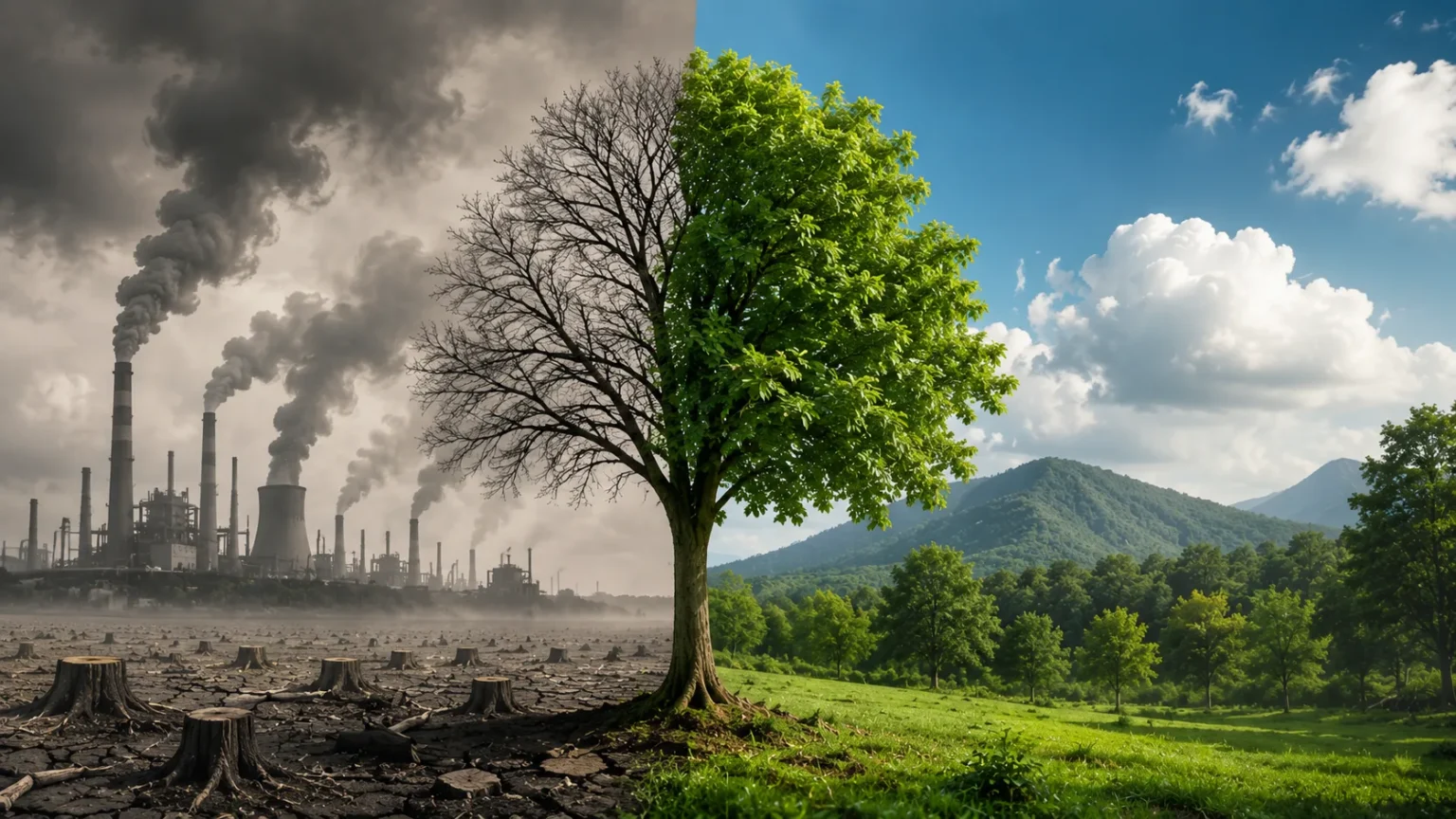

Can Trees Stop Climate Change?
Trees are one of nature’s most effective tools for removing carbon dioxide from the atmosphere. Through photosynthesis, they absorb carbon dioxide, use carbon to build trunks, branches and roots, and release oxygen. Forest soils can also store large amounts of carbon, which makes healthy forests important parts of the global climate system. Because of this, tree planting is often presented as a simple solution to global warming. The reality is more complicated. Trees can help slow climate change, but they cannot stop it on their own while greenhouse gas emissions from fossil fuels, industry, agriculture and land-use change remain high.
The most useful way to think about trees and climate change is as part of a broader solution. Protecting existing forests, restoring degraded land and planting suitable native trees can remove carbon while also supporting biodiversity, water cycles, soil health and local communities. However, forests take time to grow, land is limited, and stored carbon can return to the atmosphere through wildfire, drought, logging or disease. A serious climate strategy therefore needs both deep emissions reductions and well-designed forest restoration. Trees are valuable precisely because they can complement decarbonization, not because they can replace it.
How Do Trees Help Fight Climate Change?
Trees help regulate the climate primarily by absorbing carbon dioxide during photosynthesis. Carbon dioxide is one of the major greenhouse gases responsible for trapping heat in Earth’s atmosphere. When trees grow, they incorporate carbon into wood, bark, leaves and roots. Some of that carbon eventually enters the soil through fallen leaves, dead roots and other organic material. A growing forest can therefore act as a carbon sink, meaning it removes more carbon dioxide from the atmosphere than it releases over a particular period. This natural process is one reason forests are central to many national climate plans and carbon-removal strategies.
The amount of carbon a tree absorbs depends on species, age, climate, soil, water availability and how densely it grows. Young forests can absorb carbon rapidly while they are expanding, but mature forests may contain much larger total carbon stocks accumulated over decades or centuries. A large old tree can store substantial carbon even if its annual growth rate has slowed. For climate purposes, both storage and ongoing absorption matter. Cutting down a mature forest and replacing it with seedlings does not immediately restore the carbon that was lost. It may take many decades for the new forest to recover a comparable amount.
Forests also influence climate through mechanisms beyond carbon storage. Tree canopies provide shade, which can lower local surface temperatures in cities and rural landscapes. Trees release water vapor through transpiration, which can cool the surrounding air and contribute to regional rainfall patterns. Forests can also influence cloud formation, soil moisture and the movement of water through landscapes. These effects are particularly important in tropical regions, where large forest systems help regulate regional climate. Removing extensive forest cover can therefore alter both carbon balance and local weather patterns.
Tree roots help protect soils, which are themselves major carbon reservoirs. Healthy forests reduce erosion, improve soil structure and support fungi and microorganisms that influence carbon storage underground. When forests are cleared or heavily degraded, stored soil carbon may be released gradually through decomposition and disturbance. Restoring vegetation can help rebuild these systems, although soil recovery may take years. This makes forest restoration more valuable than simply counting the carbon stored in visible tree trunks.
Trees also provide climate adaptation benefits. Shade can reduce heat stress in cities, forests can help stabilize slopes and vegetation can slow water runoff during heavy rainfall. Coastal mangrove forests can protect communities from storm surges while storing large amounts of carbon. These benefits mean tree-based climate projects can support both mitigation, which reduces climate change, and adaptation, which helps communities cope with its effects. Well-designed projects therefore provide much more value than carbon removal alone.
Can Trees Really Stop Climate Change?
Trees cannot stop climate change by themselves because human activities release greenhouse gases much faster than forests can permanently remove them. Global fossil-fuel use adds enormous quantities of carbon dioxide to the atmosphere every year. Even an ambitious global tree-planting effort would not create unlimited carbon-removal capacity. Land, water, nutrients and ecological suitability all place constraints on how much additional forest can realistically grow. If emissions remain high, tree planting becomes similar to trying to empty a bathtub while the tap is still running at full speed.
Another limitation is time. A newly planted seedling stores only a small amount of carbon during its first years. Its climate value increases as it grows, but meaningful carbon accumulation may require decades. Fossil-fuel emissions, by contrast, enter the atmosphere immediately. A tonne of carbon dioxide emitted today cannot be treated as though a newly planted tree removes it instantly. Climate plans therefore need to reduce emissions now while forests grow and strengthen natural carbon sinks over time.
Carbon stored in forests is also not necessarily permanent. Wildfire, drought, pest outbreaks, storms, logging and land conversion can release stored carbon back into the atmosphere. Climate change itself can increase several of these risks. A forest planted to offset emissions today may burn decades later, reversing part of the claimed climate benefit. This impermanence does not make forests useless, but it means forest carbon should be managed more cautiously than geological storage designed to keep carbon underground for very long periods.
Tree planting can also create environmental problems when done poorly. Planting one fast-growing species across naturally diverse ecosystems may reduce biodiversity and increase vulnerability to pests or fire. Establishing forests on natural grasslands or peatlands can damage ecosystems that already store substantial carbon. Plantations grown for frequent harvesting may provide much less long-term carbon storage than intact native forests. Where trees are planted matters just as much as how many are planted.
The strongest climate strategy is therefore not “trees instead of emissions cuts.” It is trees plus emissions cuts. Rapid reductions in coal, oil and natural-gas use can prevent additional carbon dioxide from entering the atmosphere, while forest protection and restoration can remove some of the carbon already present. Both actions reinforce one another. Trees are a powerful climate tool, but treating them as a substitute for decarbonization greatly exaggerates what forests can realistically accomplish.
How Much Carbon Can Trees Absorb?
There is no single amount of carbon dioxide that every tree absorbs each year. Absorption varies according to tree species, age, size, location, climate and growing conditions. A rapidly growing tree in a warm, wet climate may absorb carbon faster than a slow-growing tree in a dry or cold environment. Large mature trees often hold substantial total carbon because they have accumulated biomass for many years. Small urban trees may provide valuable shade and cooling even when their overall carbon storage is relatively modest.
Carbon estimates also need to account for the whole ecosystem. Forest carbon is stored not only in trunks but also in branches, roots, leaf litter, deadwood and soil. Measuring only visible tree biomass can underestimate the total carbon stored in a healthy forest. Tropical forests often contain enormous amounts of carbon in vegetation, while peatland forests may store especially large amounts underground. Disturbing the soil can therefore release carbon even when some trees remain standing.
A forest’s annual carbon uptake also changes over time. Young regrowing forests often absorb carbon quickly as they add biomass, while mature forests may grow more slowly but contain much larger existing carbon stocks. This creates an important distinction between carbon sequestration rate and carbon storage. A younger forest may remove more carbon each year, but an old forest may contain centuries of accumulated carbon that would be difficult to replace if destroyed.
Climate conditions can influence how much carbon forests absorb in any given year. Drought can slow tree growth, heat can increase stress and severe wildfires can turn forests from carbon sinks into temporary carbon sources. Rising carbon dioxide concentrations can increase plant growth under some conditions, but this effect is limited by water, nutrients and temperature. Forest carbon uptake therefore cannot simply be assumed to increase indefinitely as atmospheric carbon dioxide rises.
For climate planning, large-scale forest inventories and models are more useful than simple claims such as “one tree absorbs a fixed number of kilograms per year.” Those numbers can provide rough educational estimates, but they hide enormous variation. Serious restoration projects measure species, survival rates, land conditions, expected growth and long-term management. Climate value comes from healthy forests that survive and mature, not from counting seedlings on planting day.
Why Protecting Existing Forests Matters More Than Planting Alone
Existing forests already contain enormous stores of carbon. When an old forest is cleared, much of that carbon can be released through burning, decomposition and soil disturbance. Planting young trees elsewhere does not immediately compensate for this loss. It may take decades or centuries for the replacement forest to store the same amount of carbon. Preventing deforestation can therefore provide a more immediate climate benefit than clearing one forest while planting another.
Old forests also contain complex ecosystems that cannot be recreated quickly. Mature forests provide habitat for birds, mammals, insects, fungi and plants that may depend on specific conditions developed over long periods. Newly planted forests usually lack this ecological complexity. Protecting existing forest therefore conserves both carbon and biodiversity. Climate and conservation goals often align most strongly when intact ecosystems are kept standing.
Deforestation can create feedback loops that make surrounding landscapes hotter and drier. Forest loss reduces shade and evapotranspiration and can alter rainfall patterns. In some tropical regions, widespread deforestation could reduce the moisture that forests recycle into the atmosphere, potentially increasing drought risk. These regional effects make forest protection valuable beyond the carbon stored inside individual trees.
Avoided deforestation can also be more predictable than new planting. The carbon already stored in a healthy forest can be measured and protected immediately, while planted seedlings face uncertainty from drought, fire, grazing and poor maintenance. Many highly publicized tree-planting projects report the number of trees planted rather than how many survive ten or twenty years later. Survival and long-term protection ultimately determine whether the climate benefit is real.
This does not mean planting new forests is unimportant. Restoration can rebuild damaged ecosystems and increase carbon storage where forest historically existed. The best approach is usually a hierarchy: protect intact forests first, improve management of degraded forests, support natural regeneration where possible and plant trees strategically where additional assistance is needed. Preventing loss and restoring damaged land work together more effectively than focusing on planting numbers alone.
Reforestation vs Afforestation
Reforestation generally means restoring trees to land that was forested relatively recently but has been cleared or degraded. This can involve natural regeneration, assisted regeneration or active planting. Reforestation often has strong ecological potential because the land historically supported forest. Native species may already exist nearby, soils may still contain seed banks and wildlife may be able to recolonize. Restoring these landscapes can increase carbon storage while improving biodiversity and watershed health.
Afforestation means establishing forest on land that has not been forested for a long period. This can provide carbon benefits in some locations, but it requires more careful ecological assessment. Natural grasslands, savannas and peatlands are not simply empty spaces waiting for trees. They support their own biodiversity and can store large amounts of carbon in soil. Planting trees in the wrong ecosystem can damage native species and sometimes reduce overall environmental value.
Reforestation often produces greater biodiversity benefits when native forest structure is restored instead of creating a single-species plantation. Mixed forests provide different habitats, root structures and responses to drought or pests. Greater ecological diversity can also improve resilience because one disease or insect outbreak is less likely to affect every tree. Carbon storage becomes more secure when the forest itself is healthier.
Afforestation can still play an important role when degraded or previously altered land is suitable for long-term tree cover. Abandoned agricultural land, severely eroded landscapes and some urban or peri-urban areas can support new forests. Site selection should consider water availability, food production, local communities and existing ecosystems. Planting trees where they create conflicts can make projects socially and environmentally unsustainable.
The distinction illustrates why climate action cannot simply be measured by acreage planted. The ecological history of the land matters. Restoring native forest where it belongs usually produces different outcomes from introducing trees into naturally treeless ecosystems. Effective climate policy considers carbon, biodiversity, water and people together rather than treating every hectare as identical.
Is Planting Billions of Trees a Good Climate Strategy?
Large-scale tree planting can contribute meaningfully to climate action when it is planned carefully. Restoring degraded forests across large landscapes can remove carbon dioxide over time while creating habitat and improving soil and water systems. Ambitious planting programs can also mobilize public attention and investment. However, announcements focused on billions or trillions of trees can oversimplify the challenge. The success of a project depends on where trees are planted, which species are used and whether those trees survive.
Seedling survival is one of the biggest practical issues. Planting events often generate impressive photographs, but seedlings may die from drought, grazing, wildfire or lack of maintenance. A project that plants one million trees but loses most of them within several years delivers far less climate benefit than the headline suggests. Long-term monitoring, replacement planting and local stewardship are essential. Measuring surviving forest area can be more informative than counting the number of seedlings initially placed in the ground.
Land competition is another consideration. Agriculture already uses a large portion of habitable land, and billions of people depend on it for food and livelihoods. Large-scale forest expansion cannot simply displace productive farmland without economic and social consequences. Restoration should prioritize degraded land, abandoned areas and landscapes where forests can coexist with agriculture. Agroforestry, which integrates trees into farming systems, can sometimes offer a useful compromise.
Monoculture plantations create additional concerns. A plantation of one commercially valuable species may grow quickly and capture carbon, but it does not necessarily provide the biodiversity or resilience of a natural forest. Frequent harvesting can also shorten carbon-storage duration. If harvested wood is burned or decomposes quickly, much of the stored carbon returns to the atmosphere. The intended use of the forest therefore influences its long-term climate value.
Planting billions of trees can be worthwhile, but the number should never become the entire strategy. Protecting existing forests, reducing fossil-fuel emissions and improving land management are equally important. The strongest tree programs focus on survival, ecosystem restoration and long-term carbon storage, not merely impressive planting targets. A forest is created over decades, not during one planting campaign.
Can Urban Trees Help With Climate Change?
Urban trees have relatively modest global carbon-removal potential compared with enormous natural forests, but their local climate benefits can be substantial. Cities often experience the urban heat island effect, where buildings, roads and other surfaces absorb heat and make developed areas warmer than nearby rural landscapes. Tree canopies provide shade and cool the air through transpiration. Streets with mature trees can therefore feel noticeably cooler during hot weather, reducing heat exposure for residents.
Cooling can also reduce electricity demand. Buildings shaded by trees may require less air conditioning during summer, which can indirectly reduce emissions where electricity generation still relies on fossil fuels. The effect depends on climate, tree placement and building design. Strategically planting trees around homes, schools, streets and public spaces can provide more benefit than random planting. Urban forestry therefore intersects with energy efficiency as well as direct carbon storage.
Trees can improve stormwater management too. Leaves and branches intercept rainfall, while roots help water enter soil rather than immediately running across pavement. This can reduce pressure on drainage systems during heavy rain and lower localized flood risk. As climate change increases the intensity of some rainfall events, these adaptation benefits become increasingly valuable. Green infrastructure often combines trees with rain gardens, permeable surfaces and restored waterways.
Air quality and public health can benefit as well, although tree species and placement need careful planning. Vegetation can capture some airborne particles and provide pleasant spaces that encourage walking and recreation. At the same time, certain species produce large amounts of allergenic pollen, and poorly placed dense vegetation can sometimes reduce air circulation around roads. Urban forestry needs good design rather than simply maximizing tree numbers.
Cities also face practical challenges that shorten tree lifespan. Limited soil, road salt, vehicle damage, heat and restricted root space can make urban conditions harsh. Newly planted trees require watering and maintenance for years before they provide significant canopy. Protecting existing mature urban trees is therefore particularly valuable. A large established tree offers cooling and shade immediately, while a replacement seedling may take decades to provide comparable benefits.
Can Forests Become Carbon Sources?
Forests are usually discussed as carbon sinks, but they can become carbon sources when they release more carbon than they absorb. Wildfires are one obvious example. Burning vegetation sends stored carbon dioxide back into the atmosphere, while damaged trees may continue releasing carbon as they decompose afterward. Forest regrowth can gradually remove some of that carbon again, but repeated severe fires can prevent full recovery.
Deforestation also turns forest carbon into atmospheric emissions. When trees are burned or cleared, the carbon contained in their biomass begins returning to the atmosphere. Soil disturbance can add further emissions. If the cleared land becomes agriculture or urban development, the ecosystem may lose much of its future carbon-absorption capacity as well. Avoiding forest conversion therefore protects both existing storage and future sequestration.
Drought can reduce a forest’s ability to absorb carbon. Trees under severe water stress may stop growing, lose leaves or die. Dead trees release carbon as they decompose and can increase wildfire risk. Large drought events can therefore temporarily weaken regional forest carbon sinks. If droughts become more frequent under climate change, this could reduce the reliability of some forest-based climate strategies.
Pests and diseases can have similar effects. Warmer winters may allow certain insects to survive and expand into areas where cold conditions previously limited them. Large outbreaks can kill millions of trees across a landscape. Dead forests may store carbon temporarily, but decomposition and wildfire eventually release much of it. Diverse forests are generally more resilient than single-species plantations because not every tree responds identically to the same threat.
These risks do not mean forests should be excluded from climate plans. They mean carbon storage should account for uncertainty and permanence. Protecting large connected ecosystems, reducing fire risk where appropriate and using diverse native species can improve resilience. Climate strategies should also continue cutting fossil emissions so society is not dependent on forests storing an ever-growing amount of carbon under increasingly stressful conditions.
How Wildfires Affect Tree-Based Climate Solutions
Wildfires are natural components of many ecosystems, and not every fire is environmentally harmful. Some forests and grasslands evolved with periodic fire that removes accumulated vegetation and supports regeneration. The climate concern arises when fires become unusually large, severe or frequent. High-intensity wildfire can kill mature trees, damage soils and release large amounts of stored carbon. Recovery may take decades, particularly if repeated fires occur before forests have fully regrown.
Climate change can increase wildfire risk in some regions by creating hotter temperatures, longer dry seasons and drier vegetation. Human land management also matters. Decades of fire suppression in certain ecosystems can allow combustible material to accumulate, while development near wildlands increases ignition sources. Effective wildfire policy therefore requires both climate mitigation and landscape management. Tree planting without considering future fire conditions can create fragile carbon projects.
Species selection can affect fire resilience. Planting dense stands of highly flammable species in dry landscapes can increase risk. Mixed native forests designed around local ecological conditions may be more resilient. In some places, controlled burns and vegetation thinning can reduce the likelihood of catastrophic wildfire. These practices may release some carbon in the short term but prevent much larger losses later.
Carbon-offset projects based on forests need especially careful wildfire planning. If a company claims permanent compensation for fossil emissions using trees that later burn, the climate accounting becomes complicated. Projects may establish buffer reserves, insurance systems or replacement requirements to address these losses. Even so, biological carbon storage cannot always offer the same permanence as keeping fossil carbon underground.
Wildfire reinforces the broader principle that tree-based climate solutions are valuable but uncertain. Forest restoration can remove substantial carbon while supporting ecosystems, yet it should complement permanent emissions reductions. The safest tonne of carbon dioxide is the one that never enters the atmosphere. Trees can help manage existing carbon, but they should not carry the entire burden of the energy transition.
Does Cutting Down Trees Always Increase Climate Change?
Cutting forests usually reduces stored carbon and can increase atmospheric greenhouse gases, but the climate impact depends on what happens to the wood and land afterward. Burning wood releases carbon relatively quickly, while timber used in buildings can store some carbon for decades. Even long-lived wood products eventually decay or are disposed of, however. Harvesting also changes forest growth and soil processes. The full carbon balance therefore depends on the entire lifecycle rather than simply whether a tree was cut.
Sustainable forestry can maintain some long-term carbon storage if harvested areas are allowed to regrow and harvest rates remain below forest growth. Wood can also substitute for more carbon-intensive materials in certain applications. However, claims that harvesting is automatically “carbon neutral” because trees regrow can be misleading. Regrowth requires time, and atmospheric carbon concentrations remain higher during the period before that carbon is recaptured.
Clear-cutting old forests creates a particularly large carbon impact because substantial stored biomass is removed at once. Young regrowth may absorb carbon quickly but begins from a much lower carbon stock. Protecting high-carbon old forests can therefore provide significant climate benefits. Forest-management decisions need to consider both short-term emissions and long-term growth.
Waste is another important factor. If harvested wood becomes paper, packaging or short-lived products, stored carbon may return to the atmosphere relatively quickly. Construction timber can hold carbon much longer. Recycling and reuse can extend the useful life of wood products and reduce demand for additional harvests. Product design therefore affects the climate impact of forestry.
The objective should not necessarily be ending all wood use. Wood is a renewable resource when forests are managed responsibly and can be preferable to some alternatives. The key is protecting high-value ecosystems, harvesting within regenerative limits and using wood efficiently. Climate-friendly forestry requires more nuance than either “never cut a tree” or “all harvested trees are automatically replaced.”
Can Agroforestry Help Reduce Climate Change?
Agroforestry integrates trees and shrubs into agricultural landscapes rather than separating forests and farms completely. Examples include growing crops between rows of trees, planting shade trees over coffee or cocoa, maintaining windbreaks or combining trees with livestock pasture. These systems can store more carbon than treeless agricultural land while still producing food or other products. Agroforestry can therefore reduce pressure to choose between agriculture and climate goals.
Trees can improve soil health by adding organic matter through leaves and roots. Their roots can reduce erosion and sometimes access nutrients or water from deeper soil layers. Certain tree species can also support nitrogen cycling. These effects may improve agricultural resilience, especially in areas vulnerable to drought or soil degradation. Better soil structure can increase water infiltration and reduce runoff.
Shade can benefit livestock and certain crops during increasingly hot weather. Trees provide shelter from extreme heat and wind, which can improve animal welfare and reduce stress. Shade-grown crops can also support greater biodiversity than open monocultures. These adaptation benefits make agroforestry attractive in regions where climate change is already affecting farming conditions.
Agroforestry is not automatically suitable everywhere. Trees can compete with crops for water, nutrients or sunlight if systems are poorly designed. Farmers may also face delayed financial returns because trees take years to mature. Land tenure and access to planting material can create additional barriers. Successful programs therefore need local knowledge and economic support rather than imposing one model everywhere.
The climate value of agroforestry lies partly in its scalability across working landscapes. Not every hectare of farmland can or should return to dense forest, but many agricultural areas can support more woody vegetation. This approach can expand carbon storage without removing land entirely from food production. Combined with improved farming practices, agroforestry can become an important part of land-based climate mitigation.
Do Mangroves Help Fight Climate Change?
Mangroves are particularly valuable climate ecosystems because they can store large amounts of carbon in both vegetation and waterlogged soils. Coastal sediments beneath mangrove forests can accumulate organic carbon for long periods because low-oxygen conditions slow decomposition. This form of storage is often called blue carbon because it occurs in coastal and marine ecosystems. Protecting mangroves therefore prevents both tree loss and disturbance of carbon-rich soils.
Mangroves also provide powerful climate-adaptation benefits. Their roots and dense vegetation reduce wave energy and can help protect coastlines from storms and erosion. Communities living in tropical coastal areas may therefore receive both climate mitigation and disaster-risk benefits from mangrove restoration. These forests also provide nurseries for fish and support local fisheries, linking climate action with food security.
Destroying mangroves for aquaculture, development or other land uses can release stored carbon and remove natural coastal protection. Restoring them can reverse some of these losses, but hydrology needs to be suitable. Simply planting mangrove seedlings in the wrong tidal zone often leads to poor survival. Successful restoration frequently begins by restoring natural water flow rather than focusing only on planting.
Sea-level rise creates an additional challenge. Healthy mangroves can sometimes migrate inland as shorelines change, but roads, seawalls and development may block that movement. Coastal planning therefore matters for their long-term survival. Protecting space for ecosystem migration can help mangroves continue providing climate benefits as sea levels rise.
Mangroves demonstrate why forest-based climate solutions are often most valuable when several benefits occur together. Carbon storage alone is important, but biodiversity, fisheries, storm protection and livelihoods strengthen the case for conservation. Protecting these high-carbon ecosystems can sometimes produce more immediate value than establishing entirely new forests elsewhere.
What Makes a Good Tree-Planting Project?
A good tree-planting project starts with the right location. The land should naturally support forest or tree cover without replacing valuable native grasslands, wetlands or other ecosystems. Restoration should address why trees disappeared in the first place. If grazing, fire, illegal logging or land conflict remains unresolved, newly planted trees may simply disappear again. Understanding local conditions is more important than choosing the fastest-growing species.
Native species are often preferred because they are adapted to local climates and support native wildlife. Mixed-species planting can create greater ecological resilience than a monoculture. However, local forestry knowledge should guide selection because some restoration goals may involve productive tree species alongside native vegetation. The most important principle is matching species to ecosystem and community needs.
Local people should be involved from the beginning. Communities living near restoration areas have long-term influence over whether forests survive. Projects that ignore land rights or restrict livelihoods without alternatives can create conflict and ultimately fail. Community forestry, employment and shared benefits can strengthen long-term stewardship. Social sustainability is therefore part of climate durability.
Monitoring should continue for years rather than ending after planting day. Projects need data on survival, growth, biodiversity and carbon accumulation. Dead seedlings may require replacement, while invasive plants or grazing pressure may require management. Climate conditions can also change after the project begins. Adaptive management makes restoration more resilient.
Finally, the project should make realistic carbon claims. Carbon benefits should account for baseline land conditions, tree survival, permanence and potential leakage, where deforestation simply moves elsewhere. Credible projects communicate uncertainty instead of presenting every planted tree as a guaranteed fixed amount of carbon removal. Restoration is most trustworthy when ecological outcomes come first and carbon accounting reflects what actually happens.
Trees vs Technological Carbon Removal
Trees represent nature-based carbon removal, while technologies such as direct air capture attempt to remove carbon dioxide using engineered systems. Forests are relatively inexpensive compared with many emerging technologies and provide biodiversity, water and community benefits. They are already available at large scale, making forest restoration an important near-term option. Their main limitation is that carbon storage can be reversed through fire, logging, disease or land-use change.
Direct air capture can potentially provide more durable carbon storage when captured carbon dioxide is injected into suitable geological formations. The process is measurable and does not require the same amount of fertile land as forest restoration. However, it currently consumes significant energy and is expensive. Large-scale infrastructure for capture, transport and storage would also need to be developed. Technological removal is therefore not yet a simple replacement for natural systems.
Forests face land limits, while engineered removal faces energy, cost and infrastructure limits. A future net-zero world will probably use several removal approaches rather than depending completely on one. Natural ecosystems can provide substantial near-term removal and ecological benefits, while technological methods may eventually address residual emissions requiring very durable storage.
Neither approach removes the need to reduce emissions. Trying to capture billions of tonnes of carbon every year while fossil emissions remain high would require enormous amounts of land, energy and investment. Prevention remains more efficient. Carbon removal is best reserved for emissions that are technically difficult to eliminate after deep decarbonization.
The comparison should therefore not be framed as trees versus technology. Both can contribute in different ways. Protecting ecosystems, expanding high-quality restoration and developing durable technological removal can form complementary parts of a climate strategy. The common priority should remain reducing the amount of carbon that needs to be removed in the first place.
What Can Individuals Do to Protect and Restore Trees?
Individuals can support forest protection through the products they purchase. Agricultural commodities, paper, timber and other goods can contribute to deforestation when supply chains are poorly managed. Choosing certified or transparently sourced products can reduce demand for destructive practices. Using products longer, recycling paper and reducing unnecessary consumption can also lower pressure on forest resources. Individual purchasing choices work best when accompanied by stronger corporate supply-chain standards.
Supporting credible conservation organizations or local restoration programs can also help. Look for projects that protect existing ecosystems, use appropriate species, involve local communities and monitor survival over time. Programs that only advertise large planting numbers without discussing land, maintenance or long-term outcomes deserve more scrutiny. Quality is more important than how inexpensive each tree appears.
Homeowners can plant appropriate native trees where space allows. A well-placed tree can provide shade, habitat and long-term carbon storage. Species selection should consider mature size, water needs, roots and local climate. Planting a large tree directly beneath power lines or too close to foundations can create future problems. Local arborists or native-plant organizations can help with selection.
Protecting mature trees may be even more valuable than replacing them. Existing trees already provide shade and carbon storage and have survived vulnerable early growth stages. When construction or landscaping is planned, designing around healthy mature trees can preserve those benefits. Proper pruning and soil care can also extend tree lifespan.
People can also support public policies that reduce deforestation and expand urban canopy, parks and ecosystem restoration. Large-scale forest outcomes depend on land-use laws, agricultural policy, protected areas and climate finance. Personal planting is useful, but systemic action determines what happens across millions of hectares. Individual climate action becomes more powerful when it helps improve those broader systems.
The Bottom Line: Can Trees Stop Climate Change?
Trees can help slow climate change, but they cannot stop it alone. Forests absorb carbon dioxide, store carbon in vegetation and soils, cool landscapes and support water cycles. Protecting and restoring forests can therefore make a significant contribution to climate mitigation. Trees also provide biodiversity, flood protection, shade, food and other benefits that technological carbon-removal approaches cannot fully replicate.
The greatest immediate priority is protecting forests that already exist. Mature forests contain large carbon stores that may take decades or centuries to replace after clearing. Preventing deforestation avoids those emissions while preserving biodiversity. Reforestation and natural regeneration can then rebuild carbon sinks on degraded land. Planting should complement protection rather than distract from ongoing forest destruction.
Tree planting has real limits. Forests require land and water, take decades to mature and can lose stored carbon through wildfire, disease or logging. Poorly designed planting projects can replace valuable grasslands, create monocultures or fail when seedlings are not maintained. Counting trees is therefore not enough. Survival, ecosystem health and long-term protection determine whether a project actually benefits the climate.
Most importantly, forests cannot compensate indefinitely for continued fossil-fuel emissions. Coal, oil and natural gas release carbon that has been stored underground for millions of years. Asking biological ecosystems to absorb all of those emissions would exceed realistic land-based removal capacity. Rapid decarbonization remains essential. Every tonne of carbon dioxide avoided reduces the amount future forests or technologies must remove.
The answer to “Can trees stop climate change?” is therefore both encouraging and realistic: trees are an essential part of the solution, but not the entire solution. Protecting forests, restoring ecosystems, improving land management and planting appropriate trees can remove carbon and make communities more resilient. Combined with rapid reductions in fossil-fuel emissions, cleaner energy and more efficient economies, forests can play a powerful role in creating a more stable climate.
Frequently Asked Questions
Can planting enough trees reverse climate change?
Trees can remove significant amounts of carbon dioxide, but planting alone cannot compensate for continued high fossil-fuel emissions. Deep emissions reductions and forest restoration need to happen together.
How do trees remove carbon dioxide?
Trees absorb carbon dioxide through photosynthesis and use the carbon to build wood, roots and other tissues. Some carbon is also stored in forest soils and organic matter.
Is planting trees better than reducing emissions?
They serve different roles, but reducing emissions is the first priority because it prevents additional carbon from entering the atmosphere. Trees are valuable for removing some existing carbon and protecting natural ecosystems.
Are old trees better for the climate than young trees?
Young forests can grow and absorb carbon quickly, while old forests often store much larger total amounts of carbon. Protecting mature forests and allowing young forests to grow are both important.
What is the best way to use trees against climate change?
Protect existing forests first, restore degraded native ecosystems, support natural regeneration and plant suitable diverse species where needed. Long-term survival and protection matter more than simply counting how many seedlings are planted.