

Mewing: Does It Work? Benefits, Risks and Results
Mewing is a tongue-posture technique that has become highly popular on social media, where it is often promoted as a way to sharpen the jawline, improve facial symmetry, straighten teeth, support breathing and even reshape the face without surgery or orthodontics. The basic idea involves resting most of the tongue against the roof of the mouth while keeping the lips closed and the teeth in a relaxed position. Although normal tongue posture does matter for oral function, many dramatic claims surrounding mewing go far beyond what current evidence can confidently support. Adults should be particularly cautious about expecting major changes in facial bone structure from tongue position alone. Facial appearance is influenced by genetics, age, body composition, dental alignment, bone structure and many other factors.
That does not mean tongue posture is completely irrelevant. The tongue, jaw, lips and breathing pattern all interact with oral function, and healthcare professionals sometimes evaluate these factors when treating swallowing problems, speech difficulties, mouth breathing or certain orthodontic concerns. However, medically guided oral or myofunctional therapy is not the same as following an online mewing tutorial designed primarily to create a more defined jawline. Understanding whether mewing works, its potential benefits, risks and realistic results can help you separate sensible posture habits from exaggerated before-and-after claims. The most useful approach is to focus on comfortable oral posture and professional evaluation when functional or structural problems are present.
What Is Mewing?
Mewing is a technique that involves consciously positioning the tongue against the roof of the mouth during rest. Most instructions encourage placing the tongue tip just behind the upper front teeth without pressing directly against them, while the middle and back portions of the tongue gently contact the palate. The lips are generally kept closed, and breathing is encouraged through the nose when comfortable and medically appropriate. Supporters argue that maintaining this posture for long periods can influence the position of the jaw and facial bones. The technique became especially popular online through communities interested in facial aesthetics, jawline definition and non-surgical appearance changes.
The name “mewing” comes from ideas associated with orthodontic approaches that emphasized facial growth, oral posture and environmental influences on jaw development. Internet communities later simplified these concepts into a self-directed technique that could supposedly be practiced by almost anyone. Over time, claims expanded well beyond ordinary tongue posture. Some users began suggesting that mewing could dramatically widen the jaw, move the maxilla forward, fix crooked teeth, reduce a double chin or create a completely different facial profile. These claims have made mewing far more controversial than the basic recommendation to maintain healthy resting tongue posture.
Normal tongue position does have functional importance. At rest, the tongue commonly rests gently against the palate rather than sitting heavily on the floor of the mouth. The lips are usually closed without excessive muscular effort, and the teeth should not be forcefully clenched together. This type of relaxed posture supports ordinary swallowing and oral function. However, a healthy resting position should feel natural rather than requiring constant hard pressure. Mewing becomes problematic when people interpret “tongue on the palate” as an instruction to push aggressively for hours.
Another part of mewing culture involves nasal breathing. Breathing through the nose is normal and beneficial for many people when the nasal airway is clear. However, chronic mouth breathing can result from allergies, enlarged tonsils or adenoids, nasal obstruction, a deviated septum or other airway problems. Simply forcing the mouth closed does not correct these underlying causes. Someone who consistently struggles to breathe through the nose should therefore seek evaluation rather than attempting to overcome the problem with willpower.
Mewing should ultimately be separated into two ideas. The first is maintaining comfortable tongue and oral posture, which can be a normal part of healthy oral function. The second is the claim that consciously maintaining this posture can dramatically remodel an adult face, which is much less supported. Confusing these two ideas creates unrealistic expectations. A sensible discussion therefore acknowledges the role of oral posture while remaining cautious about promises of major cosmetic transformation.
Does Mewing Really Work?
The answer depends on what someone means by “work.” If the goal is becoming more aware of resting tongue posture, keeping the lips comfortably closed or reducing unnecessary open-mouth posture, mewing may encourage useful awareness. If the goal is dramatically reshaping an adult jaw, moving facial bones forward or replacing orthodontic treatment, the evidence is far less convincing. Adult facial bones are not easily remodeled through mild tongue pressure alone. Bone can adapt to mechanical forces, but meaningful orthodontic or skeletal changes generally require controlled forces applied over long periods under professional supervision.
Age is particularly important. During childhood and adolescence, the jaws and facial bones are still developing, so breathing patterns, oral habits and dental forces can interact with growth. This does not mean children should perform internet mewing exercises unsupervised. It means that clinicians may consider airway function, tongue posture, thumb sucking, swallowing and other factors when evaluating developing teeth and jaws. Growth modification is a specialized area of orthodontic treatment. A social-media technique cannot reliably reproduce professional diagnosis or treatment planning.
Adults have much less remaining facial growth. The bones of the face still remodel biologically, but that process does not mean they can be predictably reshaped by placing the tongue against the palate. Major changes in jaw position generally require orthodontic movement, surgical procedures or significant changes in body composition and soft tissue. Photos claiming dramatic adult skeletal changes from mewing alone should therefore be interpreted cautiously. Lighting, posture, camera angle, weight loss, facial hair and intentional jaw positioning can create substantial visual differences.
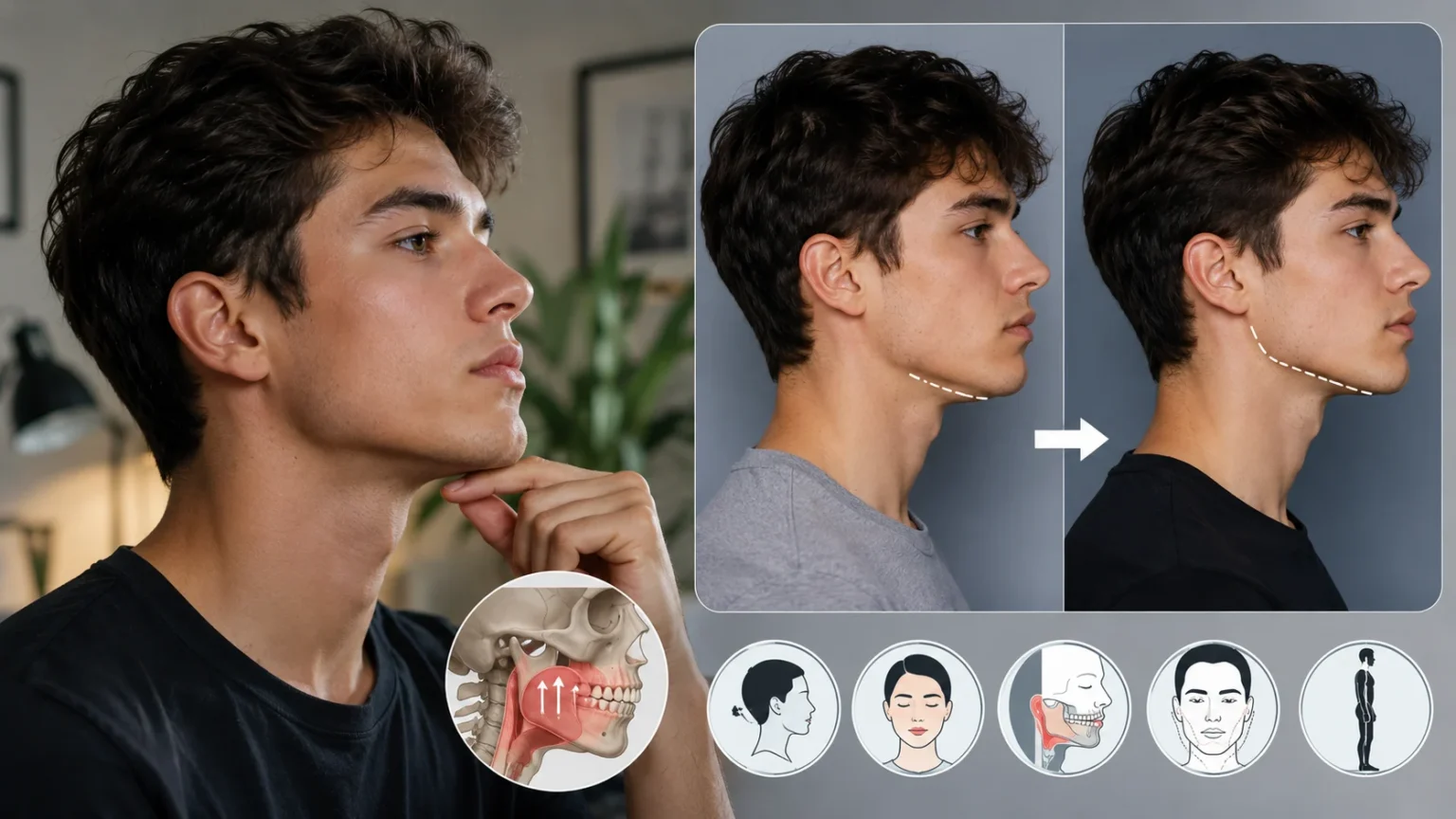
Some people report that mewing makes their jawline look immediately sharper. This can happen because adopting upright head posture and pressing the tongue upward changes the position of soft tissues beneath the jaw. The result may improve the appearance of the neck or jaw in a photograph without permanently changing bone structure. This temporary visual effect can reinforce the belief that skeletal transformation has begun. Improving posture can still be worthwhile, but it should be described accurately as a postural or soft-tissue change rather than proof of bone remodeling.
The strongest conclusion is that mewing may help some people become more aware of oral posture, but dramatic cosmetic claims are not established. It should not be marketed as a guaranteed method for producing a wider jaw, fixing malocclusion or changing facial proportions. People seeking major structural improvement should speak with an orthodontist, dentist or maxillofacial specialist. Realistic expectations protect users from spending years waiting for changes that may never occur.
Possible Benefits of Mewing
One potential benefit of mewing is improved postural awareness. People who spend long periods looking down at phones or computers may develop forward-head posture that changes how the jaw and neck appear. Thinking about tongue position sometimes encourages them to lift the head, lengthen the neck and close the mouth more naturally. This can improve appearance temporarily and may reduce unnecessary neck tension for some people. The benefit comes primarily from better general posture rather than from dramatic facial-bone remodeling.
Mewing may also encourage awareness of nasal breathing. Breathing through the nose when the airway is clear helps warm, humidify and filter incoming air. Some people who habitually leave their mouth open may realize they can comfortably keep their lips closed and breathe nasally more often. However, persistent mouth breathing should not simply be treated as a bad habit without investigating why it occurs. Nasal blockage, allergies, sleep-disordered breathing and structural problems can all interfere with comfortable nasal airflow.
Another possible benefit is recognizing excessive tongue pressure against the front teeth. Ideally, the tongue tip should not continuously push strongly against the upper or lower incisors. Abnormal swallowing patterns and tongue thrust can sometimes contribute to dental problems, although treatment requires professional assessment. Someone learning about oral posture may become more conscious of where the tongue rests. This awareness can be useful if it leads to appropriate dental or myofunctional evaluation when a genuine functional issue exists.
Some people also report that maintaining gentle tongue contact with the palate reduces the habit of keeping the mouth hanging open. A relaxed closed-mouth posture may feel more comfortable and can change the way the lower face appears at rest. Again, this is different from changing the size of the jawbone. Soft tissues, lip position and head posture all affect facial appearance. Small improvements in these habits may still provide cosmetic satisfaction without requiring dramatic anatomical change.
The psychological benefit of feeling more attentive to posture should also be considered, but it can work in either direction. A simple awareness habit can make someone feel more confident and engaged with their health. On the other hand, obsessive monitoring of facial angles or tongue pressure can increase body-image anxiety. The healthiest version of mewing is therefore gentle and functional rather than compulsive. If the practice begins consuming significant attention or creating distress about appearance, stepping away from it may be beneficial.
Can Mewing Change Your Jawline?
Mewing is most often promoted as a method for creating a sharper jawline, but the jawline people see in the mirror is influenced by many structures. The shape of the mandible matters, but so do facial fat distribution, muscle size, skin thickness, neck posture and genetics. Lower body fat can make the jaw appear more defined in some people, while age-related skin laxity can make definition less obvious. Tongue position may temporarily change the contour beneath the chin. These factors make it difficult to attribute visual changes to bone remodeling.
When the tongue is lifted against the palate, tissues under the jaw can move upward slightly. This can create an immediate difference in photographs, especially when combined with chin projection and good head posture. People often compare a relaxed open-mouth photo with a carefully posed mewing photo and interpret the change as structural improvement. The difference may actually be occurring in seconds rather than months. This does not make the appearance change fake, but it means the mechanism is different from permanent jaw growth.
Jaw muscles can also affect facial shape. Habitual clenching or heavy chewing can enlarge the masseter muscles in some individuals, producing a wider-looking lower face. Mewing itself should not involve clenching, yet online communities sometimes combine it with gum chewing or other jaw exercises. Excessive chewing can trigger jaw-joint pain, headaches or muscle tenderness. Attempting to build a larger jaw through constant muscular strain can therefore create problems rather than improve facial aesthetics.
Adults seeking significant changes in jaw projection or bite relationships should not rely on tongue posture alone. Orthodontics can reposition teeth, while certain appliances can assist selected growing patients. Orthognathic surgery can change adult jaw position when medically or cosmetically appropriate. These treatments are much more involved than mewing, but they also use predictable forces and professional planning. A person with a true underbite, overbite or significant jaw asymmetry deserves proper evaluation.
A more realistic goal is to improve the factors that can be changed safely. Maintaining healthy body composition, practicing good posture, treating chronic nasal obstruction and addressing genuine dental problems can all influence how the face looks and functions. Mewing may complement awareness of oral posture, but it should not be treated as a substitute for these measures. Jawline appearance is multifactorial, and one tongue exercise cannot override genetics and skeletal anatomy.
Mewing Results: What Can You Realistically Expect?
Realistic mewing results are generally subtler than social-media transformations suggest. Someone may notice that they hold their mouth differently, keep their head more upright or become more comfortable resting the tongue against the palate. These changes can alter facial presentation, particularly in photographs. They may also reduce an open-mouth appearance if that posture was simply habitual rather than caused by airway obstruction. Such improvements can happen without any significant change in bone shape.
Visible skeletal changes in adults should be viewed with much more skepticism. The adult maxilla and mandible do not typically move several millimeters simply because someone intentionally presses the tongue upward. Orthodontic forces can move teeth because they are carefully controlled and maintained through appliances. Skeletal changes in adults often require much stronger or surgically assisted interventions. The modest forces created by ordinary tongue posture are unlikely to reproduce these effects predictably.
Before-and-after photos can be highly misleading. A different camera lens, slightly raised chin, lower body weight or stronger lighting can make the jaw appear dramatically sharper. Facial hair can change perceived width and definition, while hydration and facial swelling can alter softness. Some people also take the “after” image while actively pressing the tongue upward, creating an immediate submental lift. Without standardized imaging, it is almost impossible to know what caused the difference.
Results in growing children are more complex because facial development is still ongoing. Oral habits can interact with dental and skeletal development, but natural growth makes it difficult to determine what would have happened without an intervention. Children with airway or orthodontic concerns should therefore be evaluated professionally rather than instructed to perform aggressive tongue exercises. Appropriate treatment may involve orthodontics, ear-nose-throat evaluation, speech therapy or myofunctional therapy depending on the problem.
People trying mewing should therefore judge success through comfort and function rather than expecting a completely different face. If comfortable tongue posture becomes easier and mouth breathing decreases because there was no underlying obstruction, that may be a useful outcome. If the goal is substantial jaw enlargement or facial reconstruction, disappointment is much more likely. Setting realistic expectations protects against years of obsessive monitoring and unnecessary pressure on the jaw.
Risks and Side Effects of Mewing
Mewing is often described as harmless, but aggressive practice can cause problems. One of the most common mistakes is pressing the tongue forcefully against the palate for prolonged periods. This can create muscle fatigue, headaches or discomfort around the jaw and floor of the mouth. Healthy resting posture should not feel like a constant strength exercise. If significant effort is needed to maintain the position, the technique is probably being performed too aggressively.
Jaw clenching is another risk. Some online instructions imply that the teeth should remain firmly together while mewing, but constant clenching can overload the jaw muscles and temporomandibular joints. Symptoms may include jaw pain, clicking, headaches, ear-area discomfort or difficulty opening the mouth. People who already grind their teeth or have TMJ problems may be particularly vulnerable. The jaw should remain relaxed rather than held in a forceful bite.
Incorrect tongue pressure could also affect teeth. Constantly pushing the tongue against the front teeth may contribute to unwanted dental movement over time, particularly if substantial force is used. This is the opposite of the intended resting position, where the tongue should contact the palate without pressing hard against the incisors. Someone who notices changing tooth positions, new gaps or bite problems should stop self-directed exercises and seek dental advice.
Forcing nasal breathing despite obstruction is another important concern. A person with severely blocked nasal passages may become uncomfortable or anxious when trying to keep the mouth closed. At night, untreated nasal obstruction or sleep-disordered breathing can have much more important health consequences than facial aesthetics. Mewing should never be used to ignore snoring, gasping during sleep, persistent congestion or difficulty getting enough air through the nose.
Psychological risks can occur as well. Social-media communities focused heavily on facial measurements sometimes encourage people to analyze jaw angles, symmetry and perceived imperfections constantly. This can intensify appearance-related anxiety or body dysmorphic concerns. A posture exercise that initially seems harmless may become part of an obsessive routine involving endless photographs and comparisons. If dissatisfaction becomes intense despite reassurance, speaking with a mental health professional can be as important as seeking cosmetic or dental advice.
Mewing and TMJ Problems
The temporomandibular joints, or TMJs, connect the lower jaw to the skull and allow movements needed for speaking and chewing. These joints work together with several powerful muscles. Mewing should not require strong jaw contraction, yet some people inadvertently clench while trying to maintain tongue posture. Prolonged clenching increases pressure on the joints and muscles. This can cause soreness near the ears, facial fatigue or tension headaches, particularly in people who already have TMJ sensitivity.
Jaw clicking by itself is relatively common and does not always indicate serious disease. However, clicking combined with pain, limited opening, locking or significant tenderness deserves evaluation. If these symptoms begin after aggressive mewing, reducing or stopping the practice is sensible. Continuing to push through pain because the technique is supposed to improve facial structure can worsen irritation. Pain is not evidence that the jaw is successfully remodeling.
Excessive gum chewing is sometimes recommended alongside mewing to build the jaw muscles. Although ordinary chewing is normal, prolonged heavy chewing can overwork the masseter and temporalis muscles. This may worsen TMJ pain and headaches. Some people develop larger masseter muscles, but the cosmetic result can be unpredictable and may make the face look wider rather than creating the desired angular appearance. Muscle enlargement also does not change the underlying bone structure.
Relaxed oral posture generally places much less stress on the TMJ than constant tooth contact. The teeth do not need to be firmly clenched throughout the day. A small natural separation between the dental arches is common at rest, even when the lips are closed and the tongue is positioned comfortably. People should avoid turning mewing into a full-time bite exercise. Comfort is a better indicator of appropriate posture than pressure.
Persistent TMJ symptoms may require a dentist, oral medicine specialist or physical therapist with relevant experience. Treatment can include habit modification, exercises, management of grinding or other individualized strategies. A professional can also determine whether bite relationships or joint pathology are contributing. Self-directed internet exercises are not a substitute when pain or jaw locking is present. The goal should be restoring comfortable function rather than pursuing facial aesthetics at the expense of joint health.
Mewing and Nasal Breathing
Nasal breathing is often presented as a major component of mewing, and in healthy people with clear nasal passages it is usually the normal resting breathing pattern. The nose filters, warms and humidifies incoming air before it reaches the lungs. Keeping the lips comfortably closed can also reduce dry mouth. Some people discover that they habitually breathe through the mouth even though nasal breathing is available and comfortable. Becoming aware of this habit can be useful.
The problem arises when mouth breathing has a medical cause. Allergies can swell nasal tissues, while a deviated septum, nasal polyps or chronic sinus problems can reduce airflow. Enlarged tonsils or adenoids can contribute in some younger people. Someone who cannot comfortably breathe through the nose should not simply force the mouth closed. Identifying and treating the obstruction is more important than maintaining a particular tongue posture.
Sleep symptoms deserve special attention. Loud snoring, gasping, witnessed pauses in breathing, morning headaches or excessive daytime sleepiness can suggest sleep-disordered breathing. Mewing is not an established treatment for obstructive sleep apnea. Relying on tongue posture while delaying sleep evaluation could leave a significant medical problem untreated. Professional assessment may involve sleep testing, airway evaluation and treatments tailored to the cause.
Nasal breathing also becomes harder during intense exercise because ventilation needs increase. Opening the mouth during demanding physical activity is a normal way to move more air. Mewing should not become a rigid rule requiring someone to keep the mouth closed during every activity. Healthy breathing adapts to the body’s needs. A technique that interferes with adequate airflow is being applied too aggressively.
People who want to improve breathing habits can start by addressing nasal health. Managing allergies appropriately, staying hydrated and seeking evaluation for persistent congestion may make comfortable nasal breathing easier. Breathing exercises can sometimes improve awareness, but they should not be treated as a cure for structural obstruction. Functional airway health should come before cosmetic promises attached to mewing.
Mewing for Children and Teenagers
Children and teenagers are frequently drawn to mewing because social media suggests that younger people can reshape their faces more easily. It is true that facial growth continues through childhood and adolescence, but this does not mean self-directed tongue pressure is a safe substitute for orthodontic evaluation. Growing jaws are influenced by genetics, dental eruption, breathing, muscles and overall development. Interfering with these systems without understanding the underlying anatomy can create unintended consequences.
Chronic mouth breathing in children deserves professional attention because it may be related to allergies, enlarged adenoids or tonsils, nasal obstruction or other airway concerns. Parents should not simply tell a child to keep the mouth closed. If breathing feels difficult, the child may be compensating for a real problem. Evaluation by a pediatrician, dentist, orthodontist or ear-nose-throat specialist may be appropriate depending on symptoms.
Dental development is another reason for caution. Crowding, crossbites, open bites and jaw discrepancies can sometimes be managed more effectively during growth, but timing matters. Orthodontists use examinations, imaging and growth assessment to determine whether intervention is appropriate. Internet exercises cannot determine whether the upper jaw is narrow, whether teeth need guidance or whether treatment should wait. Early professional assessment can prevent unnecessary experimentation.
Myofunctional therapy may be recommended in selected children when abnormal swallowing, tongue posture or oral habits are present. This involves structured exercises guided by a trained professional and usually forms part of a broader treatment plan. It is not simply aggressive mewing. The therapist evaluates function and teaches specific movements according to the child’s needs. This professional approach is much more targeted than following generic online instructions.
Teenagers can also be vulnerable to appearance-related pressure. Facial features naturally continue changing during adolescence, making it easy to attribute normal maturation to whatever technique someone happens to be practicing. Constant before-and-after comparisons can increase insecurity. Young people should be encouraged to focus on healthy function and realistic expectations rather than trying to force rapid changes in facial anatomy. Significant cosmetic concerns can be discussed with qualified professionals when growth is better understood.
Mewing vs Myofunctional Therapy
Orofacial myofunctional therapy is a structured therapeutic approach used for selected problems involving tongue posture, swallowing, oral muscle function and sometimes breathing-related habits. A trained practitioner assesses the individual’s specific pattern and develops exercises accordingly. Therapy may be coordinated with dentists, orthodontists, speech-language professionals or medical specialists. This individualized process distinguishes it from generic internet mewing instructions. Myofunctional therapy has functional goals rather than primarily promising cosmetic jaw transformation.
Someone with tongue thrust, for example, may repeatedly push the tongue forward during swallowing. A therapist can evaluate this pattern and teach exercises designed to improve coordination. Other people may have difficulty maintaining lip closure or may need rehabilitation after specific oral procedures. The therapy is therefore based on a diagnosed functional issue. Mewing, by comparison, is often practiced without any professional assessment or clear medical indication.
Myofunctional therapy may also be used as one component of care for certain breathing or orthodontic problems. It does not replace treatment of structural airway obstruction, major jaw discrepancies or severe dental crowding. If enlarged tonsils are restricting airflow, tongue exercises cannot physically remove that obstruction. Likewise, a major skeletal bite problem cannot usually be corrected by muscle training alone. Effective treatment depends on identifying the actual cause.
The exercises used in professional therapy may look superficially similar to mewing because both can involve tongue-to-palate contact. The difference is dose, purpose and supervision. A therapist can correct technique, watch for compensatory tension and modify exercises when discomfort develops. Internet users often receive only simplified instructions such as “push harder” or “hold the whole tongue up all day.” That difference matters for safety.
People interested in mewing because they suspect swallowing, breathing or tongue-posture problems may therefore benefit more from professional assessment. If everything is functioning normally and the only goal is dramatic facial change, myofunctional therapy may not be indicated either. Therapy should address a real functional need. The presence of an exercise does not automatically mean the face will be cosmetically remodeled.
Common Mewing Mistakes
One of the most common mistakes is pressing too hard. Proper resting tongue posture should be gentle and sustainable. People sometimes believe that stronger force will produce faster skeletal changes, leading them to push aggressively against the palate. This can cause tongue fatigue, jaw tension and headaches without producing proven cosmetic benefits. More pressure is not equivalent to better results.
Another mistake is pushing against the front teeth. The tongue tip should generally rest just behind the upper front teeth rather than pressing directly into them. Constant forward force can potentially affect dental position, especially when maintained for long periods. Users who notice tooth movement or bite changes should not assume this means the technique is successfully widening the jaw. Unintended dental movement can create problems requiring orthodontic correction.
Clenching the teeth is another frequent error. Some tutorials tell users to keep the molars firmly together, but prolonged clenching can overload the jaw muscles and TMJs. Resting posture does not require maximum tooth contact. The lips can remain closed while the jaw stays relaxed. Anyone developing jaw soreness should review whether they are unconsciously clenching throughout the day.
Trying to force the entire tongue upward can also become uncomfortable when anatomy, tongue mobility or airway function makes the position difficult. Some people may have a restricted lingual frenulum or other functional considerations, while others simply need time to learn relaxed posture. Painful stretching is not necessary. A professional assessment can clarify whether a genuine mobility problem exists rather than assuming every difficulty requires more force.
Finally, judging progress through daily photographs can distort perception. Facial appearance changes with lighting, hydration, sleep, camera distance and posture. Constant comparison encourages people to search for tiny differences that may not represent real anatomical change. If someone chooses to monitor appearance, widely spaced standardized photos are more meaningful. Even then, natural aging and weight changes should be considered before crediting mewing.
Better Ways to Improve Jawline Appearance
For many people, body composition has a larger effect on visible jawline definition than tongue posture. Fat distribution under the chin and around the lower face can soften facial contours. People who are above their personally healthy weight may notice greater jaw definition after gradual overall fat loss. Spot reduction from the face is not possible, so aggressive jaw exercises cannot selectively remove under-chin fat. Weight management should focus on overall health rather than pursuing an unrealistically sharp jawline.
General posture can create an immediate improvement without forcing the jaw. Forward-head posture can make the chin appear less projected and create folds under the jaw. Strengthening the upper back, adjusting workstation ergonomics and spending less time looking down at devices may improve head position. These changes can also reduce neck discomfort. Unlike aggressive mewing, good posture should feel relaxed rather than effortful.
Dental alignment can influence facial appearance as well. Significant overbites, underbites and other bite problems may alter the relationship between the lips, chin and jaw. An orthodontist can determine whether treatment could improve both function and appearance. Aligners or braces primarily move teeth, while selected growing patients may benefit from additional orthopedic approaches. Adults with severe skeletal discrepancies sometimes require jaw surgery for major structural changes.
Skin and soft-tissue factors also influence jaw definition. Aging reduces collagen and can lead to skin laxity, while genetics determine how strongly the jawbone projects beneath soft tissue. Cosmetic treatments exist for people seeking changes, but benefits, risks and costs vary considerably. Consultation with an appropriately qualified professional is important before considering injectables, devices or surgery. Social-media trends should not determine medical procedures.
Finally, facial attractiveness is not defined by one jaw shape. Strong angular jaws are currently popular in some online aesthetics communities, but facial proportions vary widely across individuals and cultures. Trying to force every face toward the same appearance can create unnecessary dissatisfaction. A healthier goal is improving modifiable factors such as posture, dental health and general wellbeing while maintaining realistic expectations about inherited anatomy.
When to See a Dentist or Orthodontist
See a dentist or orthodontist if you are concerned about a bite problem, crooked teeth or jaw alignment rather than relying on mewing to correct it. Symptoms such as difficulty biting food, excessive tooth wear or teeth that do not meet properly can indicate malocclusion. Orthodontic evaluation can determine whether the issue is dental, skeletal or a combination. Treatment recommendations depend on severity and age. Tongue posture alone cannot reliably diagnose or correct these problems.
Persistent jaw pain also deserves evaluation. Clicking accompanied by pain, locking, difficulty opening the mouth or frequent headaches can indicate temporomandibular dysfunction. A dentist can assess joint movement, muscle tenderness and bite factors. Treatment may involve habit changes, physical therapy or other strategies depending on the cause. Continuing aggressive mewing while the jaw hurts is not sensible.
Changes in tooth position after starting mewing are another reason to seek advice. New gaps, tooth tipping or altered bite contact may indicate that pressure is being applied incorrectly. Orthodontic movement should be controlled, planned and monitored. Unintentional forces can create instability rather than improvement. Stopping aggressive exercises early may prevent the problem from progressing.
Chronic mouth breathing should prompt evaluation as well. A dentist may recognize signs such as dry mouth, while medical specialists can evaluate nasal or throat obstruction. Persistent nasal blockage, snoring or sleep-related breathing symptoms may require an ear-nose-throat or sleep specialist. Fixing the underlying airway problem is more important than perfect tongue posture. Comfortable nasal breathing should never require struggling for air.
Professional consultation is also useful when appearance concerns become highly distressing. An orthodontist can explain which facial features are actually related to jaw position and which cannot reasonably be changed through dental treatment. Sometimes accurate information alone reduces anxiety. If dissatisfaction remains intense despite normal anatomy, psychological support may be beneficial. Good care addresses both physical function and how appearance concerns are affecting daily life.
The Bottom Line on Mewing
Mewing is a tongue-posture practice that involves resting the tongue against the roof of the mouth, usually while keeping the lips closed and breathing through the nose when comfortable. The basic position resembles aspects of normal oral posture. Becoming more aware of tongue placement, head position and unnecessary mouth opening can be useful for some people. These modest benefits should not be confused with evidence that mewing can dramatically reconstruct the adult face.
Claims that mewing can produce a substantially wider jaw, move facial bones forward or replace orthodontic treatment are not strongly supported. Adults have limited facial growth, and meaningful skeletal changes generally require professionally controlled orthodontic or surgical interventions. Immediate changes seen while mewing often come from posture and soft-tissue repositioning. Social-media before-and-after photographs can exaggerate results through lighting, camera angle, weight changes and intentional posing.
Mewing is not necessarily dangerous when it simply means maintaining a comfortable resting tongue position. Problems arise when people push excessively, clench their teeth, force nasal breathing despite obstruction or add extreme jaw exercises. These practices can contribute to headaches, tooth movement, jaw-muscle pain and TMJ irritation. Pain should be treated as a reason to stop and reassess rather than proof that the technique is working.
Children and teenagers require particular caution because their faces and teeth are still developing. Any concerns about mouth breathing, jaw growth, tongue thrust or dental alignment should be assessed professionally. Myofunctional therapy may help selected functional problems, but it is structured treatment rather than a cosmetic internet challenge. Growing patients should not experiment with strong sustained forces without guidance.
Ultimately, mewing may help posture awareness, but expectations should remain realistic. A comfortable tongue resting position is reasonable; obsessively pressing the tongue upward in hopes of transforming facial bones is not supported by strong evidence. People seeking meaningful jaw or bite changes should consult qualified dental or medical professionals. Better posture, healthy body composition, appropriate dental care and treatment of breathing problems offer more dependable benefits than chasing dramatic mewing transformations.
Frequently Asked Questions
Does mewing actually work?
Mewing may improve awareness of tongue and head posture, which can temporarily change how the jawline appears. There is not strong evidence that it produces major permanent changes in adult facial bone structure.
How long does mewing take to show results?
Postural changes can appear immediately when the tongue and head are positioned differently. Claims of significant skeletal transformation over months or years are not well established, especially in adults.
Can mewing make your jawline sharper?
It may make the jawline look slightly sharper by improving head posture and lifting soft tissues beneath the chin while the tongue is elevated. Permanent jawbone enlargement from mewing alone is unlikely in adults.
Can mewing cause TMJ pain?
Yes, especially if it involves clenching the teeth or pushing aggressively with the tongue. Stop or reduce the practice if you develop jaw pain, headaches, locking or painful clicking.
Should teenagers try mewing?
Teenagers should not use aggressive mewing to reshape their developing jaws. Concerns about jaw growth, crooked teeth, mouth breathing or tongue posture are better evaluated by an orthodontist, dentist or appropriate medical professional.