

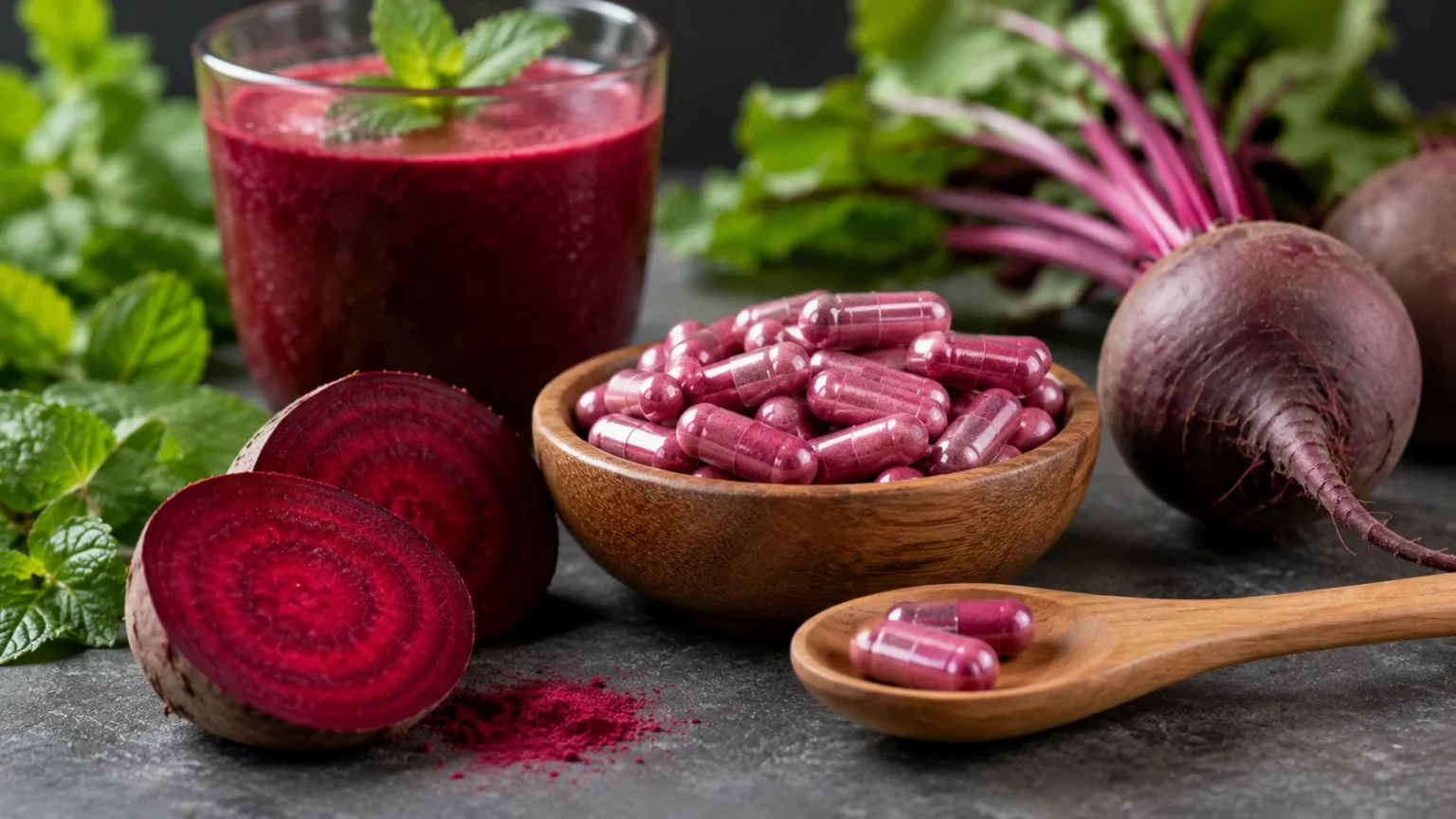

Beetroot Supplement: Benefits, Dosage & Side Effects
Beetroot supplements have become popular among people looking for convenient ways to support exercise performance, circulation, and cardiovascular health. They are commonly sold as beetroot powder, capsules, concentrated juice shots, gummies, and nitrate-standardized sports products. Much of the interest comes from beetroot’s natural nitrate content, which the body can convert into nitric oxide through a pathway involving bacteria in the mouth and other biological processes. Nitric oxide helps blood vessels relax and widen, which may improve blood flow and influence blood pressure and exercise efficiency. However, beetroot supplements vary widely in nitrate concentration, serving size, added ingredients, and overall quality. Understanding what a product contains is therefore just as important as understanding what beetroot itself may do.
A beetroot supplement is not a cure for high blood pressure, heart disease, poor circulation, or low athletic performance, and its effects differ from one person to another. Some people may notice improved exercise tolerance or modest changes in blood pressure, while others experience little obvious effect. The amount of dietary nitrate in a product, timing of the dose, training status, oral bacteria, diet, and health conditions can all influence the response. Beetroot can also cause harmless red or pink urine and stool, digestive symptoms, or problems for people who need to limit oxalates or carefully manage blood pressure. Supplement use should therefore be considered in the context of overall nutrition and medical treatment. This guide explains the potential beetroot supplement benefits, practical dosage considerations, side effects, and situations where professional advice is sensible.
What Is a Beetroot Supplement?
A beetroot supplement is a concentrated product made from beetroot, also called red beet or table beet, that is designed to provide beet-derived nutrients in a more convenient form than eating whole vegetables. Products may contain dried beet powder, beet juice concentrate, beet extract, or standardized amounts of nitrate. Powders are commonly mixed into water, smoothies, or pre-workout drinks, while capsules offer a simpler option for people who dislike the earthy flavor of beetroot. Concentrated shots are particularly common among runners, cyclists, and endurance athletes because they can deliver a meaningful amount in a small volume. The nutritional composition varies considerably, so two products labeled “beetroot supplement” may not provide comparable amounts of nitrate or other compounds.
Beetroot naturally contains dietary nitrate, pigments called betalains, folate, potassium, and several other plant compounds. However, supplements do not always preserve these nutrients in the same proportions as whole beetroot. A concentrated nitrate product may be designed mainly for nitric oxide production rather than for broad nutritional value. Conversely, a simple dried beet powder may contain many beet components but provide a relatively uncertain amount of nitrate. This distinction matters because much of the research surrounding exercise performance and blood pressure focuses specifically on nitrate-rich beetroot rather than beet flavor or color alone. Consumers should therefore look beyond the front label. Information about nitrate content, serving size, processing, added sugars, caffeine, and other ingredients can provide a clearer picture of what the supplement is intended to deliver.
When nitrate from beetroot is consumed, some of it is absorbed into the bloodstream and later concentrated in saliva. Bacteria in the mouth convert nitrate into nitrite, which can then participate in reactions that increase nitric oxide availability in the body. Nitric oxide helps regulate blood vessel tone and can influence oxygen delivery, muscle efficiency, and cardiovascular function. This nitrate-nitrite-nitric oxide pathway is one reason beetroot is frequently marketed as a natural nitric oxide supplement. The process is more complex than simply eating nitrate and instantly increasing blood flow. Oral bacteria, stomach chemistry, oxygen availability, and other factors influence conversion. This biological pathway also explains why certain mouthwashes may potentially reduce some nitrate-related effects by altering oral bacteria involved in the conversion process.
Beetroot supplements are often marketed alongside conventional nitric oxide “boosters” containing ingredients such as citrulline or arginine. These products work through different pathways, even though the marketing language may sound similar. Beet-derived nitrate uses the nitrate-nitrite pathway, whereas citrulline and arginine are connected to nitric oxide production through nitric oxide synthase. One mechanism is not automatically better for every person or every exercise goal. Some sports formulas combine beet nitrate with other ingredients, which can make it difficult to know which component is responsible for any perceived effect. Combination products can also increase the chance of interactions or excessive stimulant intake when caffeine is included. Reading the complete ingredient list is therefore important when choosing a product.
Whole beetroot still offers advantages that supplements may not fully reproduce. Eating beets provides fiber, water, micronutrients, and the benefits of consuming a vegetable as part of an overall balanced diet. Supplements are mainly useful for convenience, more predictable timing, or potentially concentrated nitrate delivery. Athletes may find a small shot easier to consume before training than a large plate of beets. Someone who simply wants the general nutritional benefits of beetroot may not need a supplement at all. The choice should depend on the goal rather than on the assumption that concentrated products are always more effective. Supplements can complement a nutritious diet, but they should not replace vegetables, adequate protein, healthy fats, whole grains, fruits, sleep, exercise, or appropriate medical care.
Potential Benefits of Beetroot Supplements
Blood pressure support is one of the most discussed potential benefits of beetroot supplementation. Dietary nitrate can increase nitric oxide availability, which may encourage blood vessels to relax and reduce vascular resistance. Some people experience modest reductions in blood pressure after consuming nitrate-rich beetroot products, although the magnitude and consistency of the response vary. The effect may differ according to baseline blood pressure, age, health status, dose, and how regularly the product is used. A supplement should not be treated as a replacement for prescribed antihypertensive medication. People taking blood pressure drugs should also be cautious because combining multiple blood-pressure-lowering influences could contribute to dizziness or excessively low readings in susceptible individuals.
Beetroot supplements may support endurance exercise by improving aspects of oxygen efficiency during physical activity. In practical terms, some people may be able to perform a given workload while using slightly less oxygen or may sustain exercise for longer before fatigue. This potential benefit has made beet juice and concentrated nitrate products popular among runners, cyclists, rowers, swimmers, and other endurance athletes. Responses appear to vary by training status, with highly trained elite athletes sometimes showing smaller benefits than recreationally active people. The type of exercise also matters because short explosive efforts and long steady endurance sessions place different demands on the body. Beetroot should therefore be viewed as a possible performance aid rather than a guaranteed method for producing faster times.
High-intensity exercise may also be influenced by nitrate supplementation, although results can be less predictable than the marketing suggests. Repeated sprint efforts, interval training, and sports involving bursts of intense activity may benefit from improved muscle blood flow or efficiency in some situations. Nitrate may have particularly relevant effects in muscle fibers that contribute to forceful or repeated contractions. However, any improvement is generally modest compared with the influence of training quality, recovery, technique, and nutrition. Athletes should avoid trying a new concentrated beet supplement for the first time immediately before an important competition because digestive symptoms can occur. Testing the product during normal training gives the person a chance to evaluate tolerance, timing, and whether any practical benefit is noticeable.
Beetroot may also support blood flow more broadly because nitric oxide plays an important role in vascular function. This has led to interest in possible benefits for walking capacity, circulation, and exercise tolerance in people with certain health conditions. However, these uses require more careful medical interpretation than simply taking a sports supplement. Poor circulation can result from peripheral artery disease, heart disease, diabetes, nerve problems, or other conditions that need proper diagnosis and treatment. A beetroot product should never delay evaluation of persistent leg pain, chest symptoms, or other signs of cardiovascular disease. The supplement may have a role as part of a wider lifestyle approach in some people, but the underlying cause of symptoms matters much more than the presence of nitrate in the diet.
Betalains and other beet compounds have also generated interest because they possess antioxidant and anti-inflammatory properties in laboratory settings. These characteristics are often used in marketing claims about recovery, soreness, and general wellness. Human outcomes are more complicated because antioxidant activity measured in a laboratory does not automatically translate into dramatic health benefits when a supplement is consumed. Some people may find beet-based products useful as part of their post-exercise nutrition, but they should not expect them to eliminate inflammation or replace recovery fundamentals. Adequate calories, protein, carbohydrates, hydration, sleep, and appropriate training load remain far more important. Beetroot’s strongest practical interest still centers on dietary nitrate and vascular effects rather than treating it as a universal antioxidant remedy.
Beetroot Supplement Benefits for Exercise and Athletic Performance
Endurance athletes often use beetroot supplements before training because nitrate may reduce the oxygen cost of submaximal exercise. A cyclist, for example, may be able to produce a particular power output with slightly improved physiological efficiency after an effective nitrate dose. This does not mean the rider suddenly develops greater aerobic fitness after one drink. Instead, the body may use oxygen and muscle energy somewhat differently during exercise. Small improvements can still matter in competitive settings where finishing times are separated by seconds. Recreational athletes may also appreciate an easier perceived effort during certain sessions. The response remains highly individual, so personal testing under consistent conditions is more useful than assuming that a dose effective for someone else will produce the same result.
Timing matters because dietary nitrate needs time to move through the nitrate-nitrite-nitric oxide pathway. Many sports users consume nitrate-rich beetroot a few hours before exercise rather than immediately before starting. The exact timing can vary according to the product and the person, so manufacturer instructions and professional guidance should be considered. Taking a dose too close to training may mean peak nitrate-related effects occur after the session has already ended. At the same time, consuming a large drink too early can be inconvenient or cause stomach discomfort. Athletes frequently experiment during ordinary training days to find a practical routine. Consistency in meals, hydration, and exercise conditions can make it easier to judge whether the supplement provides a meaningful performance difference.
Some athletes use beetroot for several consecutive days before an event instead of relying only on a single pre-exercise dose. This approach is sometimes called nitrate loading, although it should not be confused with carbohydrate loading. Repeated intake may maintain elevated nitrate and nitrite availability over a longer period. Whether this offers an advantage over a single well-timed dose depends on the athlete and event. A marathon runner, cyclist, or tournament athlete may have different needs from someone completing a short gym workout. More is not necessarily better, and consuming very large quantities increases the chance of gastrointestinal discomfort. Athletes subject to structured nutrition programs should integrate beetroot into their existing plan rather than adding it randomly alongside multiple pre-workout products.
Strength and resistance-training benefits are less straightforward than endurance claims. Increased blood flow and altered muscle function may theoretically support repeated contractions or work capacity, and some lifters report a stronger “pump” after nitrate-rich products. However, a temporary feeling of increased muscle fullness does not necessarily indicate greater strength or long-term muscle growth. Progressive overload, sufficient protein, total calorie intake, sleep, and appropriate recovery remain the major drivers of strength and hypertrophy. Beetroot may be more relevant to repeated high-intensity sets or conditioning work than to a single maximal lift. Lifters should therefore evaluate it according to the actual training goal. A supplement that helps one type of session may have little noticeable effect during another.
Competition rules and supplement quality also matter for serious athletes. Beetroot itself is not normally considered a prohibited performance-enhancing substance, but contaminated supplements can contain undeclared ingredients. Products manufactured under reputable third-party sports certification programs may reduce this risk for athletes subject to drug testing. Combination pre-workouts deserve particular caution because they may contain stimulants, proprietary blends, or other active compounds in addition to beetroot. A plain nitrate-standardized beet product is easier to evaluate than a formula containing ten or fifteen ingredients. Athletes should also remember that supplements cannot compensate for poor pacing, inadequate fueling, dehydration, or insufficient training. Beetroot is most useful when it fine-tunes an already strong performance plan rather than serving as its foundation.
How Much Beetroot Supplement Should You Take?
There is no single universal beetroot supplement dosage because products differ dramatically in concentration. One scoop of basic beetroot powder may provide far less nitrate than a small standardized beet juice shot. For this reason, comparing products only by grams of powder can be misleading. Sports-oriented research and products frequently focus on the amount of nitrate delivered rather than the total weight of beet material. Many commonly studied servings provide several hundred milligrams of nitrate, but exact needs depend on the goal, health status, and formulation. Consumers should check whether the label states nitrate content per serving. If it does not, predicting nitric oxide-related effects becomes more difficult because the amount of nitrate in ordinary beet powder can vary substantially.
For exercise purposes, people often consume a nitrate-rich serving roughly two to three hours before activity. This general timing allows the biological conversion process to occur before the workout or event. Some products are specifically formulated around this use and provide directions that should be followed rather than doubling servings without reason. People trying beetroot for the first time may prefer to start conservatively to assess digestive tolerance. It is also wise to avoid combining several high-nitrate supplements simultaneously because the total intake may become difficult to estimate. Athletes with cardiovascular conditions or those taking prescription medications should discuss supplementation with an appropriate healthcare professional. A sports product can still have meaningful physiological effects even when it is marketed as natural.
Daily beetroot powder serving sizes are often listed in grams, but these instructions refer to the amount of powder rather than a standardized nitrate dose. A typical manufacturer may suggest anything from a teaspoon to several grams depending on concentration and processing. Because formulations differ, copying the scoop size from another brand can produce a completely different intake. People using beetroot for general nutrition rather than performance may not need highly concentrated nitrate products. A small amount added to smoothies may simply be a convenient source of beet-derived compounds and color. In that situation, expectations should be different from using a product specifically standardized for sports performance. The desired outcome should determine whether nitrate content needs to be measured carefully.
People interested in blood pressure should be especially cautious about self-prescribing large daily doses. A modest blood-pressure reduction may be beneficial for some individuals, but excessively low blood pressure can cause lightheadedness, weakness, blurred vision, or fainting. Anyone already using antihypertensive medications should monitor blood pressure according to their clinician’s recommendations rather than assuming a natural supplement cannot interact with treatment. Dose adjustments to prescription medication should never be made independently because of a few readings after taking beetroot. Hydration, illness, exercise, heat, and other factors can also affect blood pressure. If repeated low readings or symptoms occur after starting supplementation, the situation should be reviewed with a healthcare professional.
Children, pregnant people, breastfeeding individuals, and people with significant kidney, cardiovascular, or metabolic conditions should use more caution because general adult sports dosages may not be appropriate. Supplement formulations can also contain ingredients beyond beetroot, including sweeteners, herbs, stimulants, minerals, or vitamins. A person may tolerate beetroot itself but react to one of these additions. Anyone using a concentrated product regularly should know exactly what is in each serving. If the main goal is simply to eat more beets, whole foods may be the more straightforward choice. Supplements are most useful when they solve a specific convenience or dosing problem. There is little benefit in taking increasingly large amounts simply because beetroot has a healthy reputation.
Side Effects of Beetroot Supplements
One of the most noticeable beetroot side effects is a harmless color change in urine called beeturia. Urine may become pink, red, or reddish-purple after consuming beets or concentrated beet products. Stool can also take on a red or dark color. These changes can look alarming, particularly for someone who does not expect them. Beet-related pigment usually resolves as the food or supplement passes through the body. However, people should not automatically assume every episode of red urine or stool comes from beetroot. Blood in urine, rectal bleeding, black tarry stool, pain, or persistent unexplained discoloration requires appropriate medical evaluation, particularly when the timing does not clearly match beet consumption.
Digestive discomfort is another relatively common issue, especially with concentrated powders or juice products. Some people experience nausea, bloating, abdominal discomfort, loose stools, or increased bowel movements. Large servings taken on an empty stomach may be harder to tolerate than smaller doses. Added sweeteners, sugar alcohols, flavorings, or other ingredients can also contribute to symptoms. Starting with a lower amount and testing it away from important events may help identify tolerance. Persistent abdominal pain, vomiting, or severe diarrhea should not be accepted simply as the cost of taking a supplement. If a product repeatedly causes significant gastrointestinal symptoms, discontinuing it and choosing another nutritional strategy is usually more sensible than forcing the body to adapt.
Blood pressure may decrease after nitrate-rich beetroot supplementation, which is often described as a benefit but can become a side effect in susceptible individuals. Symptoms of low blood pressure can include dizziness, faintness, fatigue, weakness, blurred vision, or feeling unsteady when standing. The risk may be greater in someone taking antihypertensive medications or other drugs that influence blood pressure. Dehydration can make these symptoms more pronounced. People who already have naturally low blood pressure should be particularly cautious with concentrated nitrate supplements. Checking blood pressure under appropriate conditions can provide useful information if symptoms appear. Severe dizziness, fainting, chest pain, or significant weakness requires medical attention rather than simply reducing the supplement dose and continuing.
Beetroot is relatively high in oxalates, compounds that can contribute to certain types of kidney stones in susceptible people. Someone with a history of calcium oxalate stones may therefore need to consider total dietary oxalate intake rather than assuming unlimited beet products are appropriate. The risk depends on individual stone history, hydration, dietary calcium, kidney function, and other factors. A concentrated supplement could potentially add a substantial amount depending on how it is processed. People with recurrent kidney stones should discuss dietary changes with a clinician or qualified dietitian familiar with their stone composition. Avoiding every oxalate-containing food is not necessarily required. Personalized guidance is more useful than broad restrictions because many nutritious foods naturally contain oxalates.
Allergic reactions to beetroot are uncommon but possible. Symptoms could include itching, hives, swelling, wheezing, vomiting, or other signs of an allergic response after consumption. Difficulty breathing, throat swelling, or rapidly worsening symptoms require emergency medical care. Supplements can also contain ingredients that are more likely to trigger reactions than beet itself, so the complete label matters. Manufacturing contamination is another reason to choose reputable products, particularly for people with severe food allergies. Anyone who develops a repeatable reaction after using a specific beet supplement should stop taking it until the cause is clarified. Natural ingredients can still cause allergies, medication interactions, and side effects. The word “natural” describes origin, not a guarantee of safety for every person.
Beetroot Supplement Interactions and Who Should Be Careful
People taking medications for high blood pressure should use beetroot supplements carefully because dietary nitrate may further lower blood pressure. This does not mean beetroot is automatically unsafe with every antihypertensive medication, but the combined effect may be greater than expected in certain individuals. Symptoms such as lightheadedness when standing, unusual weakness, or fainting deserve attention. Blood pressure medications should never be reduced or skipped simply because someone starts using beet powder. A clinician may want to review readings and symptoms before making any changes. The same principle applies to people using multiple cardiovascular treatments. Supplements should be considered part of the overall medication picture rather than treated as nutritionally invisible because they are available without a prescription.
Anyone taking medication that affects blood vessel dilation or erectile function should also mention concentrated nitrate supplementation to a healthcare professional. Beetroot-derived dietary nitrate is not identical to prescription nitrate medication used for angina, but both can influence nitric oxide-related vascular pathways. The practical significance depends on the medications involved, dose, blood pressure, and health status. People with heart disease should not experiment with large supplement doses as a substitute for medical treatment. Chest discomfort during exercise requires appropriate cardiovascular evaluation regardless of whether beetroot seems to improve circulation. A supplement marketed for blood flow should never create a false sense that symptoms can be managed without diagnosis. Cardiovascular conditions require evidence-based treatment and individualized professional guidance.
People with kidney disease may need additional caution because kidney function influences electrolyte balance, blood pressure management, and dietary recommendations. Beetroot naturally contains potassium, and the amount in supplements varies. Someone instructed to limit potassium should not assume every beet powder fits within that plan. Oxalate content may also matter in people with a history of particular kidney stones. The appropriate approach depends on kidney function, laboratory results, medications, and the type of supplement. A dietitian specializing in kidney health can often provide more specific guidance than a general product label. Supplements that seem harmless to someone with normal kidney function may have different implications for people whose kidneys cannot regulate minerals and fluid as effectively.
Pregnancy and breastfeeding are situations where unnecessary concentrated supplementation deserves caution. Eating cooked or raw beetroot as part of a balanced diet is different from taking a high-dose extract or nitrate-standardized sports supplement every day. Research on concentrated products may not cover every formulation used during pregnancy. Blood pressure can also require special monitoring during pregnancy, making self-directed supplementation less appropriate when a person has hypertension, low blood pressure, or pregnancy-related cardiovascular concerns. Prenatal care professionals should know about all supplements being used, including powders and “natural” performance products. A product does not need to contain a prescription ingredient to be relevant during pregnancy. When the goal is general nutrition, whole foods may provide a simpler and more predictable option.
People preparing for surgery or undergoing complex medical treatment should also disclose beetroot supplements along with vitamins, herbs, and sports products. Clinicians may want a complete list because supplements can influence blood pressure, gastrointestinal function, laboratory interpretation, or medication plans. The exact instructions before surgery vary, so there is no universal rule that every beet product must be stopped for the same number of days. Following the surgical team’s instructions is safer than relying on generic internet advice. Older adults taking multiple medications may similarly benefit from a pharmacist or clinician reviewing supplement use. The more complicated someone’s medical history becomes, the less useful one-size-fits-all dosage recommendations are. Individual context determines whether a concentrated beetroot supplement is helpful, unnecessary, or potentially problematic.
Beetroot Powder vs. Beet Juice vs. Capsules
Beetroot powder is popular because it is portable, relatively easy to store, and simple to mix into drinks or food. The powder may be made by drying whole beetroot or concentrated juice, which means nutrient composition can differ between brands. Some products emphasize general beet nutrition, while others are standardized specifically for nitrate content. Powder can be useful for smoothies, yogurt, oatmeal, and pre-workout drinks, although its earthy taste remains noticeable. Measuring consistent servings is fairly easy when a scoop is included. However, a gram amount alone does not tell you how much nitrate is present. People seeking nitric oxide-related performance benefits should therefore look for products that clearly disclose nitrate content rather than relying only on the bright red color of the powder.
Beetroot juice provides nitrate in a liquid form and has been widely used in sports settings. Drinking a large glass of ordinary beet juice can provide useful nutrients but may also require a significant volume and contain naturally occurring sugars. Concentrated beet shots solve this problem by delivering more beet-derived nitrate in a smaller serving. They are convenient before exercise and easier to transport than fresh juice. Some people dislike the strong earthy or sweet taste, while others tolerate it well. Juice products may also cause gastrointestinal discomfort when consumed quickly. Refrigeration requirements vary depending on processing. Checking the actual nitrate amount is again important because one bottle marketed as beet juice may be nutritionally very different from a concentrated sports shot.
Capsules offer convenience and avoid the distinctive flavor that discourages some people from using beetroot regularly. They can be particularly useful for travel or for people who do not want to mix powder before workouts. The main limitation is that a capsule has limited physical volume, so several capsules may be necessary to provide the amount of beet material or nitrate delivered by a concentrated shot. Some products solve this by using extracts rather than simple dried powder. Consumers should therefore compare the amount per serving rather than assuming one capsule equals one serving of juice. Capsules can also contain additional ingredients such as black pepper extract, vitamins, or herbal compounds. These additions may be unnecessary when the person’s main goal is simply obtaining dietary nitrate.
Gummies have become increasingly common because they are easy to take and may taste better than plain beet powder. However, flavor and convenience can come with added sugars, sweeteners, acids, or other ingredients. A gummy may also contain far less beet-derived nitrate than a specialized sports product despite prominent beetroot marketing. This does not make gummies inherently poor products, but expectations should match their composition. Someone wanting general beet supplementation may enjoy them, while a competitive endurance athlete may require a more clearly standardized nitrate dose. Serving size is also important because several gummies may be required each day. Reading the nutrition facts and supplement panel is more informative than choosing a format based solely on appearance or claims such as “nitric oxide support.”
The best form ultimately depends on the person’s goal. Athletes seeking predictable pre-exercise nitrate intake may prefer a standardized concentrated shot or powder with disclosed nitrate content. People adding beetroot for general dietary variety may be satisfied with basic powder or whole beets. Capsules are useful for convenience, while gummies prioritize ease and taste. No format is automatically superior because formulation quality matters more than the container. Third-party testing, transparent labeling, realistic claims, and clear ingredient amounts are useful indicators when comparing products. People should be skeptical of supplements promising extreme vascularity, instant endurance gains, detoxification, or dramatic cardiovascular improvements. Beetroot has interesting physiological properties, but trustworthy products do not need exaggerated promises to make it appealing.
How to Use Beetroot Supplements Safely and Effectively
Start by defining why you want to use a beetroot supplement. Someone training for a cycling event has a different goal from a person hoping to support healthy blood pressure or simply increase vegetable-derived nutrients. The purpose determines which product features matter most. Athletes may prioritize standardized nitrate content and pre-exercise timing, while general wellness users may prefer a simple food-based powder. Having a clear goal also makes it easier to decide whether the supplement is working. Without one, people can continue buying products indefinitely based on vague claims about circulation or energy. Supplements are most useful when they address a specific nutritional or performance objective that can be evaluated realistically.
Introduce the supplement during a normal day rather than before an important race, presentation, or long trip. This gives you a chance to discover whether it causes nausea, loose stools, dizziness, or other unexpected effects. Starting with the manufacturer’s standard serving rather than immediately doubling the amount is usually more sensible. If the product is concentrated, increasing beyond the label recommendation may not improve results and can make side effects more likely. People using beetroot before exercise should test the timing during several comparable training sessions. Keeping notes on the dose, time, workout, perceived effort, and digestive tolerance can be surprisingly useful. Personal data often provides a clearer answer than relying on dramatic testimonials from other users.
Pay attention to oral hygiene practices when using beetroot specifically for nitrate-related benefits. The conversion of nitrate to nitrite depends partly on bacteria naturally present in the mouth. Strong antiseptic mouthwash used around the same time may interfere with this pathway by reducing those bacteria. This does not mean people should abandon dental hygiene or ignore instructions from a dentist. Brushing, flossing, and appropriate dental care remain important. It simply highlights that the nitrate pathway involves oral biology rather than only digestion in the stomach. Anyone prescribed a medical mouth rinse should continue following professional advice. Supplement performance should never take priority over treatment for gum disease, infection, or another dental condition.
Combine beetroot with the fundamentals that support the same goal. For blood pressure, this includes an overall heart-healthy eating pattern, regular physical activity, adequate sleep, weight management where appropriate, smoking cessation, and prescribed treatment. For exercise performance, training consistency, carbohydrate availability, hydration, recovery, and appropriate protein intake matter far more than one supplement. Beetroot may provide a small additional advantage when these foundations are already strong. Thinking of it as an enhancer rather than a replacement prevents unrealistic expectations. It also reduces the temptation to continually increase the dose when progress depends on something else. A supplement cannot compensate for missed training, chronic sleep deprivation, or poorly controlled cardiovascular disease.
Finally, reassess whether continued use is worthwhile. If a standardized beet supplement causes repeated stomach problems, dizziness, or no meaningful benefit after an adequate trial, there may be little reason to keep taking it. People using it for blood pressure should discuss their overall readings with a clinician rather than judging success from a single measurement. Athletes can compare similar workouts and competition outcomes while recognizing that performance naturally varies. The product should also remain affordable enough that it does not displace more important nutrition priorities. Supplements are optional tools, not requirements for good health. When beetroot fits the person’s goals, medical situation, and tolerance, it can be a practical addition. When it does not, whole beets or other nutritious foods remain perfectly reasonable alternatives.
Frequently Asked Questions About Beetroot Supplements
What is a beetroot supplement good for?
Beetroot supplements are most commonly used to increase dietary nitrate intake, which may support nitric oxide production, blood flow, modest blood pressure reduction, and aspects of exercise performance. Benefits vary depending on the nitrate dose, individual response, health status, and product quality.
How much beetroot supplement should I take daily?
There is no universal daily dose because beet powders, capsules, and concentrated juices contain very different amounts of nitrate. Follow the product instructions and, when using beetroot for a specific health purpose or alongside medication, discuss an appropriate intake with a healthcare professional.
When should I take beetroot before exercise?
Many nitrate-focused products are taken roughly two to three hours before exercise so nitrate can move through the body’s conversion pathway before the workout begins. Product instructions can differ, so test your timing during ordinary training before using the supplement for an important event.
What are the most common side effects of beetroot supplements?
Possible side effects include pink or red urine, reddish stool, nausea, bloating, loose stools, and blood-pressure-related dizziness. People prone to calcium oxalate kidney stones may also need to consider the oxalate content of frequent or concentrated beet consumption.
Can you take beetroot supplements with blood pressure medication?
Beetroot may further lower blood pressure, so people taking antihypertensive medication should use concentrated products cautiously and discuss them with their healthcare professional. Do not reduce or stop prescribed medication simply because your blood pressure changes after taking a supplement.