

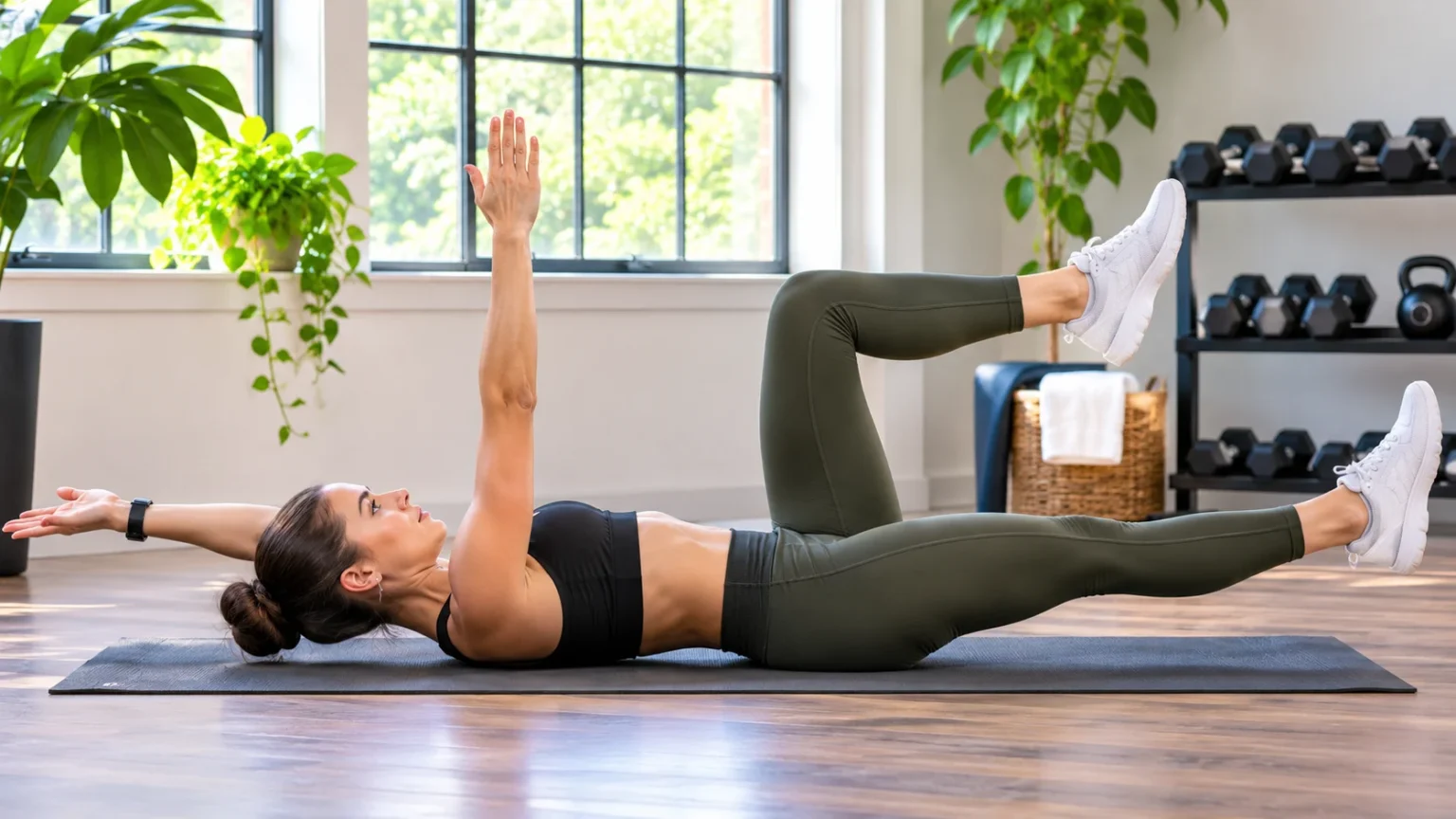

The dead bug ab workout is a simple yet effective core exercise that helps improve abdominal strength, stability, and movement control. Despite its unusual name, this floor-based movement is widely used in fitness training and physical rehabilitation. It involves moving opposite arms and legs while keeping your torso stable, challenging your core muscles without requiring complicated equipment.
Unlike traditional crunches or sit-ups, the dead bug exercise focuses on controlling movement while maintaining a supported position. This makes it a useful option for beginners and experienced exercisers alike. Understanding the correct technique, muscles involved, and common mistakes can help you include this movement in a balanced fitness routine.
What Is the Dead Bug Ab Workout?
The dead bug ab workout is a floor-based core exercise performed while lying on your back. The basic movement involves extending opposite arms and legs while maintaining a controlled trunk position. Its name comes from the starting posture, which resembles an insect lying on its back with its limbs raised.
The exercise is commonly classified as an anti-extension core movement because the abdominal muscles work to resist excessive arching of the lower back. Instead of repeatedly bending the spine, the focus remains on controlling limb movements. This makes the dead bug different from many traditional abdominal exercises that involve repeated spinal flexion.
Dead bugs are often included in beginner strength programs, warm-up routines, and rehabilitation exercises. The movement can be adjusted by changing the range of motion or moving fewer limbs at once. These modifications allow people to develop coordination and abdominal control according to their current abilities.
What Muscles Does the Dead Bug Exercise Work?
The dead bug exercise primarily challenges the abdominal muscles responsible for stabilizing the trunk. These include the rectus abdominis, transverse abdominis, and internal and external obliques. Together, these muscles help control the position of the pelvis and spine while the arms and legs move.
The rectus abdominis contributes to resisting excessive spinal extension during the exercise. The obliques help control rotation and maintain trunk alignment when opposite limbs move. Meanwhile, the transverse abdominis contributes to abdominal pressure regulation and overall core stability during controlled movement.
Other muscles also participate, including the hip flexors and muscles responsible for shoulder movement. However, these muscles mainly help position and move the limbs rather than serving as the primary abdominal stabilizers. The dead bug therefore trains coordination between the trunk and limbs instead of isolating one abdominal muscle.
How to Do a Dead Bug Ab Workout Correctly
Begin by lying comfortably on your back on an exercise mat with your knees bent. Raise your legs until your hips and knees are approximately at right angles, creating a tabletop position. Extend both arms toward the ceiling while keeping your head, shoulders, and torso relaxed against the floor.
Gently engage your abdominal muscles and maintain a comfortable, controlled lower-back position. Slowly extend your right arm overhead while moving your left leg toward the floor. Only lower the limbs as far as you can without excessive back arching, twisting, or losing control of your trunk.
Return to the starting position and repeat the movement with the opposite arm and leg. Continue alternating sides while breathing naturally and moving at a steady pace. The goal is not to reach the floor with every repetition but to maintain stable movement throughout a range that suits your current strength.
Why Proper Dead Bug Form Matters
Proper exercise technique helps ensure that the abdominal muscles provide the intended stabilization during dead bugs. When the lower back arches excessively, the movement may become harder to control. Reducing the range of motion can make it easier to maintain a stable torso while gradually developing abdominal strength.
Maintaining a controlled pace is also important because moving too quickly can reduce the challenge of coordinating the arms, legs, and trunk. Slow repetitions provide more time to recognize unwanted movement. They also allow you to focus on maintaining steady breathing and comfortable positioning.
Good technique does not require forcing the lower back aggressively into the floor. Instead, aim for a comfortable position that remains consistent throughout each repetition. If you experience back pain or cannot control the movement, choose an easier variation or seek guidance from a qualified exercise professional.
Benefits of the Dead Bug Ab Workout
One major benefit of the dead bug ab workout is improved abdominal muscle control. The exercise challenges the core to stabilize the trunk while the arms and legs move independently. This combination can help develop strength and coordination that support more complicated physical activities.
Another advantage is that the exercise requires minimal equipment and can be performed in a small space. A comfortable mat is usually sufficient for the basic variation. This makes dead bugs convenient for home workouts, gym sessions, and fitness routines that do not involve specialized exercise machines.
Dead bugs can also be adapted to different fitness levels without requiring heavy resistance. Beginners can use a limited range of motion, while experienced individuals can explore more challenging variations. The ability to adjust difficulty makes the exercise useful within broader programs focused on strength, stability, and movement quality.
How Dead Bugs Improve Core Stability
Core stability describes the ability to control the trunk and pelvis during movement or when external forces act on the body. The dead bug exercise challenges this ability by introducing controlled arm and leg movements. Abdominal muscles must coordinate their activity to prevent excessive changes in spinal position.
This type of training is sometimes called anti-extension training because it emphasizes resisting unwanted backward arching of the spine. The challenge increases as the limbs extend farther from the body. However, longer movements are only useful when the person can maintain comfortable control throughout the exercise.
Improving trunk stability can support the performance of many everyday and athletic activities. Lifting, reaching, walking, and carrying objects all require coordination between the core and moving limbs. Dead bugs provide one way to practice this coordination, although they should be combined with other suitable movement and strength exercises.
Dead Bug Exercise for Beginners
Beginners can start with a simplified dead bug variation before performing the full opposite-arm-and-leg movement. Lie on your back with both knees bent and feet resting on the floor. Raise one leg into a tabletop position and lower it carefully while keeping the trunk stable.
Once this feels manageable, try holding both legs in a tabletop position while moving one arm at a time. This variation introduces additional stabilization demands without requiring simultaneous leg movement. Gradually adding alternating leg motions can help build the coordination needed for the traditional dead bug.
Beginners should prioritize comfortable movement rather than completing a large number of repetitions. Starting with a few controlled movements on each side can help establish technique. As confidence improves, the exercise can be progressed gradually while maintaining steady breathing and avoiding unnecessary lower-back discomfort.
Dead Bug Exercise for Lower Back Support
The dead bug exercise is sometimes included in programs designed to improve trunk control and support comfortable movement. Because it is performed while lying on the back, it may feel more manageable than some standing or unsupported abdominal exercises. However, individual responses depend on the cause of discomfort.
The abdominal muscles help control spinal movement during daily activities, and dead bugs can train this function. Maintaining a stable torso while moving the limbs encourages coordinated muscular activity. This may be useful as part of a broader strengthening program that includes appropriate mobility and functional exercises.
Dead bugs are not a universal treatment for lower-back pain. Certain conditions may require modifications or a different rehabilitation approach. People experiencing persistent pain, radiating symptoms, or worsening discomfort should seek professional evaluation rather than assuming that additional abdominal exercises will resolve the underlying problem.
Dead Bug vs. Crunches: Which Is Better?
Dead bugs and crunches both challenge abdominal muscles, but they use different movement patterns. Crunches involve flexing the upper trunk, while dead bugs emphasize resisting unwanted spinal movement. Each exercise can contribute to abdominal training, depending on the person’s goals, physical abilities, and preferences.
Crunches primarily involve repeated activation of the rectus abdominis through trunk flexion. Dead bugs require coordination between several abdominal muscles while the arms and legs move. The dead bug therefore places greater emphasis on controlling trunk position during limb movement rather than repeatedly lifting the shoulders.
Neither exercise is automatically better for everyone. A balanced abdominal routine may include both dynamic movements and stabilization exercises. Choosing appropriate variations helps develop different aspects of muscular strength, endurance, and coordination while avoiding exercises that produce discomfort.
Dead Bug vs. Plank for Core Strength
The dead bug and plank are popular core exercises that challenge trunk stability in different ways. Dead bugs involve alternating limb movements while lying on the back. Planks generally require maintaining a stationary position while supporting body weight through the arms and feet or knees.
Both exercises engage abdominal muscles to resist excessive spinal movement. However, planks also place sustained demands on the shoulders and other supporting muscles. Dead bugs introduce coordination challenges as the limbs move independently, making them useful for practicing controlled movement between the trunk and extremities.
The best choice depends on exercise experience, comfort, and training goals. Beginners may find modified dead bugs easier to learn, while some people prefer the static challenge of a plank. Combining suitable versions of both exercises can provide variety within a well-rounded core training program.
Common Dead Bug Exercise Mistakes
One common mistake is extending the legs farther than the abdominal muscles can comfortably control. This may cause excessive lower-back arching or unwanted pelvic movement. Shortening the range of motion allows you to maintain a more consistent position while still challenging the core.
Another mistake is moving the arms and legs too quickly. Rapid repetitions can make it difficult to recognize when the torso begins shifting or twisting. Using a slow, steady pace helps maintain coordination and makes each repetition easier to control.
Holding the breath is another issue that can occur during challenging abdominal exercises. Controlled breathing helps maintain a comfortable rhythm and avoids unnecessary straining. If you find yourself repeatedly holding your breath, consider reducing the difficulty or taking a brief rest before continuing.
How Many Dead Bugs Should You Do?
The appropriate number of dead bug repetitions depends on your current ability and the difficulty of the chosen variation. Beginners may start with approximately five controlled repetitions per side. The main goal is maintaining consistent technique rather than reaching a specific number.
More experienced exercisers may perform additional repetitions or introduce variations that increase the stabilization challenge. However, completing more movements is not always better if control begins to decline. Stopping before technique deteriorates helps keep the exercise focused on its intended purpose.
Dead bugs can be included in a core routine several times per week, depending on training volume and recovery needs. They may also be used during warm-ups when performed at a manageable intensity. Exercise frequency should fit your overall fitness program rather than being determined by a rigid daily target.
How Often Should You Include Dead Bugs in Workouts?
Dead bugs can be included in many strength training routines because the basic movement requires little equipment. Some people perform them during warm-ups, while others include them in dedicated abdominal sessions. The appropriate schedule depends on exercise intensity, overall training demands, and individual recovery.
Beginners may benefit from practicing the movement regularly at a comfortable level to improve coordination. Short sessions with controlled repetitions can help reinforce technique. As the exercise becomes easier, difficulty can increase through movement range or carefully selected variations rather than simply extending every workout.
Rest and recovery remain important when dead bugs are performed as challenging strength exercises. The abdominal muscles respond to training demands like other muscle groups. A balanced routine should include varied movements and adequate recovery instead of relying on one exercise for every aspect of core development.
Dead Bug Exercise Variations to Try
The heel tap dead bug is a beginner-friendly variation that involves lowering one bent leg toward the floor while maintaining a stable trunk. Keeping the knee bent reduces the challenge compared with extending the leg completely. This makes it useful for practicing pelvic control and comfortable abdominal activation.
A straight-leg dead bug variation increases difficulty by extending the moving leg farther away from the body. The longer lever places greater demands on the muscles responsible for resisting trunk extension. This version should only be used when the basic movement can be performed without excessive arching or discomfort.
Some experienced exercisers use light resistance bands or carefully controlled external resistance to increase the challenge. These variations require additional coordination and may not be necessary for general fitness goals. Progressing gradually allows the exercise to remain useful without sacrificing movement quality or comfort.
Can Dead Bugs Help Improve Posture?
The dead bug exercise develops abdominal control and coordination that may support comfortable trunk positioning during movement. However, posture is influenced by many factors, including habits, physical abilities, workplace conditions, and individual anatomy. One exercise cannot guarantee a particular posture or eliminate every movement-related problem.
Dead bugs encourage awareness of how the pelvis and spine respond to limb movements. This awareness may help some people develop better control during other exercises. The movement also provides an opportunity to practice maintaining a stable position without unnecessary tension in the shoulders or neck.
For broader postural fitness, dead bugs can be combined with strengthening exercises for the back, hips, and shoulders. Regular movement and varied physical activity are also useful for maintaining comfort. Rather than aiming for one supposedly perfect posture, focus on developing the strength and mobility needed for everyday activities.
Can Dead Bugs Help Build Visible Abs?
Dead bugs can strengthen the abdominal muscles, including the rectus abdominis and obliques. However, visible abdominal definition depends on several factors, including genetics, normal body variation, and overall muscle development. Performing this exercise does not specifically remove fat from the abdominal area.
For people interested in stronger abdominal muscles, dead bugs can be one part of a balanced resistance training program. Other core exercises challenge the muscles through different positions and movement patterns. Progressive training, adequate nutrition, and appropriate recovery support general muscular development.
The value of dead bugs extends beyond appearance because they improve the ability to coordinate movement and control the trunk. Developing functional strength can make the exercise worthwhile regardless of visible changes. Focusing on comfortable progress and performance provides a more practical way to evaluate training benefits.
Who Should Modify or Avoid Dead Bug Exercises?
Dead bugs may need modification for people with certain lower-back, hip, or shoulder conditions. Although the movement is often considered beginner-friendly, lifting and extending the limbs can still create uncomfortable demands. A smaller range of motion or supported variation may be more appropriate.
People recovering from surgery, significant injury, or certain medical conditions should follow individualized exercise advice. A physical therapist can determine whether the dead bug is suitable and recommend adjustments when necessary. Pain, numbness, or unusual symptoms during the movement should not be ignored.
Pregnancy and postpartum recovery may also require changes to abdominal exercise selection based on individual circumstances. Comfortable positioning, breathing, and medical guidance become important considerations. The most appropriate exercise is one that matches current abilities and supports safe movement rather than forcing a standard variation.
Tips to Get Better Results From Dead Bugs
Improving the dead bug exercise begins with mastering a comfortable starting position. Keep the torso stable and choose a range of motion that allows controlled limb movement. Practicing this foundation helps create consistent repetitions before introducing more challenging variations.
Another useful approach is to focus on smooth coordination rather than speed. Moving opposite arms and legs slowly allows more attention to trunk stability and breathing. Brief pauses during the movement can provide an additional challenge when they can be performed comfortably.
Track progress through improved movement control, greater exercise confidence, and the ability to perform suitable variations. Increasing difficulty gradually is more helpful than rushing toward advanced versions. Dead bugs work best when combined with other appropriate strength and mobility exercises in a balanced fitness routine.
Conclusion
The dead bug ab workout is a practical core strengthening exercise that challenges abdominal stability while the arms and legs move independently. It primarily involves the rectus abdominis, transverse abdominis, and obliques, with additional contributions from supporting muscles. Its floor-based position makes it accessible and adaptable to different fitness levels.
Performing dead bugs with controlled technique can help improve trunk stability, muscular coordination, and abdominal strength. Beginners can start with modified movements, while experienced exercisers may progress to more demanding variations. Maintaining steady breathing and avoiding excessive lower-back arching are important for comfortable exercise performance.
Including dead bugs in a balanced training routine can provide useful benefits without requiring complicated equipment. The exercise should match your current strength, movement abilities, and overall fitness goals. With consistent practice and gradual progression, dead bugs can become a valuable part of regular core training.
Frequently Asked Questions
What muscles does the dead bug ab workout target?
The dead bug primarily targets the rectus abdominis, transverse abdominis, and oblique muscles. Hip flexors and shoulder muscles also contribute while the core stabilizes the torso during alternating limb movements.
Are dead bugs better than crunches?
Dead bugs and crunches train abdominal muscles differently. Dead bugs emphasize trunk stability during limb movement, while crunches involve spinal flexion. Both can be useful depending on individual fitness goals and exercise preferences.
How many dead bugs should beginners do?
Beginners can start with around five controlled repetitions per side and gradually progress as coordination improves. Maintaining a stable torso and comfortable movement is more important than completing a high number of repetitions.
Can dead bugs help with lower-back pain?
Dead bugs may be included in some rehabilitation programs because they train abdominal control. However, they are not suitable for every cause of lower-back pain, and persistent symptoms require professional assessment.
Should your lower back touch the floor during dead bugs?
Aim to maintain a comfortable, controlled lower-back position without excessive arching. Gentle contact with the floor may help some people, but aggressively forcing the spine flat is unnecessary.