

IT Definition: What Information Technology Means
Information technology, commonly shortened to IT, refers to the use of computers, software, networks, data systems, digital infrastructure, and related technologies to create, process, store, secure, and exchange information. In everyday business language, IT also describes the people and departments responsible for keeping those systems working reliably. From email and cloud applications to cybersecurity, databases, company networks, mobile devices, and technical support, information technology touches nearly every part of modern work. Even organizations that do not consider themselves technology companies rely heavily on IT to communicate, serve customers, manage operations, protect data, and make informed decisions.
The meaning of IT has expanded significantly as digital technology has become more integrated into daily life and business operations. Traditional IT departments once focused heavily on desktop computers, servers, printers, and office networks, while modern teams may also manage cloud computing, software-as-a-service applications, remote access, artificial intelligence tools, automation, cybersecurity, data platforms, and mobile infrastructure. This broader role means IT is no longer simply the department people call when a computer stops working. It has become a foundation for productivity, customer experience, operational resilience, and business growth. Understanding the definition of information technology therefore requires looking at the technologies, processes, people, and services that make digital systems useful and dependable.
What Does IT Mean?
IT stands for Information Technology, a broad term describing technology used to manage and work with digital information. It includes computers, servers, networks, software applications, databases, storage systems, cloud services, mobile devices, and security tools, along with the people and processes needed to operate them. When someone says they work in IT, they may be responsible for anything from troubleshooting laptops to designing cloud infrastructure or protecting an organization from cyber threats. The exact meaning depends on context, because IT can describe an industry, a business department, a professional field, or a collection of technologies. What connects all of these uses is the management of information through computing systems.
The word information is important because IT is not simply about owning computers or purchasing software. Technology becomes useful when it helps people collect, organize, transmit, analyze, protect, or act on information more effectively. A customer relationship management system, for example, stores information about sales prospects and customers, while an accounting platform manages financial information and a hospital information system may support patient-related workflows. Networks allow information to move between people and devices, while cybersecurity controls help prevent unauthorized access. In this sense, information technology is the infrastructure that makes digital information available to the right people and systems when it is needed.
The technology part of IT covers both physical and digital resources. Physical information technology includes laptops, desktop computers, servers, routers, switches, storage devices, data center equipment, and other hardware used to run or connect systems. Digital resources include operating systems, business applications, databases, cloud platforms, collaboration software, security tools, and configuration settings that allow hardware to perform useful work. Modern IT environments frequently combine equipment owned by the organization with cloud services operated by external providers. This mixture is sometimes called a hybrid environment because workloads, data, and applications may exist across local infrastructure and remote cloud platforms at the same time.
IT also includes operational processes that keep technology consistent and reliable. Installing software without controlling updates, access, backups, security settings, and user permissions can create significant operational problems even if the application itself works correctly. IT teams therefore establish processes for activities such as user account management, system monitoring, patching, troubleshooting, incident response, backups, equipment replacement, and technology procurement. Larger organizations may formalize these practices through IT service management frameworks and documented workflows. The objective is to make technology dependable enough that employees can focus on their actual work instead of constantly solving technical problems or wondering whether important systems will be available.
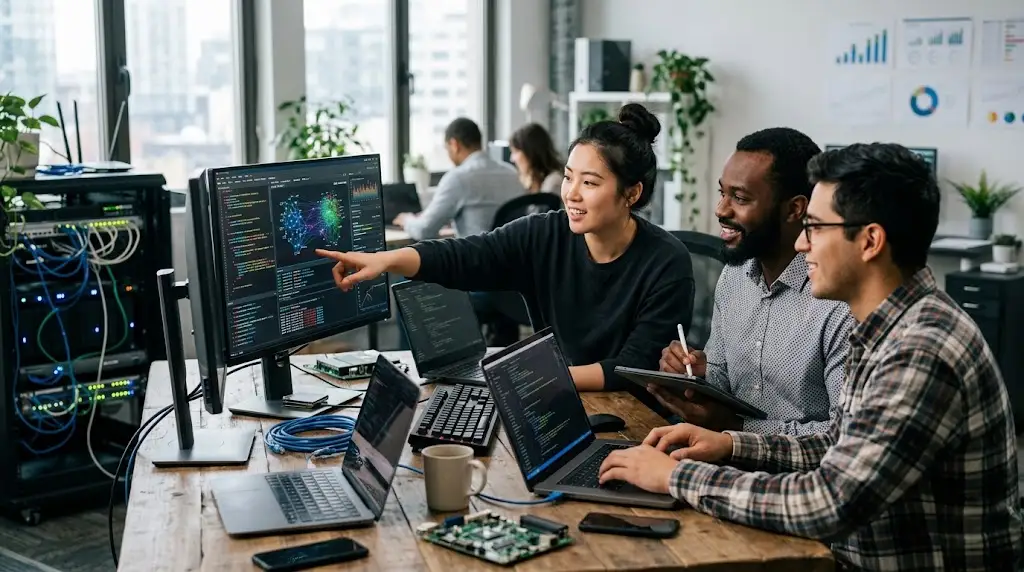
People remain an essential part of the IT definition because technology does not manage itself. IT professionals make decisions about which systems to use, how they should be configured, who should have access, how data should be protected, and how problems should be resolved. They also communicate with employees, vendors, managers, cybersecurity specialists, developers, and business leaders to understand requirements and priorities. Technical knowledge is important, but effective IT work also depends on problem solving, documentation, communication, planning, and risk management. A strong information technology function therefore combines tools and infrastructure with skilled people who understand how those technologies support real organizational needs.
Core Components of Information Technology
Computer hardware forms one of the basic building blocks of information technology. This category includes desktop computers, laptops, servers, mobile devices, storage equipment, networking hardware, printers, and specialized devices used by particular industries. Hardware provides the physical resources needed to run software, process data, and connect users to digital services. In a traditional office environment, much of this equipment may be located inside company facilities, while cloud computing has reduced the need for businesses to own every server themselves. Even cloud-based organizations still rely on hardware somewhere, because cloud providers operate large data centers filled with physical computing and networking equipment behind the services customers access remotely.
Software is another major component because it provides instructions that tell hardware what to do. Operating systems such as Windows, macOS, Linux, Android, and iOS manage devices, while business applications help employees perform specific tasks such as accounting, communication, customer management, design, project management, or data analysis. Many organizations now use software-as-a-service, commonly called SaaS, which allows users to access applications through the internet rather than installing and maintaining every system locally. Software updates, licensing, integrations, access controls, and compatibility all become IT considerations. Selecting the right application requires understanding both technical requirements and the business process the software is intended to improve.
Computer networks allow devices and systems to communicate with one another, making them fundamental to modern information technology. Local area networks connect devices within offices or facilities, while wide area networks can connect multiple locations across greater distances. Internet connectivity allows businesses to reach cloud platforms, customers, suppliers, websites, and remote employees, while virtual private networks and other secure access technologies can provide controlled connections to internal resources. Routers, switches, wireless access points, firewalls, and network management tools all contribute to reliable connectivity. When networks fail or become slow, the effects can spread quickly because applications, phones, authentication services, and other business systems may all depend on stable connections.
Data and databases form another central part of IT because organizations need structured ways to store and retrieve information. Databases may contain customer records, inventory information, employee data, transactions, product details, financial information, or millions of other data points depending on the business. IT teams may be responsible for database availability, backups, access permissions, performance, integration, and security, often working alongside database administrators or data specialists. Modern companies may also use data warehouses, data lakes, business intelligence platforms, and analytics tools to combine information from multiple systems. Reliable data management allows businesses to make decisions based on accurate information rather than disconnected spreadsheets or incomplete records.
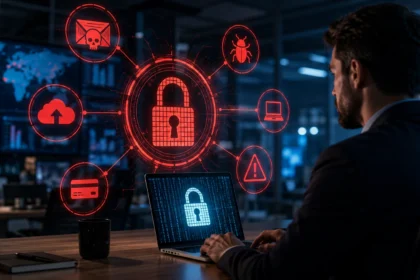
Cybersecurity connects every other IT component because hardware, software, networks, and data all require protection. Security controls may include multifactor authentication, endpoint protection, encryption, firewalls, vulnerability management, backups, access controls, security monitoring, and employee awareness training. Modern cybersecurity follows the idea that protection should exist in multiple layers rather than relying on one product to stop every threat. IT and security teams often work closely because changes to user accounts, devices, networks, cloud services, or software can affect security directly. A strong IT environment therefore treats security as part of system design and everyday operations instead of adding it only after a breach or major incident occurs.
How IT Works in a Business
Businesses use information technology to make everyday operations more efficient and reliable. Employees depend on IT systems for email, file sharing, video meetings, scheduling, customer records, financial transactions, project management, inventory, and many other routine activities. Behind those tools are networks, user accounts, security controls, software licenses, devices, servers, cloud platforms, and support processes that must function together. When IT is managed well, much of this complexity remains invisible because employees simply log in and complete their work. When systems are poorly managed, even simple activities can become frustrating through slow applications, forgotten passwords, missing files, frequent outages, or inconsistent access.
IT departments also support communication and collaboration across organizations. Email platforms, messaging tools, video conferencing systems, shared documents, intranets, and digital workspaces make it possible for teams to collaborate across offices and time zones. Remote and hybrid work have increased the importance of secure access because employees may connect from homes, hotels, client locations, or mobile devices rather than staying inside one office network. IT teams must balance convenience with security by providing authentication, device management, data protection, and reliable connectivity. Collaboration technology may appear simple to users, but maintaining a consistent experience can require careful configuration and integration across multiple platforms.
Another business role of IT is supporting applications that run critical processes. Retailers may use point-of-sale systems, manufacturers rely on production and supply-chain platforms, banks depend on transaction systems, and professional services firms may use specialized applications for billing and client management. These systems often connect with one another through integrations, APIs, or shared databases, meaning a problem in one application can affect several business processes. IT teams monitor availability, manage updates, coordinate vendors, and investigate incidents when applications stop working correctly. They may also help departments evaluate new software to ensure it meets technical, security, integration, and operational requirements before it is widely adopted.
Information technology also supports business continuity and recovery when problems occur. Hardware can fail, software can malfunction, internet connections can go down, employees can delete files accidentally, and cyber incidents can disrupt normal operations. IT teams reduce these risks through backups, redundant systems, recovery planning, monitoring, and documented response procedures. Critical systems may be designed with failover capabilities so another service can continue operating if one component becomes unavailable. Businesses should also test recovery processes rather than simply assuming backups will work when they are needed. Resilient IT infrastructure helps organizations reduce downtime and return to normal operations more quickly after unexpected events.
Strategic IT goes beyond keeping current systems running by helping leadership decide how technology can improve the business. IT leaders may evaluate automation opportunities, cloud migration, analytics platforms, artificial intelligence, cybersecurity investments, or new digital services that could improve efficiency and customer experience. They also help organizations understand the cost, risk, and complexity associated with technology choices. A new application may look attractive initially but create expensive integration or security problems if it does not fit the broader IT environment. Strong IT leadership therefore connects technical decisions with business priorities, ensuring technology investments support measurable goals rather than being adopted simply because they are new.
IT vs Computer Science and Information Systems
Information technology and computer science are closely related but are not the same field. Computer science focuses more heavily on the principles of computing, algorithms, programming, data structures, software design, artificial intelligence, and how computational systems work at a fundamental level. IT focuses more on applying and managing technology to solve practical organizational problems. A computer scientist might design a new algorithm or develop software architecture, while an IT professional might deploy the finished application, configure access, monitor performance, and support users. There is significant overlap, especially because many IT roles require scripting or programming, but the everyday objectives of the two disciplines are often different.
Software development is another related area that frequently overlaps with IT. Developers design, build, test, and maintain software applications, while IT teams often manage the environments in which those applications run. In a smaller company, the same employee may perform both responsibilities, while larger organizations usually create dedicated software engineering and IT operations teams. DevOps practices have also brought development and operations closer together by encouraging shared responsibility for deployment, automation, reliability, and monitoring. Understanding these distinctions helps students and job seekers choose career paths that fit their interests. Someone who enjoys creating applications may prefer software engineering, while someone who enjoys infrastructure and troubleshooting may prefer IT operations.
Information systems is a broader discipline that examines how people, processes, data, and technology work together inside organizations. An information systems professional may focus on business requirements, process improvement, system selection, data flows, or the relationship between technology and management. IT professionals often implement and operate the technologies identified through those processes, although job titles can overlap significantly. Business analysts, systems analysts, IT consultants, and technology managers frequently operate between these fields because they translate business needs into technical solutions. In practice, organizations care less about academic labels than whether professionals can understand problems, choose appropriate technology, and implement solutions reliably.
Cybersecurity is also closely connected with IT but has become a specialized field because the threat environment requires dedicated expertise. IT teams may manage accounts, networks, devices, and applications, while cybersecurity specialists focus more deeply on threats, vulnerabilities, security architecture, monitoring, incident response, governance, and risk. The two functions need to collaborate because security decisions can affect how technology operates, while IT changes can introduce or remove security risks. For example, an IT administrator may configure cloud storage, while security professionals define access requirements and monitor suspicious activity. In small organizations, one person may perform both roles, but larger companies often maintain specialized security teams.
Data science and analytics provide another area of overlap because they depend on reliable IT infrastructure and well-managed information. Data scientists may create statistical models or machine learning systems, while data analysts interpret information to support business decisions. IT teams may provide the databases, cloud platforms, access controls, processing capacity, and integrations required for that work. Data engineers often sit between these areas by creating pipelines that move and transform information across systems. These distinctions demonstrate how broad the technology profession has become. Information technology remains a foundational layer because nearly every digital discipline depends on dependable computing, networking, storage, security, and access to function effectively.
Common IT Services and Responsibilities
Technical support is one of the most familiar IT services because employees frequently need help with devices, applications, accounts, or connectivity. Help desk or service desk teams may resolve password problems, software errors, printer issues, hardware failures, access requests, and many other everyday incidents. Effective support is not simply about fixing problems quickly; it also involves documenting solutions, identifying recurring issues, and communicating clearly with users who may not have technical backgrounds. Ticketing systems help support teams prioritize requests, track progress, and measure service performance. Repeated incidents can reveal deeper problems that require permanent fixes rather than forcing employees to contact support each time the same issue occurs.
Device management is another major responsibility because businesses may operate hundreds or thousands of laptops, phones, tablets, and specialized endpoints. IT teams track equipment, configure security settings, install software, apply updates, manage encryption, and replace devices that reach the end of their useful life. Mobile device management and endpoint management platforms can automate many of these tasks across distributed workforces. Standardizing device configurations can also reduce support costs because technicians do not need to troubleshoot completely different setups for every employee. Good asset management helps organizations understand what equipment they own, where it is located, who uses it, and when replacement or warranty action may be necessary.
Identity and access management controls who can use organizational systems and what they are allowed to do after logging in. IT teams create user accounts, assign permissions, manage password policies, implement multifactor authentication, and remove access when employees change roles or leave the company. Poor access management can create serious security risks when former employees retain accounts or users receive more permissions than their jobs require. Modern organizations often use single sign-on systems so employees can access multiple applications through one managed identity. The principle of least privilege encourages businesses to give users only the access required for their responsibilities, reducing the potential impact of compromised accounts or mistakes.
Infrastructure management covers servers, networks, storage, cloud platforms, virtualization, and other systems that support business applications. IT administrators monitor performance, apply updates, plan capacity, troubleshoot outages, and ensure systems remain available. Cloud infrastructure has changed how this work is performed because servers and storage can now be created through software rather than requiring physical installation inside a company data center. Infrastructure-as-code and automation tools allow teams to configure environments more consistently and repeatably. However, cloud systems still require management because costs, security settings, backups, permissions, and configurations can become problematic when organizations assume the cloud provider handles every operational responsibility automatically.
IT procurement and vendor management are also important because organizations depend on external technology companies for hardware, software, cloud services, telecommunications, and professional support. IT teams may evaluate products, negotiate technical requirements, review licensing models, coordinate implementation, and monitor vendor performance after contracts are signed. Purchasing technology without IT involvement can create duplicated applications, weak integrations, unexpected costs, or security risks when departments independently adopt tools that do not fit existing systems. This situation is sometimes called shadow IT when technology is used without formal approval or oversight. Effective procurement gives employees useful tools while ensuring technology investments remain manageable, secure, and aligned with organizational standards.
Cloud Computing, Cybersecurity, and Data in Modern IT
Cloud computing is one of the biggest changes in modern information technology because businesses can now access computing resources over the internet instead of purchasing and maintaining every system themselves. Cloud services may provide servers, storage, databases, software applications, artificial intelligence tools, backups, or complete development environments on demand. Organizations often pay according to usage or subscription models, which can provide flexibility when demand changes. Cloud computing also supports remote work because employees can access approved services from multiple locations. However, moving to the cloud does not remove IT responsibility, since teams still need to manage security, configuration, user access, cost, reliability, and integration with existing systems.
Software-as-a-service has become particularly common because it allows organizations to use applications through a browser or dedicated client without operating the underlying servers themselves. Email, customer relationship management, accounting, human resources software, collaboration platforms, and project management tools are frequently delivered this way. SaaS reduces some maintenance tasks, but organizations still need to control licenses, user access, data retention, integrations, and security settings. IT teams may also need to manage dozens or hundreds of cloud applications across a large workforce. Centralized application management becomes increasingly important as organizations grow because uncontrolled software adoption can create duplicated spending and fragmented information.
Cybersecurity has become inseparable from IT because organizations face threats such as phishing, ransomware, credential theft, malicious software, data breaches, and exploitation of software vulnerabilities. Security teams and IT administrators work together to patch systems, protect endpoints, monitor networks, enforce authentication, manage backups, and respond when suspicious activity occurs. No security tool can eliminate all risk, which is why modern security uses multiple layers of preventive and detective controls. Employee awareness also matters because attackers frequently target people through deceptive messages and fake login pages. Strong cybersecurity therefore combines technology, policies, monitoring, training, and prepared incident response rather than depending solely on antivirus software.
Data management has also become more important as organizations collect greater quantities of information from applications, websites, customers, devices, and business operations. IT teams help ensure data is stored reliably, backed up, protected, and accessible to authorized users and systems. Data governance may define ownership, quality standards, retention requirements, and rules for how information should be classified and used. Poor data management can create duplicated records, inconsistent reports, security exposure, and difficulty answering even basic business questions. Businesses increasingly treat high-quality data as an asset because analytics, automation, and artificial intelligence depend heavily on accurate and appropriately managed information.
Artificial intelligence is now becoming another significant layer within IT environments. Organizations are experimenting with AI for customer service, document analysis, coding support, knowledge search, cybersecurity, automation, forecasting, and many other workflows. IT teams may be responsible for evaluating platforms, integrating AI tools with existing systems, controlling access, monitoring costs, and ensuring sensitive data is handled appropriately. AI adoption also creates governance questions about accuracy, privacy, security, intellectual property, and human review. Successful implementation therefore requires more than purchasing an AI subscription. Businesses need clear use cases, responsible policies, reliable data, and technical infrastructure that allows artificial intelligence to create value without introducing unmanaged risk.
IT Careers, Roles, and Skills
Information technology offers a wide variety of career paths because organizations need professionals across support, infrastructure, networking, security, cloud computing, databases, and technology management. Entry-level roles often include help desk technician, desktop support specialist, junior system administrator, or IT support analyst, where professionals gain experience troubleshooting real devices and applications. More specialized positions include network administrator, cloud engineer, cybersecurity analyst, database administrator, systems engineer, IT auditor, and solutions architect. Large organizations may also employ IT project managers, service management specialists, enterprise architects, and technology leaders. The best path depends on whether someone prefers hands-on troubleshooting, infrastructure design, security, data, management, or another technical specialty.
Technical skills vary by role, but several foundational areas are useful across much of the IT profession. Understanding operating systems, networking concepts, user accounts, permissions, hardware, cloud services, and basic cybersecurity provides a strong starting point. Scripting skills in languages such as PowerShell, Python, or Bash can help professionals automate repetitive tasks and manage larger environments more efficiently. Familiarity with virtualization, identity management, monitoring, and troubleshooting is also valuable for infrastructure-oriented positions. Technology changes continuously, so successful IT professionals usually develop the ability to learn new tools rather than depending entirely on one platform they studied earlier in their careers.
Communication skills are equally important because IT professionals frequently work with people who do not share their technical background. A support technician must explain solutions clearly, a systems administrator may need to communicate downtime, and an IT manager must translate technical risks into language business leaders can understand. Written documentation is also essential because teams need reliable records of system configurations, procedures, troubleshooting steps, and recovery plans. Patience and active listening help technicians identify the real problem instead of assuming users describe technical issues perfectly. Strong professionals combine technical expertise with the ability to make complicated technology understandable to colleagues and customers.
Problem solving is another defining skill because many IT issues do not come with obvious answers. A slow application could result from networking, server performance, software configuration, storage limitations, authentication problems, or several issues occurring together. Effective troubleshooting requires gathering evidence, testing assumptions, narrowing possibilities, and documenting what changes were made. Experienced professionals learn to avoid changing several settings simultaneously because doing so can make it difficult to identify which action solved or worsened the problem. This structured thinking is useful beyond technical support and applies equally to cybersecurity incidents, cloud architecture, system integrations, and infrastructure planning.
Career development in IT often combines practical experience, formal education, certifications, laboratories, and self-directed learning. Some professionals enter through university programs in information technology, information systems, computer science, or related subjects, while others begin through technical certifications and entry-level support work. Vendor certifications can demonstrate knowledge of cloud, networking, cybersecurity, or specific platforms, but credentials are most useful when combined with real problem-solving ability. Building home labs, contributing to projects, documenting technical work, and learning automation can provide useful hands-on experience. Because technology evolves constantly, IT careers reward people who remain curious and continue learning throughout their professional lives.
Why Information Technology Matters Today
Information technology matters because modern organizations depend on digital systems to perform basic business activities. A retailer may rely on IT for inventory and payments, a hospital for clinical systems and communications, a school for learning platforms, and a manufacturer for production planning and supply chains. Even small businesses use email, cloud storage, accounting software, websites, payment services, and online marketing tools. When these technologies fail, business activity can slow or stop completely. IT therefore supports operational continuity in much the same way electricity, transportation, and communications infrastructure support physical operations. Reliable technology has become an essential requirement rather than an optional competitive advantage.
IT also improves productivity by automating repetitive tasks and making information easier to find and share. Employees can collaborate on documents instantly, customers can complete transactions online, and business systems can transfer information automatically instead of requiring duplicate data entry. Automation can reduce errors and free employees to spend more time on work requiring judgment or creativity. However, productivity gains depend on thoughtful implementation because introducing too many disconnected applications can create additional complexity. IT teams help organizations simplify workflows, integrate systems, and remove unnecessary manual steps. The goal should be using technology to make work easier and more reliable rather than digitizing inefficient processes without changing them.
Customer experience increasingly depends on information technology as well. Websites, mobile apps, online payments, customer portals, support systems, and personalized services all rely on dependable technology behind the scenes. Customers expect digital services to be available quickly and securely, and technical failures can affect trust almost immediately. IT teams work with product, marketing, sales, operations, and customer service teams to maintain the systems supporting these experiences. Performance monitoring and capacity planning become particularly important during periods of high demand. A successful digital customer experience therefore depends on infrastructure and IT operations as much as it depends on attractive design or marketing.
Information technology also helps organizations adapt to change. Cloud platforms can allow businesses to scale computing resources, collaboration tools can support distributed teams, and analytics can provide faster insight into changing customer behavior or operational conditions. During mergers, expansions, new product launches, or business disruptions, IT teams often need to connect systems, provision users, migrate data, and establish secure access quickly. Flexible technology architecture can make these transitions easier, while outdated or poorly documented systems can slow organizations down. Strategic IT investment therefore improves not only current efficiency but also the ability to respond when business circumstances change unexpectedly.
Ultimately, the definition of IT extends far beyond computers and troubleshooting. Information technology is the combination of hardware, software, networks, cloud services, data, security, processes, and skilled professionals that allows organizations to operate in a digital world. It supports communication, decision-making, customer service, productivity, cybersecurity, and innovation across nearly every industry. As artificial intelligence, automation, cloud computing, and connected devices continue to evolve, the scope of IT will continue changing with them. The underlying purpose, however, will remain consistent: using technology responsibly and reliably to make information accessible, useful, secure, and valuable to the people and organizations that depend on it.
Frequently Asked Questions
What does IT stand for?
IT stands for Information Technology. It refers to the use and management of computers, software, networks, data, cloud platforms, digital infrastructure, and related systems for processing and exchanging information.
What is a simple definition of information technology?
Information technology is the use of digital systems to create, store, process, secure, and share information. It includes both the technology itself and the people responsible for managing it.
What does an IT department do?
An IT department manages technology such as computers, networks, software, cloud services, user accounts, cybersecurity controls, databases, and technical support. It also helps businesses select, operate, secure, and improve the systems employees rely on.
Is IT the same as computer science?
No. Computer science focuses more on computing theory, algorithms, programming, and software development, while IT focuses more heavily on implementing, managing, supporting, and securing technology in practical environments.
What are examples of information technology?
Examples include laptops, servers, business software, databases, Wi-Fi networks, cloud computing platforms, cybersecurity tools, email systems, mobile devices, backup systems, and technical support services. Together, these technologies help organizations manage digital information and everyday operations.