

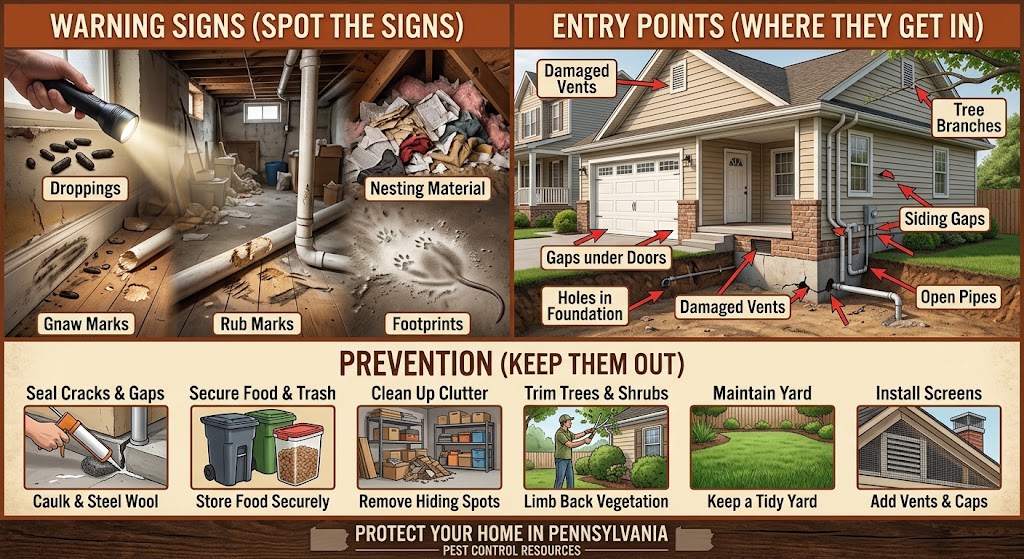

Rat problems often begin before homeowners see an actual rat. A few droppings in a cabinet, scratching sounds in the wall, gnaw marks near stored food, or an opening near the foundation may be the first signs that something is wrong. By the time rats are clearly visible, they may already have
found food, shelter, nesting areas, and access points around the property.
For Pennsylvania homeowners, rat activity should be taken seriously. Rats can damage materials, contaminate food areas, chew through insulation or wires, and create recurring problems when entry points remain open. A complete rat-control plan should not only remove the active rats. It should also
identify how they entered, where they are nesting, what is attracting them, and how future activity can be reduced.
Why Rats Enter Homes and Buildings
Rats enter homes for simple reasons: food, water, warmth, shelter, and protection. A home, garage, basement, shed, attic, or commercial building can provide several of these needs at once.
Common attractants include:
- Open trash containers
- Pet food
- Birdseed
- Food stored in garages
- Compost or food waste
- Cluttered storage areas
- Water sources
- Gaps near doors or foundations
- Dense vegetation near the structure
- Outdoor storage against walls
- Damaged vents or screens
- Easy access to basements, crawl spaces, or attics
Even a clean home can develop a rat problem if exterior conditions make the property easy to enter or attractive for nesting.
Early Warning Signs of Rat Activity
Rats are often active when people are not watching. They may move at night, stay inside walls, or travel through hidden areas. Because of this, homeowners usually notice evidence before seeing the animal itself.
Common warning signs include:
- Droppings
- Scratching or squeaking sounds
- Gnaw marks
- Chewed food packaging
- Greasy rub marks along walls
- Nesting material
- Damaged insulation
- Strong or unusual odors
- Holes near the foundation
- Burrows around the property
- Pet attention focused on one wall, cabinet, or appliance
These signs should not be ignored. A small amount of evidence may still point to a larger hidden issue.
Droppings Are One of the Most Common Clues
Rat droppings are often found near food sources, storage areas, walls, cabinets, appliances, basements, garages, or attic spaces. They may appear behind boxes, under sinks, inside pantries, near utility areas, or along travel routes.
Droppings are more than a nuisance. They can indicate active movement and contamination risk. Homeowners should avoid sweeping or disturbing droppings without proper precautions, especially in enclosed areas where contamination may be present.
When droppings are found repeatedly, the next step should be inspection. The goal is to determine where rats are traveling, where they may be entering, and what conditions are supporting the activity.
Scratching Sounds Should Be Investigated
Rats may create scratching, squeaking, grinding, or scurrying sounds as they move through walls, ceilings, attics, crawl spaces, or cabinets. These sounds may be more noticeable at night when the home is quiet.
Possible sound locations include:
- Attics
- Wall voids
- Basements
- Crawl spaces
- Kitchen cabinets
- Drop ceilings
- Garages
- Utility rooms
- Behind appliances
Sounds alone do not confirm the exact pest, but they are a strong reason to inspect. Mice, squirrels, raccoons, and other animals can also make noise, so correct identification matters.
Gnaw Marks Can Point to Active Rodents
Rats chew constantly. They may gnaw on wood, plastic, insulation, pipes, wires, food packaging, stored items, and building materials. Fresh gnaw marks may look lighter than older damage and may appear near entry points, food sources, or travel paths.
Chewing damage is a major concern because it can affect the condition of the home. If rats are active in an attic, wall, or utility area, damaged insulation or wiring may not be visible without inspection.
A homeowner who finds gnaw marks should not assume the problem is limited to that one area. Rats often travel between multiple zones.
Entry Points Are Usually Part of the Problem
Rat control is difficult when entry points remain open. Rats may use existing holes, gaps, vents, utility openings, damaged materials, and foundation access points to enter a home or business.
Common entry points include:
- Foundation gaps
- Openings around pipes
- Utility penetrations
- Garage-door gaps
- Basement window gaps
- Damaged vents
- Dryer vents
- Crawl-space openings
- Roofline gaps
- Gaps under exterior doors
- Openings near decks or porches
- Damaged siding or trim
A proper inspection should look at both obvious and hidden entry points. Sealing one hole may not be enough if other access routes remain available.
Why Traps Alone Are Usually Not Enough
Many homeowners start with traps. Traps may remove individual rats, but they usually do not solve the full problem. If rats can still enter, more may appear later. If food sources remain, the property may continue attracting activity. If nesting areas are not addressed, the infestation can
persist.
A stronger approach includes:
- Inspection
- Identification of activity areas
- Population reduction
- Entry-point review
- Exclusion work
- Sanitation recommendations
- Removal of contaminated materials where needed
- Ongoing monitoring
This is why working with a rat exterminator can be important when signs of rat activity are repeated, hidden, or difficult to control.
Sanitation Helps Reduce Rat Pressure
Sanitation does not mean the home is dirty. It means reducing the food and shelter conditions rats can use.
Helpful sanitation steps include:
- Keeping trash sealed
- Removing food waste quickly
- Storing pet food in hard containers
- Keeping birdseed sealed
- Cleaning spills and crumbs
- Organizing garages and storage areas
- Reducing cardboard clutter
- Keeping compost away from the structure
- Removing unused outdoor debris
- Cleaning around outdoor trash areas
Sanitation alone may not remove active rats, but it supports the control plan by making the property less attractive.
Exclusion Helps Reduce Future Activity
Exclusion means closing or protecting entry points so rats cannot easily re-enter. This is one of the most important parts of long-term prevention.
Exclusion may involve:
- Sealing gaps
- Installing vent guards
- Repairing damaged materials
- Closing utility openings
- Improving garage-door seals
- Protecting attic vents
- Securing crawl-space openings
- Repairing foundation gaps
- Reinforcing weak access points
Timing matters. Entry points should be handled carefully so animals are not trapped inside walls, attics, or enclosed spaces. Inspection and removal should come before final sealing in active cases.
Attics and Insulation May Need Special Attention
Rat activity in an attic can create additional concerns. Rats may damage insulation, leave droppings, contaminate materials, chew wires, or create odors. Because attics are not checked daily, activity can continue for some time before homeowners notice.
Possible attic warning signs include:
- Scratching above the ceiling
- Droppings
- Damaged insulation
- Nesting material
- Chewed wires or stored items
- Odors
- Entry points near vents or rooflines
If rats have been active in an attic, cleanup may be needed along with removal and exclusion. Contaminated insulation should be handled carefully and assessed by professionals.
Outdoor Conditions Can Keep Rats Coming Back
Rat prevention should include the outside of the property. Outdoor conditions often determine whether rats continue approaching the structure.
Homeowners should check:
- Trash areas
- Sheds
- Garages
- Decks
- Porches
- Woodpiles
- Dense shrubs
- Compost areas
- Bird feeders
- Pet feeding areas
- Fence lines
- Foundation edges
- Outdoor storage
Reducing shelter and food outside can lower the chance that rats will keep returning.
When to Call for Professional Help
Professional help is recommended when rat signs continue, when activity is hidden, or when the entry points are unclear.
Homeowners should consider calling for help when they notice:
- Droppings in multiple areas
- Scratching sounds in walls or ceilings
- Gnawed materials
- Damaged food packaging
- Burrows near the home
- Rat activity in the attic
- Strong odors
- Activity returning after traps
- Possible wiring or insulation damage
- Entry points that are difficult to identify
A complete professional plan should explain what was found, what treatment is recommended, and what steps can reduce future activity.
A Complete Rat-Control Plan Should Be Preventive
Rat removal is only one part of the process. Long-term control should reduce the conditions that allowed the problem to develop.
A complete plan may include:
- Rat identification
- Inspection of the home and exterior
- Activity mapping
- Population reduction
- Entry-point sealing
- Sanitation recommendations
- Attic or insulation review
- Monitoring
- Follow-up service
For homeowners looking for rodent prevention and exclusion services, the goal should be lasting protection, not just short-term removal.
Prevention Is Easier Than Recovery
Rat problems become more difficult when they are ignored. Once rats find reliable food, shelter, and access, they may continue returning and expanding their activity around the property.
Homeowners can reduce risk by watching for early signs, sealing access points, storing food properly, reducing clutter, keeping trash secured, and correcting outdoor conditions that attract rodents.
Patriot Pest Solutions provides rat removal and control services for homes and businesses in Pennsylvania. The company’s rat-control page describes inspection, population reduction, exclusion, sanitation, attic cleanup, insulation replacement, bait stations, year-round monitoring, rat repellent
treatment, and service in Berks, Chester, Delaware, and Montgomery counties.
For homeowners, the key is early action. Droppings, scratching sounds, gnaw marks, entry holes, and attic activity should not be treated as minor inconveniences. With the right inspection, removal, exclusion, and prevention strategy, a rat problem can be addressed more completely and the property
can be better protected from future activity.