

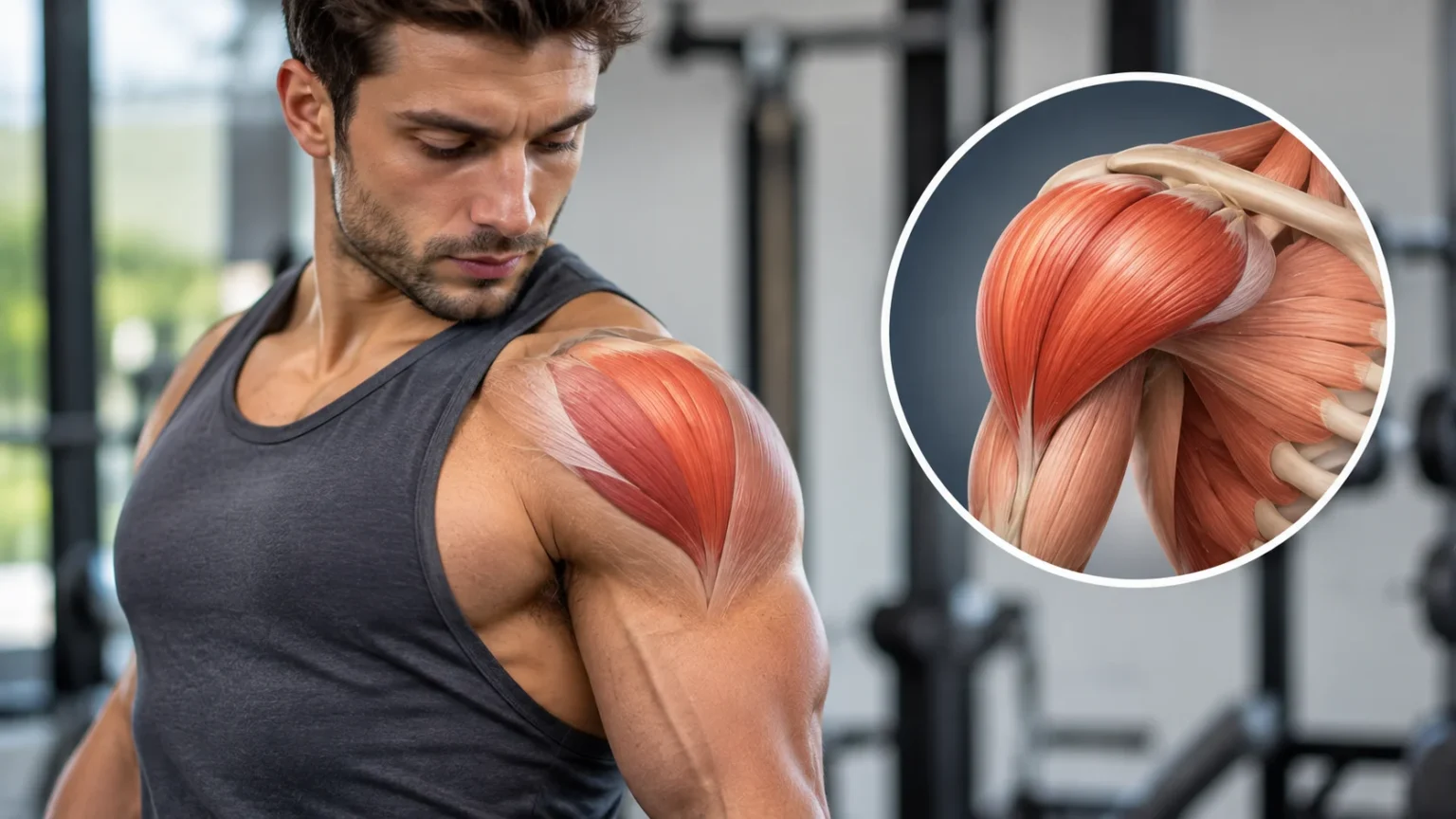

The deltoid muscle is located on the outer part of your shoulder, covering the shoulder joint and forming its rounded shape. It extends from the collarbone and shoulder blade to the upper arm bone. This large, triangular muscle helps you lift, rotate, and move your arm in different directions. Understanding its location and anatomy can help you recognize how your shoulders function during everyday activities.
The deltoid is divided into three sections: anterior, lateral, and posterior. Each section contributes to specific shoulder movements while working with other muscles. Whether you reach overhead, lift an object, or move your arm backward, the deltoid plays an important role. Its structure allows the shoulder to perform a wide range of controlled movements.
Knowing where the deltoid muscle is located is also useful when learning about shoulder discomfort, exercise technique, and muscular anatomy. Although the deltoid is easy to identify on the outer shoulder, nearby muscles and joints can produce similar symptoms. This guide explains its location, structure, function, and common problems using simple language.
Where Is the Deltoid Muscle Located?
The deltoid muscle sits on the outer surface of the shoulder, directly beneath the skin and surrounding soft tissues. It covers much of the shoulder joint and gives the upper arm its familiar rounded appearance. The muscle begins at several points around the shoulder girdle. Its fibers travel downward toward a common attachment on the upper arm bone.
You can identify the general deltoid muscle location by looking at the rounded area between your neck and upper arm. The muscle extends across the front, side, and back of this region. Its broad upper portion narrows as it approaches the middle of the upper arm. This arrangement creates the triangular appearance that gives the muscle its name.
The deltoid is positioned above several deeper shoulder structures, including parts of the rotator cuff. It works closely with these muscles to move and stabilize the arm. Although the deltoid is prominent, it does not control shoulder movement independently. Several nearby muscles and joints must coordinate to create smooth, comfortable motion.
Deltoid Muscle Anatomy Explained
The deltoid is a thick skeletal muscle shaped approximately like an inverted triangle. Its broad upper attachment connects to the clavicle and scapula, while its lower attachment connects to the humerus. These bones form important parts of the shoulder complex. The arrangement of muscle fibers allows the deltoid to produce force in several directions.
Anatomically, the deltoid contains three distinct regions with different fiber orientations. The anterior fibers run from the front of the shoulder toward the upper arm. The middle fibers extend downward from the outer shoulder, while the posterior fibers originate farther behind. These differences help explain why each region contributes to different arm movements.
The deltoid receives nerve signals primarily through the axillary nerve, which originates from the brachial plexus. Blood reaches the muscle through branches of nearby arteries, including the posterior circumflex humeral artery. These structures support normal muscle activity and tissue health. Understanding these anatomical relationships is important when evaluating certain shoulder injuries or neurological problems.
What Are the Three Parts of the Deltoid Muscle?
The anterior deltoid forms the front portion of the shoulder muscle. It helps move the arm forward and assists with inward rotation. This region becomes active during activities such as reaching in front of your body or performing certain pushing movements. It works alongside the chest muscles and other shoulder structures to support coordinated movement.
The lateral deltoid, also called the middle deltoid, forms much of the shoulder’s outer contour. Its primary role involves lifting the arm sideways, a movement known as shoulder abduction. This section contributes significantly when raising your arm away from your body. The middle deltoid also works with the rotator cuff to help maintain controlled shoulder movement.
The posterior deltoid occupies the back portion of the shoulder. It assists with moving the arm backward, outward rotation, and certain pulling movements. Activities such as rowing exercises and reaching behind the body involve this region. Although each part has different responsibilities, the three sections frequently work together during everyday movement.
Where Does the Deltoid Muscle Attach?
The deltoid muscle has three main points of origin around the shoulder girdle. Its anterior section begins along the lateral third of the clavicle, commonly called the collarbone. The middle section originates from the acromion, a bony projection of the shoulder blade. The posterior section begins along the spine of the scapula.
These attachment points provide a broad foundation for the deltoid muscle fibers. From their origins, the fibers travel toward the outer surface of the upper arm. They eventually converge at the deltoid tuberosity, a roughened area on the humerus. This insertion allows the muscle to transfer force to the upper arm during movement.
The deltoid’s attachment pattern explains its ability to move the arm in multiple directions. Different groups of muscle fibers pull on the humerus from different angles. However, effective shoulder movement also depends on the stability of surrounding joints. The rotator cuff and muscles controlling the shoulder blade help maintain proper coordination throughout these actions.
What Is the Main Function of the Deltoid Muscle?
The main function of the deltoid muscle is to move the upper arm at the shoulder joint. Its middle fibers are especially important for lifting the arm sideways. The anterior and posterior sections contribute to forward, backward, and rotational movements. Together, these functions allow you to perform many daily activities requiring shoulder mobility and control.
When you lift an object onto a shelf, several deltoid fibers contribute to raising and positioning your arm. Reaching forward involves greater activity from the anterior section. Pulling your arm backward recruits the posterior fibers along with other muscles. The exact contribution of each section depends on the direction and resistance of the movement.
The deltoid also contributes to shoulder stability during certain activities. However, it does not replace the deeper stabilizing functions of the rotator cuff. Healthy shoulder movement requires coordination between multiple muscles, ligaments, and joints. This teamwork allows the arm to move through a large range of motion while maintaining joint control.
Deltoid Muscle vs Rotator Cuff: What’s the Difference?
The deltoid and rotator cuff are both important parts of shoulder anatomy, but they serve different primary functions. The deltoid is a large, superficial muscle responsible for producing substantial arm movement. The rotator cuff consists of four smaller muscles positioned around the shoulder joint. These deeper muscles help control and stabilize the head of the humerus.
The four rotator cuff muscles are the supraspinatus, infraspinatus, teres minor, and subscapularis. They support joint stability and assist with rotation and other shoulder movements. The supraspinatus also contributes to lifting the arm sideways. These muscles coordinate with the deltoid rather than functioning as completely separate systems.
Understanding the distinction is useful because shoulder discomfort can involve either muscle group or nearby structures. Pain near the outer shoulder does not always indicate a deltoid injury. Rotator cuff conditions may produce discomfort in a similar area. A healthcare professional can help identify the underlying cause when symptoms persist or affect normal movement.
Where Is the Anterior Deltoid Muscle Located?
The anterior deltoid is located at the front of the shoulder, near the outer portion of the collarbone. Its fibers extend downward and slightly outward toward the humerus. This section forms the front part of the rounded shoulder contour. It lies close to the upper chest muscles and contributes to movements involving the arm in front of the body.
You use the anterior deltoid when reaching toward an object or lifting your arm forward. It also assists during certain pressing movements and inward rotation of the upper arm. These actions involve several other muscles working together. The anterior deltoid helps generate and control movement rather than functioning as an isolated shoulder structure.
Exercises such as controlled front raises and some shoulder pressing movements recruit the anterior deltoid. However, its involvement varies according to arm position, resistance, and technique. Repeated or demanding shoulder activity can sometimes lead to soreness in this region. Persistent pain should not automatically be attributed to ordinary muscle fatigue without appropriate assessment.
Where Is the Lateral Deltoid Muscle Located?
The lateral deltoid is located on the outermost portion of the shoulder, between the anterior and posterior sections. It begins at the acromion of the scapula and extends toward the deltoid tuberosity. This region creates much of the shoulder’s rounded outer appearance. Its position makes it important for lifting the arm away from the body.
The primary movement associated with the lateral deltoid is shoulder abduction. This occurs when you raise your arm sideways, such as when reaching toward an object beside you. The muscle works alongside the supraspinatus and other stabilizing structures. Their coordinated activity helps maintain controlled movement through different shoulder positions.
Lateral raises are commonly used to train this part of the deltoid. The exercise involves lifting the arms outward using suitable resistance and controlled technique. However, movement should remain within a comfortable range without forcing the shoulder. People experiencing pain or restricted mobility may benefit from individualized exercise guidance before adding resistance.
Where Is the Posterior Deltoid Muscle Located?
The posterior deltoid lies at the back of the shoulder, originating from the spine of the scapula. Its fibers travel toward the upper arm and join the other deltoid sections at their shared insertion. This region contributes to the shoulder’s rear contour. It sits near several upper-back muscles involved in pulling and shoulder blade movement.
The posterior deltoid helps move the arm backward and assists with outward rotation. It becomes active during certain rowing, pulling, and reaching movements. For example, moving your arm behind your torso involves this region alongside other shoulder muscles. These coordinated movements support daily activities that require controlled backward arm motion.
Rear deltoid exercises may include reverse fly movements and appropriately performed rowing variations. These activities can strengthen the posterior shoulder when included in a balanced resistance training program. However, exercise selection should reflect individual comfort and movement ability. Excessive resistance or poorly controlled movement can increase unnecessary strain on the shoulder.
How Does the Deltoid Help With Shoulder Movement?
The deltoid contributes to several movements because its fibers extend in different directions around the shoulder joint. Depending on the arm’s position, specific regions become more active. This allows the muscle to assist with lifting, reaching, and rotating the arm. However, shoulder movements rarely depend on the deltoid alone.
During arm elevation, the deltoid generates force while the rotator cuff helps control the position of the humeral head. The shoulder blade also rotates and changes position as the arm rises. This coordination is often called scapulohumeral rhythm. It helps distribute movement across the shoulder complex rather than concentrating all motion within one joint.
The deltoid also contributes when lowering the arm against resistance. In this situation, the muscle can work eccentrically, meaning it produces tension while lengthening. Such control is important when placing objects down or returning the arm from an elevated position. Strength and coordination both influence how smoothly these movements occur.
Common Causes of Deltoid Muscle Pain
Deltoid muscle pain may occur after unfamiliar exercise, repetitive arm movements, or sudden increases in physical activity. Muscle soreness can develop when tissues experience demands beyond their usual level. This discomfort often improves with suitable recovery and adjusted activity. However, pain near the deltoid is not always caused by the muscle itself.
Shoulder problems involving the rotator cuff, tendons, bursae, or nearby joints may produce pain around the outer upper arm. Sometimes discomfort can also originate from the neck or other structures. The location of pain alone cannot confirm a diagnosis. Persistent symptoms require consideration of movement limitations, injury history, and other possible causes.
Direct impact or sudden force can sometimes injure the deltoid muscle. A strain may cause localized pain, tenderness, or difficulty performing certain movements. More significant injuries can produce notable swelling or weakness. Seek medical assessment when pain follows trauma, becomes severe, or prevents normal arm movement.
Signs and Symptoms of a Deltoid Muscle Injury
A deltoid muscle strain may cause discomfort around the front, side, or back of the shoulder. Pain can become more noticeable when lifting the arm or performing resisted movements. Some people experience localized tenderness or reduced movement comfort. Symptoms vary depending on the affected tissue and the severity of the injury.
More significant muscle injuries may involve swelling, bruising, or noticeable weakness. However, these symptoms can also occur with other shoulder problems. A sudden inability to raise the arm after an injury deserves prompt medical evaluation. It is important not to assume that all shoulder weakness comes from a simple muscle strain.
Numbness, tingling, or unusual changes in shoulder sensation may suggest nerve involvement rather than an isolated muscle problem. The axillary nerve supplies the deltoid and sensation to part of the outer shoulder. Certain injuries can affect this nerve and reduce muscle function. New neurological symptoms should be assessed by a qualified healthcare professional.
How to Strengthen the Deltoid Muscle Safely
Strengthening the deltoid can help improve shoulder function and support everyday arm movements. Common resistance exercises include shoulder presses, lateral raises, and rear deltoid movements. These activities emphasize different parts of the muscle while also recruiting surrounding structures. Choose exercises that match your current experience, comfort, and available equipment.
Beginners can start with light resistance and focus on smooth, controlled repetitions. Avoid swinging weights or forcing the shoulders into painful positions. Gradually increasing the challenge may help improve strength over time. However, proper technique and recovery remain more important than lifting heavier weights before the movement feels manageable.
A balanced shoulder program should also include exercises for the rotator cuff and muscles controlling the shoulder blades. These structures help coordinate arm movement and contribute to overall shoulder function. Training only one deltoid section may overlook important supporting muscles. A qualified exercise professional can help adapt routines for individual needs or existing limitations.
Deltoid Muscle Stretches and Mobility Exercises
Gentle shoulder mobility exercises can help maintain comfortable movement around the deltoid and surrounding structures. One common option is the cross-body shoulder stretch. This involves bringing one arm across the chest while providing light support with the opposite hand. The movement should create a mild stretching sensation without causing sharp pain.
Shoulder circles and controlled arm movements can also be included in a gentle mobility routine. Begin with small, comfortable movements before gradually exploring a larger range. Avoid forcing your arm through painful positions or using sudden momentum. Comfortable movement can support joint mobility, although stretching does not treat every cause of shoulder discomfort.
People with recent injuries, significant pain, or restricted shoulder movement may require modified exercises. Some shoulder conditions can become more uncomfortable with inappropriate stretching. A physical therapist can help identify suitable activities and progression strategies. Listening to symptoms and avoiding aggressive movements is important when protecting sensitive shoulder tissues.
Why Deltoid Anatomy Matters for Injections
The deltoid is commonly used for certain intramuscular injections, including some vaccinations. Its superficial location and accessible muscle tissue make it a practical injection site for appropriately trained healthcare professionals. However, correct anatomical identification is essential. The shoulder contains nearby nerves, blood vessels, and joint structures that must be considered.
Healthcare professionals use anatomical landmarks and established clinical guidelines when selecting a deltoid injection location. The appropriate site depends on individual anatomy and the specific procedure. Incorrect placement may cause pain or injury to surrounding structures. For this reason, injections should be administered by trained personnel rather than attempted through general anatomical descriptions.
Understanding why the deltoid is used for injections can improve basic awareness of shoulder anatomy. However, knowing the muscle’s location does not replace clinical training or injection-specific guidance. People experiencing persistent pain, weakness, or reduced movement after an injection should seek medical assessment. Most routine post-injection soreness is temporary, but unusual or worsening symptoms deserve attention.
When Should You See a Doctor for Deltoid Pain?
Mild shoulder soreness after unfamiliar exercise may improve with suitable rest and gradual return to normal activity. However, symptoms that persist, worsen, or repeatedly interfere with everyday tasks deserve evaluation. A healthcare professional can assess the shoulder and consider possible muscle, tendon, joint, or nerve problems. Early assessment can help guide appropriate management.
Seek prompt medical attention after a significant shoulder injury, especially when accompanied by severe pain or difficulty moving the arm. Visible deformity, considerable swelling, or sudden weakness may indicate a more serious problem. Numbness and persistent tingling also require attention. These symptoms should not be treated solely with home stretching or exercise.
Emergency care is appropriate when shoulder or arm pain occurs alongside concerning symptoms such as chest pressure, shortness of breath, or sudden neurological changes. These signs can indicate problems unrelated to the deltoid muscle. Avoid assuming that all shoulder pain has a muscular cause. Proper evaluation helps distinguish routine discomfort from conditions requiring urgent treatment.
Conclusion
The deltoid muscle is located on the outer shoulder, extending from the clavicle and scapula to the humerus. Its triangular structure forms the rounded appearance of the shoulder and contributes to several important arm movements. The muscle contains anterior, lateral, and posterior sections. Each region performs different functions while working with surrounding muscles and joints.
Understanding deltoid anatomy helps explain how the shoulder lifts, rotates, and controls the upper arm. It also provides useful context for exercise selection, movement limitations, and common shoulder symptoms. However, pain around the deltoid does not always indicate an injury to the muscle itself. Several nearby tissues can produce similar discomfort.
Maintaining shoulder health involves comfortable movement, appropriate strengthening, and attention to persistent symptoms. Exercises should be performed with controlled technique and resistance suited to individual ability. When pain follows an injury or interferes with daily activities, professional assessment is important. Knowing where the deltoid muscle is located provides a foundation for understanding shoulder function and caring for this important part of the body.
Frequently Asked Questions
Where Exactly Is the Deltoid Muscle Located?
The deltoid muscle is located on the outer shoulder, covering much of the shoulder joint. It begins at the collarbone and shoulder blade and attaches to the humerus, creating the shoulder’s rounded appearance.
What Are the Three Parts of the Deltoid Muscle?
The deltoid has three sections: anterior, lateral, and posterior. The anterior section helps move the arm forward, the lateral section lifts it sideways, and the posterior section assists with backward movement.
What Is the Main Function of the Deltoid Muscle?
The deltoid primarily helps lift and move the upper arm at the shoulder joint. Its different sections contribute to forward movement, sideways elevation, backward movement, and certain rotational actions.
Why Does My Deltoid Muscle Hurt?
Pain around the deltoid may result from muscle strain, unfamiliar exercise, or problems involving nearby shoulder structures. Persistent pain, significant weakness, or discomfort after an injury should be evaluated by a healthcare professional.
Is the Deltoid Part of the Rotator Cuff?
No, the deltoid is separate from the rotator cuff. The deltoid is a large superficial muscle that helps move the arm, while the four rotator cuff muscles primarily stabilize and control the shoulder joint.