

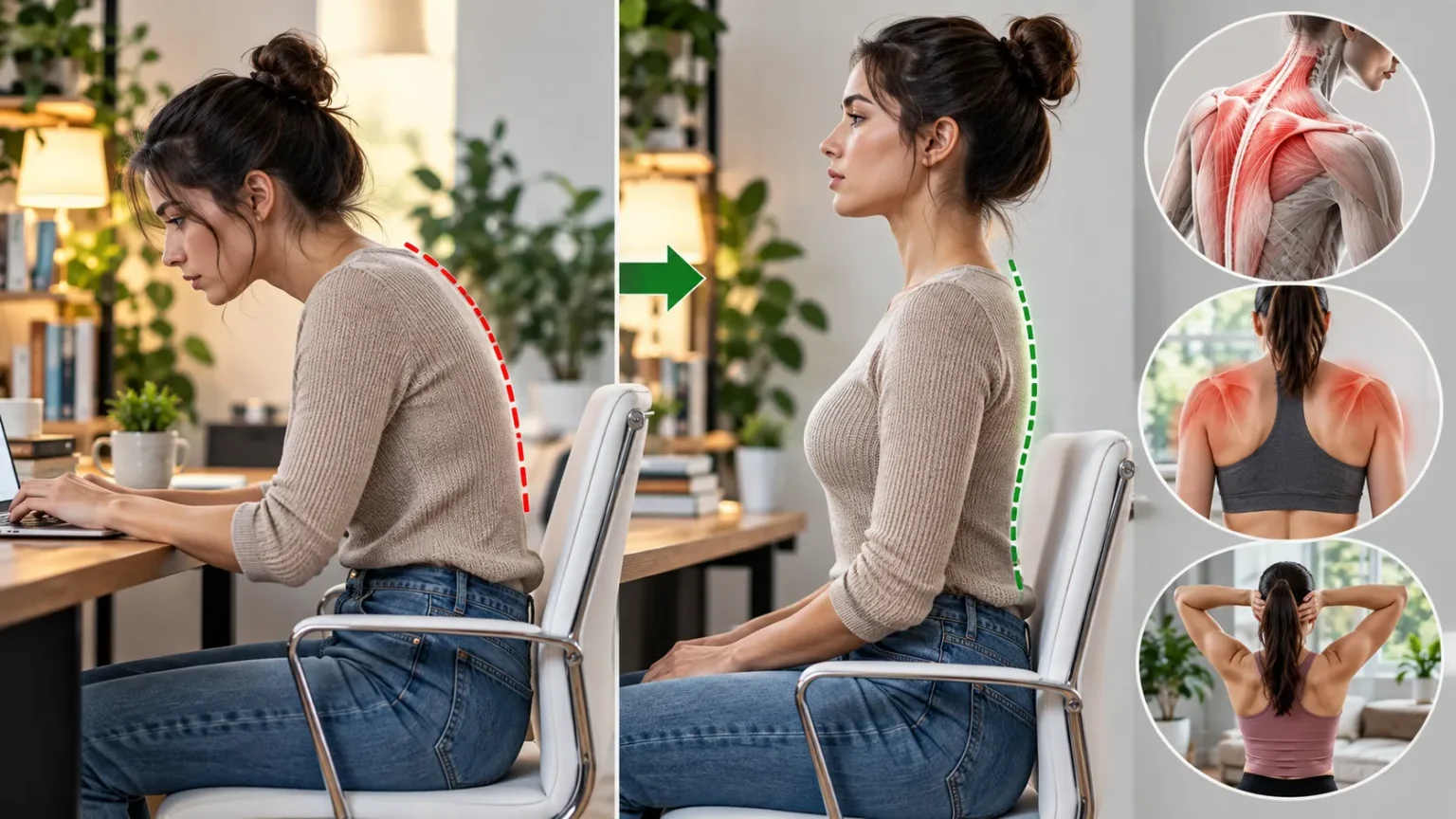

Rounded shoulders describe a posture where the shoulders appear to sit farther forward than usual, often accompanied by an upper back that looks slightly curved. This position can develop from prolonged sitting, repeated daily habits, muscle imbalances, or simply the way a person naturally holds their body. It is common among office workers, students, drivers, and people who spend significant time using screens.
Having rounded shoulders does not automatically mean something is wrong or that pain will develop. However, some people experience neck tension, upper-back discomfort, shoulder stiffness, or difficulty maintaining certain positions. Understanding the symptoms, common causes, useful exercises, and realistic treatment options can help you improve comfort without becoming overly focused on achieving one supposedly perfect posture.
What Are Rounded Shoulders?
Rounded shoulders occur when the shoulder blades and upper arms tend to sit farther forward around the rib cage. From the side, the shoulders may appear to curve toward the chest rather than resting directly beneath the ears. The position can be mild and barely noticeable or more obvious depending on body structure and movement habits.
The shoulder blades naturally move in several directions throughout the day, so some forward positioning is completely normal. Problems are more likely when one posture is held for very long periods or when the shoulders feel difficult to move comfortably. Posture should therefore be viewed as something dynamic rather than a position your body must maintain perfectly.
Rounded shoulders can occur with an increased curve through the upper spine, forward head posture, or tightness around the chest. These features are often grouped together, but they do not always have the same cause. Each person may have a different combination of mobility, strength, daily habits, anatomy, and symptoms affecting their posture.
Common Symptoms of Rounded Shoulders
The most obvious sign is a visible forward position of the shoulders when standing or sitting. Some people also notice that their palms naturally face backward rather than inward when their arms hang beside the body. Shirts, jackets, or backpack straps may also sit differently because the shoulders rest slightly forward.
Physical symptoms can include tightness across the chest, aching between the shoulder blades, neck tension, or fatigue around the upper back. The shoulders may also feel stiff during overhead movements. These symptoms can become more noticeable after long periods of computer work, reading, driving, or using a phone.
Not everyone with rounded shoulders experiences discomfort. Posture and pain are influenced by many factors, including stress, sleep, workload, strength, previous injuries, and general activity levels. If you have pain, it is usually more helpful to focus on improving comfortable movement and strength rather than trying to force your shoulders backward all day.
What Causes Rounded Shoulders?
Prolonged sitting is one common contributor, especially when the arms remain in front of the body for many hours. Computer work, gaming, studying, driving, and phone use can all encourage the shoulders to stay forward. The issue is often the lack of movement variety rather than one specific sitting position.
Muscle strength and flexibility can also influence shoulder position. The muscles across the chest may feel stiff, while muscles around the shoulder blades may lack endurance. This combination can make an upright position feel tiring, although muscle imbalance is rarely the only explanation for posture.
Natural anatomy matters as well. Bone structure, spinal curves, shoulder shape, age, and genetics all influence how someone looks when standing. This is why two people with similar habits may have very different posture, and why appearance alone should not be used to diagnose a physical problem.
Can Desk Work Cause Rounded Shoulders?
Desk work can contribute when you spend many hours leaning toward a screen with your arms supported in front of you. Over time, the position may become familiar and comfortable enough that you continue using it even when standing. The shoulders and upper back may also feel stiff after long periods without movement.
The solution is not necessarily sitting rigidly upright for eight hours. Any posture can become uncomfortable when held for too long. Changing positions, standing occasionally, walking, and moving the shoulders throughout the day may be more practical than constantly trying to maintain one ideal alignment.
A comfortable workstation can still help. Position the screen at an appropriate height, keep frequently used items within easy reach, and allow the elbows to rest comfortably. Small improvements combined with regular movement breaks can reduce unnecessary fatigue around the neck and shoulders without requiring perfect posture.
Tight Chest Muscles and Rounded Shoulders
The pectoral muscles at the front of the chest can feel stiff when the arms spend a lot of time positioned forward. This may make opening the chest or moving the shoulders backward feel less comfortable. Gentle stretching can sometimes reduce this sensation and make upright positions feel easier.
A doorway chest stretch is a simple option. Place the forearms or hands against the sides of a doorway and step forward gently until you feel mild tension across the chest. Avoid forcing the shoulders backward or turning the stretch into a painful position.
Stretching alone may not create lasting changes if the shoulders repeatedly return to the same position throughout the day. Combining mobility work with upper-back strengthening and more movement variety is usually more useful. The goal should be comfortable shoulder motion rather than trying to permanently stretch the chest as much as possible.
Weak Upper-Back Muscles and Posture
Muscles around the shoulder blades help control how the shoulders move during pulling, reaching, lifting, and overhead activities. If these muscles have low endurance, holding the upper body in certain positions may feel tiring. This can encourage the shoulders to drift forward during long periods of sitting or work.
Exercises such as rows, band pull-aparts, face pulls, and controlled reverse fly movements can strengthen the upper back. Focus on smooth motion rather than squeezing the shoulder blades together as hard as possible. Excessive tension is not necessary to train the muscles effectively.
Strengthening also improves the ability to move between different positions rather than locking the body into one posture. A strong upper back should support reaching and movement, not simply hold the shoulders backward. Gradual resistance training generally provides more benefit than repeatedly reminding yourself to “sit up straight.”
Rounded Shoulders and Neck Pain
Rounded shoulders can sometimes appear alongside forward head posture, where the head sits farther in front of the torso. This may increase the workload on muscles around the neck and upper back during prolonged sitting. Some people experience stiffness, headaches, or muscular fatigue when these positions are held for many hours.
The relationship between posture and neck pain is not always simple. Many people sit with forward shoulders without symptoms, while others develop discomfort even with relatively upright posture. Stress, sleep, screen time, exercise habits, and previous injuries can all influence how the neck feels.
Gentle neck movement, shoulder exercises, and regular breaks from static positions can often improve comfort. Avoid repeatedly forcing the chin backward or aggressively retracting the shoulders. Comfortable movement throughout the day is usually more sustainable than trying to maintain a rigid corrected position.
Rounded Shoulders and Upper-Back Pain
Upper-back discomfort may develop when muscles around the shoulder blades become fatigued from prolonged sitting or repeated reaching. Some people describe a dull ache or burning sensation between the shoulder blades after several hours at a desk. Movement or changing position may temporarily make the area feel better.
Pain does not necessarily mean the muscles are damaged or that the spine is incorrectly aligned. Often, tissues simply become sensitive after remaining in one position for too long. Gradually increasing movement and strength can improve how well these muscles tolerate everyday activities.
Short-term symptom-relief tools may also help when discomfort flares. Some people explore heat, massage, or devices such as a TENS unit for temporary pain relief. These approaches may improve comfort, but they should complement movement and strengthening rather than replace them.
Best Exercises for Rounded Shoulders
Rows are one of the most useful exercises because they strengthen muscles around the upper back and shoulder blades. You can use resistance bands, cables, dumbbells, or machines. Keep the movement controlled and avoid aggressively shrugging or pulling the shoulders as far backward as possible.
Band pull-aparts are another simple option. Hold a resistance band in front of you and pull your hands apart while keeping the movement comfortable. The exercise can be performed with light resistance and works well for people who want a simple upper-back movement during work breaks.
Wall slides can also improve shoulder movement and control. Stand with your back near a wall and slowly move the arms upward within a comfortable range. Do not force the hands or elbows against the wall if your mobility does not allow it, because the goal is smooth movement rather than perfect contact.
Stretches That May Help Rounded Shoulders
Doorway chest stretches can help reduce stiffness across the front of the shoulders. Keep the stretch gentle and avoid pushing until you feel pain. Holding a comfortable position for around 20 to 30 seconds may be enough to create a mild stretching sensation without irritating the joint.
Upper-back mobility can also be useful. You might sit in a chair and gently extend the upper back over the backrest while keeping the movement controlled. Another option is reaching the arms forward and then opening them outward to move the shoulder blades through a comfortable range.
Stretching should not become the only strategy. If mobility improves but the shoulders still feel weak or tired, strengthening may deserve more attention. A balanced routine that includes chest mobility, upper-back strength, and regular movement generally provides a more complete approach than stretching alone.
How to Improve Rounded Shoulders at Home
Start by identifying which daily situations encourage you to stay in one position for too long. Long desk sessions, phone use, reading, or gaming may all contribute. Set simple reminders to stand, walk, or move the shoulders periodically rather than attempting to correct posture continuously.
Add two or three upper-body exercises several times per week. Rows, wall slides, and light band pull-aparts are straightforward options that require minimal equipment. Gradually increase resistance or repetitions as the movements become easier instead of trying to make immediate dramatic changes.
Be patient with appearance. Posture can change somewhat through movement and strengthening, but anatomy also influences how the shoulders naturally sit. Progress should be measured through improved comfort, easier movement, greater strength, and reduced fatigue rather than by trying to look perfectly upright at all times.
How Long Does It Take to Improve Rounded Shoulders?
There is no fixed timeline because rounded shoulders can involve habits, strength, mobility, anatomy, and years of repeated positioning. Some people notice greater comfort within a few weeks of regular exercise and movement breaks. Visible posture changes may take longer or may be relatively subtle.
Consistency matters more than performing intense corrective routines occasionally. Short exercises repeated several times per week are usually easier to maintain than long daily sessions. Improving general physical activity can also support progress because the body becomes accustomed to moving through more varied positions.
Do not assume lack of dramatic visual change means the exercises are not working. Increased shoulder mobility, reduced neck fatigue, and better tolerance for desk work are meaningful improvements. A healthy shoulder does not need to match a textbook posture to function well.
When Should You See a Healthcare Professional?
Professional assessment may be useful if shoulder or neck pain persists despite reasonable changes to activity and exercise. A physical therapist or other qualified clinician can evaluate shoulder movement, upper-back mobility, strength, and possible nerve symptoms. They can then suggest exercises suited to your specific limitations.
Seek medical attention sooner if you have significant arm weakness, persistent numbness, tingling, severe pain after an injury, or symptoms that continue worsening. These signs may involve more than ordinary postural fatigue and should not be managed only with stretching or strengthening at home.
You should also seek evaluation if shoulder movement becomes progressively limited or painful enough to affect sleep and daily activities. Rounded shoulders themselves are rarely an emergency, but ongoing symptoms deserve proper assessment. Identifying the actual cause prevents you from repeatedly treating posture when another condition may be responsible.
Conclusion
Rounded shoulders describe a forward resting position of the shoulders that may be influenced by sitting habits, muscle endurance, flexibility, anatomy, and everyday movement patterns. Some people experience neck or upper-back discomfort, while others have no symptoms at all.
Improvement usually focuses on moving more often, strengthening the upper back, maintaining comfortable chest mobility, and reducing long periods in one position. Rows, wall slides, pull-aparts, and gentle stretches can all fit into a simple routine when performed consistently.
Do not become overly focused on achieving perfect posture. Comfortable movement, strength, and function matter more than holding the shoulders in one exact position throughout the day. Persistent pain, weakness, numbness, or significant movement limitations should be evaluated by a healthcare professional.
FAQs
Can rounded shoulders be corrected?
Rounded shoulders may improve through strengthening, mobility work, movement breaks, and changes in daily habits. How much appearance changes depends on anatomy, age, activity level, and the factors contributing to posture.
What muscles are weak with rounded shoulders?
Muscles around the upper back and shoulder blades may have reduced endurance in some people. However, rounded shoulders should not automatically be blamed on one weak muscle or muscle group.
What muscles should I stretch for rounded shoulders?
Gentle stretches for the chest and front of the shoulders may help when these areas feel stiff. Upper-back mobility can also be useful, but stretching should usually be combined with strengthening.
Can sleeping position cause rounded shoulders?
Sleeping position alone is unlikely to be the main cause. Daily sitting, screen use, movement habits, anatomy, strength, and overall activity levels are usually more relevant to how the shoulders rest.
How often should I exercise for rounded shoulders?
Two to three strengthening sessions per week can be a practical starting point, combined with frequent movement breaks. Exercises should be progressed gradually and should not cause sharp or worsening pain.