

Soleus exercises are an important part of maintaining strong calves, stable ankles, and comfortable lower-body movement. The soleus is a powerful muscle located deep within the calf, underneath the larger gastrocnemius muscle. It plays an essential role in standing, walking, running, and maintaining balance. Although it is often overlooked during exercise routines, the soleus contributes significantly to everyday mobility and physical performance.
Many people focus on traditional calf raises without realizing that different knee positions influence how the calf muscles contribute to movement. Exercises performed with bent knees can place greater emphasis on the soleus because the gastrocnemius works across both the knee and ankle joints. Understanding this difference helps explain why certain movements are commonly used in calf strengthening and rehabilitation programs.
This guide explains effective soleus exercises, their potential benefits, proper form, and practical training considerations. You will discover seated calf raises, bent-knee heel raises, resistance exercises, and gentle mobility movements. Whether you want to support ankle stability, improve everyday movement, or understand calf muscle function, these strategies provide a useful introduction to soleus training.
What Is the Soleus Muscle and Where Is It Located?
The soleus is a broad, relatively flat muscle located in the posterior part of the lower leg. It sits beneath the gastrocnemius and forms an important part of the calf muscle group. Together, these muscles contribute to plantarflexion, the movement that points the foot downward at the ankle. The soleus is especially active during standing and walking.
Unlike the gastrocnemius, which crosses both the knee and ankle joints, the soleus acts primarily across the ankle. This anatomical difference affects how the muscles contribute during movements performed with straight or bent knees. The soleus contains a high proportion of fatigue-resistant muscle fibers. This characteristic helps it support sustained activities such as maintaining an upright standing position.
The soleus also contributes to controlling forward movement of the lower leg over the foot. During walking, it helps manage forces around the ankle and supports smooth progression through each step. Its function is important for stability and efficient movement. Understanding its location and role makes it easier to appreciate why targeted calf exercises may be beneficial.
Why Are Soleus Exercises Important?
Soleus exercises help develop strength and endurance in a muscle that supports many everyday activities. The soleus contributes to standing balance, walking efficiency, and ankle control. When the muscle functions effectively, it works alongside other lower-leg muscles to manage physical demands. Maintaining calf strength is useful for people with different activity levels.
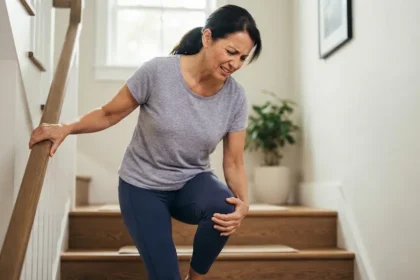
Appropriate strengthening may support movement during stair climbing, recreational activities, and prolonged standing. The soleus also contributes to controlling ankle movement when the body moves forward over the foot. However, it does not work independently during most activities. Effective lower-body function depends on coordination between several muscle groups.
Soleus training can also be included in rehabilitation programs for selected ankle and lower-leg conditions. Exercise selection should depend on individual symptoms, movement capacity, and clinical recommendations. Stronger muscles do not automatically prevent every injury. A balanced approach that includes suitable activity, recovery, and comfortable movement supports long-term function.
Benefits of Soleus Exercises for Calf Strength
One of the main benefits of soleus exercises is improving strength within the deeper calf muscles. Targeted strengthening helps the soleus adapt to appropriate physical demands over time. This may improve the ability to perform repeated heel-raising movements and other ankle-related activities. Progress depends on consistency, exercise selection, and individual physical capacity.
The soleus works closely with the gastrocnemius to create force through the ankle. Training both muscles can support overall calf function rather than focusing exclusively on one structure. Bent-knee calf exercises are often included because they shift some of the relative demand toward the soleus. Straight-knee movements can complement these exercises by challenging the wider calf complex.
Developing calf strength may make certain everyday movements feel more manageable. Activities such as walking uphill and climbing stairs require coordinated effort from the lower legs. However, improvements occur gradually and should not be measured only through exercise difficulty. Comfortable movement, appropriate recovery, and consistent technique are important indicators of progress.
How Soleus Exercises Support Ankle Stability
The ankle depends on several muscles, ligaments, and tendons to maintain stability during movement. The soleus contributes by helping control ankle position and manage forces during weight-bearing activities. Its role becomes particularly important while standing, walking, and changing direction. Strengthening the calf muscles may support overall ankle function.
During walking, the soleus helps control how the shin moves forward over the foot. This contributes to balanced movement and efficient weight transfer. The muscle also works with other stabilizers around the ankle and foot. Because stability involves multiple structures, soleus training is usually most useful as part of a broader movement program.
People recovering from certain ankle injuries may benefit from carefully selected calf strengthening exercises. However, rehabilitation requirements differ according to the injury and its severity. Balance exercises and other movements may also be included when appropriate. A physical therapist can determine whether targeted soleus strengthening is suitable for an individual’s recovery plan.
Seated Calf Raises: A Common Soleus Exercise
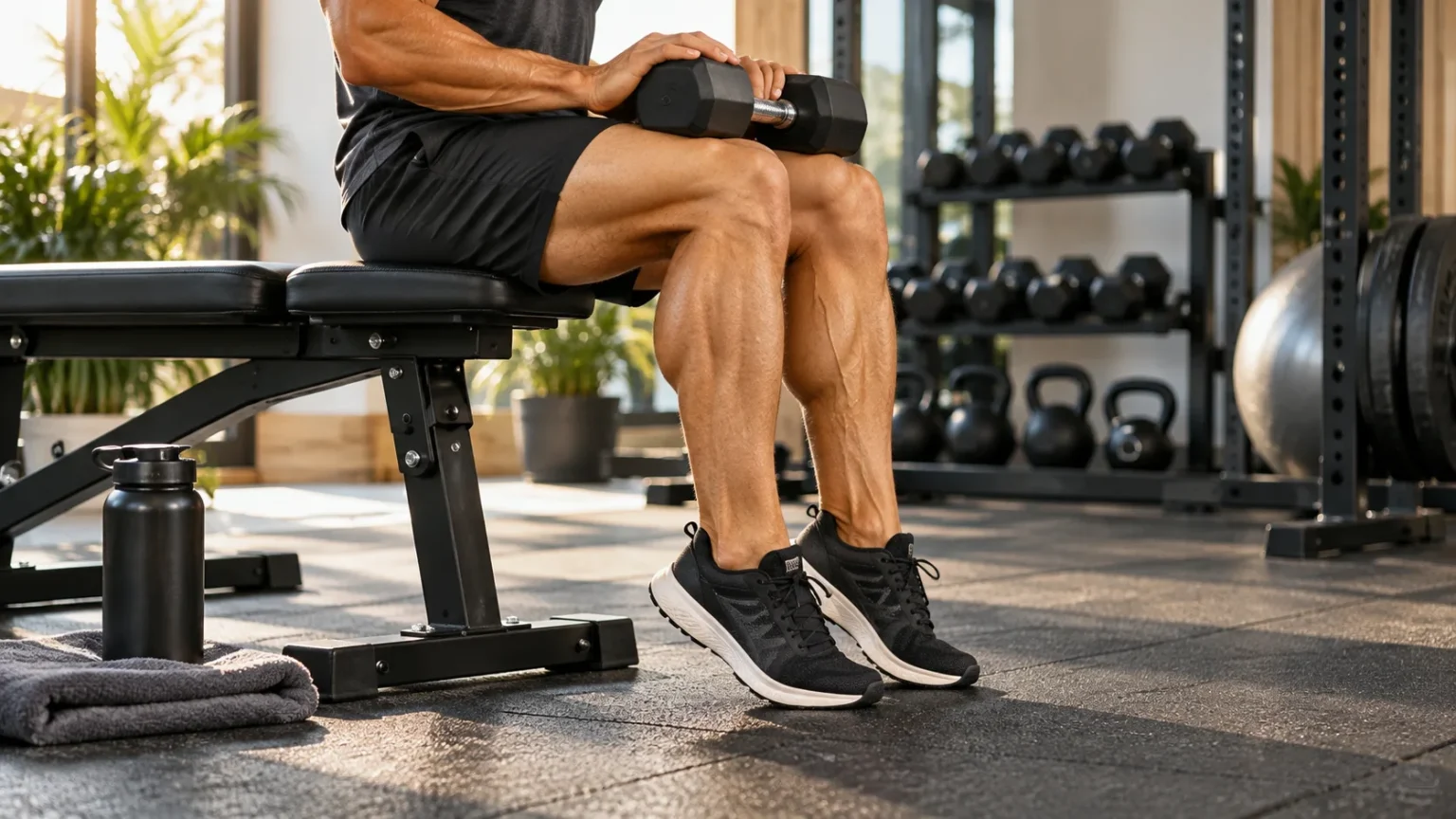
Seated calf raises are among the most commonly used exercises for emphasizing the soleus muscle. Because the knees remain bent, the gastrocnemius contributes differently than it does during straight-knee calf raises. This position allows the soleus to play a substantial role in lifting the heels. Seated calf raises can be adapted for different abilities.
The movement generally involves sitting upright with the feet supported and knees comfortably bent. The heels rise while the balls of the feet remain in contact with the floor or an appropriate platform. Controlled movement is important, and the feet should remain comfortably aligned. There is no need to force an unusually high heel lift.
Beginners may use a comfortable, unloaded version when suitable, while structured strengthening programs sometimes include specialized equipment. Resistance should be selected according to individual capacity rather than comparison with others. People with calf pain or Achilles tendon symptoms may require modifications. Professional guidance is useful when uncertainty exists about safe exercise loading.
Bent-Knee Standing Calf Raises for Soleus Training
Bent-knee standing calf raises provide another way to emphasize the soleus during ankle plantarflexion. The bent-knee position reduces the gastrocnemius’s mechanical contribution compared with a straight-knee position. However, both calf muscles can remain involved. This exercise also requires balance and control from surrounding muscles.
A common variation uses a stable support while the knees remain slightly bent throughout the movement. The heels rise through a comfortable range before returning toward the floor. Keeping the movement controlled helps avoid unnecessary bouncing. A stable surface is important because balance demands can become greater as the heels lift.
This variation may not be suitable for everyone, particularly individuals with ankle pain, balance difficulties, or recent injuries. Supported or seated alternatives may be preferable in some circumstances. Exercise progression should reflect comfort and functional needs. The goal is to strengthen the calf muscles without creating unnecessary pain or instability.
Soleus Raises With a Resistance Band
Resistance bands are sometimes used during ankle strengthening because they offer adjustable resistance without requiring large exercise machines. Certain movements can challenge plantarflexion, which involves the soleus and gastrocnemius muscles. Band exercises may be useful in supervised rehabilitation or general conditioning programs. Their effectiveness depends on technique and appropriate resistance.
A resistance-band plantarflexion exercise typically involves controlled ankle movement against elastic resistance. The knee position influences how much emphasis is placed on different calf muscles. Smooth movements are generally preferable to sudden pulling or snapping. Bands should also be inspected for damage before use.
Resistance-band exercises do not isolate the soleus completely, and their benefits depend on the broader program. People with tendon injuries or persistent pain should seek guidance before introducing new resistance. An exercise that feels comfortable for one person may not suit another. Choosing appropriate resistance helps support controlled movement and gradual adaptation.
Soleus Stretching and Calf Flexibility
Stretching may be useful for people who experience limited ankle mobility or a sensation of calf tightness. A bent-knee calf stretch is commonly used to emphasize structures associated with the soleus. However, stretching does not directly strengthen the muscle. Its role is primarily related to comfortable movement and flexibility where appropriate.
A gentle bent-knee calf stretch generally involves keeping the heel supported while allowing the knee to bend comfortably. The movement should create a mild stretching sensation rather than pain. Avoid forcing the ankle beyond its natural range. People with recent injuries or Achilles tendon conditions may need to avoid certain stretching positions.
Not everyone needs to stretch the soleus regularly. Some people have adequate mobility and benefit more from strength or coordination work. Stretching should be selected according to individual limitations and comfort. A physical therapist can help determine whether restricted ankle movement is actually contributing to symptoms or functional difficulties.
Soleus Exercises for Walking and Running Performance
The soleus plays an important role in walking and running because it helps produce and control forces around the ankle. During each step, the calf muscles contribute to supporting body weight and moving the body forward. Appropriate strengthening may improve muscular capacity for these activities. However, performance depends on several muscles and movement patterns working together.
Walking and running place different demands on the soleus depending on speed, terrain, and individual mechanics. The muscle must repeatedly respond to changing forces while maintaining coordination with surrounding structures. Suitable calf strengthening can complement a balanced physical activity routine. It should not replace comfortable movement, adequate recovery, or other aspects of general conditioning.
People returning to running after an injury may require a gradual rehabilitation program. Sudden increases in activity can place additional demands on the calf and Achilles tendon. Exercise progression should be based on symptoms and functional readiness rather than a fixed schedule. Professional guidance can help determine when more demanding activities are appropriate.
How to Improve Soleus Exercise Form
Proper exercise form helps ensure that soleus training remains comfortable and controlled. The ankle should move smoothly without unnecessary twisting or sudden changes in direction. During calf raises, the feet should remain supported and the movement should stay within a comfortable range. Avoid using momentum to compensate for limited strength or control.
Breathing is another important consideration during strengthening exercises. Holding the breath unnecessarily can increase physical strain and make movements feel more demanding. Natural breathing helps maintain a relaxed upper body while the lower legs perform the activity. Keeping the surrounding muscles comfortable also supports better coordination.
Exercise technique should be adjusted according to mobility, balance, and any existing symptoms. People with limited ankle movement may require a smaller range or additional support. The correct movement should feel manageable rather than forced. A qualified physical therapist or exercise professional can identify technique adjustments when necessary.
Common Mistakes to Avoid During Soleus Training
One common mistake is assuming that stronger calf muscles require increasingly difficult exercises at every session. Muscles and tendons need opportunities to adapt to appropriate physical demands. Sudden increases in resistance or activity may lead to discomfort. Gradual progression is generally more effective than attempting challenging movements before developing adequate control.
Another mistake is using a very fast bouncing motion during calf raises. This can make it harder to control movement and understand how the ankle responds. Deliberate, smooth repetitions may provide better feedback about technique. However, the appropriate movement speed depends on the purpose of the exercise and the individual’s experience.
Ignoring pain is another important mistake. Discomfort around the Achilles tendon, heel, or calf should not automatically be treated as ordinary muscle fatigue. Persistent symptoms may indicate that exercise selection or loading requires adjustment. Stopping an aggravating movement and seeking appropriate guidance helps prevent unnecessary complications.
How Often Should You Perform Soleus Exercises?
The appropriate frequency of soleus training depends on individual fitness, rehabilitation needs, and other physical activities. A person completing a supervised recovery program may follow a different schedule from someone performing general strengthening exercises. There is no universal routine suitable for every individual. Exercise frequency should support comfortable movement and sufficient recovery.
Muscle-strengthening activities are generally most effective when balanced with appropriate rest and other forms of movement. The soleus also works during everyday walking and standing, so total activity matters. Some people may need additional recovery after demanding physical activity. Individual capacity is more important than following an inflexible exercise calendar.
People with recurring calf pain, ankle problems, or Achilles tendon symptoms should seek professional guidance before beginning structured resistance training. A physical therapist can recommend suitable movements and monitor progress. Exercise plans may change as strength and function improve. Consistency and appropriate progression are more important than performing unnecessarily frequent sessions.
Soleus Exercises vs Gastrocnemius Exercises
The soleus and gastrocnemius are the two primary muscles contributing to the visible and deeper structure of the calf. Both help point the foot downward at the ankle. However, their anatomical differences influence how they respond to different knee positions. Understanding these differences can help explain common calf strengthening exercises.
The gastrocnemius crosses both the knee and ankle joints, while the soleus does not cross the knee. When the knee bends, the gastrocnemius becomes shorter and its capacity to produce force can decrease. This changes the relative contribution of the soleus during certain movements. Straight-knee calf raises generally involve substantial activity from both muscles.
A balanced calf strengthening program may include movements performed with different knee positions. This approach can help challenge the calf complex rather than emphasizing only one muscle. However, both muscles work together during many everyday activities. Exercise selection should reflect comfort, function, and personal needs rather than attempting complete muscle isolation.
How Long Does It Take to Strengthen the Soleus?
The time required to improve soleus strength varies depending on current physical capacity, exercise consistency, and individual health. Some people may notice improved movement control before measurable strength changes become apparent. Muscle adaptation occurs gradually in response to suitable training. There is no guaranteed timeline that applies to everyone.
Early improvements may involve better coordination and greater familiarity with selected movements. More substantial strength changes usually require continued training over several weeks or longer. Recovery, overall activity, and existing injuries can influence progress. Increasing exercise difficulty too quickly does not necessarily lead to better results.
Rather than focusing on rapid improvements, pay attention to comfortable movement and gradual functional changes. Activities such as walking or climbing stairs may feel easier as lower-leg endurance develops. Progress should not require persistent pain or excessive fatigue. When symptoms interfere with exercise, professional assessment can help identify the appropriate next steps.
When Should You Avoid Soleus Exercises?
Soleus exercises may need to be modified or temporarily avoided when calf or ankle symptoms suggest an injury. Sudden pain, noticeable swelling, and difficulty walking require careful attention. Certain tendon or muscle injuries can worsen when inappropriate resistance is introduced. A healthcare professional can determine whether exercise is suitable.
People recovering from surgery, fractures, or significant ankle injuries should follow their clinician’s rehabilitation instructions. Some conditions require temporary restrictions on weight-bearing or particular movements. Exercises that are safe during one recovery stage may not be appropriate during another. Individual medical guidance should take priority over general exercise information.
Seek urgent medical assessment for sudden significant calf swelling, warmth, redness, or unexplained calf pain, especially when one leg is affected. These symptoms can occasionally indicate a blood clot or another serious problem. Chest pain or sudden shortness of breath requires emergency attention. Do not attempt to treat concerning symptoms through stretching or calf exercises.
Conclusion
Soleus exercises can support calf strength, ankle stability, and everyday movement when performed appropriately. The soleus plays an important role in standing, walking, and controlling ankle motion. Seated calf raises, bent-knee variations, and selected resistance exercises can help develop its function. Understanding the muscle’s anatomy makes exercise selection more informed.
Proper form, comfortable movement, and gradual progression are essential components of soleus training. Exercises should reflect individual fitness levels, mobility, and any existing medical conditions. Strengthening the soleus can complement broader lower-body activities rather than replacing them. Gentle mobility and appropriate recovery may also support a balanced routine.
The most effective exercise approach is one that remains comfortable, consistent, and suitable for personal needs. Avoid forcing movement through pain or increasing resistance unnecessarily. People with persistent calf or ankle symptoms may benefit from individualized physical therapy. With appropriate guidance, soleus training can contribute to healthy lower-leg function and long-term mobility.
Frequently Asked Questions
What is the best exercise for the soleus muscle?
Seated calf raises are commonly used to emphasize the soleus because the knees remain bent. Other options include supported bent-knee heel raises and suitable resistance exercises.
What are the benefits of soleus exercises?
Soleus exercises can improve calf strength, muscular endurance, and ankle control. These benefits may support everyday activities such as walking, standing, climbing stairs, and maintaining balance.
How do you target the soleus instead of the gastrocnemius?
Bent-knee calf exercises place greater relative emphasis on the soleus by reducing the gastrocnemius’s mechanical contribution. However, both muscles remain involved during many ankle movements.
Can soleus exercises help with ankle stability?
Yes, the soleus contributes to controlling ankle movement during weight-bearing activities. Appropriate strengthening may support ankle function, particularly when included in a broader rehabilitation or conditioning program.
How often should you train your soleus muscles?
Training frequency depends on individual ability, activity levels, and recovery needs. Beginners and people with existing injuries should choose manageable routines and seek professional guidance when necessary.