
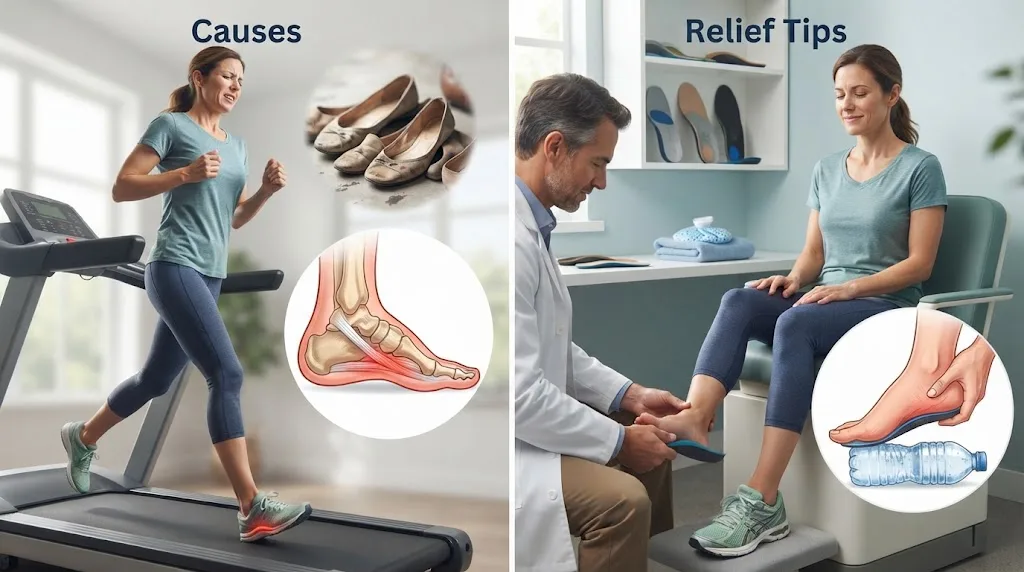

Arch pain is discomfort felt along the curved underside of the foot between the heel and the ball of the foot. It may feel aching, burning, tight, or sharp depending on the cause. Some people notice symptoms only while walking or running, while others experience pain after standing for long periods or taking their first steps after rest.
The foot arch is supported by bones, ligaments, tendons, and muscles that work together to absorb impact and help propel the body forward. When one of these structures becomes overloaded or irritated, discomfort can develop. Changes in activity, footwear, body weight, foot mechanics, or training intensity can all influence how much stress the arch experiences.
Most mild cases improve with temporary activity changes, supportive footwear, gentle exercises, and gradual return to normal loading. However, persistent pain should not automatically be blamed on tired feet. Severe swelling, inability to bear weight, numbness, major trauma, or pain that continues worsening may require evaluation by a qualified healthcare professional.
Plantar Fascia Irritation
The plantar fascia is a strong band of connective tissue that runs from the heel toward the toes and supports the arch. Irritation of this tissue is a common cause of pain under the foot. Discomfort is often strongest near the heel or inner arch and may feel especially noticeable during the first few steps after getting out of bed.
Symptoms can develop after sudden increases in walking, running, standing, or other weight-bearing activity. Tight calves, changes in footwear, and higher training loads may also increase stress through the plantar fascia. The condition is sometimes called plantar fasciitis, although long-lasting cases may involve tissue changes rather than simple short-term inflammation alone.
Reducing aggravating activity temporarily can help the tissue settle, but complete rest is not always necessary. Gentle calf mobility, foot-strengthening exercises, and gradual loading are commonly used during recovery. If pain continues for many weeks or significantly limits walking, professional assessment can help confirm whether the plantar fascia is actually the source.
Flat Feet and Fallen Arches
Flat feet describe a foot shape where the arch appears lower when standing. Some people naturally have low arches throughout life without experiencing pain, while others develop discomfort after activity or changes in foot function. A flatter arch does not automatically mean something is wrong, but it can influence how forces travel through the foot and lower leg.
Pain may occur when muscles and tendons supporting the arch become fatigued or overloaded. Long periods of standing, walking on hard surfaces, or rapidly increasing exercise volume can make symptoms more noticeable. Some people also experience ankle fatigue or aching along the inner side of the foot after demanding days.
Supportive footwear or temporary arch supports may improve comfort for certain people, but they are not a universal requirement. Strengthening the feet, calves, and surrounding muscles can also improve load tolerance. Persistent changes in arch shape, significant weakness, or difficulty performing a single-leg heel raise should be evaluated professionally.
Posterior Tibial Tendon Problems
The posterior tibial tendon runs along the inner ankle and helps support the arch during standing and walking. Irritation can cause pain behind the inside ankle bone and along the inner arch. Symptoms may begin gradually and become more noticeable during long walks, stairs, or activities requiring repeated pushing through the foot.
Tendon problems often develop when training or daily activity increases faster than the tissue can adapt. Recovery usually involves reducing excessive load and then rebuilding strength gradually. Similar principles apply to tendon injuries elsewhere in the body, and this guide to tendonitis treatment provides useful context on progressive loading and recovery.
If the tendon becomes significantly weak, the arch may appear lower over time and walking can become more difficult. Persistent swelling, progressive flattening, or inability to rise onto the toes comfortably deserves assessment. Early rehabilitation can help strengthen the tendon before symptoms become more limiting.
Overuse and Sudden Activity Changes
Arch pain often appears after a sudden increase in walking, running, hiking, or sports participation. Even healthy feet can become sore when their workload changes dramatically. Starting a new job that requires prolonged standing or taking a much longer trip on foot than usual can create similar problems.
The issue is usually not that movement is harmful but that the tissues were not prepared for the new volume. Muscles, tendons, and connective tissues adapt gradually when exposure increases over time. A rapid jump in mileage, hill work, speed, or standing duration can temporarily exceed their capacity.
Reducing the workload slightly can allow symptoms to settle while keeping you active. Shorter walks, easier routes, or more rest between demanding sessions may help. Once pain becomes manageable, rebuild duration and intensity gradually instead of immediately returning to the same activity level that triggered the flare.
Footwear and Arch Pain
Shoes can influence how comfortable your feet feel during long periods of standing, walking, or exercise. Footwear that is too tight, worn out, poorly fitted, or unsuitable for the activity may increase pressure on sensitive areas. However, there is no single shoe type that is automatically best for every foot shape.
Comfort should usually be the first priority. The shoe should provide enough room for the toes, hold the heel securely, and feel stable during movement. Some people prefer firmer arch support, while others feel better in more flexible footwear, so personal comfort and activity demands both matter.
Replacing extremely worn shoes can help when the midsole or sole no longer provides the support you are used to. If you repeatedly experience arch pain in several types of shoes, the problem may involve more than footwear alone. Strength, training load, tendon health, and foot mechanics should also be considered.
Tight Calves and Limited Ankle Mobility
The calf muscles and Achilles tendon influence how the foot moves during walking and running. When ankle mobility is limited, the foot may compensate in other ways as the body moves forward. This can increase stress through the plantar fascia, arch muscles, and surrounding tissues in some people.
Gentle calf stretching may improve comfort if the lower leg feels tight. Stand facing a wall with one foot behind you, keep the heel down, and lean forward until you feel a mild stretch. A bent-knee version can target deeper calf muscles that also contribute to ankle movement.
Avoid forcing the ankle aggressively into painful positions. Mobility improves gradually, and intense stretching is not necessary to create change. Combining calf mobility with calf raises and foot-strengthening exercises can provide a more balanced approach than relying only on stretching to address recurring arch discomfort.
Exercises That May Help Arch Pain
Short-foot exercises can strengthen small muscles that help support the arch. While seated or standing, gently draw the ball of the foot toward the heel without curling the toes. The movement should be subtle, creating a slight lift through the arch while keeping the toes relaxed against the floor.
Toe yoga can also improve foot control. Try lifting the big toe while keeping the smaller toes down, then reverse the movement. This exercise may feel awkward at first, but coordination usually improves with practice and can help you develop better awareness of the muscles that stabilize the foot.
Calf raises provide a more functional strengthening option because they train the calf, ankle, and foot together. Rise onto the balls of your feet slowly and lower with control. Begin with both legs and progress toward single-leg variations only when symptoms are manageable and you can maintain good balance.
How to Relieve Arch Pain at Home
Begin by reducing activities that clearly worsen your symptoms rather than avoiding all movement. If a long walk causes pain for hours afterward, shorten the distance temporarily. Maintaining comfortable activity helps preserve strength and mobility while giving irritated tissues a chance to recover from excessive loading.
Cold packs may provide short-term relief after a demanding day, especially when the arch feels sore or irritated. Wrap the pack in a cloth and avoid placing ice directly on the skin. Some people prefer gentle warmth when stiffness is the main problem, so choose the option that feels most comfortable.
Over-the-counter pain medication may be suitable for some people, but medical conditions and other medications can affect what is safe. A pharmacist or clinician can provide guidance if needed. Pain relief can make movement easier, but long-term improvement usually depends on addressing workload, strength, footwear, and the specific structure causing symptoms.
Arch Pain During Running
Runners may develop arch pain after increasing mileage, speed, hills, or frequency too quickly. New shoes or a sudden change in running surface can also coincide with symptoms. The exact trigger can be difficult to identify when several training variables are changed at the same time.
If pain becomes progressively worse during each run, temporarily reduce distance or intensity. Flat routes and shorter sessions may be easier to tolerate while the foot settles. Continuing to increase mileage through worsening pain can make recovery slower and may cause you to change your running pattern in ways that stress other areas.
Strengthening should continue alongside gradual running progression. Calf raises, short-foot exercises, and controlled single-leg work can improve the ability of the foot and lower leg to tolerate repeated impact. Return to previous mileage step by step rather than using one pain-free run as evidence that full training volume is immediately appropriate.
When Arch Pain Needs Medical Attention
Seek assessment if pain is severe, follows a significant injury, or prevents you from bearing weight normally. A sudden pop, major swelling, or bruising can indicate a more serious muscle, ligament, tendon, or bone injury. These symptoms should not be managed only with stretching or new shoes.
Numbness, burning, or tingling may suggest nerve involvement rather than a simple overuse problem. Persistent pain at night, unexplained swelling, redness, warmth, or fever also deserves medical attention. These symptoms can have several causes and should not automatically be assumed to come from plantar fascia irritation.
Pain that continues for several weeks despite sensible activity changes is another reason to seek help. A podiatrist, physical therapist, sports medicine clinician, or other qualified healthcare professional can examine foot mechanics, tendon strength, nerve symptoms, and walking patterns to determine the most likely source.
How to Prevent Arch Pain From Returning
Increase walking, running, and standing time gradually so the tissues of the foot can adapt. Sudden workload changes are a common trigger for overuse pain, even in people who are otherwise active. Progressing one training variable at a time makes it easier to identify when the foot is being asked to do too much.
Keep the calves and foot muscles strong with regular resistance exercise. Calf raises, balance work, and simple intrinsic foot exercises can improve the capacity of the lower leg and arch. Strengthening does not need to be complicated, but it should become gradually more challenging as the body adapts.
Wear shoes that are comfortable for your activity and replace pairs that have become excessively worn. Pay attention to early soreness rather than waiting until walking becomes difficult. Small adjustments to training and recovery are usually easier to manage than a long break caused by repeatedly ignoring worsening symptoms.
Conclusion
Arch pain can come from several causes, including plantar fascia irritation, tendon overload, flat-foot mechanics, sudden activity changes, tight calves, or unsuitable footwear. The exact location and behavior of the pain can provide clues about the source. Many mild cases improve with sensible load management and gradual strengthening.
Home relief can include shorter periods of aggravating activity, comfortable shoes, gentle mobility, and exercises that strengthen the calves and foot muscles. Stretching may help when stiffness is present, but it should not be painful. Returning to activity gradually is usually more effective than alternating between complete rest and sudden high workloads.
Seek professional care for severe pain, major swelling, numbness, inability to bear weight, or symptoms that continue despite several weeks of reasonable self-care. Not every arch problem has the same cause, so persistent pain deserves a proper assessment. With an appropriate plan, many people can return to comfortable walking, running, and daily activity.
FAQs
What is the most common cause of arch pain?
Plantar fascia irritation is a common cause, particularly when pain is strongest near the heel or inner arch. Tendon overload, training changes, footwear, and muscle fatigue can also contribute.
Is walking good for arch pain?
Gentle walking may be fine if symptoms remain manageable. Reduce distance or pace when pain increases significantly during or after activity, then rebuild gradually as the foot becomes more comfortable.
What exercises help arch pain?
Short-foot exercises, toe-control drills, calf raises, and gentle calf mobility can help strengthen and support the arch. Exercise should be progressed gradually and should not create sharp or worsening pain.
Can flat feet cause arch pain?
Flat feet can contribute to discomfort in some people, but many people with low arches have no symptoms. Pain depends on factors such as tissue strength, workload, footwear, and overall movement tolerance.
When should I see a doctor for arch pain?
Seek medical care for severe pain, major swelling, numbness, significant trauma, or inability to bear weight. Persistent pain that does not improve with reasonable self-care also deserves evaluation.