

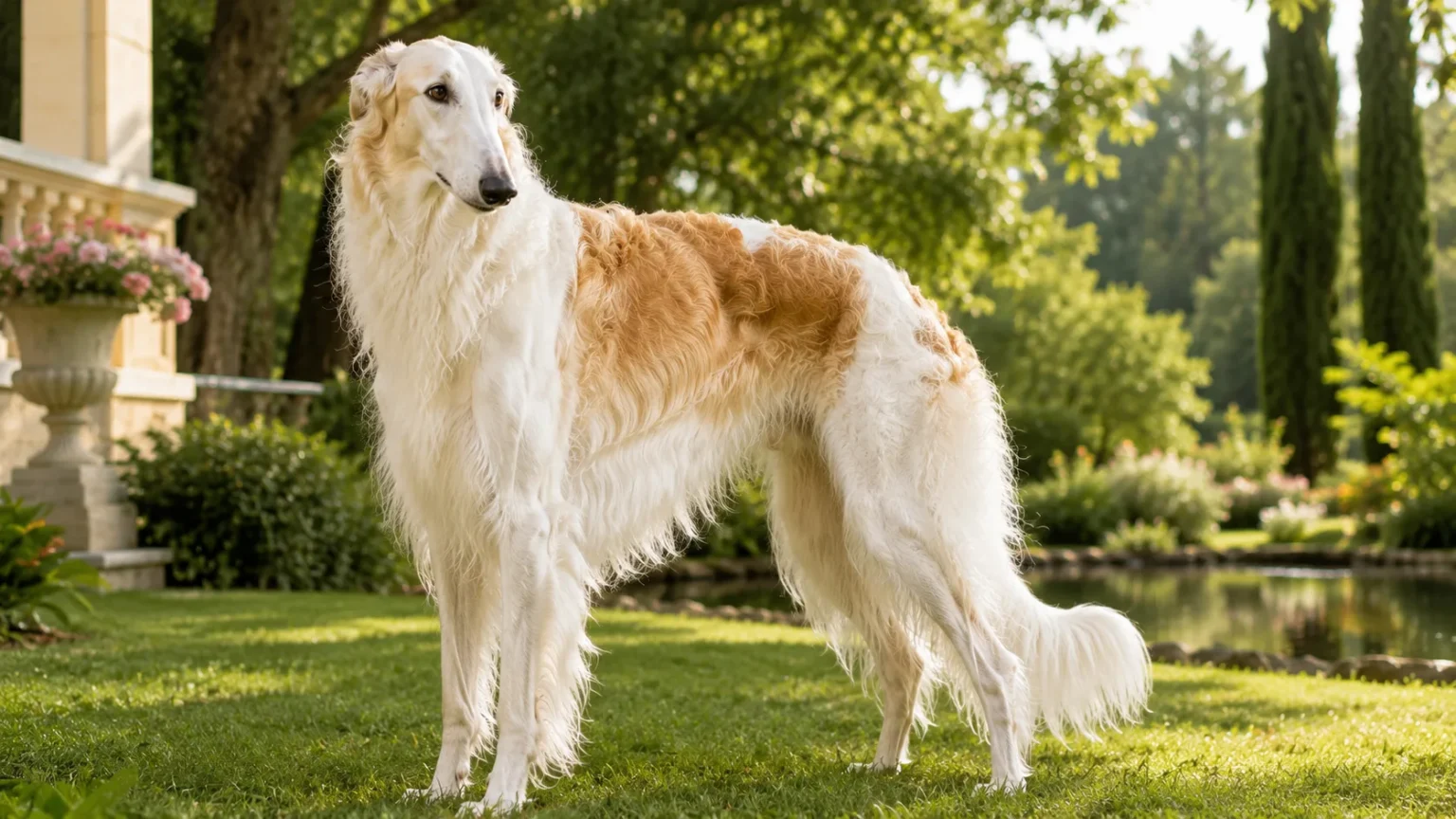

Borzoi Dog: Temperament, Size, Lifespan & Care
The Borzoi is an elegant, athletic sighthound known for its long, narrow head, silky coat, graceful movement, and calm personality. Originally developed in Russia for hunting across large open landscapes, the breed combines impressive speed with a surprisingly relaxed attitude indoors. Borzois are often affectionate with their families without being overly demanding, making them appealing to people who prefer a quieter companion. However, their independent nature, strong prey drive, large size, and need for secure exercise areas mean they are not suitable for every household. A well-cared-for Borzoi can become a gentle, dignified, and deeply rewarding companion. Understanding Borzoi temperament, adult size, lifespan, grooming needs, exercise requirements, health concerns, and training style can help prospective owners decide whether this distinctive dog fits their lifestyle.
What Is a Borzoi Dog?
The Borzoi is a large sighthound developed primarily in Russia, where dogs of this general type were historically used to pursue fast-moving game across open land. The breed was once commonly known in English as the Russian Wolfhound, although Borzoi is now the widely accepted name. Like other sighthounds, Borzois rely strongly on vision and speed when responding to movement rather than following scent trails for long distances. Their slim bodies, deep chests, long legs, and flexible structure are designed for rapid acceleration and efficient running. Despite their athletic appearance, they are not usually constantly active indoors. Many Borzois are remarkably peaceful once their daily exercise needs have been met.
The word “Borzoi” is connected with the Russian idea of swiftness, which suits the breed’s powerful running ability. Historically, Borzois were associated with large estates and organized hunts, where packs of hounds could chase wolves, hares, and other game. Selective breeding emphasized speed, courage, sight, and the ability to work across demanding terrain. Over time, the dogs also became admired for their elegant appearance and began appearing in homes and dog shows outside Russia. Modern Borzois are primarily companion and show dogs rather than working hunting animals. Nevertheless, many of the instincts developed during the breed’s history remain clearly visible in their behavior today.
Physically, the Borzoi has one of the most distinctive silhouettes in the dog world. The head is unusually long and narrow, the muzzle is refined, and the body combines a deep chest with a noticeably tucked-up abdomen. Long legs contribute to the breed’s height and give the dog a light, effortless-looking gait. The coat is generally silky and can range from straight to wavy or slightly curly, with feathering appearing on areas such as the tail and legs. Borzois occur in many coat colors and patterns, so appearance varies considerably from dog to dog. Their overall impression, however, is consistently graceful, lean, and athletic rather than heavy or bulky.
Although the Borzoi appears delicate, it is a genuine sporting breed capable of considerable speed and physical power. Its lightweight-looking frame should not be mistaken for weakness because the breed was developed to pursue prey under challenging conditions. At the same time, Borzois are usually less boisterous than many large working or sporting dogs. They often enjoy short periods of energetic running followed by long stretches of rest. This combination can surprise new owners who assume a fast dog must require continuous activity throughout the day. Borzois generally need regular opportunities to move, but they are not usually ideal companions for endless repetitive exercise or highly demanding obedience routines.
Modern Borzois are best suited to owners who appreciate an independent dog rather than expecting constant attention and immediate obedience. They can form close relationships with household members while still maintaining a reserved, self-contained personality. Their sensitivity means harsh handling is inappropriate, yet their independence also means they may not respond to training in the same eager manner as many retriever or herding breeds. Secure fencing is especially important because a rapidly moving animal can trigger an instinctive chase. Prospective owners should therefore look beyond the breed’s striking beauty and consider its behavioral heritage carefully. A Borzoi thrives when its physical design, temperament, and instincts are respected.
Borzoi Temperament and Personality
Borzoi temperament is usually described as calm, gentle, dignified, and somewhat reserved. Many adults are quiet in the home and prefer relaxing near their family rather than constantly demanding interaction. They can be affectionate, but their affection is often subtle compared with breeds that enthusiastically follow their owners from room to room. Some Borzois enjoy physical closeness, while others prefer simply sharing the same space. Their composed personality can make them excellent companions for households that value a relatively peaceful environment. However, calm behavior indoors should not be confused with complete passivity because a Borzoi can transform rapidly when something activates its chasing instinct.
With family members, Borzois often develop strong bonds and can be remarkably sweet and sensitive. They generally respond better to calm communication than loud corrections or confrontational training. A harsh household can make a sensitive Borzoi anxious, withdrawn, or less willing to cooperate. Their emotional subtlety sometimes means owners need to pay attention to body language rather than expecting obvious displays of stress. Consistent routines and respectful handling usually help them feel secure. Because they are not typically aggressive or highly confrontational dogs, people may mistakenly assume they require little socialization. In reality, thoughtful early exposure to people, environments, sounds, handling, and everyday situations remains important for developing a confident adult.
Borzois are often reserved around unfamiliar people. This does not necessarily mean they are fearful or unfriendly because many simply prefer observing strangers before deciding whether interaction is worthwhile. They are not normally considered natural guard dogs in the same sense as protective working breeds. A Borzoi may alert to unusual activity, but many lack the territorial intensity required for reliable protection work. Their tall size and unusual appearance can still appear imposing to people unfamiliar with the breed. Owners should allow the dog to approach new people at a comfortable pace rather than forcing greetings. Positive experiences help preserve the breed’s naturally composed temperament without encouraging unnecessary suspicion.
Children and Borzois can live together successfully when interactions are supervised and respectful. The breed’s gentle personality can be well suited to calm older children who understand how to behave around a large dog. However, Borzois are tall and can accidentally knock over a small child simply by turning quickly or becoming excited. They also tend to dislike rough handling, climbing, ear pulling, or chaotic physical play. Young children should never be left unsupervised with any large dog, regardless of breed reputation. Families should teach children to respect sleeping areas and feeding spaces. A household that values calm interactions is generally a better match than one expecting the dog to tolerate constant rough play.
One of the most important parts of Borzoi temperament is the strong prey drive inherited from generations of sighthound breeding. A rabbit, squirrel, cat, or other rapidly moving animal can trigger an immediate chase response even in an otherwise quiet dog. Once a Borzoi begins running after something, recall commands may become far less reliable. This is why secure fenced exercise areas are so important. Some Borzois can live peacefully with cats or small animals they were raised with, but that familiarity does not guarantee safety around unfamiliar animals outdoors. Owners should never assume good indoor manners eliminate instinctive chasing behavior. Understanding prey drive is essential to responsible Borzoi ownership.
Borzoi Size, Weight, and Appearance
The Borzoi is a genuinely large dog, although its slim build can make its size less obvious in photographs. Adult males commonly stand around 28 inches or taller at the shoulder, while females are generally somewhat smaller. Individual dogs can be considerably taller, and the breed’s long legs make even a moderately weighted Borzoi feel physically substantial. Adult body weight varies according to sex, height, build, and individual genetics, but many Borzois fall roughly within the 60-to-100-pound range. Males commonly occupy the heavier end of that range. Because the breed is naturally lean, a healthy Borzoi should not have the thick, heavy outline associated with mastiff-type dogs.
Borzoi puppies grow rapidly and can look dramatically different from mature adults. Young dogs often appear awkward or unusually leggy while bones, muscles, and body proportions develop. Owners should avoid judging healthy body condition according to breeds that naturally carry more visible mass. A Borzoi should have a streamlined outline, and some definition around the waist is expected. However, being naturally slender does not mean extreme thinness is desirable. Regular veterinary assessment can help owners distinguish appropriate sighthound condition from inadequate nutrition or illness. Maintaining a healthy weight is particularly important for large dogs because unnecessary body mass increases stress on joints and other structures.
The breed’s deep chest provides space for the heart and lungs required during intense running. Behind the ribcage, the abdomen rises noticeably upward, producing the classic sighthound tuck. The back has a graceful contour rather than appearing completely flat, and the rear assembly provides substantial propulsion during running. The long tail is generally carried low and often develops abundant feathering. Feet are relatively compact for such a tall dog, helping support efficient movement. These features are functional rather than purely decorative. The Borzoi’s appearance reflects generations of selection for speed, agility, endurance, and the ability to make fast changes in direction while pursuing moving game.
The Borzoi coat contributes significantly to the breed’s elegant appearance. Hair is generally silky and may be flat, wavy, or somewhat curly depending on the individual and body area. Longer feathering often appears around the neck, chest, legs, and tail, creating a flowing outline when the dog moves. Borzois can appear in a wide variety of colors, including white, black, cream, gold, red, gray, brindle, and numerous combinations or markings. Coat color does not determine temperament or quality as a companion. Grooming needs also remain broadly similar regardless of color. Prospective owners should choose based on health, temperament, responsible breeding, and lifestyle compatibility rather than selecting primarily for a particular coat pattern.
Space requirements involve more than the dog’s standing height. A Borzoi takes up considerable room when stretched across a floor, turning through narrow hallways, riding in a vehicle, or sleeping on a large bed. Apartments are not automatically unsuitable if adequate outdoor exercise is available, because many adults are quiet indoors. However, very cramped homes can make daily life inconvenient with such a tall animal. Stairs, slippery flooring, small vehicles, and limited outdoor access are worth considering before bringing home a puppy. Large dogs also require larger crates, bedding, equipment, and veterinary handling. Understanding practical size requirements helps prevent situations where owners discover that their beautiful puppy has become far larger than expected.
How Much Exercise Does a Borzoi Need?
Borzois require regular exercise, but their needs differ from those of breeds developed for continuous work throughout the day. Many adults are satisfied with daily walks combined with opportunities to run safely in a securely enclosed environment. The ability to sprint is particularly valuable because running allows them to express natural sighthound behavior. A Borzoi may spend a short period moving at remarkable speed and then be content to rest for much of the day. Owners should therefore focus on quality exercise rather than assuming hours of repetitive activity are necessary. Individual energy levels vary, so age, health, weather, and personality should guide the exact routine.
A secure fenced area is strongly recommended whenever a Borzoi is allowed to run freely. Invisible electronic boundaries are generally not an ideal substitute because prey drive can motivate a dog to cross despite discomfort. Once a Borzoi reaches full speed, catching or physically intercepting it becomes extremely difficult. Public spaces without secure boundaries also carry risks from traffic, wildlife, bicycles, and other dogs. Even a Borzoi with good training may ignore recall when instinctive pursuit begins. Long lines can provide controlled freedom during some activities, although they must be handled carefully to avoid injuries when a large fast dog accelerates suddenly. Safety should always take priority over off-leash freedom.
Daily walks provide more than physical exercise because they also expose the dog to smells, sights, sounds, and social environments. A calm neighborhood walk can provide useful mental stimulation without requiring exhausting mileage. Some Borzois enjoy hiking, but owners should consider terrain, temperature, wildlife, and leash security. Their thin body structure and relatively limited insulation in certain areas can make extreme weather uncomfortable. Hot conditions also deserve caution because vigorous running can quickly raise body temperature. Exercise is generally better scheduled during cooler periods in warm climates. Water and rest should be available after active sessions, particularly following intense sprinting.
Borzoi puppies need a different exercise approach from mature dogs. Their bodies are developing rapidly, so excessive repetitive impact or forced long-distance exercise may place unnecessary stress on growing joints and bones. Puppies still need play, exploration, gentle walks, training, and opportunities to develop coordination. Free movement on safe surfaces is often more appropriate than repeatedly jogging long distances with an owner. Slippery floors can be problematic for rapidly growing large puppies, so providing stable footing at home may help. Exercise intensity can increase gradually as the dog matures. A veterinarian familiar with large breeds can help owners judge appropriate activity during different developmental stages.
Mental enrichment is also important even though Borzois are not typically obsessed with solving tasks for hours. Short training sessions, scent-based games, food puzzles, exploration, and controlled novelty can provide useful stimulation. Because the breed may become bored with repetitive drills, variety often works better than performing the same obedience sequence again and again. Lure coursing and similar controlled sighthound activities can provide an outlet for natural chasing behavior where available. Owners do not need to turn every walk into formal training. Allowing appropriate sniffing and observation can be enriching as well. A balanced routine combines safe physical activity, opportunities to run, mental stimulation, and plenty of rest.
Training and Socializing a Borzoi
Training a Borzoi requires patience because the breed is intelligent but highly independent. These dogs were developed to notice movement and make rapid decisions while working at a distance from people, which differs from breeds selected for close obedience. A Borzoi may understand a command perfectly and still decide that something else is more interesting. This behavior should not automatically be interpreted as stupidity or stubbornness. Short, positive training sessions generally produce better engagement than prolonged repetition. Food rewards, gentle praise, play, and access to enjoyable activities can all be useful motivators. Building cooperation is more effective than trying to force obedience through intimidation.
Recall training deserves special attention because of the breed’s strong prey drive. Owners should begin teaching name response and coming when called from puppyhood, gradually increasing distractions while maintaining safety. Even excellent training cannot completely eliminate the possibility that a moving animal will trigger pursuit. For that reason, a reliable recall should complement secure management rather than replace it. Practice can occur indoors, in fenced areas, and on a properly managed long line. Rewards should be valuable enough to compete with environmental distractions. Punishing a dog after it finally returns can weaken recall because the dog begins associating coming back with an unpleasant consequence.
Socialization should begin early and continue throughout adolescence. A Borzoi puppy benefits from calm exposure to different people, surfaces, vehicles, household sounds, handling procedures, friendly dogs, and new environments. Socialization does not mean forcing the puppy to interact with everyone it encounters. The goal is helping the dog learn that unfamiliar situations can be safe and manageable. Allowing observation at a comfortable distance can sometimes be more productive than encouraging constant greetings. Positive experiences are particularly important for a naturally reserved breed. Careful socialization can reduce unnecessary fear while preserving the Borzoi’s normal dignified and somewhat selective approach to strangers.
Leash manners are essential because an adult Borzoi is large enough to pull a person off balance. Puppies should learn early that tension on the leash does not automatically lead toward whatever they want. Rewarding attention and relaxed walking can gradually create more manageable behavior. Sudden lunges toward small animals remain possible, so owners need appropriate equipment and situational awareness. A properly fitted collar or harness should be selected with the breed’s narrow head and body structure in mind. Some sighthound owners prefer specially designed collars that reduce the chance of slipping out. Equipment should provide security without causing unnecessary discomfort or restricting normal movement.
Harsh training methods are particularly inappropriate for the Borzoi’s sensitive personality. Yelling, physical punishment, or intimidation can damage trust and may cause avoidance instead of improving behavior. Clear boundaries are still important, but they can be taught through consistent reinforcement and management. Preventing unwanted behaviors is often easier than repeatedly correcting them after they occur. For example, keeping food out of reach prevents counter surfing from becoming rewarding, while secure fencing prevents rehearsing dangerous chasing behavior. Training should focus on practical skills such as recall foundations, leash walking, settling, handling, grooming cooperation, and calm behavior around distractions. These skills make everyday life safer without demanding robotic obedience.
Borzoi Grooming and Coat Care
The Borzoi’s long, silky coat requires regular grooming, but maintenance is generally manageable when performed consistently. Brushing once or twice a week is often sufficient for many adults during normal periods, although dogs with heavier coats may need more attention. A pin brush, slicker brush, or appropriate comb can help remove loose hair and prevent tangles. Areas with longer feathering, particularly behind the ears, around the legs, and beneath the body, deserve careful checking. Small tangles are easier to remove before they tighten into mats. Gentle grooming also provides an opportunity to inspect the skin for irritation, parasites, lumps, or other changes.
Shedding is part of living with a Borzoi. The amount can vary throughout the year, and seasonal shedding periods may produce considerably more loose hair than usual. More frequent brushing during these times can reduce the amount of hair accumulating around the home and prevent loose undercoat from tangling. Regular vacuuming will still be necessary for owners who prefer extremely clean floors and furniture. Shaving the coat is generally unnecessary for routine maintenance and can alter the protective qualities of the hair. The natural coat helps provide insulation and protection from environmental conditions. Owners should focus on keeping it clean, untangled, and healthy rather than dramatically shortening it for convenience.
Bathing frequency depends on the individual dog’s lifestyle and coat condition. A Borzoi that spends considerable time outdoors may need bathing more often than one that primarily walks on clean urban surfaces. Excessive bathing with harsh shampoo can dry the skin, so gentle dog-specific products are preferable. Brush out significant tangles before bathing because wetting mats can sometimes make them more difficult to remove. Thorough rinsing is important because shampoo residue may cause irritation. Drying the coat completely, especially in thick feathered areas, helps prevent prolonged dampness. Many owners find that regular brushing allows them to extend the time between full baths.
Nail care is particularly important in a large athletic breed. Overgrown nails can alter how a dog places its feet and may reduce traction or comfort during movement. Depending on growth rate and activity, nails may need trimming or grinding every few weeks. Starting nail handling during puppyhood makes maintenance much easier later. Owners should also inspect the feet for cuts, foreign material, damaged pads, or hair tangles. Dental care deserves similar attention because periodontal disease is common across dog breeds. Regular tooth brushing with dog-safe toothpaste provides a stronger preventive approach than relying exclusively on occasional dental treats.
Ear and eye checks can be incorporated into routine grooming. Borzoi ears generally do not require complicated maintenance, but owners should notice unusual odor, discharge, redness, or persistent scratching. Healthy ears should not be repeatedly cleaned with strong products without a reason. The eyes should remain clear and comfortable, without persistent squinting or unusual discharge. Because Borzois have long faces and large bodies, grooming sessions also provide a valuable chance to notice weight changes and body condition. Consistent hands-on care helps owners recognize subtle problems earlier. Grooming is therefore not simply cosmetic maintenance; it contributes to overall health monitoring and strengthens the dog’s comfort with handling.
Borzoi Lifespan and Common Health Concerns
The typical Borzoi lifespan is often around 9 to 14 years, although individual longevity varies according to genetics, health, nutrition, environment, and veterinary care. Some dogs live beyond the typical range, while others develop serious illness earlier in life. Responsible breeding can reduce the likelihood of certain inherited problems, but no breeder can guarantee that a puppy will remain completely disease-free. Prospective owners should ask about health testing performed on the parents and discuss conditions seen within the family line. Choosing a breeder who prioritizes health and temperament is more important than choosing purely for unusual color or extreme appearance. Long-term preventive care remains important after the puppy comes home.
One of the most serious concerns for Borzois is gastric dilatation-volvulus, commonly called bloat or GDV. Deep-chested breeds are at increased risk of this emergency, in which the stomach becomes distended and may twist. Symptoms can include repeated unsuccessful attempts to vomit, abdominal enlargement, restlessness, drooling, weakness, and rapid deterioration. GDV requires immediate veterinary treatment and can become fatal very quickly. Owners should learn the warning signs before an emergency occurs. Some veterinarians discuss preventive gastropexy, a surgical procedure intended to reduce the risk of stomach twisting, particularly for breeds considered vulnerable. The decision should be discussed according to the individual dog’s circumstances.
Heart health is another area worth monitoring in the Borzoi. Different cardiac conditions can occur, and responsible breeders may use appropriate screening to evaluate breeding dogs. Owners should mention exercise intolerance, fainting, persistent coughing, unusual breathing, or sudden reductions in stamina to their veterinarian. Not every symptom indicates heart disease, but large athletic dogs can sometimes compensate for problems until disease becomes more advanced. Routine physical examinations allow veterinarians to listen for abnormal heart sounds and evaluate overall cardiovascular health. Additional testing may be recommended when abnormalities are detected. Early identification can sometimes improve management options and quality of life.
Borzois can also experience musculoskeletal problems, including injuries associated with their speed and large frame. Growing puppies deserve particular care because rapid development creates nutritional and mechanical demands on bones and joints. Feeding an appropriate complete diet designed for large-breed growth can help avoid excessive calorie and mineral intake. Adults should remain lean rather than carrying unnecessary weight. Slippery flooring can increase the risk of falls, especially for puppies and older dogs. Sudden lameness, swelling, persistent stiffness, or reluctance to move warrants veterinary evaluation. Exercise should develop fitness gradually rather than expecting an unconditioned dog to perform intense running without preparation.
Like other dogs, Borzois can develop cancers, eye disorders, dental disease, age-related changes, and many conditions not limited specifically to the breed. Routine veterinary examinations become increasingly valuable as a dog gets older because early disease may produce subtle symptoms. Owners should watch for changes in appetite, thirst, weight, movement, breathing, behavior, urination, or energy level. Preventive parasite control and vaccinations should be discussed according to lifestyle and regional disease risks. Maintaining a healthy body condition, providing appropriate exercise, and seeking timely veterinary care can support longevity. Knowing breed-associated risks should encourage preparation rather than create the impression that every Borzoi will inevitably become ill.
Feeding and Nutrition for a Borzoi
A Borzoi needs a nutritionally complete diet appropriate for its age, size, health, and activity level. Puppies have especially important nutritional requirements because they grow into large adults relatively quickly. Large-breed puppy food can help provide controlled energy and an appropriate mineral balance during development. Encouraging excessively rapid growth through overfeeding is unnecessary and may place additional stress on developing bones and joints. Portions should be adjusted according to body condition rather than relying entirely on feeding charts printed on packaging. Veterinary guidance can be particularly useful during the first year, when weight and growth can change quickly. Healthy development is more important than producing the largest possible puppy.
Adult Borzois should maintain their naturally lean sighthound appearance without becoming underweight. Because the breed is slim by design, inexperienced people may sometimes think a healthy Borzoi needs to gain weight. Conversely, owners can become so accustomed to the lean outline that they overlook genuine weight loss. Regular body-condition assessment provides a more reliable guide than appearance alone. The ribs may be relatively easy to feel beneath the coat, while the waist and abdominal tuck should remain obvious. Exact feeding amounts vary dramatically according to food calorie density, metabolism, activity, age, and whether the dog is neutered. Portions should therefore be personalized over time.
Meal management deserves additional attention because of the breed’s deep chest and GDV risk. Owners sometimes divide daily food into two or more meals instead of offering one very large feeding. Rapid gulping can be addressed with appropriate feeding strategies when necessary, although evidence surrounding individual bloat-prevention practices can be complex. Dramatic exercise immediately around large meals is generally avoided by many owners of deep-chested breeds. Most importantly, people should understand the warning signs of GDV and have access to emergency veterinary care. Feeding changes alone cannot guarantee prevention. A veterinarian can discuss the dog’s individual risk and whether preventive gastropexy should be considered.
Treats are useful for training but should remain a relatively small part of total daily calorie intake. Borzois can learn effectively with small food rewards, so treats do not need to be large simply because the dog is large. Excess calories can accumulate quickly when multiple family members provide snacks throughout the day. Human foods also vary in safety, and some common ingredients are toxic to dogs. A nutritionally complete dog food should provide the foundation of the diet unless a veterinary nutrition professional designs an alternative plan. Homemade diets require careful formulation because feeding meat and vegetables alone does not automatically provide the correct balance of minerals, vitamins, fatty acids, and other nutrients.
Fresh water should always be readily available unless a veterinarian gives specific temporary instructions. Monitor changes in drinking because substantially increased thirst can be associated with several medical conditions. Supplements should not be added automatically when a dog is already eating a complete balanced diet. Excessive minerals or vitamins can sometimes be harmful, particularly during puppy growth. Joint supplements, omega-3 products, and other additions may be appropriate for certain dogs, but quality and dosage matter. Discussing supplements with a veterinarian helps avoid unnecessary combinations. Good Borzoi nutrition is ultimately straightforward: provide appropriate complete food, maintain a healthy lean condition, monitor growth and weight, and adjust feeding according to the individual dog.
Is a Borzoi a Good Family Dog?
A Borzoi can be an excellent family dog for the right household. Its calm indoor temperament, gentle nature, and tendency to relax between exercise sessions can make everyday companionship surprisingly easy. The breed is often appealing to people who want a large dog without the constant exuberance associated with some sporting or working breeds. However, prospective owners need to appreciate independence rather than expecting an intensely obedient companion. Secure exercise arrangements are also essential because of the prey drive. Families who understand these traits often find Borzois graceful, affectionate, and enjoyable to live with. People who want reliable off-leash freedom in unfenced areas may find the breed considerably more challenging.
Households with other dogs can often accommodate a Borzoi successfully when introductions are handled appropriately. Many Borzois enjoy living with canine companions and may appreciate another sighthound with a similar play style. Size differences deserve consideration because fast chase games between a large Borzoi and a tiny dog can become risky even without aggression. Individual temperament matters more than assuming all members of a breed will behave identically. Early socialization and thoughtful management improve the likelihood of peaceful relationships. Feeding spaces and resting areas should also be respected. Any signs of tension deserve attention before they escalate into repeated conflict.
Living with cats requires more careful consideration. Some Borzois raised with indoor cats learn to treat them as members of the household and coexist peacefully for years. Others retain enough prey drive that living with a small animal is not considered safe. Even a dog trustworthy with its own cat may chase an unfamiliar cat outdoors. Breed history therefore cannot be ignored simply because one individual appears calm. Prospective owners with cats should discuss temperament and prior exposure carefully with a responsible breeder or rescue organization. Supervision and gradual introductions are essential. There is no ethical way to guarantee that every Borzoi will be completely safe with every small animal.
First-time dog owners can succeed with a Borzoi, but they should understand what makes sighthounds different from highly biddable breeds. Training may require more patience, and recall reliability has practical limits when prey is involved. Grooming, veterinary costs, transport, fencing, and large-dog equipment also need consideration. A first-time owner willing to research the breed and work with experienced trainers can provide an excellent home. Someone expecting the dog to follow commands instantly because it has attended obedience classes may become frustrated. Choosing a breed according to personality and lifestyle is more important than selecting based on appearance. Borzoi ownership rewards people who enjoy cooperation rather than constant control.
The best Borzoi home is usually calm, secure, and prepared for a large independent sighthound. Owners should have time for daily walks, safe opportunities for exercise, basic training, grooming, and companionship. A huge property is not mandatory, but reliable management is. The breed can adapt surprisingly well to indoor life because mature dogs often spend many hours resting. What matters is whether physical and behavioral needs are met consistently. People drawn to the Borzoi’s beauty should spend time with adult dogs whenever possible before making a decision. Seeing how the breed behaves in everyday life provides a much more realistic understanding than photographs alone.
Choosing a Borzoi Puppy or Rescue Dog
Choosing a healthy Borzoi puppy starts with finding a responsible breeder who places health, temperament, and long-term welfare ahead of sales. A good breeder should be willing to discuss the strengths and weaknesses of the breed rather than presenting Borzois as perfect dogs for everyone. Prospective owners should ask about health screening, family longevity, temperament, and conditions that have occurred within related dogs. Meeting the mother when possible can provide useful information about temperament and general condition. Puppies should be raised in a clean environment with appropriate social exposure. A breeder who pressures buyers into making an immediate decision without discussing lifestyle compatibility deserves caution.
Responsible breeders also remain interested in where their puppies will live. Questions about fencing, other pets, children, work schedules, and previous dog experience are usually signs that the breeder cares about successful placement. Some people interpret extensive questions as intrusive, but matching a sensitive sighthound to the right home reduces the chance of later abandonment. Written contracts often explain health expectations and what should happen if the owner can no longer keep the dog. Ethical breeders generally want dogs returned to them or otherwise safely rehomed rather than surrendered unpredictably. Ongoing breeder support can be especially valuable during puppy development.
Borzoi rescue organizations provide another path for people who are comfortable adopting an adult or older puppy. An adult dog may already have an established temperament, making it easier to evaluate activity level, sociability, and compatibility with other pets. Foster homes can often provide detailed information about how a particular Borzoi behaves indoors. Some rescue dogs require additional training or time to adjust because of previous experiences. Others settle quickly into new households and already possess excellent manners. Adoption should not be viewed as automatically easier or harder than purchasing a puppy. The individual dog’s history, personality, health, and needs determine how demanding the transition will be.
Before bringing a Borzoi home, prepare the environment for a large fast-growing dog. Secure fencing should be checked carefully for gaps, weak gates, or areas where a determined animal might escape. Indoor floors can be made safer with rugs or runners in slippery areas. Food, appropriate bowls, bedding, grooming equipment, a secure collar or harness, identification, and veterinary arrangements should be ready before arrival. Dangerous foods, medications, electrical cords, and fragile items need to be placed out of reach. A comfortable quiet sleeping area can help the dog settle without constant stimulation. Preparation reduces stress for both the new dog and the household.
The final decision should be based on compatibility rather than emotion alone. Borzoi puppies are beautiful, and adult dogs have a dramatic appearance that can create an immediate desire to own one. However, responsible ownership can last more than a decade and includes veterinary expenses, training challenges, travel arrangements, exercise, shedding, and management of prey drive. A person who appreciates these realities is far more likely to enjoy the breed long term. The Borzoi is not designed to be an effortless decorative companion. It is a sophisticated sighthound with specific instincts and needs. For owners who value its independence, gentleness, athleticism, and quiet companionship, those characteristics are exactly what make the breed special.
FAQs About Borzoi Dogs
Are Borzoi dogs good family pets?
Borzois can make excellent family companions because they are generally calm, gentle, and affectionate with people they know. They are best suited to households that understand their large size, independent personality, sensitivity, and strong prey drive.
How big does a Borzoi get?
Adult Borzois are tall dogs, with males commonly standing about 28 inches or more at the shoulder and females usually somewhat smaller. Many adults weigh roughly 60 to 100 pounds, although sex, height, genetics, and individual build can produce considerable variation.
How long do Borzoi dogs live?
A Borzoi lifespan commonly falls around 9 to 14 years, although some dogs may live shorter or longer lives. Responsible breeding, healthy body weight, appropriate exercise, preventive veterinary care, nutrition, and early treatment of illness can all influence longevity.
Do Borzois need a lot of exercise?
Borzois need daily activity and benefit greatly from opportunities to run in securely fenced areas, but many adults are surprisingly relaxed indoors. They generally prefer periods of fast activity combined with walks and plenty of rest rather than constant high-intensity exercise throughout the day.
Are Borzois difficult to train?
Borzois are intelligent but independent, so they may not display the eager-to-please training style found in some other breeds. Positive reinforcement, short sessions, consistency, and realistic expectations work best, while secure management remains important because prey drive can override even well-practiced recall.