

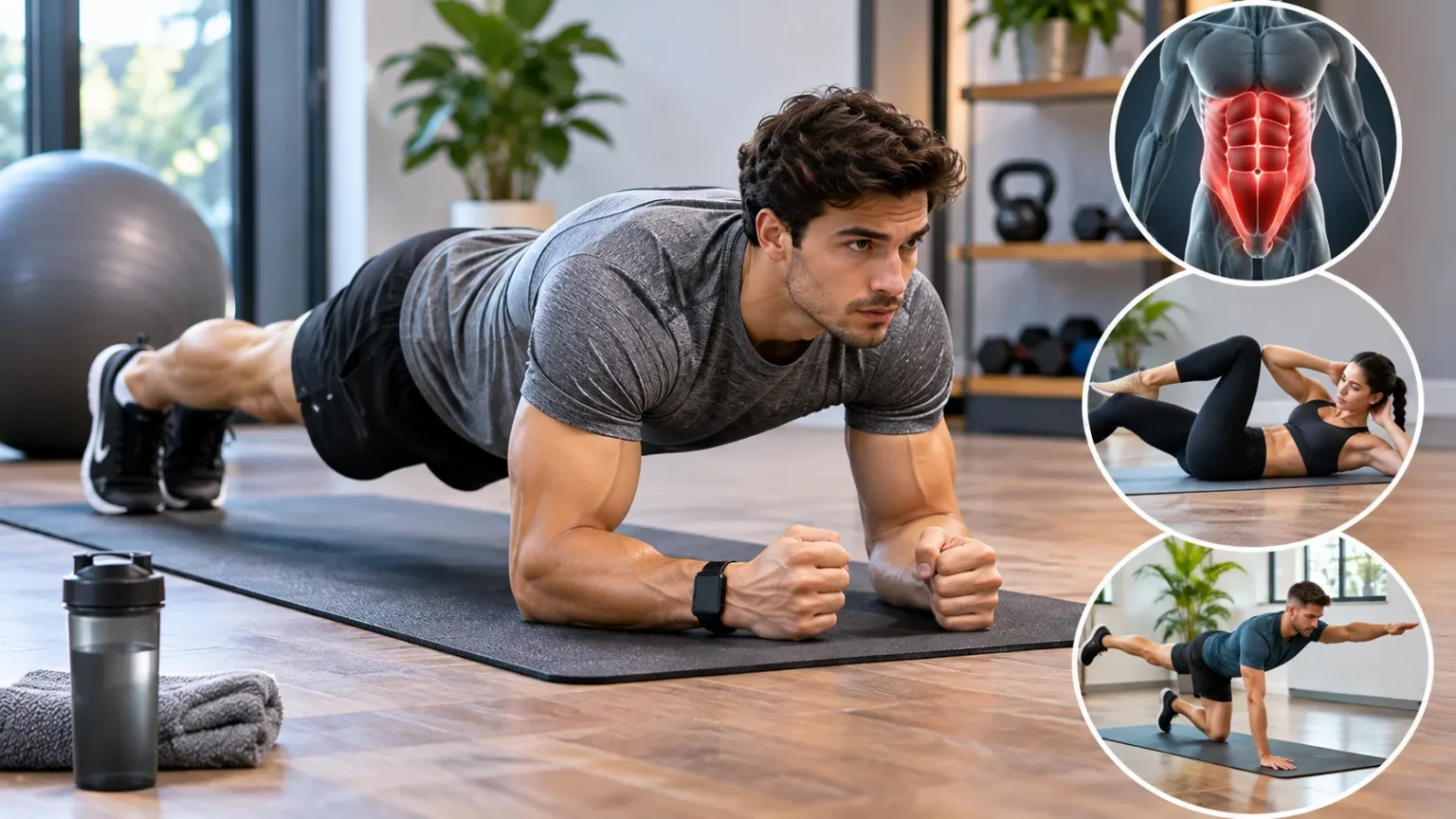

Core strength plays an important role in how your body moves, balances, and handles everyday activities. Whether you are walking, lifting groceries, sitting at a desk, or participating in sports, your core muscles help support controlled movement. However, many people associate core strength only with abdominal exercises, overlooking its wider importance.
Understanding core strength can help you improve physical fitness, movement coordination, and everyday comfort. A strong and well-coordinated core supports the spine, connects upper and lower body movements, and helps maintain balance. Building these abilities does not require complicated equipment or intense workout routines.
This guide explains what core strength means, which muscles are involved, and why core training matters. You will also discover beginner-friendly exercises, practical workout tips, common mistakes, and ways to develop better stability. The goal is to help you approach core strengthening safely and consistently.
What Is Core Strength?
Core strength refers to the ability of muscles around the trunk and pelvis to produce and control force during movement. These muscles help stabilize the body while supporting activities such as bending, reaching, standing, and lifting. Core function involves more than holding your abdomen tight during exercise.
The core includes muscles in the abdomen, back, pelvis, and surrounding areas. These muscles work together to control the position of the trunk and transfer movement between different body regions. Their coordination contributes to stability during both simple and demanding physical activities.
For example, when you carry a shopping bag, your core muscles help manage the uneven load. Similarly, reaching for an object requires your trunk to remain controlled as your arms move. These everyday examples show why core strength is useful beyond traditional fitness exercises.
Why Is Core Strength Important?
Core strength supports efficient movement by helping the body maintain control during physical activities. When your trunk muscles coordinate effectively, your arms and legs can move from a more stable base. This contributes to activities ranging from ordinary walking to recreational sports.
Another important benefit involves balance and coordination. Core muscles respond to changes in body position and help manage forces during movement. Although balance depends on several body systems, appropriate trunk control can contribute to maintaining steady and comfortable movement.
Core training may also improve physical confidence when performing everyday tasks. However, stronger core muscles do not guarantee freedom from back pain or prevent every injury. Good overall fitness, appropriate activity levels, and movement habits remain important parts of physical well-being.
Which Muscles Make Up the Core?
The core contains several muscle groups that work together to support trunk movement and stability. Important abdominal muscles include the rectus abdominis, transverse abdominis, and internal and external obliques. Each contributes differently to bending, rotation, pressure regulation, and movement control.
The back also contains muscles involved in core function. These include the multifidus and erector spinae, which help support and move the spine. Muscles surrounding the pelvis and hips contribute to maintaining stability during standing, walking, and changing positions.
The diaphragm and pelvic floor also participate in trunk function by helping regulate pressure within the abdomen. These structures coordinate with other muscles during breathing and physical activity. Understanding this broader muscle network explains why effective core training should involve more than abdominal crunches.
Core Strength vs. Core Stability: What’s the Difference?
Core strength and core stability are closely related, but they describe different aspects of physical function. Core strength concerns the ability to produce and resist force. Core stability focuses on controlling trunk movement and maintaining appropriate positioning during activities.
A person may have sufficient muscular strength but still find certain balance or coordination tasks challenging. Likewise, someone may demonstrate good control during simple activities but need additional strength for demanding movements. Both abilities contribute to overall physical performance.
For example, carrying a moderately heavy object requires muscular force and controlled trunk positioning. Standing on an uneven surface involves adjusting body movements as conditions change. A balanced core training program can include exercises that develop both strength and movement control.
How Core Strength Supports Everyday Movement
Core muscles contribute to many movements that people perform without thinking. Getting out of bed, standing from a chair, and reaching overhead all require coordination between the trunk and limbs. These activities involve different patterns of muscle activation depending on the task.
During walking, the core helps control movement around the pelvis and trunk. When carrying objects, these muscles assist with managing changing loads and maintaining balance. Their contribution becomes especially noticeable during movements that involve twisting or uneven weight distribution.
For example, moving a box from a table to a nearby shelf requires coordinated activity throughout the body. The trunk helps transfer force while the arms and legs perform their roles. Developing core strength can make these tasks feel more manageable as part of overall physical conditioning.
Can Core Strength Help With Back Pain?
Core strengthening exercises are commonly included in rehabilitation programs for certain types of back pain. They may help improve muscular endurance, movement confidence, and physical function. However, back pain has many possible causes, and core weakness is not always responsible.
Research suggests that exercise can help many people with persistent nonspecific lower back pain. Core-focused exercises are one option, but they are not necessarily better than every other suitable exercise approach. Individual preferences, comfort, and consistency influence how useful a program becomes.
If you experience ongoing back pain, avoid assuming that more abdominal exercise will solve the problem. A healthcare professional or physical therapist can help identify suitable activities. Sudden severe symptoms, significant weakness, or changes in bladder or bowel control require urgent medical assessment.
How to Build Core Strength Safely
Building core strength begins with choosing exercises that match your current abilities. Start with controlled movements that allow comfortable breathing and good coordination. The goal is to develop movement quality gradually rather than complete the most difficult exercise immediately.
Begin with manageable exercise sessions and allow enough recovery between demanding workouts. As movements become easier, you can gradually increase repetitions, resistance, or exercise complexity. Progress should reflect how your body responds rather than a fixed expectation about improvement speed.
Avoid pushing through sharp pain, dizziness, or unusual discomfort. Mild muscular effort can be normal, but increasing joint or back pain deserves attention. If you have an injury or medical condition affecting movement, professional guidance can help you choose appropriate modifications.
Plank Exercises for Core Strength
The plank is a common exercise used to develop trunk endurance and stability. It involves supporting the body while resisting unnecessary movement through the spine. Several variations allow the exercise to be adapted to different ability levels.
A basic forearm plank involves supporting your body on your forearms and toes while maintaining comfortable alignment. Keep breathing normally and avoid forcing the lower back into an uncomfortable position. If this version feels too demanding, a modified plank with knee support may be appropriate.
Focus on controlled positioning rather than holding the exercise for as long as possible. Short, comfortable efforts can be useful when practicing proper form. As endurance improves, you may gradually increase the duration without sacrificing breathing or movement quality.
Bird Dog Exercise for Trunk Control
The bird dog exercise is commonly used to develop trunk stability and coordination. It involves controlled arm and leg movements while maintaining a supported position on the floor. The exercise challenges the body to manage changing weight distribution.
Begin on your hands and knees with your hands beneath your shoulders and knees beneath your hips. Slowly extend one arm and the opposite leg only as far as you can comfortably control. Return to the starting position before repeating on the other side.
Avoid rushing or lifting your limbs higher than necessary. The movement should remain controlled, with comfortable breathing throughout. If extending both limbs feels difficult, practice moving one arm or one leg at a time before attempting the combined version.
Dead Bug Exercise for Core Coordination
The dead bug exercise develops coordination between the arms, legs, and trunk. It is performed while lying on your back, making it useful for practicing controlled movement without standing. Different variations allow the difficulty to be adjusted gradually.
Begin by lying comfortably with your knees bent and arms positioned above your shoulders. Slowly move one arm or leg while maintaining a comfortable trunk position. Return to the starting point and repeat with another controlled movement.
The goal is to keep the exercise smooth rather than force your back into an uncomfortable position. Shortening the movement range can make the exercise easier to manage. As coordination improves, a physical therapist or qualified instructor can suggest more challenging variations.
Glute Bridges and Their Role in Core Training
Glute bridges primarily train the muscles around the hips while also requiring trunk control. They are often included in general strengthening and rehabilitation programs. The exercise can help develop coordination between the pelvis, trunk, and lower body.
To perform a basic bridge, lie on your back with your knees bent and feet resting on the floor. Gently raise your hips to a comfortable height while keeping your movement controlled. Lower slowly and continue breathing throughout the exercise.
Avoid lifting your hips so high that your lower back feels uncomfortable. The movement should come from coordinated hip extension rather than excessive spinal arching. If the exercise causes pain, reduce the range or seek guidance about suitable alternatives.
Side Planks for Lateral Core Strength
Side planks train muscles that help control side-to-side trunk movement. The exercise involves supporting the body on one side while maintaining a stable position. It can be useful for developing muscular endurance and controlled lateral stability.
A beginner variation involves supporting your body on one forearm and bent knees. Keep your shoulder comfortably positioned and raise your hips only as far as you can control. Maintain normal breathing rather than holding your breath during the effort.
More challenging variations may involve straight legs or additional controlled movements. However, difficulty should increase only when the basic exercise feels manageable. People with shoulder discomfort may need another exercise that develops similar trunk control without aggravating symptoms.
Standing Core Exercises for Everyday Fitness
Core training does not have to take place entirely on the floor. Standing exercises can develop trunk control during movements that resemble everyday activities. These exercises may be particularly useful for people who prefer functional movement patterns.
Examples include controlled standing marches, resistance-band presses, and light carrying activities. Each movement requires the trunk to respond to changes in force or body position. The appropriate difficulty depends on balance, strength, and previous exercise experience.
For instance, a standing resistance-band press can challenge your trunk to resist rotation. Start with light resistance and maintain a comfortable stance while moving slowly. A stable support or professional supervision may be helpful when balance is a concern.
How Often Should You Train Your Core?
Core training frequency depends on exercise intensity, overall activity levels, and individual recovery needs. Many people can include moderate core exercises within their regular strength-training routine. However, there is no requirement to perform demanding abdominal workouts every day.
Training two or three times per week may provide a practical starting point for some beginners. These sessions can be combined with exercises for the legs, back, chest, and arms. Recovery periods become especially important when workouts involve greater resistance or muscular effort.
Consistency matters more than completing large amounts of exercise in a short period. Choose a schedule that fits your daily responsibilities and allows comfortable recovery. If soreness persists or performance declines, your exercise volume may need adjustment.
How Long Does It Take to Improve Core Strength?
Core strength can improve gradually through regular training and appropriate progression. Early changes may involve better coordination and familiarity with particular exercises. Noticeable improvements in strength or muscular endurance often develop over several weeks, although individual results vary.
Training history, exercise selection, recovery, and general health all influence progress. Someone beginning physical activity may experience different improvements from an experienced athlete. Comparing progress with others is less useful than observing changes in your own movement abilities.
For example, you may initially find it difficult to maintain control during a short plank. After consistent practice, the movement may become more comfortable and manageable. These functional improvements can provide a practical way to recognize progress without focusing on appearance.
The Importance of Breathing During Core Exercises
Breathing plays an important role in trunk coordination and physical activity. The diaphragm works with abdominal and pelvic muscles to help manage pressure inside the trunk. Controlled breathing allows these systems to respond appropriately during different movements.
Some people unintentionally hold their breath when concentrating on difficult exercises. Although breath-holding can occur during certain advanced strength activities, beginners usually benefit from maintaining a comfortable breathing rhythm. Avoid unnecessary straining during basic core workouts.
For example, breathe naturally while performing a plank or bird dog exercise. During repeated movements, exhaling through the effort may help maintain a steady rhythm. If breathing becomes difficult, reduce the exercise intensity and return to a manageable position.
Common Core Training Mistakes to Avoid
One common mistake is focusing only on abdominal crunches while ignoring other trunk muscles. Core function involves several muscle groups that support different movements. A varied program can include exercises that resist rotation, control side bending, and coordinate the hips and spine.
Another mistake is increasing exercise difficulty before mastering basic control. Fast repetitions or excessive resistance may reduce movement quality. Progressing gradually gives you an opportunity to develop confidence and recognize which movements feel appropriate.
People may also believe that core exercises must cause discomfort to be effective. However, sharp pain and excessive strain are not necessary for progress. Training should challenge the muscles while allowing controlled movement, comfortable breathing, and suitable recovery.
Do You Need Equipment to Strengthen Your Core?
Many useful core exercises require little or no equipment. Planks, bird dogs, dead bugs, and bridges can be performed on a suitable floor surface. This makes core training accessible for people who prefer exercising at home.
Simple equipment can introduce variety when basic movements become easier. Resistance bands, light weights, and exercise mats may provide additional options. However, buying equipment is not necessary for creating an effective beginner routine.
If you use exercise equipment, choose resistance that allows controlled movement. Avoid selecting heavy loads simply to make the exercise feel more demanding. A manageable routine performed consistently can support progress without complicated machines or expensive accessories.
Core Strength for Sports and Physical Activities
Core strength contributes to coordination during many recreational and athletic activities. Running, cycling, swimming, and team sports involve movements that require trunk control. The exact contribution depends on the demands of each activity.
Athletes may benefit from exercises that resemble the movement patterns used in their sport. For example, activities involving rotation may require controlled rotational strength. However, core training should complement broader conditioning rather than replace sport-specific practice.
A well-rounded exercise program may include strength, balance, mobility, endurance, and skill development. Focusing exclusively on abdominal exercises would overlook other important physical abilities. Training should support the activities you enjoy and the movements you want to perform comfortably.
How Core Strength Changes With Age
Core muscles remain important throughout life because they contribute to movement and balance. Changes in physical activity, muscle strength, and health conditions can influence trunk function over time. However, people of different ages can benefit from appropriately selected strengthening activities.
Older adults may find standing exercises, supported movements, and gradual resistance training particularly useful. These activities can support functional mobility when matched to individual abilities. Exercise choices should consider balance, previous injuries, and any relevant medical conditions.
Younger people can also develop core strength through enjoyable physical activities and age-appropriate exercises. The emphasis should remain on movement skills, confidence, and overall fitness. Extremely demanding workouts are not required to develop useful trunk strength.
How to Create a Balanced Core Workout Routine
A balanced core routine includes movements that challenge different aspects of trunk control. Rather than completing many similar abdominal exercises, combine activities that address stability, coordination, and muscular endurance. This provides a broader approach to core fitness.
For example, a beginner session might include a modified plank, bird dog, dead bug, and glute bridge. Perform each movement for a comfortable number of repetitions or a manageable duration. Prioritize technique and rest whenever movement quality begins to decline.
As your abilities improve, increase difficulty gradually or introduce new movement patterns. You can also combine core exercises with walking and general strength training. A simple routine that fits your lifestyle is often easier to maintain than an overly complicated workout plan.
How to Know Whether Your Core Is Getting Stronger
Core strength improvements are often noticeable through better exercise control and increased movement tolerance. Activities that previously felt difficult may become easier to perform. You may also notice improved coordination when carrying objects, changing positions, or participating in recreational activities.
Tracking a few practical exercises can help identify progress. For example, record whether you can complete a controlled bird dog movement or maintain a comfortable plank position. Focus on quality, consistency, and how you feel rather than attempting to reach arbitrary performance targets.
Remember that core fitness develops alongside other physical abilities. Improvements in balance, muscular endurance, and movement confidence can all be meaningful. If you experience pain or unusual limitations, seek professional advice rather than pushing through symptoms.
Conclusion
Core strength supports everyday movement, balance, coordination, and physical activity. It involves more than the abdominal muscles because the back, hips, diaphragm, and pelvic structures also contribute to trunk function. Understanding these relationships helps explain why varied exercises can be useful.
Building core strength does not require intense workouts or expensive equipment. Beginner-friendly movements such as planks, bird dogs, dead bugs, and bridges can help develop control when performed appropriately. Consistency, comfortable progression, and recovery are important parts of an effective routine.
The most useful core training program is one that matches your abilities and supports your everyday activities. Focus on controlled movement, appropriate effort, and gradual improvement rather than unrealistic expectations. With a balanced approach, core strengthening can become a practical part of long-term physical fitness.
Frequently Asked Questions
What Is Core Strength in Simple Words?
Core strength is the ability of muscles around your abdomen, back, and pelvis to support and control movement. These muscles help stabilize your trunk during everyday activities, exercise, and changes in body position.
What Are the Best Exercises for Core Strength?
Planks, bird dogs, dead bugs, glute bridges, and side planks are useful core exercises. The best choices depend on your current abilities, comfort, and goals. Begin with manageable variations and progress gradually.
How Often Should Beginners Train Their Core?
Many beginners can include core strengthening exercises two or three times per week as part of a balanced routine. Exercise intensity, recovery needs, and other physical activities should guide the schedule.
Does Core Strength Help Improve Posture?
Core muscles contribute to trunk control and can support comfortable movement and positioning. However, posture depends on several factors, and there is no single perfect posture that everyone must maintain throughout the day.
Can You Build Core Strength Without Going to the Gym?
Yes, many effective core exercises can be performed at home without equipment. Bodyweight movements such as modified planks, bird dogs, and bridges provide accessible ways to practice strength and stability.