

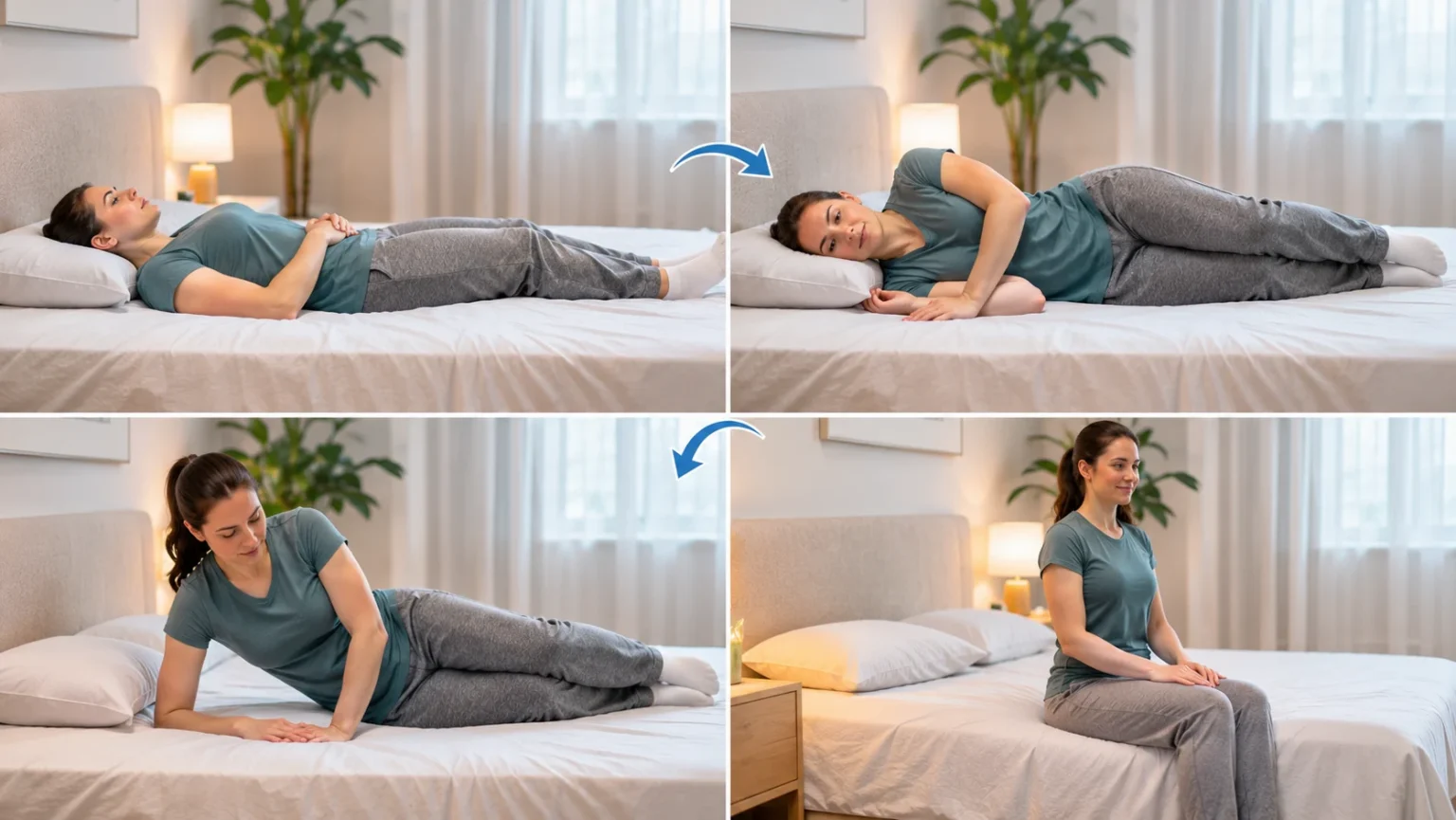

The term log roll describes a movement technique used in healthcare, physical therapy, and certain sports activities. In medical settings, it usually means turning a person’s body as one aligned unit while limiting twisting through the spine. Healthcare professionals may use this technique when assisting patients with specific injuries, movement restrictions, or recovery needs.
Log rolling is commonly discussed in hospitals, rehabilitation centers, and postoperative care instructions. It can help people change positions while following movement precautions recommended by their healthcare team. However, the technique is not necessary for everyone, and its benefits depend on the person’s condition and the reason for using it.
Understanding the log roll meaning can help you recognize its different uses and why proper technique matters. This guide explains the medical definition, common applications, practical considerations, safety precautions, and other meanings of the term. It also explores how log rolling differs from ordinary body movements and when professional assistance may be necessary.
What Is a Log Roll?
A log roll is a coordinated movement in which the shoulders, trunk, hips, and legs turn together while the body stays relatively aligned. The technique aims to minimize twisting between different parts of the torso. It is commonly associated with patient positioning, rehabilitation, and movement precautions after certain medical procedures.
For example, a person recovering from a spinal procedure may be instructed to turn onto their side without twisting their trunk. Instead of rotating the shoulders and hips separately, they move together in one controlled motion. This approach may help the person follow temporary movement restrictions established by their surgeon or physical therapist.
The term also has meanings outside healthcare, including rolling a floating log in competitive sports. Therefore, the intended definition depends on the context in which it appears. In medical discussions, however, log rolling usually refers to coordinated body positioning rather than the recreational activity involving a wooden log.
Why Is the Log Roll Technique Used?
The log roll technique is used to assist with turning or repositioning while limiting relative rotation through the trunk. It may be included in movement precautions after certain spinal operations or other procedures. Healthcare professionals can also use coordinated turning when examining or assisting people who require controlled movement.
One common purpose is helping patients change positions during recovery. People with pain, reduced mobility, or specific postoperative restrictions may find ordinary twisting movements uncomfortable or unsuitable. A log roll offers a structured way to turn while keeping the shoulders and pelvis moving together as much as possible.
However, log rolling does not guarantee that the spine remains completely motionless. Research and clinical practices recognize that some movement may still occur during repositioning. For this reason, the technique should be used according to individual medical guidance rather than treated as a universally protective method for every injury.
How Does the Log Roll Technique Work?
The basic principle of log rolling is coordinating movement between the upper and lower body. Instead of turning the shoulders independently from the hips, the person rotates both regions in the same direction. This reduces relative twisting and helps maintain a more consistent body position during the movement.
In routine rehabilitation, a healthcare professional may teach a patient how to move between lying on their back and lying on their side. The specific approach depends on the patient’s strength, comfort, and prescribed precautions. Some people can perform the movement independently, while others require assistance or additional support.
A successful log roll emphasizes controlled movement rather than speed or force. The person should avoid sudden twisting, unnecessary strain, and movements that conflict with medical instructions. Anyone recovering from surgery or living with a significant injury should follow the technique demonstrated by their treating healthcare professional.
Log Roll in Medical and Healthcare Settings
Medical professionals may use log rolling when patients need assistance changing position on an examination table or hospital bed. The technique can help coordinate movement among caregivers while maintaining a relatively aligned torso. It is particularly associated with situations where movement restrictions or clinical assessment requirements influence patient handling.
In hospitals, nurses and rehabilitation professionals may assist with turning patients for comfort, skin care, or examination. However, the exact method depends on the patient’s condition and the healthcare facility’s procedures. Log rolling is only one positioning technique, and it may not be the best option for every patient.
People with suspected spinal injuries require particular caution because inappropriate movement could cause additional harm. Modern trauma care often emphasizes minimizing unnecessary movement and using appropriate stabilization methods. A suspected spinal injury should be managed by trained emergency professionals rather than attempting an improvised log roll.
Log Roll for Spinal Precautions
Spinal precautions refer to movement restrictions or handling practices intended to reduce potentially harmful movement of the spine. These precautions may be recommended after certain injuries, operations, or medical assessments. A log roll is sometimes used as part of these precautions because it encourages coordinated movement of the torso.
For example, a patient recovering from a spinal procedure may receive instructions to avoid excessive bending, lifting, or twisting temporarily. Their healthcare team might recommend log rolling when changing sleeping positions or getting out of bed. However, restrictions vary considerably depending on the operation, healing stage, and individual medical needs.
It is important to understand that log rolling cannot eliminate all spinal motion. In some circumstances, alternative patient-handling methods may be preferred because they can reduce movement more effectively. Following current clinical guidance and the treating professional’s instructions is more important than assuming one technique is always safest.
Log Roll After Back Surgery
After certain types of back surgery, patients may be taught a log roll technique before returning home. The goal is often to help them move between lying and sitting while limiting uncomfortable twisting. This can make early postoperative movement more manageable when normal activities are temporarily restricted.
Patients may practice the movement with a physiotherapist or nurse before attempting it independently. The healthcare professional can demonstrate suitable positioning and explain which movements should be avoided. The technique may need modification depending on pain levels, muscle strength, surgical details, and the patient’s ability to move comfortably.
Not everyone who undergoes back surgery needs identical movement precautions. Some procedures allow earlier return to normal activities, while others involve more specific restrictions. Patients should follow their surgeon’s recovery plan and report increased pain, new weakness, or unexpected symptoms rather than forcing themselves to complete a movement.
Log Roll in Physical Therapy and Rehabilitation
Physical therapists may use log rolling as a functional movement strategy during rehabilitation. It can help patients learn how to change positions with greater control while managing temporary movement limitations. The technique may be relevant for people recovering from selected surgeries or experiencing difficulty with ordinary bed mobility.
Rehabilitation sessions often focus on improving confidence, coordination, and independence during daily activities. A therapist may assess how comfortably a patient can turn, sit up, or move between positions. Based on these findings, they can recommend exercises and movement strategies suited to the person’s condition and functional goals.
Log rolling is not a treatment for every type of back pain or mobility problem. Many people benefit from ordinary movement, progressive strengthening, and individualized exercise rather than strict restrictions. A physiotherapist can determine whether log rolling offers a practical advantage or whether another movement approach would be more suitable.
Log Roll for Getting Out of Bed
Getting out of bed can be uncomfortable for people recovering from certain operations or managing limited mobility. A log roll is sometimes recommended to reduce trunk twisting during this transition. The technique coordinates turning onto the side with moving toward a seated position, according to the patient’s prescribed recovery instructions.
A healthcare professional may demonstrate how to use the arms and legs together to support the movement. The aim is to avoid unnecessary strain while transitioning from lying down to sitting. However, the exact sequence should be adapted to the individual’s strength, balance, pain level, and medical restrictions.
Patients should not attempt unfamiliar movement techniques without assistance when they have significant weakness, dizziness, or difficulty controlling their body. An unstable bed or unsuitable surroundings can also increase the risk of falling. Learning the movement from a qualified professional is particularly important after recent surgery or hospitalization.
Log Roll for Getting Into Bed
Moving from standing or sitting into a lying position can also require careful coordination during recovery. Some patients are advised to use a reverse log roll to limit twisting as they return to bed. This method generally involves moving the legs and torso in a coordinated manner while following prescribed precautions.
The movement may feel unfamiliar initially, especially when a person has recently undergone surgery. Physical therapists often help patients practice bed transfers using supportive equipment or assistance when necessary. Comfortable positioning and appropriate bed height can make the transition easier without encouraging unnecessary force or awkward movements.
The technique should be adjusted if pain, weakness, or restricted mobility makes the movement difficult. Patients should never ignore surgical restrictions or attempt to complete a transfer that feels unsafe. Asking for professional guidance can help prevent falls and ensure the movement approach matches individual recovery requirements.
Log Roll and Proper Body Alignment
Body alignment is one of the most important concepts associated with log rolling. The technique aims to keep the shoulders, trunk, and pelvis moving in a coordinated direction. Although perfect alignment is not possible during every movement, minimizing unnecessary rotation may be useful when certain precautions are required.
In clinical practice, body alignment also involves considering the head, neck, and lower limbs. The appropriate positioning depends on the injury or medical condition being managed. Trained healthcare teams may use additional support and coordinated handling when assisting patients who cannot move safely on their own.
Maintaining alignment does not mean keeping every muscle rigid or preventing all natural motion. Excessive tension can make movement uncomfortable and difficult to control. The goal is to follow clinically appropriate movement guidance while allowing the safest and most comfortable positioning possible for the individual.
Benefits of the Log Roll Technique
One potential benefit of log rolling is helping patients follow temporary movement restrictions during recovery. Coordinated turning can reduce relative twisting through the torso compared with certain ordinary movement patterns. This may be useful when a healthcare team has specifically advised limiting trunk rotation after a procedure.
Another advantage is providing a consistent method for assisted repositioning. When healthcare professionals use an agreed movement approach, communication and coordination may become easier. Structured patient handling can also support comfort and reduce unnecessary movements, although its effectiveness depends on staff training and the patient’s particular needs.
Log rolling may also improve confidence for patients who are uncertain about changing positions after surgery. Learning a familiar movement strategy can make everyday tasks feel more manageable. However, these advantages should not be interpreted as proof that log rolling prevents every injury or improves recovery outcomes for all patients.
Limitations and Risks of Log Rolling
Despite its common use, log rolling has limitations that should be understood. The technique does not completely prevent spinal movement, even when performed by trained individuals. Some injuries or clinical situations may require alternative handling methods because maintaining precise stabilization can be difficult during a coordinated turn.
Improper assistance can also create unnecessary strain for patients and caregivers. Pulling suddenly, moving without coordination, or ignoring pain may increase discomfort. Healthcare professionals therefore consider the patient’s stability, medical restrictions, and available equipment before choosing a suitable repositioning approach.
Another limitation is the possibility of using strict movement precautions when they are not medically necessary. Excessive restrictions can interfere with comfortable mobility and daily independence. The decision to use log rolling should be guided by individual assessment rather than the assumption that everyone with back discomfort needs the same technique.
Log Roll vs Normal Rolling: Key Differences
Normal rolling involves changing position by turning different body regions in a natural sequence. For example, someone may rotate their shoulders before moving their hips when turning in bed. This movement pattern is common during everyday activities and is not automatically harmful for people without specific restrictions.
A medical log roll, by comparison, emphasizes moving the shoulders and hips together to reduce relative trunk rotation. This creates a more coordinated movement pattern that may be preferred under certain clinical circumstances. The technique can feel less natural initially because it deliberately limits independent movement between body regions.
Neither method is universally better in every situation. People without medical restrictions can generally use comfortable, natural movements according to their abilities. Those with recent injuries or postoperative precautions should follow individualized guidance regarding whether coordinated rolling is recommended and when normal movement can safely resume.
What Is a Log Roll in Emergency Care?
In emergency care, a log roll traditionally refers to turning a patient while attempting to maintain alignment of the head, neck, and torso. It has been used during trauma assessments and certain patient-handling procedures. However, emergency spinal care practices have evolved as clinicians have learned more about movement during transfers.
A traditional log roll may cause some spinal movement even when several trained responders assist. Depending on the situation, emergency teams may prefer alternative techniques or equipment that better support motion restriction. The choice depends on clinical priorities, available resources, and the patient’s condition.
Members of the public should avoid unnecessarily moving someone who may have sustained a serious spinal injury. Emergency services should be contacted, and trained responders should manage positioning and transfer decisions. Immediate movement may be necessary in certain life-threatening situations, but this requires careful judgment rather than routine use of an improvised technique.
What Is Log Rolling in Sports?
Outside medical settings, log rolling is also a traditional competitive sport involving balance on a floating wooden log. Participants attempt to remain standing as the log rotates beneath their feet. The activity requires coordination, balance, and rapid adjustments to changing movement patterns.
Competitive log rolling developed from activities associated with the logging industry, where workers handled floating timber. Over time, it became a recognized sporting event featuring specialized equipment and organized competitions. Modern versions may use traditional wooden logs or manufactured alternatives designed for recreational and competitive use.
The sports meaning differs completely from medical log rolling. One involves maintaining balance on a rotating object, while the other involves coordinated body positioning for healthcare purposes. Recognizing the context helps prevent confusion when the term appears in fitness discussions, rehabilitation instructions, or sporting events.
What Is Logrolling in Politics?
In politics, logrolling refers to the practice of exchanging support between lawmakers or decision-makers. One person may agree to support a proposal in return for another person’s support on a different issue. This arrangement is commonly discussed in legislative negotiations and political decision-making.
For example, two lawmakers may support each other’s proposals even when those proposals address unrelated policy areas. Such cooperation can help build enough agreement to pass legislation. However, critics argue that some exchanges may prioritize political bargaining over the broader public interest or the merits of individual proposals.
Political logrolling has no direct relationship to patient positioning or the sporting activity involving floating logs. The shared terminology comes from different historical and figurative uses of the expression. Understanding these separate definitions is helpful because the intended meaning changes significantly depending on the subject being discussed.
Common Mistakes Associated With Medical Log Rolling
One common mistake is assuming that log rolling completely immobilizes the spine. Although it aims to limit relative twisting, some movement can still occur. This distinction is especially important when dealing with suspected spinal injuries, where trained assessment and appropriate movement restrictions are essential.
Another mistake is attempting to assist someone without understanding their medical condition or prescribed precautions. Poor coordination between helpers can create unwanted movement or discomfort. Hospital staff and rehabilitation professionals use specific procedures because safe patient handling requires consideration of more than simply turning the body together.
A further mistake involves continuing the movement despite worsening symptoms or clear signs of distress. Pain, dizziness, new weakness, or other unexpected problems may indicate that the method needs reassessment. Patients and caregivers should communicate concerns promptly and avoid forcing movements that have not been approved by the treating healthcare team.
When Should Log Rolling Be Avoided?
Log rolling should not be performed automatically whenever someone experiences back pain or difficulty moving. Its suitability depends on the diagnosis, injury stability, and specific medical instructions. Patients with suspected unstable spinal injuries should not be repositioned by untrained individuals unless an immediate danger makes movement unavoidable.
Some medical conditions may require alternative handling approaches or additional stabilization. For example, trauma teams may choose other techniques when minimizing spinal movement is particularly important. A person with significant pain, limited mobility, or complex injuries should be assessed before any assisted repositioning method is selected.
Even during routine recovery, a log roll may not be the most comfortable or practical option for every patient. Modern rehabilitation often emphasizes movement strategies tailored to individual needs. If a healthcare professional has not recommended log rolling, there is no reason to assume it should replace ordinary movement automatically.
Key Safety Tips for Log Rolling
The most important safety consideration is following instructions from a qualified healthcare professional. Patients recovering from spinal surgery or significant injuries should use only the movement approaches recommended for their condition. Individual restrictions may vary, so advice provided to another patient should not be treated as universally applicable.
Caregivers should also understand when assistance is required and when movement should be left to trained professionals. Patients who cannot support themselves safely may need specialized equipment or coordinated assistance. Attempting a difficult transfer without appropriate support can increase the risk of falls, discomfort, or unintended movement.
Finally, monitor symptoms during recovery and report unexpected changes promptly. Increasing pain, new numbness, weakness, or loss of bladder or bowel control may require urgent medical assessment, depending on the circumstances. Safe rehabilitation involves appropriate movement, clear communication, and timely professional evaluation rather than relying on one positioning technique alone.
Conclusion
A log roll is a coordinated movement technique commonly used in healthcare to turn the body while limiting twisting through the torso. It may be recommended after certain spinal procedures or during specific patient-handling situations. Although the concept is simple, its correct use depends on individual medical needs and professional guidance.
Log rolling can support prescribed movement precautions, improve coordination during assisted repositioning, and help some patients feel more confident about bed mobility. However, it does not completely prevent spinal movement or replace appropriate medical assessment. Modern healthcare approaches emphasize choosing the safest handling method for each particular situation.
The term also appears in sports and politics, where it has entirely different meanings. Understanding the context makes it easier to interpret discussions involving log rolling accurately. For medical applications, following individualized instructions and avoiding unnecessary movement after suspected serious injuries remain the most important safety considerations.
Frequently Asked Questions (FAQs)
What does log roll mean in medical terms?
A medical log roll is a coordinated turning movement that aims to keep the shoulders, torso, and hips relatively aligned. Healthcare professionals may use it when specific movement precautions are required.
Why do doctors recommend log rolling?
Doctors or physical therapists may recommend log rolling after certain procedures to help patients change positions while limiting trunk twisting. The recommendation depends on the person’s condition and recovery requirements.
Is log rolling safe after back surgery?
Log rolling may be appropriate after certain back surgeries when recommended by the treating healthcare team. Patients should follow their surgeon’s instructions because movement restrictions and recovery needs vary.
Can log rolling prevent spinal injuries?
Log rolling may reduce certain twisting movements, but it cannot completely prevent spinal motion or guarantee protection against injury. Suspected serious spinal injuries require trained emergency assessment and appropriate handling.
What is the difference between log rolling and normal rolling?
Log rolling emphasizes turning the shoulders and hips together, while normal rolling may involve more independent movement between body regions. The appropriate method depends on comfort, mobility, and medical precautions.