

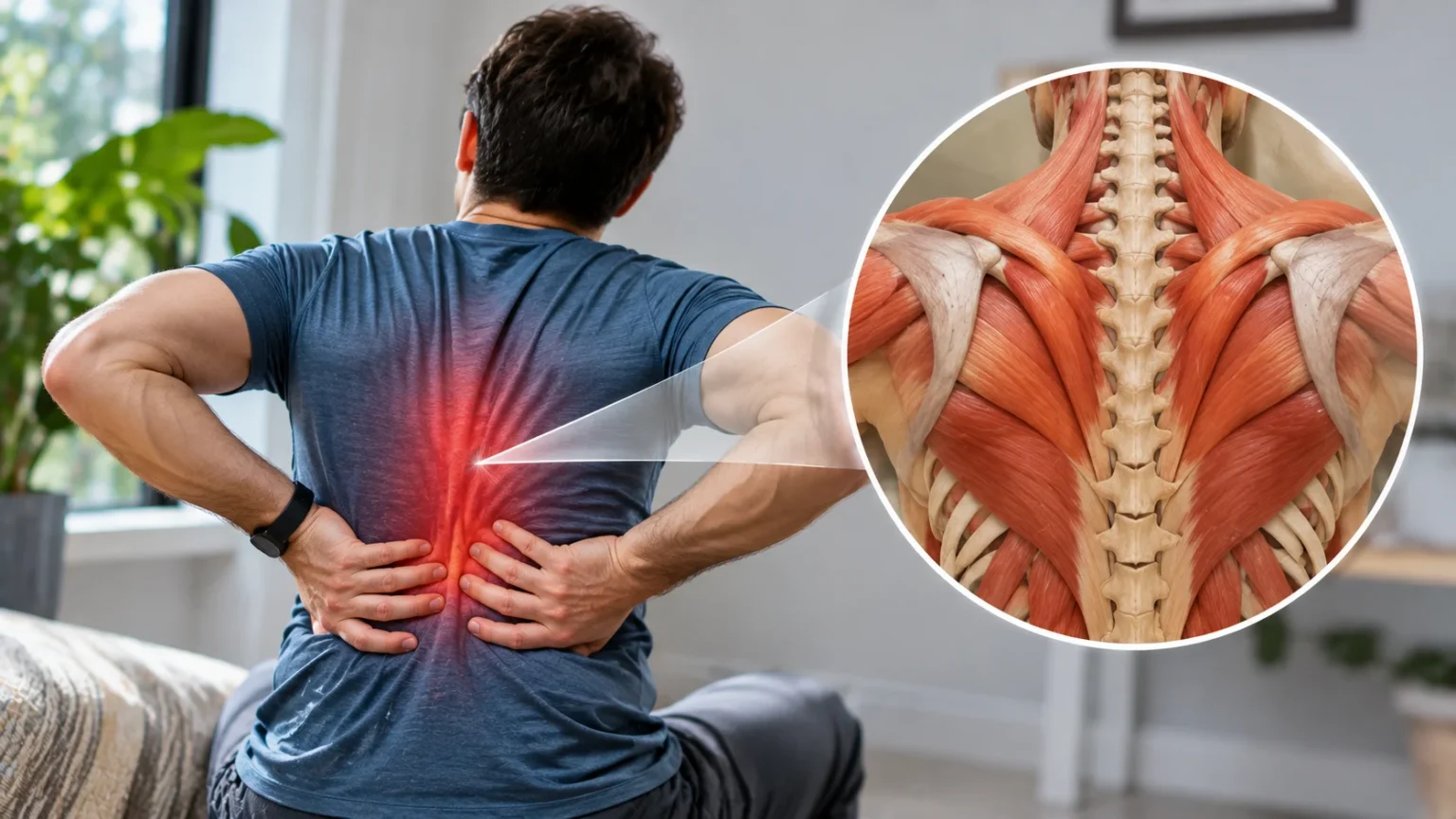

What Is the Mid Back?
The mid back is the central region of the back, located between the upper back and lower back. It mainly corresponds to the thoracic spine, which contains twelve vertebrae connected to the rib cage. This area helps support the upper body, protect important structures, and allow controlled movements during everyday activities.
Understanding mid back anatomy is important because this region connects the neck, shoulders, ribs, and lower spine. Several muscles, ligaments, nerves, and joints work together to maintain stability and support movement. Although the middle back is generally less flexible than the neck or lower back, it still contributes to bending, twisting, and reaching.
Mid back discomfort can develop from muscle strain, repetitive movements, injuries, or conditions affecting the spine and surrounding tissues. Some people experience mild stiffness, while others notice persistent pain between the shoulder blades. Learning about the structure, functions, and common problems of the mid back can help people recognize symptoms and make informed decisions about their health.
Where Is the Mid Back Located?
The mid back is located between the base of the neck and the lower end of the rib cage. This region includes the thoracic spine, which extends from the first thoracic vertebra, T1, to the twelfth thoracic vertebra, T12. It forms the central section of the spine between the cervical and lumbar regions.
You can identify the general mid back area by placing a hand between your shoulder blades and moving downward toward the lower ribs. The region includes the bones of the thoracic spine and the surrounding muscles and connective tissues. However, the exact boundaries of what people call the middle back can vary.
The mid back sits behind the chest and connects with the ribs through specialized joints. These connections create a relatively stable structure that supports the upper body and assists breathing movements. Because the region contains several interconnected structures, discomfort near the middle back may originate from muscles, joints, nerves, or nearby organs.
Mid Back Anatomy: Understanding the Thoracic Spine
The thoracic spine consists of twelve vertebrae that form the bony framework of the mid back. These bones are arranged vertically and help support the trunk while protecting the spinal cord. Most thoracic vertebrae connect with ribs, making this region structurally different from the more mobile cervical and lumbar sections of the spine.
Intervertebral discs sit between most neighboring vertebral bodies and help distribute forces during movement. These discs contain a softer central region surrounded by a tougher outer layer. Facet joints connect neighboring vertebrae at the back of the spine, helping guide movement and contributing to stability during bending and rotation.
The thoracic spine also has a natural outward curve called thoracic kyphosis. This curve is a normal feature of spinal anatomy and helps distribute mechanical loads through the body. Its shape varies between individuals, and changes in curvature do not automatically indicate a medical problem or explain the presence of back pain.
How Do the Ribs and Shoulder Blades Connect to the Mid Back?
The rib cage is closely connected to the thoracic spine through joints that allow small movements during breathing. Twelve pairs of ribs attach to the thoracic vertebrae, although their connections at the front of the chest differ. Together, the ribs, sternum, and thoracic spine create a protective framework around important organs.
The shoulder blades, also called scapulae, rest against the upper portion of the rib cage. They are not directly joined to the thoracic vertebrae by a typical bone-to-bone joint. Instead, muscles help position and move them across the chest wall during activities such as reaching, lifting, and pulling.
This relationship explains why shoulder movements sometimes produce sensations around the middle back. Muscles connecting the shoulder blades to the spine and ribs help coordinate upper-body activities. When these tissues become fatigued or irritated, discomfort may appear between the shoulder blades, even when the thoracic vertebrae themselves are not injured.
Which Muscles Support the Mid Back?
Several important muscles support the mid back and help control movements of the spine and shoulder blades. The erector spinae group runs along the back and contributes to spinal extension and stability. Smaller muscles, including the multifidus, assist with precise movement control and help stabilize neighboring vertebrae during everyday activities.
The trapezius and rhomboid muscles are especially important for shoulder blade movement and positioning. The middle and lower portions of the trapezius help control the scapula during reaching and pulling. Meanwhile, the rhomboids assist with drawing the shoulder blades toward the spine and maintaining controlled movement during certain upper-body tasks.
Other muscles, including the latissimus dorsi and intercostal muscles, also contribute to functions involving the mid back. The latissimus dorsi supports several shoulder movements, while the intercostal muscles assist with breathing. These muscle groups work together with the spine, ribs, and nervous system to provide coordinated movement and support.
What Are the Main Functions of the Mid Back?
One major function of the mid back is supporting the upper body and helping maintain spinal stability. The thoracic vertebrae, discs, muscles, and ligaments work together to distribute forces during standing, sitting, and movement. This support allows the trunk to remain controlled while the arms, shoulders, and lower body perform different activities.
The mid back also contributes to spinal rotation, extension, and side bending. These movements are useful when turning to look behind you, reaching across your body, or changing direction. Although the rib cage limits some motion compared with other spinal regions, the thoracic spine still provides important flexibility for daily activities.
Another essential function is supporting the rib cage during breathing. As the ribs move, the thoracic joints and surrounding muscles accommodate changes in chest shape. The mid back also helps protect the spinal cord and supports the nerves that communicate with nearby tissues, making it important for both movement and nervous system function.
What Does Mid Back Pain Feel Like?
Mid back pain can appear as aching, stiffness, tightness, burning, or sharp discomfort around the thoracic spine. Some people feel pain between the shoulder blades, while others notice symptoms along one side of the back. The sensation may remain localized or spread toward the ribs and surrounding chest wall.
Symptoms sometimes become more noticeable during twisting, reaching, lifting, or remaining in one position for a long period. Muscle-related discomfort may increase when the affected tissues are contracted or stretched. However, the relationship between movement and pain varies, and similar symptoms can develop from several different musculoskeletal conditions.
Some people experience temporary soreness after unfamiliar exercise or physically demanding activities. Others report recurring stiffness or discomfort that interferes with sleep and ordinary movement. Pain intensity alone does not always reveal the underlying cause, so persistent symptoms should be assessed rather than automatically attributed to muscle tension or posture.
What Are the Common Causes of Mid Back Pain?
Muscle strain is one possible cause of mid back pain, particularly after unfamiliar lifting, sudden movements, or repetitive physical activity. Muscles and connective tissues may become irritated when they experience more demand than usual. This discomfort can develop gradually or appear soon after a particular movement, depending on the affected tissues.
Thoracic joint irritation, rib-related problems, and injuries can also contribute to discomfort around the middle back. Age-related spinal changes may be present, although they do not always cause symptoms. In some cases, problems involving spinal discs, nerves, or vertebrae can produce pain that requires a more detailed medical evaluation.
Mid back pain does not always originate from the spine or surrounding muscles. Certain conditions affecting the chest, lungs, heart, digestive organs, or other structures can cause referred pain in the back. Because these possibilities require different treatment approaches, unusual, severe, or unexplained symptoms should not be dismissed as ordinary muscular discomfort.
How Is Mid Back Pain Different From Upper and Lower Back Pain?
Mid back pain generally affects the thoracic region, while upper back pain may also involve the neck, shoulders, and upper trapezius area. These regions overlap in everyday descriptions, which can make symptoms difficult to categorize. Healthcare professionals usually focus on the exact location, movement limitations, and accompanying symptoms rather than terminology alone.
Lower back pain mainly involves the lumbar region, located below the thoracic spine and above the pelvis. The lumbar spine supports substantial mechanical loads and allows different movement patterns. Conditions affecting this area may produce discomfort near the waist or symptoms extending into the legs, depending on the underlying cause.
The thoracic spine is supported by the rib cage, making its mechanics different from the lumbar and cervical regions. However, being relatively stable does not mean the mid back cannot develop painful conditions. Understanding these anatomical differences helps explain why assessment and treatment may vary according to the affected spinal region.
When Should You Seek Medical Care for Mid Back Pain?
Mild mid back discomfort following unfamiliar activity may improve with appropriate rest from aggravating tasks and gradual movement. However, pain that persists, worsens, repeatedly returns, or limits daily activities deserves medical evaluation. A healthcare professional can assess whether symptoms involve the spine, surrounding muscles, nerves, or another underlying condition.
Certain symptoms require prompt attention, including significant weakness, persistent numbness, fever with back pain, or severe discomfort after a fall or other injury. Unexplained weight loss or worsening pain that regularly interrupts sleep may also require investigation. These warning signs do not confirm a serious condition, but they should not be ignored.
Seek emergency medical care when back pain occurs with chest pressure, sudden breathing difficulty, or other symptoms suggesting a medical emergency. New loss of bladder or bowel control, or significant new weakness, also requires urgent assessment. These symptoms can indicate conditions that need immediate treatment rather than home exercises or self-care.
How Are Mid Back Problems Diagnosed?
Diagnosing mid back problems usually begins with a review of symptoms, medical history, and recent activities. A clinician may ask when the discomfort started, where it occurs, and which movements influence it. Information about injuries, existing health conditions, and associated symptoms helps guide the examination and identify possible causes.
During the physical examination, the healthcare professional may assess spinal movement, muscle tenderness, posture, strength, and neurological function. They may also examine the ribs, shoulders, and neck when symptoms overlap these regions. These findings help determine whether the discomfort is likely musculoskeletal or requires further investigation.
Imaging is not necessary for every case of uncomplicated mid back pain. However, X-rays, MRI scans, or other tests may be recommended when an injury, neurological problem, or serious underlying condition is suspected. The appropriate investigation depends on clinical findings, and imaging results must be interpreted alongside symptoms rather than used alone.
How Can You Relieve Mild Mid Back Pain?
For mild muscle-related discomfort, temporarily reducing activities that worsen symptoms can allow irritated tissues to settle. Gentle walking and comfortable movement may help prevent unnecessary stiffness. Prolonged bed rest is generally not recommended for uncomplicated back pain, although activity should be adjusted according to symptoms and professional advice.
Some people find temporary relief from a warm compress or a wrapped cold pack placed on the uncomfortable area. Use a protective layer between the skin and the temperature source to reduce the risk of irritation or injury. These approaches may improve comfort, but they do not correct every possible cause of thoracic back pain.
Physical therapy may help when discomfort is associated with movement limitations, muscle weakness, or recurring symptoms. A therapist can recommend exercises that gradually improve mobility, strength, and tolerance for daily activities. Treatment should match the underlying condition, and worsening pain during an activity is a reason to stop and seek appropriate guidance.
Conclusion
The mid back is an important region of the body that includes the thoracic spine, surrounding muscles, joints, and rib connections. It helps support the upper body, protect the spinal cord, and coordinate movements involving the trunk and shoulders. Understanding its anatomy explains why this region is essential for comfortable everyday movement.
Mid back discomfort can develop from muscle strain, joint irritation, injury, or conditions involving nearby structures. Because different problems may produce similar symptoms, identifying the exact cause is important when pain persists. Gentle movement and suitable rehabilitation can support recovery in many uncomplicated cases, while warning signs require timely medical assessment.
Maintaining mid back health involves regular physical activity, gradual strengthening, comfortable mobility, and appropriate recovery. Changing positions during prolonged sitting and building tolerance for everyday tasks can also support function. Learning how the middle back works helps people make informed decisions about movement, recognize concerning symptoms, and care for their musculoskeletal health.
Frequently Asked Questions
Where is the mid back located?
The mid back is located between the base of the neck and the lower end of the rib cage. It mainly includes the thoracic spine, which contains twelve vertebrae labeled T1 through T12.
What is the main function of the mid back?
The mid back supports the upper body, protects the spinal cord, and helps control trunk movement. It also connects with the rib cage and assists the movements needed for comfortable breathing.
What causes pain in the middle of the back?
Common causes include muscle strain, repetitive movements, joint irritation, and injury. However, pain can sometimes originate from spinal conditions or nearby organs, making professional evaluation important when symptoms are persistent or unusual.
How can I strengthen my mid back?
Gentle rowing exercises, supported thoracic mobility movements, and appropriate back-strengthening activities can help improve muscular function. Start with comfortable movements and increase resistance gradually, especially if you have previous injuries or recurring discomfort.
When should I worry about mid back pain?
Seek medical advice for persistent, worsening, or severe mid back pain. Emergency assessment is important if symptoms occur with chest pain, breathing difficulty, significant new weakness, or changes in bladder or bowel control.