

Palm Oil: Nutrition, Uses, Benefits & Health Concerns
Palm oil is one of the most widely used vegetable oils in the world and appears in everything from cooking oils and packaged foods to cosmetics, soaps, and household products. It comes primarily from the fruit of the African oil palm, Elaeis guineensis, and differs from palm kernel oil, which is extracted from the seed inside the fruit. Palm oil provides energy, vitamin E compounds, and varying amounts of carotenoids depending on how extensively the oil has been refined. It is also relatively high in saturated fat compared with oils such as olive, sunflower, soybean, and canola oil. This combination of useful nutrients and substantial saturated fat has made its health effects the subject of considerable scientific discussion.
Palm oil should not automatically be categorized as either a health food or an unhealthy ingredient because its effects depend on the type of palm oil, amount consumed, foods it replaces, overall dietary pattern, and processing method. Red palm oil retains large amounts of carotenoid pigments and other phytonutrients, while refined palm oil has a milder flavor and contains fewer carotenoids after processing. Clinical research indicates that palm oil can raise LDL cholesterol compared with vegetable oils lower in saturated fat, making frequent replacement of unsaturated oils with palm oil a cardiovascular consideration. At the same time, red palm oil can provide bioavailable provitamin A carotenoids. Environmental issues involving deforestation, biodiversity, labor, and sustainable production add another dimension to the palm oil debate.
What Is Palm Oil?
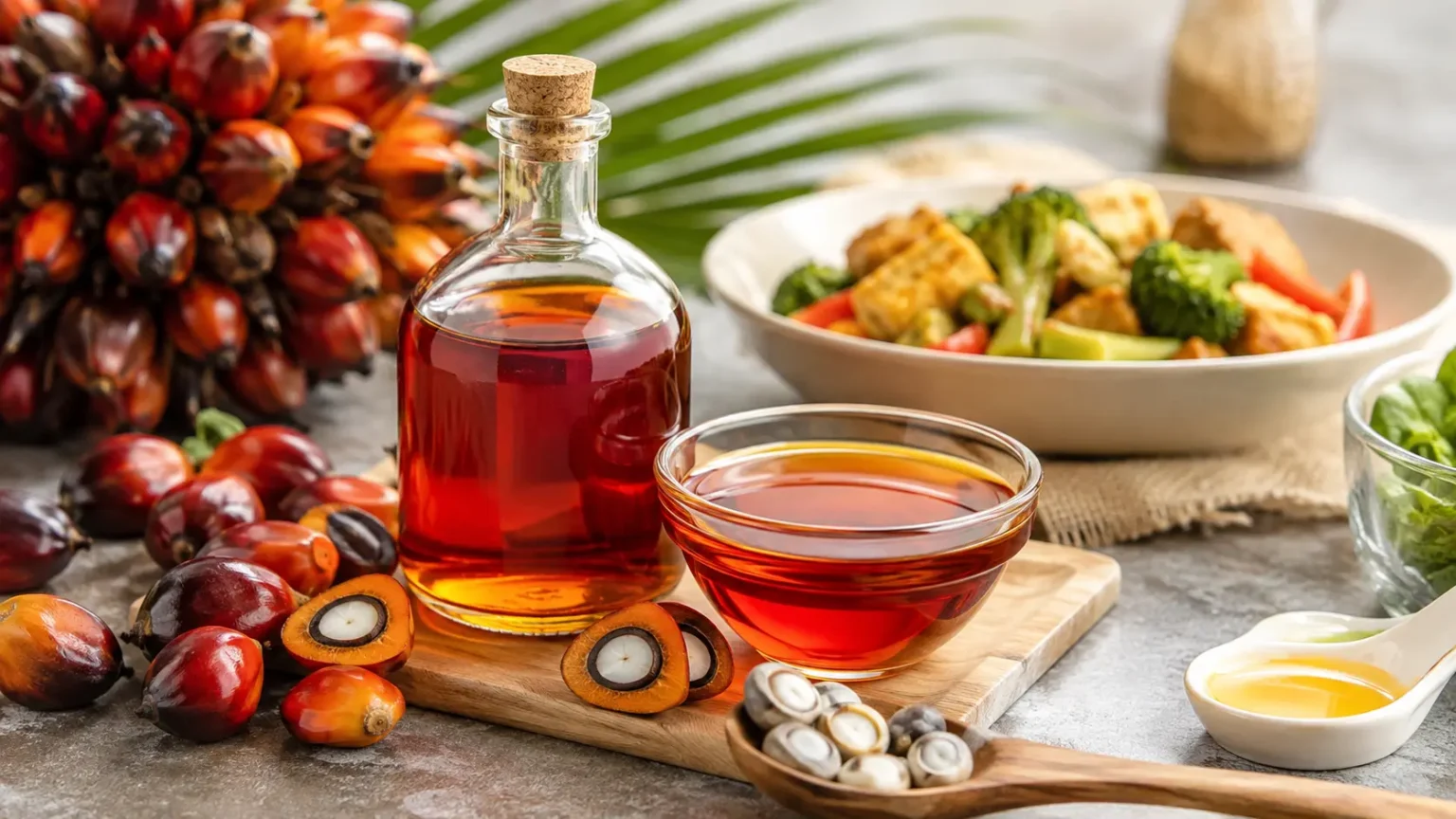
Palm oil is a plant-based fat obtained from the fleshy fruit of oil palm trees. Commercial production is dominated by the African oil palm, although related species and hybrids are also cultivated. Fresh oil palm fruits grow in large bunches containing hundreds or thousands of individual fruits, each with oily orange-red flesh surrounding a hard kernel. Mechanical pressing and processing release the crude palm oil from this fruit material. The naturally reddish color comes largely from carotenoid pigments, including beta-carotene. When the oil undergoes extensive refining, bleaching, and deodorization, much of that strong color and flavor is removed, producing the pale refined palm oil commonly found in processed foods.
Palm oil is sometimes confused with palm kernel oil, but they are nutritionally and chemically different products. Palm oil comes from the fleshy part of the fruit, whereas palm kernel oil is extracted from the seed located inside the hard kernel. Palm kernel oil contains a substantially different fatty-acid profile and is particularly rich in saturated fats such as lauric acid. Ordinary palm oil contains a mixture dominated by palmitic acid and oleic acid along with smaller quantities of other fatty acids. Because the two oils come from the same fruit, ingredient labels can make them seem interchangeable. Anyone evaluating nutritional information should therefore check whether a product contains palm oil, palm kernel oil, or a combination.
One reason palm oil is commercially important is its physical stability. It is naturally semi-solid at many room temperatures because of its saturated and monounsaturated fat composition. Food manufacturers can therefore use it to create texture and shelf stability in baked goods, spreads, fillings, confectionery products, instant noodles, and other processed foods. Unlike partially hydrogenated oils, palm oil can provide solidity without necessarily producing industrial trans fats through partial hydrogenation. This made it increasingly attractive as food companies reduced industrial trans-fat use. However, replacing trans fat with palm oil can still increase saturated-fat intake compared with replacing it with oils rich in unsaturated fats.
Oil palm is also highly productive relative to the amount of agricultural land required to produce a given quantity of vegetable oil. This efficiency has contributed significantly to its widespread adoption across food and consumer-product industries. Indonesia and Malaysia became major global producers, while cultivation also occurs in parts of Africa, Latin America, and other tropical regions. High yield can theoretically reduce land pressure compared with lower-yielding oil crops, but environmental impact depends on where and how plantations expand. Conversion of forests or peatlands can create major ecological damage even when the crop itself is productive. Sustainability therefore depends on production practices rather than simply whether palm oil is present.
Modern discussion of palm oil increasingly separates nutrition, food technology, and sustainability instead of treating them as one issue. Nutritionally, palm oil’s saturated-fat content matters. From a food-manufacturing perspective, its stability and semi-solid texture can be useful. Agriculturally, its high yield makes it difficult to replace globally without considering what alternative crops would require. Environmentally, poorly managed expansion can threaten forests, wildlife, peatlands, and communities. A 2026 review emphasized that palm oil’s health and sustainability profile depends strongly on processing, dietary context, and production practices rather than on one characteristic alone.
Palm Oil Nutrition and Fat Composition
Like other pure cooking oils, palm oil is primarily fat and therefore provides substantial energy. One tablespoon of vegetable oil typically contains roughly 120 calories and around 14 grams of fat, although exact nutrition labeling varies by product and serving size. Palm oil contains very little protein, carbohydrate, fiber, or water because those components are largely separated during oil extraction and processing. Its nutritional value therefore comes primarily from fatty acids and fat-soluble compounds rather than from the broad vitamin, mineral, and fiber profile found in whole plant foods. This distinction is important when palm oil is described as nutrient-rich. It can contain valuable compounds while still functioning mainly as a concentrated source of dietary fat.
Approximately half of the fatty acids in conventional palm oil are saturated, with palmitic acid making up the largest portion. Much of the remainder consists of monounsaturated fat, particularly oleic acid, along with smaller amounts of polyunsaturated linoleic acid. This places palm oil between butter and many liquid vegetable oils in terms of saturation. It is generally less saturated than coconut oil or palm kernel oil but considerably more saturated than olive, canola, soybean, corn, sunflower, or safflower oils. Fatty-acid composition matters because replacing saturated fats with polyunsaturated fats can improve LDL cholesterol and cardiovascular risk. The health effect of palm oil therefore depends partly on what fat it replaces in the diet.
Red palm oil contains carotenoids responsible for its distinctive deep orange-red color. Beta-carotene is especially important because the body can convert it into vitamin A, which supports vision, immune function, reproduction, and normal cellular development. Research has shown that red palm oil can improve vitamin A status in populations at risk of deficiency when incorporated appropriately into diets or food programs. This makes red palm oil nutritionally different from highly refined palm oil, which loses much of its carotenoid content during bleaching and deodorization. Red palm oil should still be consumed as a fat rather than as an unlimited vitamin supplement because its saturated-fat and calorie content remain relevant.
Palm oil also contains vitamin E compounds, including tocopherols and tocotrienols. Tocotrienols are chemically related to the more familiar tocopherol forms of vitamin E and have attracted research because of their antioxidant and cell-signaling properties. Red and minimally processed palm oils generally retain more of these compounds than heavily refined products, although refined palm oil can still contain some vitamin E activity. Experimental research has examined tocotrienols in relation to cholesterol metabolism, neurological health, and oxidative stress. However, the presence of a biologically interesting compound does not prove that consuming more palm oil produces the same effects seen with purified tocotrienol preparations. Food composition and therapeutic supplementation are different questions.
Processing can substantially change the nutritional profile of palm oil. Crude red palm oil retains carotenoids, tocopherols, tocotrienols, phytosterols, and other minor compounds, while refining removes pigments, odors, impurities, and some phytonutrients. Modern refining can also influence levels of process contaminants formed during high-temperature treatment. Recent reviews describe improvements in processing methods intended to lower contaminants such as glycidyl esters and 3-MCPD esters while preserving desirable oil characteristics. Consumers should therefore avoid assuming every palm oil product is nutritionally identical. The composition depends on whether the oil is crude, red, refined, fractionated, repeatedly heated, or incorporated into a processed food.
Different Types of Palm Oil
Crude palm oil is the initial oil obtained after palm fruits are sterilized, processed, and pressed. It naturally has a rich red-orange color because it contains substantial carotenoid pigments. Crude oil also contains free fatty acids, moisture, plant residues, odors, and other components that generally require additional processing before large-scale food manufacture. It is therefore not identical to the refined palm oil consumers most commonly encounter in packaged products. In regions where less-refined palm oil has traditional culinary uses, the characteristic color and flavor may be desirable. From a nutritional perspective, its carotenoid content is one of its most notable features, but quality and handling still matter because oils can deteriorate when stored or heated improperly.
Red palm oil is processed in ways intended to make the oil suitable for consumption while preserving much of its natural red color and phytonutrient content. It is particularly rich in carotenoids and includes vitamin E compounds such as tocopherols and tocotrienols. Red palm oil has been investigated as a dietary strategy for improving vitamin A status because beta-carotene and related carotenoids can be converted into vitamin A. Its distinctive taste and strong color make it less interchangeable with neutral cooking oils in some recipes. Although it offers more carotenoids than standard refined palm oil, it still contains a substantial proportion of saturated fatty acids and should therefore fit within an overall balanced fat intake.
Refined, bleached, and deodorized palm oil is the form widely used by commercial food manufacturers. Refining removes much of the strong red color, odor, and flavor, producing a more neutral ingredient suitable for bakery fats, shortenings, snacks, spreads, and prepared foods. The process also improves consistency and removes undesirable impurities. However, extensive refining reduces carotenoid content and can lower some other minor phytonutrients. Very high-temperature refining can create process contaminants, which has led industry and regulators to investigate improved technologies and temperature controls. Recent processing research focuses on reducing these compounds while maintaining oxidative stability and food functionality.
Palm olein and palm stearin are produced by fractionating palm oil according to the melting characteristics of its fats. Palm olein is the more liquid fraction and is widely used as a cooking and frying oil in tropical countries. Palm stearin is more solid and is useful in shortenings, bakery fats, margarines, and other products requiring structure. The fatty-acid profiles of these fractions differ somewhat, with stearin generally containing a greater proportion of saturated fat. This illustrates why simply seeing “palm” on an ingredient description does not always tell the entire nutritional story. Food formulation, fractionation, serving size, and the surrounding diet determine actual saturated-fat exposure.
Palm kernel oil comes from the seed rather than the fruit flesh and deserves its own category. It is much richer in saturated fatty acids and resembles coconut oil more closely than ordinary palm oil. Palm kernel oil is often used in confectionery coatings, non-dairy creamers, baked goods, soaps, and cosmetic products because of its physical characteristics. Someone trying to reduce saturated-fat intake should therefore distinguish palm kernel oil from standard palm oil rather than assuming both contain approximately the same proportion. Ingredient lists sometimes contain palm oil and palm kernel oil together, especially in highly processed foods. Evaluating the product’s nutrition facts label can provide a more practical measure of total saturated fat than relying only on the ingredient name.
Potential Benefits of Palm Oil
One potential nutritional benefit of red palm oil is its high carotenoid content. Beta-carotene and related carotenoids act as provitamin A compounds, meaning the body can convert them into active vitamin A according to physiological needs. Vitamin A deficiency can impair vision, immunity, and normal development and remains a public-health problem in some regions. Research examining red palm oil interventions has found improvements in vitamin A status among vulnerable groups when the oil is appropriately incorporated into food programs. This does not mean red palm oil is necessary for people who already obtain adequate vitamin A through a varied diet. Its strongest benefit in this context applies where deficiency risk is genuinely present.
Red palm oil also supplies antioxidant compounds, including carotenoids, tocopherols, and tocotrienols. These molecules can interact with oxidative processes in laboratory and biological systems, and researchers have investigated their potential effects on cardiovascular, metabolic, and cellular health. A 2025 review highlighted carotenoids, tocopherols, tocotrienols, and polyphenols among important bioactive components of red palm oil. However, antioxidant content should not be interpreted as proof that palm oil prevents cancer, reverses aging, or protects against every disease involving oxidative stress. Human health outcomes depend on much more than a food’s antioxidant concentration. A diverse diet containing fruits, vegetables, legumes, nuts, seeds, and whole grains provides a broader range of protective nutrients.
Palm oil’s resistance to oxidation can be useful during food preparation compared with highly unstable fats. Its relatively high saturated and monounsaturated fat content contributes to thermal and oxidative stability, which helps explain its widespread use in commercial frying. Oils that oxidize extensively during storage or repeated heating can form undesirable degradation products. Palm oil’s natural composition can make it technically suitable for certain high-heat applications, but that does not mean repeatedly heating the same oil indefinitely is healthy. Reused frying oils of any type can accumulate oxidation products. Good food preparation practices include avoiding excessive overheating, replacing degraded frying oil, and minimizing reliance on deep-fried foods regardless of the fat used.
Another practical benefit is that palm oil can provide food structure without relying on partially hydrogenated fats that contain industrial trans fatty acids. Historically, food manufacturers used partially hydrogenated oils to create semi-solid textures in baked goods, margarines, and shortenings. Once the cardiovascular harms of industrial trans fats became clear, companies needed alternatives with appropriate physical characteristics. Palm oil could provide solidity naturally because of its saturated-fat composition. However, replacing trans fat with palm oil is not nutritionally identical to replacing it with unsaturated vegetable oils. Palm oil may represent an improvement over trans-fat-rich shortening while still raising LDL cholesterol more than oils low in saturated fat.
Palm oil also plays an important economic and food-security role in many producing and consuming countries because it is productive, versatile, and comparatively affordable. Smallholders and agricultural communities depend on oil palm for income, while consumers rely on it as a major cooking fat in some regions. Nutritional recommendations should therefore consider cultural, economic, and food-system realities rather than assuming every household can simply replace all palm oil overnight. A realistic public-health approach focuses on the amount and context of consumption, encourages unsaturated fats where feasible, and promotes sustainable production. Benefits and concerns can coexist: palm oil can be useful within the global food system while still requiring attention to saturated fat and environmental practices.
Palm Oil and Heart Health
The main nutritional concern surrounding palm oil is its saturated-fat content. Saturated fatty acids can raise LDL cholesterol when they replace unsaturated fats in the diet, and elevated LDL is an established causal risk factor for atherosclerotic cardiovascular disease. Palm oil is not composed entirely of saturated fat, but its approximately balanced mixture of saturated and unsaturated fatty acids means it contains substantially more saturated fat than oils such as olive, canola, soybean, sunflower, or corn oil. The World Health Organization recommends limiting saturated-fat intake and replacing saturated fats with healthier unsaturated fats, particularly polyunsaturated fatty acids, to reduce cardiovascular risk.
Clinical trial evidence supports concern when palm oil replaces vegetable oils lower in saturated fat. A meta-analysis of intervention studies found that palm oil significantly increased LDL cholesterol compared with low-saturated-fat vegetable oils. The increase was particularly clear in randomized trials. Palm oil also produced some increases in HDL cholesterol compared with certain alternatives, which supporters sometimes emphasize. However, cardiovascular recommendations generally focus strongly on lowering atherogenic lipoproteins such as LDL rather than attempting to offset increased LDL through higher HDL. The practical dietary question is therefore what oil palm oil replaces. Substituting it for trans-fat-rich shortening differs from substituting it for canola or sunflower oil.
The World Health Organization’s 2024 rapid overview of systematic reviews examined palm oil consumption compared with other vegetable oils and cardiovascular outcomes. WHO commissioned the work while developing broader guidance on tropical oils following its updated saturated-fat recommendations. The overview highlights the complexity of the evidence because comparisons vary depending on the type of oil used as the reference. Palm oil may produce a more favorable lipid profile than fats containing industrial trans fats but a less favorable profile than many oils rich in unsaturated fatty acids. This means statements claiming palm oil is simply “heart healthy” or “heart harmful” without identifying the comparison fat are incomplete.
Red palm oil adds another layer because its carotenoids, tocotrienols, and phytosterols may have potentially favorable biological effects. Laboratory and small human studies have explored antioxidant pathways and cholesterol metabolism, leading to claims that these compounds could counterbalance the saturated-fat content. However, these possible protective components have not overturned mainstream recommendations regarding saturated fat replacement. Someone at elevated cardiovascular risk generally has stronger evidence for using unsaturated oils as primary cooking fats than for deliberately increasing palm oil intake to obtain tocotrienols. Red palm oil can still fit in moderate quantities within a varied diet, particularly where it is culturally important, without being treated as cardiovascular medicine.
The entire dietary pattern remains more important than one ingredient. A person eating palm oil occasionally in meals rich in vegetables, legumes, whole grains, fish, and minimally processed foods has a different nutritional profile from someone obtaining large amounts through fried foods, pastries, packaged snacks, and confectionery products. Saturated fat from all food sources contributes to total intake, including butter, high-fat dairy, fatty meats, coconut oil, palm kernel oil, and palm oil. Rather than fearing a trace amount of palm oil in one product, consumers can examine overall saturated-fat intake and choose unsaturated fats more often. This approach aligns better with cardiovascular evidence than dividing individual foods into simplistic good-versus-bad categories.
Palm Oil in Processed Foods and Cooking
Palm oil appears frequently in packaged foods because manufacturers value its texture, oxidative stability, neutral flavor after refining, and long shelf life. It can be found in baked goods, cookies, crackers, instant noodles, frozen foods, chocolate spreads, confectionery fillings, shortenings, margarine, and snack products. Its presence does not automatically make a food unhealthy, because overall nutrition depends on the complete ingredient profile. However, many products containing palm oil are also high in refined carbohydrates, sodium, added sugars, or calories. Consequently, the health concern may come from the overall ultra-processed food pattern rather than palm oil alone. Reading nutrition labels provides more useful information than focusing only on one ingredient.
Consumers interested in cardiovascular health should pay particular attention to saturated fat on the nutrition facts panel. A food can contain palm oil but contribute only a small amount of saturated fat per realistic serving, while another product can provide a substantial proportion of the recommended daily limit. Palm kernel oil and coconut oil can contribute even greater saturated-fat proportions. Serving size matters as well because eating several servings quickly multiplies the amount shown on the label. Comparing similar products can help consumers choose versions with less saturated fat even when both contain some palm-derived ingredients. This strategy is more practical than attempting to avoid every trace of palm oil across an entire food supply.
For home cooking, palm olein is commonly used for frying and sautéing in many countries because it remains stable and widely available. Its heat stability is useful, but it should not be interpreted as permission to reuse oil repeatedly until it becomes dark, thick, or strongly odorous. Heating fats over and over promotes oxidation and degradation, regardless of their starting composition. Frying also increases the energy density of food, making frequent deep-fried meals easier to overconsume. People can use palm oil occasionally while also relying on unsaturated oils such as olive, canola, soybean, sunflower, or peanut oil depending on cooking needs and local availability. Variety can reduce dependence on one fat source.
Repeatedly heated or oxidized palm oil has been studied because oxidation can generate compounds with different biological effects from fresh oil. Earlier experimental research raised concerns about adverse physiological effects from extensively oxidized palm oil, although much of this work involved animal models or exposures that may not directly mirror typical human diets. Modern food processing increasingly emphasizes controlling oxidation, temperature, contaminants, and oil quality. Consumers can apply the same principle at home by storing oils away from heat and light, avoiding smoking the oil excessively, and discarding frying oil that has clearly deteriorated. Freshness and cooking method matter alongside the type of oil itself.
Palm oil can also be part of traditional dishes in which its flavor, color, and texture contribute culturally important characteristics. Nutritional guidance should respect these uses rather than suggesting that one culturally meaningful ingredient must be eliminated completely. Moderation becomes especially relevant because a small amount of palm oil used to prepare a meal centered on vegetables, legumes, or whole grains may fit easily within a healthy dietary pattern. Problems are more likely when saturated fats dominate the diet or palm oil appears repeatedly through heavily processed foods. A balanced approach allows traditional use while encouraging unsaturated oils for a larger proportion of everyday added fats when practical.
Environmental and Sustainability Concerns
Palm oil’s environmental reputation is primarily connected with the expansion of plantations into tropical forests and peatlands. When high-carbon ecosystems are cleared or burned, large amounts of stored carbon can enter the atmosphere, contributing to climate change. Habitat conversion can also threaten biodiversity in some of the world’s most species-rich regions. Wildlife affected by poorly managed palm expansion can include orangutans, elephants, tigers, and numerous less visible species. These environmental consequences are real, but they result from specific land-use and production practices rather than from an intrinsic property of the oil itself. Sustainable sourcing therefore focuses on how and where palm is grown.
Simply replacing palm oil globally with another vegetable oil would not automatically eliminate agricultural pressure. Oil palm produces a large amount of oil per unit of land compared with many competing oil crops. If global demand for vegetable oil remained unchanged, replacing all palm production with lower-yield crops could require considerably more farmland. This is one reason many conservation and sustainability strategies focus on preventing deforestation and improving palm production rather than calling only for complete global boycotts. Consumers can support better practices by looking for credible sustainable sourcing commitments and by reducing unnecessary demand for highly processed products overall.
Certification systems are one mechanism used to improve the palm oil supply chain. The Roundtable on Sustainable Palm Oil, or RSPO, establishes standards addressing environmental, social, and governance requirements for certified producers and supply chains. Its current standards include restrictions aimed at protecting valuable ecosystems, limiting fire, addressing peatland development, supporting worker and community rights, and improving traceability. RSPO’s certification systems were revised in 2025 and became effective in May 2026, reflecting continuing updates to assurance and auditing requirements. Certification is not a guarantee that every sustainability challenge has disappeared, but it provides a framework for independent standards and accountability.
Social issues also matter. Oil palm production supports the livelihoods of many small farmers and workers, meaning sustainability involves people as well as forests. Labor conditions, land rights, community consent, wages, pesticide exposure, and conflict over land can all influence whether production is responsible. Current RSPO principles explicitly address community rights, worker conditions, smallholder inclusion, environmental protection, and transparent business practices. Consumers rarely have enough information to evaluate individual plantations directly, so credible certification and transparent corporate sourcing policies can serve as practical signals. Companies still need monitoring and enforcement because written commitments are meaningful only when they influence real supply chains.
Environmentally conscious consumers can therefore take a more nuanced approach than assuming “palm-free” always means more sustainable. Choosing products using certified or traceable palm oil can support efforts to improve production, while consuming fewer unnecessary packaged foods can reduce demand for multiple agricultural commodities at once. Companies can also reduce impacts by sourcing from existing plantations rather than converting high-conservation-value areas. Governments and producers play larger roles than individual shoppers because land-use policy, enforcement, supply-chain transparency, and agricultural standards operate at scale. Personal purchasing decisions still matter, but sustainability ultimately requires coordinated action across growers, manufacturers, regulators, retailers, and consumers.
How to Include Palm Oil in a Healthy Diet
Palm oil can fit within a healthy diet when its amount is considered alongside total saturated-fat intake. People do not generally need to eliminate every food containing palm oil, particularly when consumption is occasional. A more useful goal is making unsaturated fats the primary sources of added dietary fat whenever practical. Olive, canola, sunflower, soybean, peanut, and other unsaturated oils can be used for many everyday cooking purposes depending on flavor and heat requirements. Nuts, seeds, avocados, and oily fish also provide beneficial unsaturated fats in whole-food forms. Palm oil can then occupy a smaller role rather than becoming the dominant fat in the diet.
Someone who regularly cooks with red palm oil for cultural reasons can use smaller portions while maintaining its characteristic flavor and color. Meals can be built around vegetables, beans, lentils, whole grains, fish, or other minimally processed ingredients so the overall dietary pattern remains nutrient-dense. Red palm oil’s carotenoids can add nutritional value, especially where vitamin A intake is limited, but additional oil is not necessary once energy and nutrient needs are met. Because all oils are calorie-dense, portion size matters for anyone managing body weight. One tablespoon can add more than one hundred calories quickly even when the oil contains beneficial micronutrients.
People with elevated LDL cholesterol or established cardiovascular disease may benefit particularly from replacing more saturated fats with unsaturated oils. This could mean using olive or canola oil instead of palm or butter for routine cooking and reserving palm-based foods for occasional consumption. The relevant change is substitution rather than simply adding another oil on top of the existing diet. WHO’s saturated-fat guidance emphasizes replacing saturated fatty acids with unsaturated fats rather than merely reducing one nutrient without considering what fills the calorie gap. This replacement strategy has stronger cardiovascular evidence than focusing on antioxidant components within a saturated-fat-rich oil.
When purchasing packaged foods, consumers can compare saturated fat, calories, sodium, added sugars, fiber, and overall ingredients rather than automatically rejecting any product containing palm oil. A minimally sweetened whole-grain product containing a small amount of palm oil may still provide a stronger overall nutritional profile than a palm-free product loaded with sugar or another saturated fat. Food labels should therefore be read as a complete picture. Palm kernel oil deserves extra attention because it is especially saturated. Products eaten frequently have a much greater effect on diet quality than foods consumed occasionally in small quantities.
The most balanced conclusion is that palm oil is neither nutritionally essential nor something most people need to fear in tiny quantities. Red palm oil provides carotenoids and vitamin E compounds, while refined palm oil offers food-processing stability but fewer of the original pigments. Its relatively high saturated-fat content means unsaturated oils are generally preferable as primary everyday fats for cardiovascular health. Environmental impact depends substantially on production practices and sourcing. Consumers can therefore make decisions based on frequency, serving size, overall diet, personal cholesterol levels, culinary needs, and sustainability rather than responding to either extreme marketing or alarmist claims.
Frequently Asked Questions About Palm Oil
Is palm oil healthy or unhealthy?
Palm oil can be part of a balanced diet, but it contains considerably more saturated fat than many common liquid vegetable oils. Replacing palm oil with oils rich in unsaturated fats can lower LDL cholesterol, so moderation is particularly relevant for cardiovascular health.
What is the difference between palm oil and palm kernel oil?
Palm oil is extracted from the fleshy fruit of the oil palm, while palm kernel oil comes from the seed inside the fruit. Palm kernel oil is generally much higher in saturated fat and has a fatty-acid profile more similar to coconut oil.
Does red palm oil contain vitamin A?
Red palm oil is rich in beta-carotene and other provitamin A carotenoids that the body can convert into vitamin A. Research has shown that it can improve vitamin A status in populations where deficiency is a concern.
Does palm oil raise cholesterol?
Palm oil can raise LDL cholesterol compared with vegetable oils lower in saturated fat. Its effect depends partly on which fat it replaces, so substituting palm oil for trans-fat-rich fats differs from replacing unsaturated oils with palm oil.
Is sustainable palm oil better for the environment?
Sustainably certified palm oil aims to reduce problems such as deforestation, peatland conversion, fire use, and harmful labor or community practices. Current RSPO standards include environmental and social requirements, although certification should be viewed as one part of broader supply-chain accountability rather than a guarantee that every impact has been eliminated.