

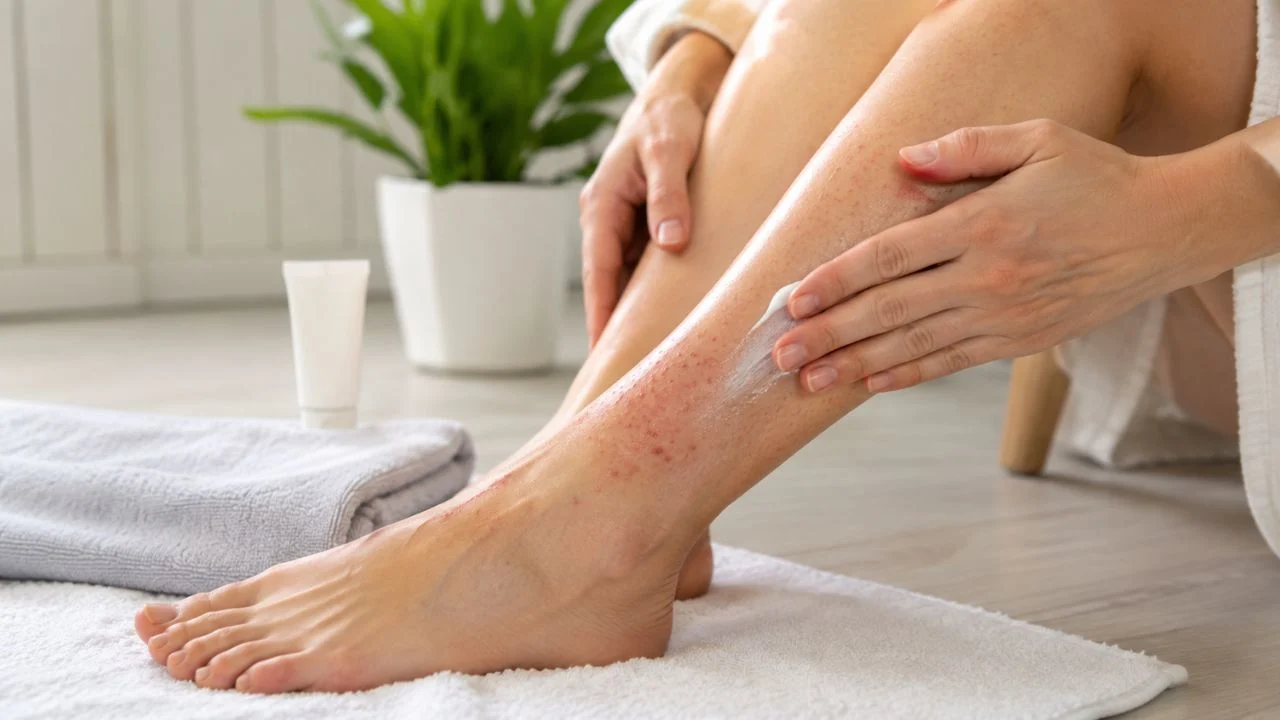

Red Itchy Bumps on Legs: Causes, Treatments and Warning Signs
Finding red itchy bumps on your legs can be uncomfortable and worrying, especially when they appear suddenly. The bumps may be small and scattered, grouped in clusters or surrounded by dry, swollen or irritated skin. Although many cases are mild, the appearance alone does not always reveal the exact cause.
Common explanations include insect bites, shaving irritation, folliculitis, eczema, contact dermatitis and heat rash. In some cases, intensely itchy bumps may be connected to scabies, hives or a fungal infection. The right treatment depends on the pattern, timing and symptoms accompanying the rash.
It may be tempting to scratch the bumps or apply several skin products at once. However, scratching can break the skin and increase the risk of infection, while heavily fragranced products may make irritation worse. Gentle care is usually the safest place to begin while you look for possible triggers.
This guide explains the most common causes of red itchy bumps on legs, how to recognise important differences and what may help relieve the discomfort. It also covers warning signs that should be assessed by a doctor rather than managed only with home remedies.
Key Takeaways
Red itchy bumps on the legs are a symptom rather than a single condition. They may develop after shaving, sweating, wearing tight clothing, touching an irritating substance or being bitten by insects. Looking at when and where the bumps appeared can provide useful clues.
Bumps centred around individual hairs may suggest folliculitis, ingrown hairs or razor bumps. Dry, rough or flaky areas are more consistent with eczema or contact dermatitis, while raised welts that appear and disappear may be hives. Very intense nighttime itching may require evaluation for scabies.
Most mild rashes can initially be managed by avoiding irritants, applying a fragrance-free moisturiser and keeping the skin cool. A cold compress may temporarily calm itching and swelling. Over-the-counter treatment should be selected carefully because the wrong product can worsen certain infections.
Seek medical attention when the affected skin becomes increasingly painful, hot, swollen or rapidly redder. Fever, pus, red streaks, breathing difficulty, facial swelling, widespread blistering or purple spots are also reasons to get prompt medical help. These symptoms may indicate an infection or serious reaction.
What Do Red Itchy Bumps on the Legs Mean?
A red, itchy bump forms when the skin becomes irritated or inflamed. This can happen because the immune system reacts to an allergen, insect saliva, infection, heat, friction or damage around a hair follicle. The redness may be less noticeable on brown or black skin.
The bumps may be called papules, welts, pustules, blisters or nodules depending on their size and contents. A papule is a small raised area, while a pustule contains pus. A welt is usually broader and raised, whereas a blister contains clear fluid.
The cause is more likely to be local when the rash only affects a small area that contacted a product, plant or fabric. Bumps across both legs may point toward shaving irritation, dry skin, heat exposure or something that touched a wider area. Widespread itching can have many possible explanations.
Not every bump that itches is dangerous or contagious. Keratosis pilaris, for example, can produce harmless rough bumps on the thighs, although it is not usually intensely itchy. A professional examination may be needed when symptoms overlap or do not improve.
Notice the Appearance, Location and Timing
Start by examining whether the bumps are flat, raised, rough, smooth, fluid-filled or filled with pus. Check whether each bump surrounds a hair and whether the skin between the bumps looks normal. These details can help distinguish folliculitis from eczema, bites or hives.
The location also matters. Bumps around the ankles may occur after flea bites, while mosquito bites often affect exposed skin. Shaving irritation commonly develops on the lower legs, and sweat-related folliculitis may appear where tight clothing traps heat and moisture.
Timing can provide another important clue. Bumps that appear after using a new lotion, detergent or hair-removal product may indicate contact dermatitis. Spots noticed after sleeping in a different room, travelling or buying second-hand furniture may raise questions about bedbugs.
Consider whether the itching is worse at night, after exercise, during hot weather or immediately after a shower. Also note whether anyone else in the household is itchy. Shared symptoms may suggest a common exposure, infestation or contagious skin condition that needs appropriate treatment.
Insect Bites on the Legs
Mosquitoes, fleas, bedbugs, mites and other insects can leave small red itchy bumps on the legs. The skin reaction occurs because the immune system responds to substances introduced during the bite. Some people develop only mild spots, while others experience noticeable swelling.
Mosquito bites often appear as isolated or scattered itchy bumps on exposed skin. Flea bites tend to affect the lower legs and ankles and may appear in small clusters. Their exact appearance varies, so the rash alone cannot always identify which insect caused it.
Bedbug bites may form grouped welts or a line-like or zigzag pattern. However, bedbug bites can resemble mosquito bites, hives and other rashes. Confirmation usually requires checking sleeping areas for insects, shed skins, dark spots or other evidence of an infestation.
Most simple insect bites improve with time and basic itch relief. Seek medical advice if the bumps become painful, ooze pus or are accompanied by fever, body aches or a rapidly spreading rash. Breathing problems or swelling of the lips, tongue or throat require emergency care.
Folliculitis and Inflamed Hair Follicles
Folliculitis develops when hair follicles become inflamed or infected. It can create clusters of red bumps that resemble small pimples, sometimes with a white or pus-filled centre. The affected area may itch, burn, feel tender or become uncomfortable under clothing.
Bacteria are one possible cause, but fungi, friction, sweating and blocked follicles can also contribute. Tight leggings, unclean razors, hot tubs and heavy skin products may increase the risk. Folliculitis can appear on the thighs, calves, buttocks and other hair-bearing areas.
Mild cases may improve when the trigger is removed and the skin is kept clean and dry. Avoid shaving over the area, squeezing the bumps or wearing tight clothing until the irritation settles. A warm compress may help soothe tender follicles and encourage natural drainage.
Widespread, recurring or painful folliculitis should be assessed by a healthcare professional. Treatment may involve an antibacterial wash, antifungal medicine or prescription antibiotic depending on the cause. Using random antibiotics is not recommended because not all folliculitis is bacterial.
Razor Bumps and Shaving Irritation
Red itchy bumps on legs after shaving are often caused by razor burn, inflamed follicles or ingrown hairs. Shaving can create tiny injuries in the skin, particularly when the blade is dull or the skin is dry. Friction from clothing may then worsen the irritation.
Ingrown hairs develop when a cut hair curves back into the skin instead of growing outward. The resulting razor bumps may itch, feel sore or develop a visible trapped hair. People with thick or curly hair may experience ingrown hairs more frequently.
Pause shaving until the bumps have improved and avoid picking at visible hairs. When shaving again, soften the skin with warm water, use a fragrance-free shaving cream and shave in the direction of hair growth. Use light pressure rather than repeatedly passing over the same area.
Replace dull blades regularly and rinse the razor thoroughly after use. Applying a gentle, fragrance-free moisturiser after shaving can support the skin barrier. Waxing, depilatory creams and other hair-removal methods can also cause irritation, so patch testing is important.
Contact Dermatitis From Products or Clothing
Contact dermatitis occurs when something touching the skin causes irritation or an allergic reaction. Common triggers include fragranced lotions, laundry detergent, fabric dye, adhesives, plants and hair-removal products. The rash may become itchy, dry, swollen, blistered or bumpy.
Irritant contact dermatitis develops when a substance directly damages the skin barrier. Allergic contact dermatitis happens when the immune system reacts to a particular ingredient. A person may develop an allergy even after previously using the product without obvious problems.
Think about anything that touched your legs shortly before the bumps appeared. This could include a new moisturiser, soap, sunscreen, essential oil, detergent, uniform or exercise garment. Stop using the suspected item and avoid applying additional fragranced products to the irritated skin.
Mild symptoms may gradually settle once the trigger is removed. Persistent, severe or recurring contact dermatitis may require medical evaluation and allergy patch testing. Seek prompt care if the area becomes increasingly painful, warm, crusted or filled with pus.
Eczema and Extremely Dry Skin
Eczema can produce dry, itchy, inflamed patches with small raised bumps. The skin may look red, darker, purple, grey or ashy depending on skin tone. Repeated rubbing and scratching can make the area thicker, rougher and more likely to crack or bleed.
Cold weather, low humidity, fragranced products, sweating and rough fabrics may trigger an eczema flare. Some people notice symptoms behind the knees or around the ankles, while others develop patches across the thighs or lower legs. The pattern can change over time.
Apply a thick, fragrance-free moisturiser several times a day, particularly after bathing. Use lukewarm rather than hot water and choose a gentle cleanser. Long hot showers remove protective oils from the skin and can make itching and dryness more intense.
Eczema is not contagious, but broken eczema skin can become infected. Yellow crusts, pus, increasing pain, warmth or fever need medical assessment. A doctor may recommend a topical corticosteroid or another treatment based on the location and severity of the flare.
Hives and Allergic Skin Reactions
Hives are raised, itchy bumps or patches that can develop anywhere on the body, including the legs. They may be round, irregular or joined together into larger areas. Individual hives often change shape, move to another location or disappear within hours.
Possible triggers include foods, medicines, infections, insect stings, heat, cold, pressure and exercise. In many cases, the exact trigger is not found. Hives may look red on lighter skin and may appear closer to the surrounding colour or darker on deeper skin tones.
A non-drowsy antihistamine may help some people, but it should be used according to the label and a pharmacist’s advice. Keeping the body cool and avoiding the suspected trigger may also help. Very hot showers can increase itching and make the welts feel more noticeable.
Call emergency services if hives occur with difficulty breathing, throat tightness, dizziness or swelling of the face, lips or tongue. These may be signs of a severe allergic reaction. Recurrent hives or symptoms lasting several days should be discussed with a healthcare professional.
Heat Rash and Sweat-Related Bumps
Heat rash develops when sweat becomes trapped beneath the skin. It can cause clusters of tiny red, clear or skin-coloured bumps that feel prickly or intensely itchy. The rash is more common during hot, humid weather or after heavy physical activity.
Tight or non-breathable clothing may trap heat against the thighs, knees and lower legs. Thick creams and oils may also block sweat ducts in vulnerable people. The rash usually becomes more uncomfortable when the skin remains hot and damp.
Move to a cooler environment, change out of sweaty clothing and let the affected skin dry. Wear lightweight, loose-fitting fabric and avoid heavy ointments while the rash is active. A cool bath or compress may provide temporary comfort without further irritating the skin.
Heat rash often settles once the skin stays cool, but other conditions can look similar. Seek medical advice when the bumps contain pus, become painful or do not improve after cooling measures. Fever or spreading redness may indicate an infection rather than uncomplicated heat rash.
Scabies and Intense Nighttime Itching
Scabies is caused by microscopic mites that burrow into the upper layer of skin. It typically produces severe itching that is especially noticeable at night, along with a pimple-like rash. Tiny curved or thread-like burrows may sometimes be visible.
The rash commonly affects the wrists, finger spaces, waist, buttocks, armpits and genital area, but it can also involve the knees and legs. Symptoms may not appear immediately after the first exposure. This delay allows scabies to spread before a person realises they have it.
Scabies usually spreads through prolonged skin-to-skin contact and sometimes through shared clothing, towels or bedding. It does not result from poor personal hygiene. Close contacts may need treatment at the same time, even when they have not yet developed itching.
Ordinary moisturisers and anti-itch creams do not kill scabies mites. Effective treatment requires an appropriate prescription or recommended scabicide used exactly as directed. The itching may continue for a while after successful treatment, so follow-up advice is important.
Fungal Infections Such as Ringworm
Ringworm is a fungal skin infection rather than an actual worm. It often causes an itchy, circular or ring-shaped rash with a raised, scaly edge. The centre may become clearer as the outside expands, although not every fungal rash forms a perfect ring.
The infection can spread through direct skin contact, animals, shared towels, gym surfaces or contaminated objects. Warm, damp environments support fungal growth, making sweating and tight clothing potential contributors. Scratching may spread the infection to nearby areas.
An over-the-counter antifungal product may be suitable for a small, uncomplicated rash when a pharmacist agrees that ringworm is likely. The treatment must usually continue for the full recommended period. Stopping as soon as the rash looks better may allow it to return.
Avoid applying a strong steroid cream to an undiagnosed ring-shaped rash unless advised by a professional. Steroids can temporarily change its appearance while allowing the fungus to spread. Medical care is important when the rash is extensive, recurring or not improving.
Other Possible Causes of Bumpy, Itchy Legs
Keratosis pilaris produces tiny rough bumps when keratin blocks the openings of hair follicles. It frequently affects the thighs and may feel like sandpaper or “chicken skin.” It is harmless and commonly becomes more noticeable when the skin is dry.
Varicose eczema tends to affect the lower legs in people with circulation problems or varicose veins. It can cause itching, dryness, colour changes and swelling near the ankles. Medical assessment is important because management may involve both skin care and circulation support.
Prurigo nodularis causes firm, intensely itchy bumps that often develop on areas that are easy to scratch, including the arms and legs. Scratching keeps the itch-scratch cycle active and may lead to bleeding, crusting or scarring. Dermatological treatment is usually needed.
Less commonly, medication reactions, autoimmune conditions and other infections can produce a bumpy leg rash. A diagnosis cannot reliably be made from an online description alone. Persistent, unexplained or repeatedly returning symptoms deserve a professional skin examination.
How to Calm Red Itchy Bumps at Home
Begin by gently rinsing the skin with lukewarm water and a mild, fragrance-free cleanser. Pat the area dry rather than rubbing it. Avoid scrubs, exfoliating brushes and strongly scented soap because they can damage the skin barrier and increase itching.
Apply a cool, damp cloth for approximately 10 to 15 minutes when the itch becomes difficult to ignore. A fragrance-free moisturiser may help when the skin is dry or irritated. Store the moisturiser in the refrigerator if a cooler application feels more soothing.
Wear loose, breathable clothing and avoid overheating. Keep your fingernails short and consider covering the area at night to reduce unconscious scratching. Scratching provides brief relief but can create open wounds, discoloration, scarring and secondary skin infections.
Ask a pharmacist whether an antihistamine, calamine lotion or mild hydrocortisone product is appropriate for your symptoms. These options are not suitable for every cause or every person. Follow the package directions and avoid applying medicine to broken or infected skin without advice.
Treatments to Avoid Without a Diagnosis
Do not squeeze, pop or puncture the bumps. Even when they resemble acne, opening them can push bacteria deeper into the skin and cause scarring. Pus-filled, painful or enlarging bumps should be examined rather than drained with household tools.
Avoid mixing several medicated creams in an attempt to cover every possible cause. Antifungals, antibiotics and corticosteroids treat different problems. Combining them without guidance can irritate the skin, hide important symptoms or delay the correct diagnosis.
Essential oils, undiluted vinegar, lemon juice and harsh disinfectants should not be placed on an inflamed rash. Natural ingredients can still cause chemical irritation or allergic contact dermatitis. Broken skin absorbs substances more easily and may react more severely.
Do not continue shaving, waxing or exfoliating an actively irritated area. Give the skin time to recover before restarting hair removal. When symptoms repeatedly return after the same activity, a dermatologist can help identify safer techniques or alternative methods.
When Should You See a Doctor?
Arrange a medical appointment when the rash is widespread, severe, recurring or not improving after one to two weeks of gentle care. You should also seek advice when the itching regularly disrupts sleep, work or normal daily activities.
Get prompt help when the skin becomes painful, hot, swollen or rapidly redder. These signs may point to cellulitis or another bacterial infection, particularly when accompanied by fever, chills, swollen glands, red streaks or a general feeling of illness.
A rash that develops after starting a new medicine deserves medical attention. Emergency care is needed for breathing difficulty, facial or throat swelling, widespread blistering, peeling skin or sores affecting the mouth or eyes. These may represent a serious reaction.
Purple or red spots that do not fade when pressed, severe headache, neck stiffness, confusion or significant illness require urgent assessment. Babies, pregnant people and anyone with a weakened immune system should receive earlier professional advice for an unexplained rash.
How Doctors Diagnose Itchy Leg Bumps
A doctor will usually ask when the bumps started, how they have changed and whether anyone else is itchy. They may ask about travel, pets, new medicines, skin products, shaving, outdoor activities and exposure to people with a similar rash.
The appearance and distribution of the bumps often provide useful diagnostic information. A clinician may inspect the hair follicles, check for burrows, examine the feet and look for evidence of infection. Bringing clear photos showing how the rash developed can be helpful.
Tests are not always necessary, but a swab may be taken from a pus-filled bump. A skin scraping can help identify fungus or scabies, while patch testing may be recommended for recurring contact dermatitis. A biopsy is reserved for unclear or persistent conditions.
Treatment will depend on the diagnosis and may include moisturisers, topical corticosteroids, antihistamines, antifungal medicine, antibiotics or scabies treatment. Following the full treatment plan is important, even when the itching begins to improve before the rash disappears.
How to Prevent Itchy Bumps From Returning
Protect the skin barrier by using a mild cleanser and applying fragrance-free moisturiser after bathing. Keep showers short and lukewarm. Moisturising regularly can reduce dryness, cracking and sensitivity to fabrics, weather changes and irritating ingredients.
Use clean shaving tools, soften the hair before shaving and avoid pressing the blade firmly against the skin. Shave in the direction of hair growth and avoid passing over the same spot repeatedly. Replace blades before they become dull or rusty.
Change out of sweaty clothes after exercise and wash tight sportswear between uses. Choose breathable fabrics when possible and shower after using hot tubs or pools. Do not share razors, towels or personal skin-care tools with other people.
Use insect repellent and protective clothing when spending time outdoors. Check sleeping areas when unexplained clustered bites appear after travel. When a contagious condition such as scabies or ringworm is diagnosed, follow cleaning and close-contact instructions carefully.
Final Thoughts
Red itchy bumps on legs can develop for many reasons, from simple dryness and shaving irritation to insect bites, eczema or infection. The pattern, timing and accompanying symptoms are often more informative than redness alone, particularly across different skin tones.
Gentle skin care is usually the best first response to a mild, localised rash. Keep the area clean and cool, avoid scratching and stop using any newly introduced products. Applying many treatments at once can make it harder to determine what is helping.
Monitor the bumps for changes in pain, warmth, swelling, discharge or spread. These features may signal an infection that requires professional treatment. An unexplained rash should not be ignored when it is getting worse or affecting your overall health.
A doctor or dermatologist can usually narrow down the cause by examining the rash and reviewing recent exposures. Getting the correct diagnosis protects your skin from unnecessary treatment and helps you choose a solution that addresses the real trigger.
Frequently Asked Questions
Why do I suddenly have red itchy bumps on my legs?
Sudden bumps may result from insect bites, contact with an irritating product, hives, sweating or shaving. Consider any new exposures and seek care if the rash spreads quickly or causes other symptoms.
What causes itchy bumps on legs after shaving?
They are commonly caused by razor burn, inflamed hair follicles or ingrown hairs. Pause shaving, avoid picking and use a clean, sharp razor with shaving cream when the skin has healed.
How can I tell whether the bumps are insect bites?
Insect bites may appear in clusters, lines or exposed areas, but their appearance can overlap with several rashes. Check your environment for insects and look for recent outdoor, travel or sleeping exposures.
When are red bumps on the legs serious?
They require prompt attention when the skin is hot, painful, swollen, rapidly spreading or producing pus. Fever, breathing problems, facial swelling, blistering or purple spots also need urgent medical care.
Can stress cause itchy bumps on the legs?
Stress can worsen hives, eczema and the itch-scratch cycle, but it should not automatically be assumed to be the cause. Persistent or unusual bumps should still be assessed for skin irritation, infection and other conditions.