

The trapezius muscle is a large, flat muscle that covers much of the upper back and extends into the neck and shoulders. It plays an important role in posture, shoulder movement, neck stability, and control of the shoulder blades. You use it during everyday actions such as lifting, reaching, turning your head, carrying objects, and maintaining an upright position.
Because the trapezius is active during so many movements, it can become tight, tired, strained, or painful. Long periods at a desk, repetitive lifting, stress-related muscle tension, poor movement habits, and intense exercise can all affect this area. Understanding the trapezius muscle’s location, function, and common problems can help you recognize symptoms and support healthier movement.
What Is the Trapezius Muscle?
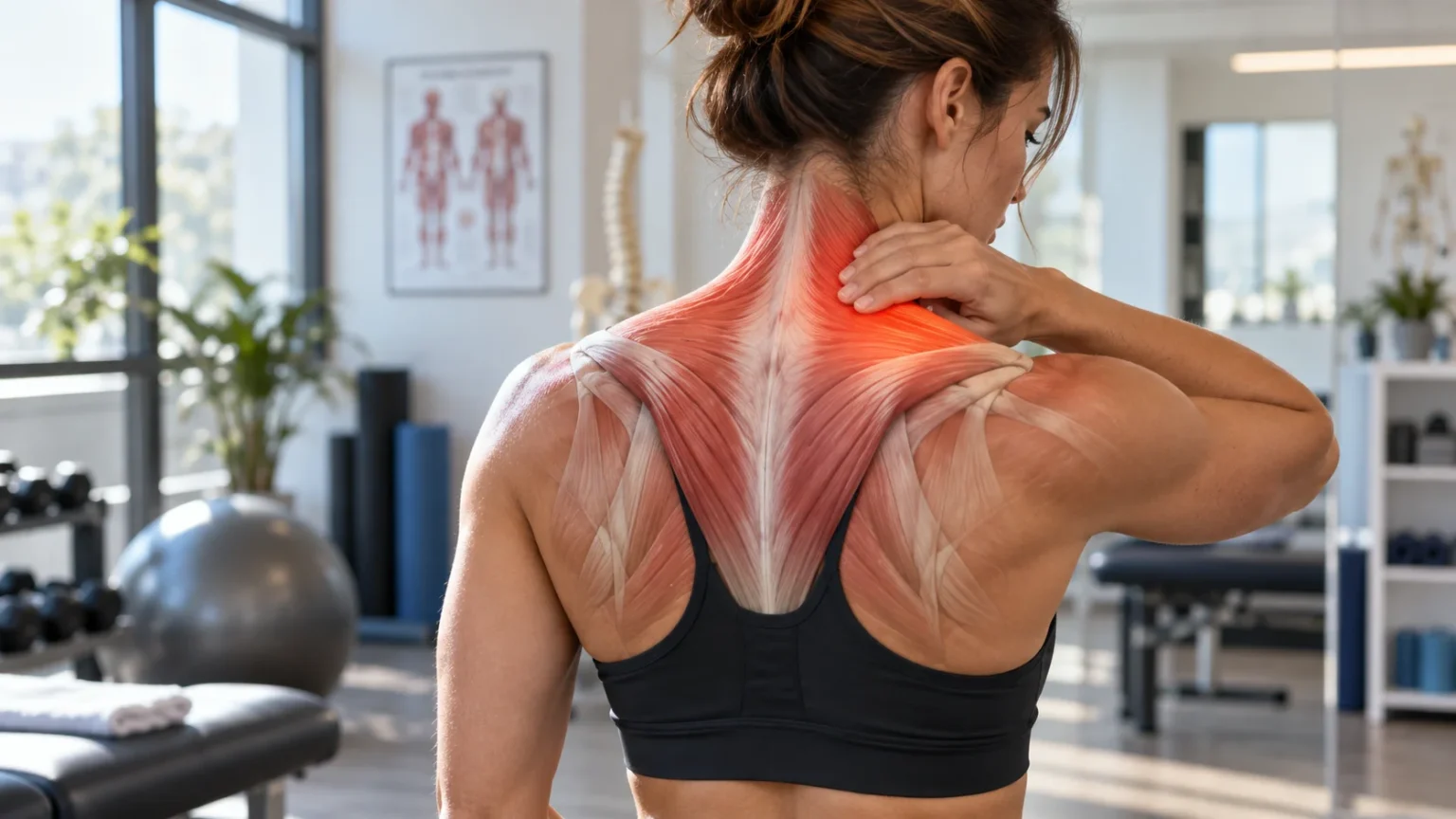
The trapezius is a broad, triangular muscle located across the upper and middle back. There is one trapezius muscle on each side of the body, and together they form a large diamond-like shape across the back. The muscle connects the skull, neck, spine, shoulder blade, and collarbone, allowing it to influence several different movements.
Unlike smaller muscles that perform one primary action, the trapezius has several functions depending on which fibers are working. Different portions can raise, lower, rotate, or pull the shoulder blades toward the spine. These actions help position the shoulders correctly when you reach, lift your arms, carry objects, or perform upper-body exercises.
The trapezius also works closely with surrounding muscles rather than functioning independently. The rhomboids, serratus anterior, levator scapulae, rotator cuff muscles, and neck muscles all contribute to coordinated shoulder and upper-back movement. Balanced strength between these areas helps the shoulder blades move smoothly during daily activities and exercise.
Where Is the Trapezius Muscle Located?
The trapezius begins near the base of the skull and extends down the spine into the middle portion of the back. From there, its fibers spread outward toward the shoulders and shoulder blades. Because it covers such a large area, discomfort involving the trapezius may be felt in the neck, across the shoulders, or between the shoulder blades.
The upper portion runs from the neck toward the outer shoulder. These fibers are often the area people refer to when they say their “traps” feel tight after working at a computer or carrying a heavy bag. They help elevate and rotate the shoulder blade while also contributing to certain movements of the neck.
The middle and lower fibers extend farther down the upper back. Middle fibers help draw the shoulder blades toward the spine, while lower fibers assist with downward movement and upward rotation of the scapula. These sections are important for maintaining controlled shoulder mechanics when raising the arms overhead.
What Does the Trapezius Muscle Do?
One of the trapezius muscle’s major functions is controlling the shoulder blades. The scapulae must move smoothly during reaching, pressing, pulling, and overhead activities. Different trapezius fibers work together to position and rotate the shoulder blades so the arms can move efficiently without relying excessively on other muscles.
The upper trapezius helps elevate the shoulder blade, which occurs when you shrug your shoulders. It also works with other muscles to assist upward rotation when lifting the arm overhead. This does not mean the upper traps should remain constantly tense, because healthy movement involves coordinated activity between the upper, middle, and lower portions.
The trapezius also contributes to head and neck control when the shoulder blades remain stable. It can assist with neck extension, side bending, and rotation depending on which fibers are active. During normal posture, the muscle helps provide low-level support so the head, shoulders, and upper back remain coordinated throughout movement.
Upper, Middle, and Lower Trapezius Explained
The upper trapezius runs from the base of the skull and neck toward the collarbone and shoulder blade. Its main responsibilities include shoulder blade elevation and assisting upward rotation. It becomes highly active during shrugging movements and can also help stabilize the shoulder when carrying loads or performing overhead activities.
The middle trapezius is positioned across the upper back and mainly contributes to scapular retraction. Retraction means drawing the shoulder blades toward the spine, as occurs during many rowing exercises. Strong middle trapezius fibers can support upper-back control during pulling movements and help maintain efficient shoulder blade positioning.
The lower trapezius extends downward toward the middle spine and helps depress and upwardly rotate the shoulder blade. This portion is particularly important when raising the arms overhead. Balanced function between the three regions allows the shoulder blades to move rather than remaining fixed or being pulled excessively in one direction.
What Causes Trapezius Muscle Pain?
Trapezius pain can develop from muscle overuse, prolonged positioning, sudden strain, or repetitive activity. Working for several hours with the shoulders elevated or the head held forward may contribute to fatigue around the neck and upper back. Carrying heavy bags, lifting unfamiliar loads, or rapidly increasing exercise intensity can also make the trapezius sore.
Stress can influence how tense the upper trapezius feels because some people unconsciously raise or brace their shoulders when they are anxious or concentrating. Sustained tension does not necessarily mean the muscle is injured, but it can contribute to discomfort and fatigue. Regular movement breaks and relaxation may help when prolonged muscle guarding is part of the problem.
Pain around the trapezius can also come from other structures. Neck joints, nerves, shoulder problems, headaches, and surrounding muscles may create symptoms in a similar area. Persistent or worsening upper-back and neck pain should therefore not automatically be blamed on a “tight trap” without considering other possible causes.
Common Signs of a Tight Trapezius
A tight trapezius may feel like stiffness, aching, pressure, or a persistent sense of tension across the upper shoulders. You may notice that turning your head or lowering one ear toward the shoulder feels restricted. Some people also experience tenderness when pressing the muscle between the neck and the top of the shoulder.
Symptoms may become more noticeable after prolonged desk work, driving, using a phone, or sitting without changing position. The shoulders can begin to feel heavy or tired even when there has been no significant physical activity. Gentle movement may temporarily improve the sensation because it changes the load placed on muscles that have remained relatively still.
Not every feeling of tightness means the trapezius actually needs aggressive stretching. Muscles can feel tight when they are fatigued, overworked, weak, or protecting a sensitive area. Strength training, movement variation, workstation adjustments, and recovery may therefore be as important as stretching when trapezius discomfort repeatedly returns.
Trapezius Muscle Strain and Overuse
A trapezius strain occurs when muscle fibers are overloaded beyond what they can comfortably tolerate. This may happen during sudden lifting, sports, forceful pulling, or an unexpected movement involving the neck or shoulder. Symptoms can include localized pain, tenderness, muscle stiffness, weakness, or discomfort when moving the arm or turning the head.
Milder strains may improve gradually with temporary activity modification and comfortable movement. Completely avoiding movement for extended periods is not always necessary unless a healthcare professional recommends it. As symptoms settle, gradually returning to normal activity can help restore movement and strength without immediately exposing the muscle to the same demanding load.
Overuse can develop more gradually than an acute strain. Repeated lifting, frequent overhead activity, heavy carrying, or demanding training without enough recovery can fatigue the muscle over time. Managing training volume, improving technique, and strengthening surrounding muscles can help reduce unnecessary stress on the trapezius during repetitive activities.
How Posture Affects the Trapezius
Posture is not about finding one perfect position and remaining there all day. Even an upright posture can become uncomfortable when held for several hours without movement. The trapezius may become fatigued when the head and shoulders remain in the same position for prolonged periods, particularly during computer or phone use.
A workstation that encourages you to reach forward constantly may increase demand on the neck and shoulder muscles. Placing the monitor at a comfortable viewing height, keeping frequently used items within easy reach, and supporting the forearms can reduce unnecessary effort. Regularly changing position is often more useful than trying to maintain rigid posture.
Movement patterns elsewhere in the body can also influence how the neck and shoulders are used. The spine, pelvis, hips, and lower body all contribute to overall movement and positioning. Understanding issues such as lower back and hip pain can be useful when considering how discomfort in one area may affect movement habits throughout the body.
Best Exercises for the Trapezius Muscle
Rows are a useful exercise for strengthening the middle trapezius and surrounding upper-back muscles. They can be performed using resistance bands, cables, dumbbells, or machines depending on your ability and available equipment. Focus on moving the shoulder blades comfortably while keeping the neck relaxed instead of aggressively pulling the shoulders backward.
Shrugs directly challenge the upper trapezius by loading shoulder elevation. Hold suitable resistance at your sides, raise your shoulders in a controlled manner, pause briefly, and lower them gradually. Avoid rolling the shoulders in large circles because the primary goal is controlled elevation and lowering rather than creating unnecessary motion through the shoulder joint.
Exercises that emphasize lower trapezius control can include wall slides, prone arm raises, and carefully performed overhead movements. The best variation depends on shoulder mobility and current strength. Start with manageable resistance and prioritize smooth scapular movement before progressing to heavier loads or more challenging positions.
How to Stretch the Trapezius Safely
A gentle upper trapezius stretch can be performed by sitting upright and slowly tilting one ear toward the same-side shoulder. Keep the opposite shoulder relaxed instead of allowing it to rise. You should feel mild tension along the side of the neck and upper shoulder without forcing your head farther using your hand.
Hold the stretch comfortably while breathing normally, then return your head to a neutral position. A stretch should feel like gentle tension rather than sharp pain, burning, numbness, or tingling. More force does not automatically produce better flexibility, and aggressive stretching can irritate tissues that are already sensitive.
Stretching may provide temporary relief when the muscle feels stiff, but it works best as part of a broader approach. Regular movement, strength exercises, recovery, and changes to repetitive daily positions may offer more lasting benefits. If stretching repeatedly increases symptoms, stop forcing the area and consider professional assessment.
How to Prevent Trapezius Tightness
Regular movement breaks are one of the simplest ways to reduce prolonged tension around the upper back and shoulders. Stand up, walk briefly, move your arms, and change neck position during long periods of desk work. Even short breaks can provide variety to tissues that would otherwise remain in nearly the same position for several hours.
Strength training can also improve the capacity of the trapezius and surrounding muscles to tolerate everyday demands. Exercises for the upper back, shoulders, chest, and core help create a more balanced training program. Progress resistance gradually so the muscles have time to adapt instead of suddenly exposing them to workloads they are not prepared to manage.
Pay attention to habits that repeatedly load one side of the body. Carrying a heavy bag on the same shoulder, holding a phone between the ear and shoulder, or working with one arm constantly elevated may contribute to discomfort. Small adjustments can reduce repetitive strain without requiring major changes to your routine.
When Should You See a Doctor for Trapezius Pain?
Mild muscular soreness after unfamiliar exercise often improves over several days. However, pain that persists, becomes progressively worse, repeatedly interrupts sleep, or significantly limits normal neck and shoulder movement deserves professional evaluation. A healthcare provider can assess whether the symptoms are likely muscular or related to another structure.
Seek prompt medical attention if upper-back or neck pain follows a significant accident or injury, especially if severe weakness or loss of movement occurs. Numbness, tingling, or weakness extending into an arm or hand may indicate nerve involvement and should not simply be treated as ordinary trapezius tightness.
Medical attention is also important when pain is accompanied by concerning symptoms such as chest discomfort, breathing difficulty, severe unexplained headache, fever, or sudden neurological changes. These symptoms may have causes unrelated to the trapezius. When discomfort feels unusual or significantly different from normal muscle soreness, appropriate assessment is safer than assuming it is muscular.
Conclusion
The trapezius is a large muscle extending from the neck and skull across the shoulders and down the upper back. Its upper, middle, and lower fibers perform different but coordinated roles in controlling the shoulder blades, supporting the neck, and assisting arm movement. Healthy trapezius function is important for many everyday and athletic activities.
Tightness, overuse, muscle strain, prolonged positioning, and repetitive activity can all contribute to trapezius discomfort. Symptoms may include aching, stiffness, tenderness, restricted neck movement, or fatigue around the shoulders. Because nearby joints, nerves, and muscles can produce similar symptoms, ongoing pain should not automatically be attributed to the trapezius alone.
Regular movement, appropriate strengthening, gentle mobility work, sensible workstation adjustments, and gradual exercise progression can support healthy trapezius function. Avoid aggressively stretching or training through sharp pain simply because the area feels tight. Persistent, severe, or unusual symptoms should be evaluated so the underlying cause can be identified appropriately.
FAQs
What is the main function of the trapezius muscle?
The trapezius controls and stabilizes the shoulder blades while assisting neck and shoulder movement. Its different sections help elevate, retract, depress, and upwardly rotate the scapula during everyday and exercise-related movements.
Where is the trapezius muscle located?
The trapezius extends from the base of the skull and neck down the upper and middle back, spreading outward toward the shoulders, collarbones, and shoulder blades on both sides of the body.
Why does my trapezius feel tight?
Trapezius tightness may result from prolonged sitting, repetitive activity, muscle fatigue, stress-related tension, heavy carrying, or exercise. Recurring tightness can also involve weakness or other neck and shoulder problems.
What exercises strengthen the trapezius?
Rows, shrugs, wall slides, prone arm raises, and suitable overhead exercises can strengthen different regions of the trapezius. The best program combines controlled technique, appropriate resistance, and gradual progression.
Can trapezius pain cause neck discomfort?
Yes. Because the upper trapezius attaches around the neck and skull, irritation or fatigue can be associated with neck and shoulder discomfort. Persistent pain or neurological symptoms should receive professional evaluation.