
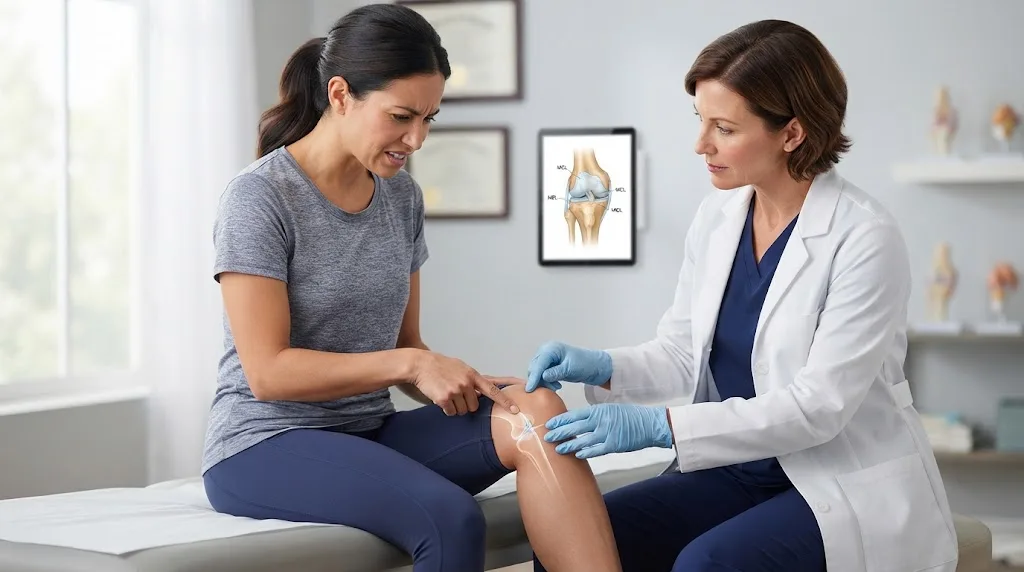

Inside knee pain refers to discomfort felt along the medial, or inner, side of the knee. This area includes the medial meniscus, medial collateral ligament, pes anserine tendons and bursa, joint cartilage, and nearby muscles. Pain can develop gradually from overuse or appear suddenly after twisting, impact, or another injury that stresses the inner knee.
The exact location and behavior of the pain can offer useful clues. Some people feel tenderness directly along the joint line, while others notice aching slightly below the knee or closer to the kneecap. Symptoms may worsen with walking, stairs, squats, running, pivoting, or after sitting for a long period.
Not every episode of medial knee pain means there is serious damage. Mild overuse problems can improve with temporary activity changes, strengthening, and gradual return to normal movement. However, locking, major swelling, instability, severe pain, or symptoms following significant trauma should be assessed by a qualified healthcare professional.
Medial Meniscus Irritation or Tear
The medial meniscus is a crescent-shaped piece of cartilage that helps distribute pressure and improve stability inside the knee. It can become irritated through repeated deep bending or injured during twisting movements when the foot stays planted. Pain is often felt along the inner joint line and may become more noticeable during squats or pivoting.
Some meniscus problems also cause swelling, clicking, catching, or a sensation that something is blocking normal movement. A larger tear may make it difficult to fully bend or straighten the knee. However, painless clicking is common and does not automatically mean the meniscus has been damaged.
Mild symptoms may improve with load modification and progressive strengthening, particularly when there is no locking or significant instability. Persistent swelling, repeated catching, or a knee that becomes physically stuck deserves clinical evaluation. A clinician can assess movement, joint-line tenderness, and other signs before deciding whether imaging is necessary.
Medial Collateral Ligament Injury
The medial collateral ligament, or MCL, runs along the inner side of the knee and helps resist forces that push the knee inward. It can be injured during sports, falls, or direct impacts to the outside of the knee. Pain is typically felt along the ligament and may be accompanied by tenderness or swelling.
Mild MCL sprains may cause soreness but allow normal walking, while more significant injuries can create instability or difficulty putting weight on the leg. The knee may feel less secure when turning, changing direction, or stepping sideways. Symptoms often begin immediately after a clear injury rather than appearing gradually.
Treatment depends on severity, but many MCL injuries improve without surgery. Temporary activity restriction, gradual strengthening, and sometimes bracing may be recommended. If the knee feels unstable, swelling is substantial, or the injury occurred with a loud pop and major loss of function, medical evaluation is important.
Pes Anserine Bursitis
The pes anserine area sits slightly below the inner side of the knee where several tendons attach to the shinbone. A small bursa in this region can become irritated and painful. The discomfort is often located a few centimeters below the joint line rather than directly inside the knee joint.
Symptoms may worsen when climbing stairs, running, getting up from a chair, or lying with the knees pressed together. Repetitive activity, training increases, muscle tightness, or changes in walking mechanics can all contribute. The area may also feel tender when pressed directly.
Management usually focuses on reducing aggravating load and strengthening the surrounding muscles. Hip, hamstring, and quadriceps exercises can help improve lower-body control, while short-term symptom relief may come from cold packs or activity modification. Persistent pain should be assessed to confirm that the bursa or tendons are actually the source.
Knee Osteoarthritis
Osteoarthritis can affect the inner compartment of the knee and cause medial pain, stiffness, swelling, or reduced range of motion. Symptoms may be worse after prolonged activity or after sitting for a long time. Some people notice aching when walking, standing, or using stairs, particularly as the joint becomes more sensitive.
The amount of structural change on an X-ray does not always match pain severity. Some people have advanced changes with manageable symptoms, while others feel more pain with less dramatic findings. Strength, activity level, sleep, body weight, and previous injuries can all influence how the knee feels.
Exercise remains an important part of management because stronger quadriceps and hip muscles can support the joint. Sit-to-stands, step-ups, and other controlled lower-body exercises may improve function when performed within a tolerable range. Severe or progressively limiting symptoms should be discussed with a healthcare professional.
Patellofemoral Pain and Inner Knee Discomfort
Patellofemoral pain usually causes discomfort around or behind the kneecap, but some people feel it more toward the inner side. The kneecap moves within a groove as the knee bends and straightens, and irritation in this area can become noticeable during stairs, squats, running, or prolonged sitting.
Changes in training volume, quadriceps strength, hip control, and ankle mobility can all influence symptoms. The problem is usually not one single movement fault but a combination of load and tissue sensitivity. Reducing painful activity temporarily while rebuilding lower-body strength often helps.
If your pain is particularly noticeable on stairs, this guide to knee pain going down stairs can help explain why descending can place greater demand on the knee. Understanding those mechanics can make it easier to choose appropriate modifications while symptoms settle.
Muscle and Tendon Overuse
Muscles and tendons around the inner thigh and knee can become irritated when activity increases too quickly. Running, hiking, squatting, cycling, or standing for long periods may overload tissues that are not prepared for the volume. The pain may feel more like an ache or pulling sensation than a sharp joint pain.
Adductors, hamstrings, and other nearby muscles can influence how the knee feels during movement. If these tissues are sore or fatigued, discomfort may be felt along the inside of the knee even when the joint itself is not injured. Symptoms often improve as the muscles recover and adapt.
Gradual strengthening and sensible workload progression are usually helpful. Avoid repeatedly stretching or exercising into sharp pain simply because the area feels tight. A temporary reduction in activity followed by progressive loading can help restore tolerance without creating a cycle of repeated flare-ups.
How to Relieve Inside Knee Pain at Home
Start by reducing activities that clearly worsen symptoms rather than avoiding movement completely. Shorter walks, lighter training, fewer stairs, or a smaller squat range may help during a flare. Gentle movement within a comfortable range can maintain mobility and strength while irritated tissues begin to settle.
Cold packs may help when the knee feels swollen or sore after activity, while warmth can feel better when stiffness is the main complaint. Use either option for short periods and protect the skin with a cloth barrier. These methods provide temporary relief but do not replace strengthening or appropriate load management.
Over-the-counter pain medication may be suitable for some people, but medical conditions and other medicines can affect what is safe. A pharmacist or healthcare professional can provide guidance if needed. Long-term improvement usually depends more on addressing the cause and rebuilding strength than on relying only on symptom relief.
Exercises That May Help
Sit-to-stands are a practical way to strengthen the quadriceps and glutes. Use a chair height that allows you to stand without sharp pain, then lower yourself slowly and with control. As the movement becomes easier, you can use a lower seat or add light resistance.
Step-ups can also improve knee and hip strength. Begin with a low step and focus on keeping the knee controlled rather than collapsing inward. Use a railing or stable surface for support if balance is difficult, then gradually increase step height or resistance as strength improves.
Bridges, side steps, and calf raises can complement knee-focused exercises by strengthening the surrounding muscles. A balanced program helps improve control from the hip to the foot. Stop or modify exercises that cause sharp pain or a lasting increase in symptoms afterward.
When Inside Knee Pain Is More Concerning
Seek medical attention if pain follows significant trauma and you cannot bear weight normally. Rapid swelling, visible deformity, or a loud pop followed by instability can indicate a ligament, meniscus, or other internal injury. These symptoms deserve assessment rather than repeated attempts to test the knee through painful movement.
A knee that locks and cannot fully straighten or bend should also be evaluated. True mechanical locking can occur with certain meniscus injuries or loose tissue inside the joint. Repeated giving way or progressive loss of motion are additional reasons to seek professional care.
A hot, red, swollen knee accompanied by fever or feeling seriously unwell requires prompt medical attention. Sudden calf swelling, chest pain, or shortness of breath also needs urgent assessment. Persistent inner knee pain that continues for several weeks despite sensible self-care should be professionally reviewed.
How to Prevent Medial Knee Pain
Increase exercise volume gradually so the muscles, tendons, and joint tissues have time to adapt. Sudden jumps in running distance, squat volume, hill training, or sports intensity can create overload. Changing one training variable at a time makes it easier to identify what the knee can tolerate.
Build strength throughout the lower body rather than focusing only on the knee. Strong quadriceps, glutes, hamstrings, and calves help distribute force during walking, stairs, running, and squatting. Regular resistance training can improve the capacity of these tissues to handle daily and athletic demands.
Pay attention to early soreness and adjust before symptoms become severe. Comfortable footwear, adequate recovery, and regular movement breaks can also support knee health. No single strategy prevents every problem, but consistent strength and sensible progression reduce the likelihood of repeated overload.
Conclusion
Inside knee pain can come from several structures, including the medial meniscus, MCL, pes anserine area, cartilage, muscles, and tendons. The exact location, trigger, and type of pain can provide useful clues about the likely cause. Not every episode of medial knee pain means serious joint damage.
Relief often starts with temporary activity modification and progressive strengthening. Sit-to-stands, step-ups, bridges, and other lower-body exercises can improve support around the knee when performed within a tolerable range. Cold, heat, and other symptom-relief strategies may also help during a flare.
Seek professional evaluation for major swelling, locking, instability, severe trauma, or pain that does not improve with reasonable self-care. A hot red joint with fever needs prompt medical attention. When serious causes are excluded, gradual movement and strength-building can often help restore comfort and confidence.
FAQs
What is the most common cause of inside knee pain?
Common causes include medial meniscus irritation, MCL strain, pes anserine bursitis, osteoarthritis, and muscle or tendon overuse. The exact cause depends on where the pain is located and how it behaves.
Can inside knee pain come from the meniscus?
Yes. Medial meniscus problems can cause joint-line pain, swelling, catching, or difficulty fully straightening the knee. Persistent locking or repeated swelling should be medically assessed.
Is walking good for inside knee pain?
Gentle walking may be appropriate when symptoms remain manageable. Reduce distance or pace if pain increases significantly, then rebuild activity gradually as the knee becomes more comfortable.
What exercises help medial knee pain?
Sit-to-stands, step-ups, bridges, side steps, and calf raises can help strengthen the lower body. Choose a comfortable range and progress gradually rather than forcing painful repetitions.
When should I see a doctor for inside knee pain?
Seek care for severe pain, rapid swelling, locking, instability, inability to bear weight, or symptoms after major trauma. Persistent pain that does not improve with self-care also deserves evaluation.