

Wild Yam Benefits: What It May Do and What the Evidence Really Says
Wild yam has been used in herbal traditions for generations, but modern interest in the plant is driven largely by claims about menopause, hormone balance, menstrual discomfort, and “natural progesterone.” Wild yam supplements are now sold as capsules, extracts, powders, and topical creams, often with messaging aimed at women going through perimenopause or menopause. Some of these claims sound convincing because wild yam naturally contains diosgenin, a plant compound that can serve as a starting material for manufacturing steroid hormones. However, what happens in a laboratory and what happens inside the human body are very different.
One of the most important facts to understand is that your body does not naturally convert the diosgenin in wild yam into progesterone. Pharmaceutical manufacturers can chemically transform diosgenin into steroid compounds in a laboratory, but eating wild yam or applying ordinary wild yam cream does not reproduce that process inside the body. This distinction is frequently lost in supplement marketing. Memorial Sloan Kettering notes that there is no evidence that humans can convert wild yam diosgenin into progesterone.
That does not mean wild yam is biologically inactive or completely without potential. The plant contains steroidal saponins and other natural compounds that have produced interesting effects in laboratory and animal research. Researchers have investigated possible anti-inflammatory, metabolic, hormonal, and antioxidant effects, among others. The problem is that encouraging laboratory findings do not automatically translate into meaningful benefits for people. Human clinical research remains much more limited than the popularity of wild yam supplements might suggest.
Menopause is the best-known modern use, yet human evidence remains mixed and limited. One small placebo-controlled trial involving topical wild yam cream found no meaningful advantage over placebo for menopausal symptoms or measured hormone levels. Other small studies using different yam species or preparations have reported possible benefits, making it difficult to draw one conclusion across every product sold as wild yam.
The most useful approach is therefore neither to dismiss wild yam completely nor treat it as a proven hormonal therapy. Instead, understand what the plant contains, which uses have actual human evidence, where research is still preliminary, and what safety issues deserve attention. Herbal products can be valuable parts of personal wellness routines, but “natural” does not automatically mean effective, hormone-free, interaction-free, or appropriate for everyone. The sections below separate popular claims from what current evidence can reasonably support.
What Is Wild Yam?
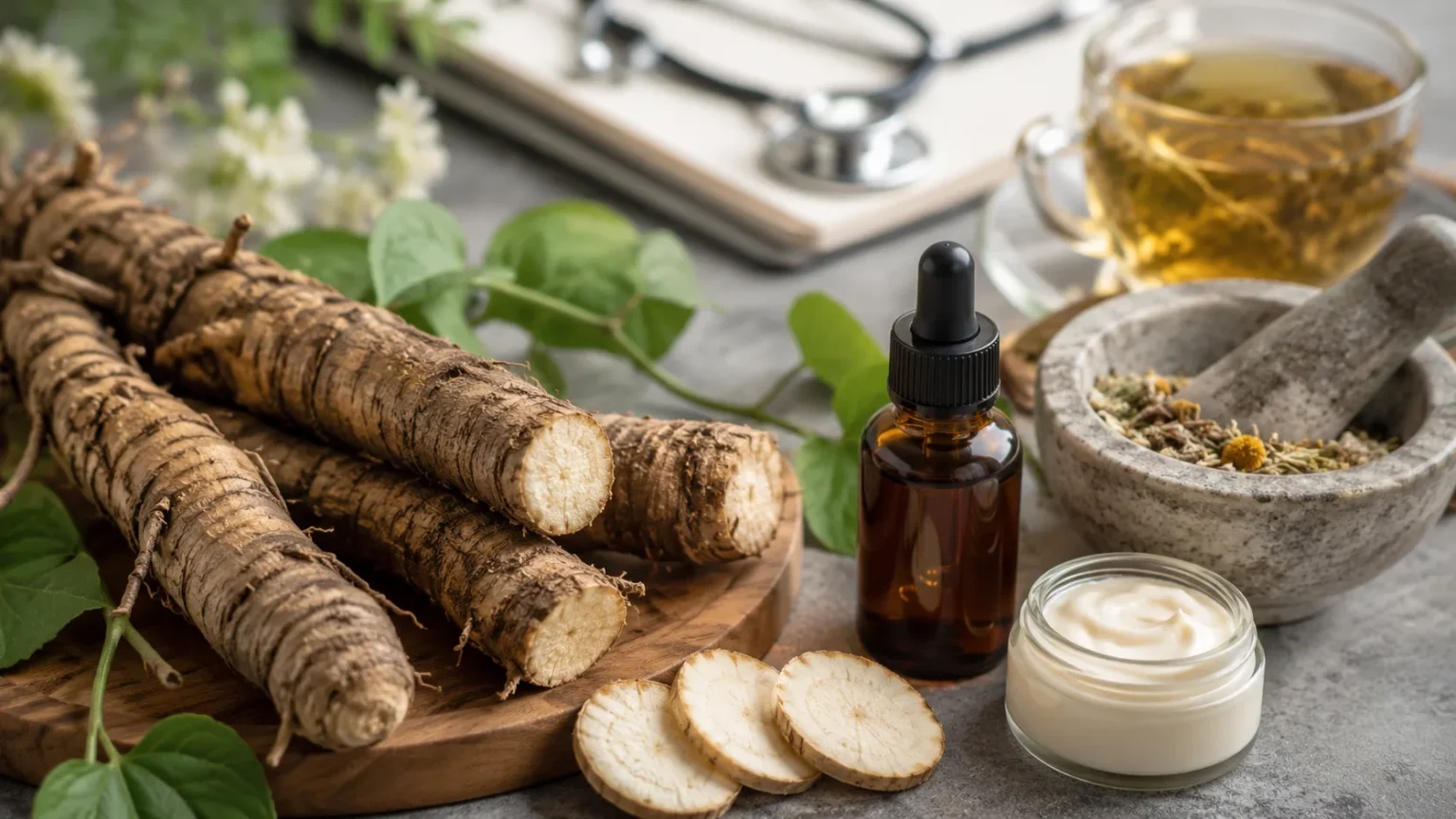
Wild yam usually refers to plants from the Dioscorea genus, particularly Dioscorea villosa, a climbing vine native to parts of North America. The underground root or rhizome is the portion most commonly used in herbal preparations. Historically, wild yam has also been known by names such as colic root, rheumatism root, and devil’s bones. Traditional applications included digestive complaints, muscle discomfort, menstrual symptoms, and inflammatory conditions, although traditional use does not by itself establish clinical effectiveness.
Wild yam should not automatically be confused with the yams commonly eaten as food. The word “yam” describes many plants within the broader Dioscorea genus, and different species have different chemical profiles. Products marketed as wild yam may contain Dioscorea villosa, while some studies have examined species such as Dioscorea alata. Results from one species cannot always be assumed to apply perfectly to another. This species variation is one reason research on wild yam can appear inconsistent.
The compound that receives the most attention is diosgenin, a steroidal sapogenin occurring in several Dioscorea species. Diosgenin has a chemical structure that makes it useful to pharmaceutical chemists as a raw material in steroid synthesis. Historically, compounds from plants containing diosgenin played an important role in the industrial development of steroid hormones. This scientific connection eventually contributed to the idea that wild yam itself might function like progesterone when consumed.
Commercial wild yam is available in several forms. Capsules and tablets may contain powdered root or standardized extracts, while liquid tinctures contain plant compounds dissolved in an extraction medium. Topical wild yam products are usually creams or lotions marketed for menopause, skin care, or hormonal wellness. Some products combine wild yam with other botanicals, making it harder to determine which ingredient is responsible for either benefits or side effects.
It is also important to read labels carefully because a product called “wild yam progesterone cream” may contain actual progesterone in addition to wild yam. Those products are fundamentally different from a cream containing only botanical wild yam extract. The presence of pharmaceutical progesterone changes both the expected effects and the safety considerations. Consumers should therefore check the ingredient list rather than assuming every product carrying the words “wild yam” has the same composition.
Wild Yam and Diosgenin: Does It Really Increase Progesterone?
The association between wild yam and progesterone comes from chemistry rather than normal human metabolism. Diosgenin can be used as a starting compound from which progesterone and other steroid hormones are manufactured through laboratory processes. These transformations require chemical reactions and controlled manufacturing steps that do not occur simply because diosgenin enters the digestive system or touches the skin. In other words, wild yam is not naturally equivalent to progesterone.
This difference matters because many products have historically been promoted as natural alternatives to hormonal therapies. A person may reasonably assume that a “wild yam hormone cream” allows the body to manufacture more progesterone naturally. Current evidence does not support that assumption. Memorial Sloan Kettering specifically states that although diosgenin is used as raw material for synthetic progesterone, there is no evidence the human body converts it into progesterone.
A small clinical trial helps illustrate the point. Researchers studied 23 postmenopausal women using a topical wild yam extract cream in a double-blind, placebo-controlled crossover design. After treatment, researchers did not find significant changes in serum or salivary progesterone, estradiol, follicle-stimulating hormone, blood pressure, glucose, or lipid measurements. Menopause symptom improvement was also not significantly different between active wild yam cream and placebo.
That does not mean diosgenin is biologically irrelevant. Laboratory research continues to investigate its interactions with cellular pathways, inflammation, metabolism, and hormone-related signaling. Those findings may eventually contribute to future drug development or new therapeutic research. However, isolated diosgenin studied under controlled experimental conditions cannot automatically be treated as equivalent to a consumer wild yam capsule containing variable concentrations of plant compounds.
For SEO searches such as wild yam progesterone, wild yam for hormone balance, or wild yam estrogen benefits, the most accurate answer is therefore nuanced. Wild yam contains a compound that can be converted into steroid hormones industrially, but ordinary human metabolism does not perform that conversion. Anyone seeking treatment specifically for low progesterone, menopausal hormone therapy, infertility, or another hormone-related condition should not substitute wild yam for medically prescribed hormonal treatment without professional guidance.
Potential Wild Yam Benefits: What Research Suggests So Far
Wild yam contains several biologically interesting compounds, but the strength of evidence varies dramatically depending on the claimed benefit. Much of what appears online comes from traditional herbal use, laboratory research, animal experiments, or studies of isolated diosgenin rather than well-designed clinical trials of wild yam supplements in humans. These different evidence levels should not be treated as interchangeable. A benefit demonstrated in cultured cells is only an early research signal, not proof that taking a capsule will produce the same effect.
Potential anti-inflammatory activity is one area researchers have explored. Experimental studies involving Dioscorea villosa and diosgenin have suggested effects on inflammatory signaling pathways. This helps explain the herb’s historical use for joint discomfort, muscle spasms, and conditions described traditionally as inflammatory. However, modern human studies have not established wild yam as a reliable treatment for arthritis or chronic inflammatory disease. Conventional diagnosis and treatment remain important when pain or inflammation is persistent.
Researchers have also explored metabolic effects of Dioscorea compounds. Animal and laboratory studies have examined possible influences on glucose metabolism, lipid levels, oxidative stress, and fat accumulation. These findings are scientifically interesting but do not mean wild yam should be used instead of established treatments for diabetes, high cholesterol, or cardiovascular disease. Human evidence is currently too limited to recommend it as a metabolic therapy.
Some small human studies involving yam intake or specific Dioscorea extracts have reported changes in hormone-related measures, menopausal symptoms, or lipid profiles. However, these studies have often used small groups and different species, doses, and preparations. Memorial Sloan Kettering describes the human evidence as limited and mixed and notes that larger studies are required before benefits can be confirmed.
The strongest people-first takeaway is that wild yam may contain compounds worthy of continued research, but most advertised benefits remain uncertain. Someone who enjoys using a properly formulated product and experiences no adverse effects may still choose it as a complementary wellness product after considering medical circumstances. The problem arises when preliminary science is marketed as proof that wild yam can replace hormone therapy, cure arthritis, treat infertility, prevent cancer, or control chronic disease.
Wild Yam for Menopause and Hot Flashes
Menopause is probably the most common reason people search for wild yam supplements. Hot flashes, night sweats, sleep disruption, vaginal changes, mood symptoms, and changes in menstrual patterns can significantly affect daily comfort during the menopausal transition. Because some people prefer nonhormonal or plant-based approaches, products marketed as wild yam for menopause have become widely available. The popularity of the option, however, is greater than the certainty of the clinical evidence.
One of the better-known studies evaluated wild yam cream in 23 healthy women experiencing troublesome menopausal symptoms. Participants used wild yam cream and placebo in different treatment periods, allowing researchers to compare effects. The investigators reported no significant difference between active cream and placebo for the main menopausal symptom outcomes. They also found no meaningful changes in progesterone or estradiol levels, challenging the idea that wild yam cream acts as topical hormone replacement.
Another randomized study involving 50 menopausal women examined an oral extract of Dioscorea alata rather than the commonly marketed Dioscorea villosa. The researchers reported improvements in several menopausal symptoms compared with placebo during the study period. While this result is worth noting, a small study involving a different Dioscorea species and specific preparation cannot establish that every wild yam supplement produces the same effect.
This explains why summaries of the evidence can appear contradictory. “Wild yam” is not one standardized medicine with a single dose and formulation. Researchers may use different plant species, extraction processes, doses, treatment periods, and symptom scales. A positive result from one preparation therefore does not automatically overturn a negative result from another. Larger, well-designed studies using clearly standardized preparations are needed to determine whether any particular wild yam extract meaningfully improves menopausal symptoms.
Anyone experiencing significant hot flashes or other menopause symptoms has additional evidence-based options worth discussing with a healthcare professional. Depending on individual medical history, these can include menopausal hormone therapy and various nonhormonal treatments. Wild yam may be appealing as a botanical approach, but it should not be marketed as a proven natural progesterone replacement. The most reasonable interpretation today is that evidence for menopause benefits is limited and inconsistent.
Can Wild Yam Help With Menstrual Cramps and PMS?
Wild yam has a long history of traditional use for menstrual discomfort and abdominal cramping. This historical reputation is partly why older herbal texts sometimes refer to it as colic root. Herbal practitioners have traditionally described wild yam as having antispasmodic properties, suggesting that it could help relax certain types of smooth-muscle discomfort. Modern consumers may therefore encounter products promoted for wild yam menstrual cramps, PMS, or monthly hormonal balance.
The challenge is that traditional use is not supported by a large body of modern clinical research. Laboratory and animal findings involving diosgenin or wild yam extracts may demonstrate biological effects relevant to inflammation or pain pathways, but this is different from showing that a standardized wild yam supplement reliably reduces menstrual cramps in people. High-quality trials specifically examining dysmenorrhea are limited.
Menstrual cramps occur largely because uterine contractions and inflammatory signaling increase around menstruation. Treatments with established evidence work through mechanisms known to address these processes. Wild yam’s reputation as an antispasmodic makes it scientifically plausible enough to investigate, but plausible does not mean proven. Someone experiencing occasional mild cramps may choose complementary strategies, yet persistent severe pain should not be dismissed as something that only needs an herbal remedy.
Painful periods can sometimes be associated with endometriosis, adenomyosis, uterine fibroids, pelvic inflammatory disease, or other gynecological conditions. If pain becomes progressively worse, prevents normal activities, occurs outside menstruation, or is accompanied by unusually heavy bleeding, medical evaluation is important. Because wild yam may have hormone-related biological activity, people with hormone-sensitive conditions should be particularly cautious about self-treating with concentrated supplements.
For people interested in trying wild yam specifically for PMS or cramps, the safest expectation is modest. It should be viewed as a traditional botanical with insufficient clinical evidence rather than a proven menstrual-pain medication. Tracking symptoms over several cycles can help determine whether any perceived benefit is consistent. If symptoms remain severe, evidence-based evaluation and treatment should take priority over continuing to increase the supplement dose.
Wild Yam Cream for Skin and Topical Use
Wild yam cream is one of the most visible forms of the herb in the supplement and natural skincare market. These creams may be marketed for menopause, dryness, skin aging, hormonal balance, or general wellness. Some are simply cosmetic moisturizers containing wild yam extract, while others combine wild yam with numerous herbs and oils. A separate category contains actual progesterone, making label reading especially important.
From a basic skincare perspective, a wild yam cream can moisturize simply because of its cream base. Ingredients such as oils, glycerin, emollients, and occlusives may make dry skin feel softer regardless of whether wild yam contributes any unique effect. A consumer may therefore experience genuine improvement in skin comfort without that improvement proving a hormone-related benefit from the wild yam itself. The entire formulation matters.
Claims that ordinary wild yam cream supplies progesterone naturally are misleading when no actual progesterone is present. Topically applied diosgenin does not automatically become progesterone inside the skin. In the controlled clinical trial of topical wild yam extract, researchers did not observe significant increases in progesterone or estradiol after treatment.
Topical tolerance can also vary. Cosmetic safety research has evaluated certain standardized Dioscorea villosa extracts and found them acceptable at concentrations used in tested cosmetic formulations, but concentrated or undiluted extracts can be more irritating. A finished cosmetic product should therefore not be assumed equivalent to raw wild yam extract. People with sensitive skin can patch-test a new cream before applying it across larger areas.
Stop using a wild yam cream if it consistently produces redness, burning, itching, swelling, or a worsening rash. Also check whether the product contains fragrance, essential oils, preservatives, or other active ingredients before assuming wild yam itself caused the reaction. If the label lists actual progesterone, treat the product as fundamentally different from an ordinary herbal cream and discuss use with a healthcare professional when appropriate.
Wild Yam for Digestion, Inflammation and Joint Discomfort
Traditional wild yam use extends beyond reproductive health. Historical herbal applications included digestive discomfort, abdominal spasms, cough, joint pain, and conditions described as rheumatic. These traditional uses helped give Dioscorea villosa names such as colic root and rheumatism root. The plant’s continued reputation for cramping and inflammation comes partly from these historical practices rather than modern clinical guidelines.
Experimental research offers some biological reasons these traditional uses continue to attract interest. Wild yam extracts and diosgenin have been investigated for anti-inflammatory and pain-related effects in laboratory and animal studies. Certain experiments have found changes in inflammatory mediators or pain responses. These findings can justify further clinical research, but they do not establish an effective human dose or prove benefits for arthritis, gastrointestinal disease, or chronic pain.
Digestive claims deserve particular caution because concentrated herbal supplements can themselves cause gastrointestinal discomfort in some people. A product purchased for abdominal cramping may therefore worsen nausea or stomach upset instead of improving it. It is also important to distinguish between ordinary digestive discomfort and persistent symptoms that could indicate gastrointestinal disease requiring diagnosis.
Similarly, joint pain has many possible causes, including osteoarthritis, inflammatory arthritis, injuries, gout, infections, and autoimmune disorders. A botanical product should not delay evaluation when joints are swollen, hot, persistently painful, or increasingly difficult to move. Wild yam may remain an area of research interest, but established treatments provide much stronger evidence for most chronic inflammatory conditions.
A sensible description of these potential wild yam benefits is therefore “traditional or preliminary,” not established. That wording may sound less exciting than supplement advertising, but it helps people make more informed decisions. Scientific interest in a plant can be genuine even when there is not yet enough human evidence to recommend it as a treatment.
How to Use Wild Yam Supplements Safely
Wild yam is available as capsules, tablets, liquid extracts, dried root preparations, and topical creams. There is no universally established therapeutic dose for the conditions most commonly advertised because clinical evidence is limited and products vary substantially. Two supplements labeled “wild yam” may contain different species, extraction ratios, amounts of diosgenin, or combinations of other herbs. This makes direct dose comparisons difficult.
The first step is to read the Supplement Facts panel and complete ingredient list. Look for the exact Dioscorea species when it is provided, the amount per serving, serving frequency, and any additional active ingredients. Combination formulas are particularly important to examine because another botanical may account for side effects or drug interactions. Do not assume that a product is simple just because the front label emphasizes wild yam.
Follow the manufacturer’s labeled serving unless a qualified healthcare professional recommends otherwise. Taking several times the listed amount does not reliably increase potential benefit and may increase the risk of side effects. Herbal compounds can have pharmacological activity, and concentrated extracts deliver different exposures from ordinary foods. “More natural product” is not the same as “more effective treatment.”
If using a topical product, apply a small amount to a limited skin area first when sensitivity is a concern. Do not use products on broken or severely irritated skin unless the instructions specifically support that use. Wash your hands after application when appropriate and avoid accidental contact with the eyes. Most importantly, determine whether the cream contains actual progesterone rather than only wild yam extract.
In the United States, dietary supplements are not approved by the FDA for safety and effectiveness before they reach the market in the same way that medicines are. Manufacturers carry the initial responsibility for product safety and truthful labeling, while the FDA’s oversight is largely regulatory and postmarket. This makes careful product selection and communication with a doctor or pharmacist particularly important.
Possible Wild Yam Side Effects
Safety information for wild yam is less extensive than the information available for established medicines. Small clinical studies have not identified a large number of serious adverse effects during short-term use, but the limited number of participants means uncommon problems could easily be missed. A lack of reported side effects in a small study is therefore not the same as proof of long-term safety.
Digestive discomfort is one potential concern with oral herbal preparations. Some consumer medical resources report nausea, vomiting, headaches, or gastrointestinal upset, particularly with larger quantities of wild yam products. Because formulas vary, it may be difficult to determine whether the reaction comes from wild yam itself, the extraction method, or another ingredient. Stop taking a supplement if symptoms repeatedly appear after each dose.
Topical products can cause irritation in susceptible individuals. Redness, burning, itching, or rash after applying wild yam cream should prompt discontinuation until the cause is clearer. Concentrated plant extracts can behave differently from diluted ingredients used in properly formulated cosmetics. Cosmetic safety testing of specific Dioscorea villosa extracts cannot guarantee that every homemade or commercial formula will be equally well tolerated.
Allergic reactions are possible with botanical products, although severe reactions appear to be uncommon. New widespread hives, facial swelling, throat tightness, significant breathing difficulty, or faintness after taking any supplement requires urgent medical attention. Mild itching or a localized rash also deserves caution because continued exposure can sometimes worsen a hypersensitivity reaction.
Long-term safety remains another uncertainty. People sometimes take herbal hormone-support supplements continuously for months or years because they appear gentler than medication. Yet limited human research means there may be less long-term safety information, not necessarily less risk. Periodically reviewing every supplement you take with a pharmacist or healthcare professional can help identify unnecessary products, duplicated ingredients, or interaction concerns.
Who Should Be Careful With Wild Yam?
People with hormone-sensitive medical conditions should approach wild yam cautiously. Laboratory research has raised questions about possible estrogen-like biological activity from certain wild yam constituents, even though wild yam does not simply convert into estrogen or progesterone in the body. Memorial Sloan Kettering advises people with hormone-sensitive cancers to discuss wild yam use with their physicians.
This precaution may be relevant to people with a history of certain breast, ovarian, or uterine cancers as well as other hormone-sensitive conditions. Endometriosis and uterine fibroids are also commonly included in precautionary advice surrounding hormone-active supplements. The actual clinical impact of ordinary wild yam products is uncertain, but uncertainty is itself a reason for caution when hormone-sensitive disease is involved.
Pregnancy and breastfeeding are additional situations where safety data are inadequate. An herbal product can be traditional without having been systematically studied during pregnancy. Because developing babies can be more vulnerable to biologically active compounds and because reliable safety evidence for wild yam is lacking, using concentrated supplements during pregnancy or breastfeeding should be discussed with a healthcare professional rather than assumed safe.
People taking prescription medications should also mention wild yam when reviewing their medication list. Supplement-drug interaction information can be incomplete precisely because many botanical preparations have not undergone extensive pharmacokinetic testing. The risk becomes harder to evaluate when a wild yam supplement contains several additional herbs. Your pharmacist needs the exact product label rather than simply the words “herbal supplement.”
Anyone scheduled for surgery or receiving treatment for a serious medical condition should similarly disclose wild yam use. Healthcare teams commonly ask about supplements because botanical products may influence physiology in ways that are not obvious from the marketing label. Stopping or continuing a supplement can then be decided based on the procedure, medication regimen, and individual health history rather than guesswork.
Wild Yam vs Progesterone Cream: Know the Difference
Wild yam cream and progesterone cream are sometimes presented side by side online, creating significant confusion. A wild yam-only cream contains botanical extract but no pharmaceutical progesterone unless progesterone is specifically listed as an ingredient. Applying this botanical product does not cause the diosgenin in the cream to become progesterone inside your body. That conversion requires laboratory chemistry.
A true progesterone product contains progesterone itself. The hormone may originally have been manufactured using plant-derived starting materials, including compounds related to diosgenin, but the final substance is chemically progesterone before it reaches the product. That distinction is similar to the difference between a raw industrial ingredient and a finished medicine produced through multiple manufacturing steps.
Some products make the distinction especially difficult by including both wild yam and progesterone. For example, current U.S. product listings can contain micronized progesterone alongside wild yam-related labeling. A shopper looking only at the front of the package might mistakenly believe the hormonal effect comes naturally from wild yam when actual progesterone has been added.
This matters because actual progesterone has biological effects and safety considerations that do not apply in the same way to a simple botanical moisturizer. Anyone using progesterone for menopausal symptoms, fertility, menstrual problems, or another medical reason should know exactly how much hormone they are receiving. A healthcare professional can also help determine whether the route and dose are appropriate.
When buying a product, therefore, turn the container around and read the ingredients rather than relying on phrases such as “hormone support,” “natural balance,” or “wild yam progesterone.” Marketing language can blur scientific distinctions that are important for safety. If progesterone is not listed, do not assume the body will manufacture it from the wild yam after application.
How to Choose a Wild Yam Supplement
Start by looking for a clearly identified plant species. Ideally, the label should specify something such as Dioscorea villosa rather than simply saying “yam complex.” This makes it easier to understand what you are actually taking and whether research on a particular species is relevant. A transparent label should also tell you the amount of root powder or extract per serving.
Check whether the product is a single-ingredient supplement or a mixture. Menopause formulas often combine wild yam with black cohosh, soy isoflavones, red clover, dong quai, or numerous other botanicals. Combination products may be convenient, but they also introduce more potential interactions and make it difficult to know which ingredient is helping or causing a reaction. Simpler formulas are easier to evaluate.
Avoid products making promises that sound like medication claims without appropriate evidence. Statements that wild yam “replaces progesterone,” “balances all female hormones,” “cures menopause,” or treats serious diseases should make you skeptical. FDA advises consumers to be cautious with dietary supplements promising cures or quick solutions because supplements are not preapproved for effectiveness in the same manner as drugs.
Quality testing is another useful consideration. Independent verification cannot prove that wild yam will produce a health benefit, but it can provide additional confidence that a product contains what the label claims and meets standards for certain contaminants. Look for transparent manufacturers that provide clear ingredient information, lot numbers, contact details, and testing practices rather than relying entirely on testimonials.
Finally, decide what problem you are actually trying to solve before buying wild yam. If you want relief from severe hot flashes, significant menstrual pain, abnormal bleeding, fertility concerns, or symptoms of a hormone-related disorder, diagnosis may be more valuable than trying multiple supplements. Buying an herbal product should be an informed choice within a broader health plan rather than the result of assuming that natural hormone marketing guarantees effectiveness.
How Long Does Wild Yam Take to Work?
There is no scientifically established universal timeline for wild yam because different products are used for different goals and clinical evidence is limited. Supplement websites may suggest improvements within days or weeks, but those timelines are not standardized medical expectations. The amount of extract, species of yam, product quality, symptom being treated, and individual response can all affect what someone notices.
For menopausal symptoms, available studies have generally evaluated treatment over weeks or months rather than expecting immediate effects. Even then, results have been inconsistent. The small topical wild yam study that followed women through multiple treatment periods did not demonstrate a significant advantage over placebo despite continued use.
Subjective symptoms such as hot flashes, cramps, sleep quality, or mood can naturally fluctuate, which makes individual supplement experiences particularly difficult to interpret. Someone may start wild yam during a week when symptoms happen to be severe and improve naturally afterward. This is why placebo-controlled studies are valuable; they help distinguish true treatment effects from normal variation and expectations.
If you decide to use wild yam after discussing relevant health concerns, define what improvement would actually look like. Track the frequency and severity of the symptom rather than relying on a vague impression that you feel different. If nothing changes after a reasonable trial based on the product instructions, increasing the dose indefinitely is unlikely to be a good strategy.
Do not continue delaying appropriate care while waiting for an herbal supplement to begin working. Persistent abnormal bleeding, severe pelvic pain, unexplained weight changes, worsening menopausal symptoms, or other significant health concerns deserve evaluation regardless of supplement use. A botanical product should complement sensible healthcare rather than become a reason to postpone it.
Is Wild Yam Worth Taking?
Whether wild yam is worth taking depends on what you expect from it. If you are looking for a guaranteed natural progesterone replacement, current evidence does not support that use. Diosgenin’s ability to serve as a raw material for laboratory hormone synthesis does not mean the body can make progesterone directly from a wild yam supplement. This is the single most important misconception to understand before buying the product.
If your interest is menopause relief, the answer is less absolute but still cautious. Human studies are limited and have produced mixed findings, with some preparations showing possible improvement and others performing no better than placebo. Differences between yam species and extracts make the evidence harder to generalize. Larger, standardized clinical trials would be needed before wild yam could be considered a reliably effective menopause treatment.
For menstrual cramps, joint discomfort, inflammation, or digestive symptoms, traditional use and early research provide reasons for scientific interest but not strong clinical proof. These possible uses may eventually become better understood as more rigorous studies are completed. At present, wild yam should not replace established treatment for a diagnosed medical condition.
Safety also matters when making the decision. Healthy adults may tolerate many wild yam products without obvious problems, but long-term data are limited and concentrated supplements can still cause adverse effects. People with hormone-sensitive conditions, pregnancy, breastfeeding, significant medical problems, or prescription medication use have additional reasons to seek personalized advice.
The most sensible position is to treat wild yam as an optional botanical supplement with interesting but incomplete evidence. It is not a hormone, it does not naturally become progesterone inside the body, and it is not a proven cure for menopause or chronic disease. If you choose to use it, select a transparent product, keep expectations realistic, monitor how you respond, and make sure important symptoms receive appropriate medical care.
Conclusion: Understand the Evidence Before Using Wild Yam
Wild yam is an interesting medicinal plant with a long history of traditional use and a modern reputation built heavily around hormone-related claims. Its most famous constituent, diosgenin, genuinely has pharmaceutical importance because it can be chemically transformed into steroid compounds. The crucial detail is that this transformation takes place in a laboratory rather than automatically inside the human body.
Potential wild yam benefits remain an active area of interest. Early research has explored menopausal symptoms, inflammation, metabolism, pain, and other effects. However, much of the supporting evidence comes from laboratory or animal studies, while human trials remain limited. The results of small menopause studies are mixed, illustrating why stronger research is still needed before broad health claims can be made.
Wild yam cream deserves particular caution because products can differ dramatically. Some contain only botanical extract, some are ordinary moisturizing formulations, and others contain actual progesterone. A plant-only cream should not be assumed to provide progesterone simply because the label refers to hormone balance. Always read the ingredient list carefully.
Possible wild yam side effects include digestive discomfort and skin irritation, while long-term safety has not been studied as thoroughly as many consumers assume. People with hormone-sensitive conditions should seek professional guidance, and safety during pregnancy and breastfeeding has not been adequately established. Medication users should also disclose wild yam when reviewing supplements with their healthcare team.
Ultimately, wild yam may have a place in complementary wellness for some people, but its benefits should be kept in perspective. The best decisions come from separating traditional use, laboratory findings, and actual human clinical evidence rather than treating them as the same thing. A supplement does not have to be a miracle treatment to be interesting, but honest expectations are essential for using it responsibly.
Frequently Asked Questions
Does wild yam increase progesterone naturally?
No evidence shows that the human body converts wild yam’s diosgenin into progesterone. Diosgenin can be chemically converted into steroid hormones in a laboratory, but that process does not occur naturally after taking wild yam.
Is wild yam good for menopause?
Research is limited and mixed. Some small studies of particular Dioscorea preparations suggest possible benefits, while a controlled study of wild yam cream found no significant advantage over placebo.
Can you take wild yam every day?
There is no universally established daily therapeutic dose or strong long-term safety evidence. Follow product directions and discuss regular use with a healthcare professional if you take medication or have a medical condition.
What are the side effects of wild yam?
Possible effects can include stomach upset, nausea, vomiting, headache, or skin irritation with topical products. Stop use and seek appropriate medical advice if you develop a significant reaction.
Who should not use wild yam?
People with hormone-sensitive conditions, those who are pregnant or breastfeeding, and anyone taking medications or managing significant medical conditions should discuss wild yam with a healthcare professional before using it.