

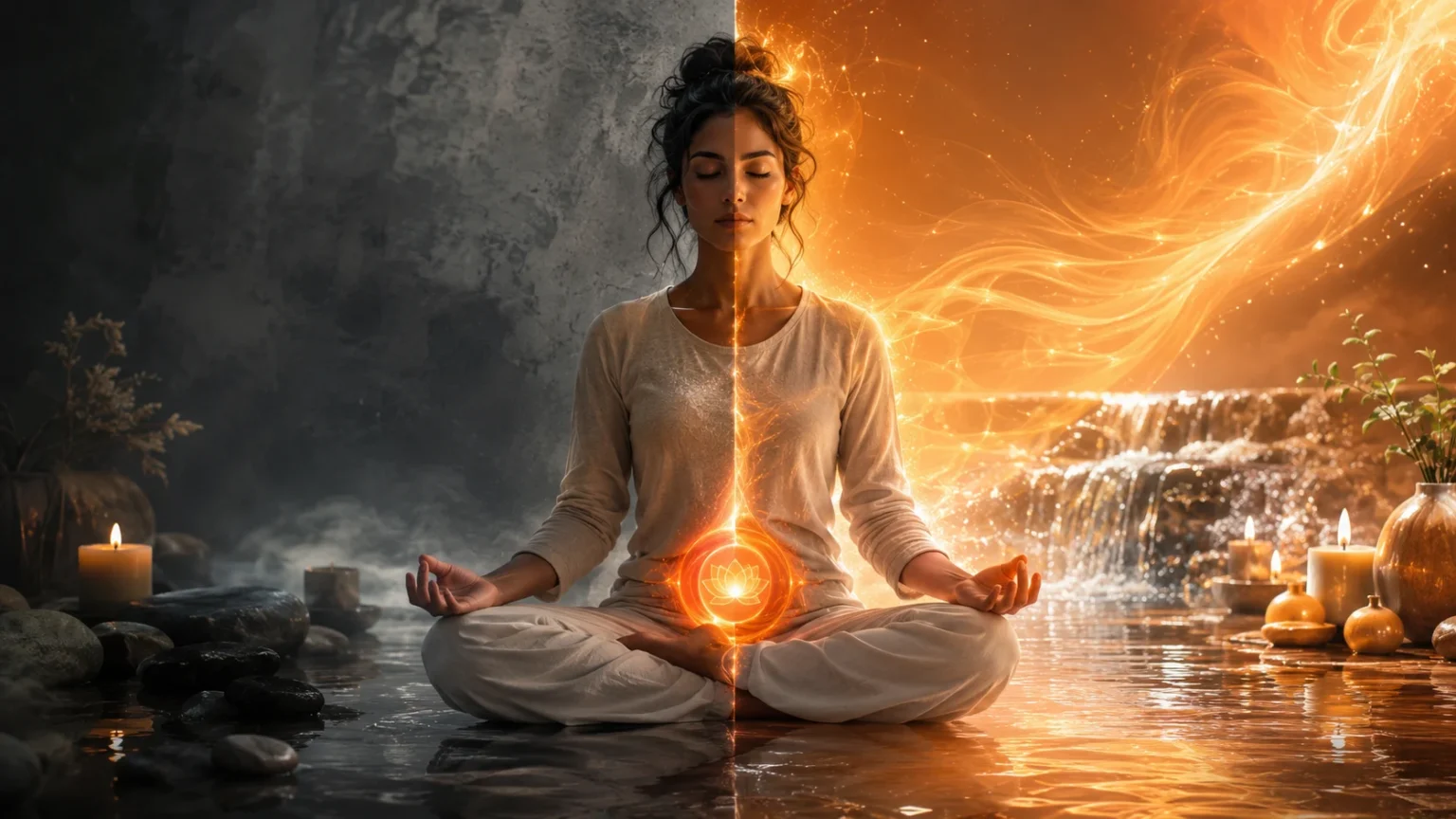

Sacral Chakra: Signs It’s Blocked & How to Balance It
The sacral chakra is traditionally associated with creativity, emotions, pleasure, relationships, and the ability to adapt to change. Known as Svadhisthana in Sanskrit, it is commonly described within modern chakra traditions as the second of the seven major chakras. People interested in yoga, meditation, and energy practices often explore this chakra when they feel emotionally disconnected, creatively stuck, or unable to enjoy everyday experiences.
Within traditional and contemporary spiritual practices, the sacral chakra is generally associated with the lower abdomen and the color orange. When people describe it as “balanced,” they usually mean they feel emotionally flexible, creatively engaged, comfortable with pleasure, and able to form healthy connections. A “blocked sacral chakra,” by contrast, is a spiritual or metaphorical concept rather than a medically recognized diagnosis.
That distinction is important. Feelings such as low motivation, emotional numbness, relationship difficulties, or changes in sexual interest can have many psychological, social, hormonal, and medical causes. Chakra-balancing practices may be meaningful for relaxation and self-reflection, but they should not replace professional care when symptoms are persistent, distressing, or affecting everyday life.
If the spiritual framework resonates with you, however, working with the sacral chakra can provide a structured way to reflect on creativity, emotional expression, boundaries, enjoyment, and personal relationships. Meditation, yoga, mindful movement, journaling, creative activities, and intentional lifestyle changes can all become practical ways to explore what “balance” means in your own life.
What Is the Sacral Chakra?
The sacral chakra is commonly known by the Sanskrit name Svadhisthana, often translated in ways related to one’s own dwelling or inner place. In many modern chakra systems, it is considered the second major energy center, positioned after the root chakra and before the solar plexus chakra. It is traditionally associated with emotional experience, creativity, sensuality, relationships, and the ability to move through change.
The chakra system comes from South Asian spiritual and yogic traditions, although modern Western descriptions often simplify or reinterpret ideas found across different historical texts and practices. There is not one single universal chakra system that has always been practiced in exactly the same way. Contemporary seven-chakra models are particularly common in yoga, meditation, and wellness communities.
The sacral chakra is generally connected symbolically with the water element, which reflects themes such as flow, flexibility, movement, and emotional change. Just as water adapts to the container around it, sacral chakra practices often emphasize learning to experience emotions without either suppressing them completely or becoming overwhelmed by them.
Modern practitioners frequently associate the chakra with pleasure and creativity as well. That can include artistic expression, curiosity, intimacy, playfulness, imagination, and simply allowing yourself to enjoy positive experiences. In this sense, sacral chakra work can become less about “fixing energy” and more about paying attention to areas of life that may have become neglected.
Where Is the Sacral Chakra Located?
In modern chakra descriptions, the sacral chakra location is usually placed in the lower abdominal or pelvic region, a few inches below the navel. Some traditions describe the energetic center somewhat differently, so exact anatomical placement should not be treated like locating a physical organ.
Chakras are spiritual or symbolic concepts rather than anatomical structures that can be identified through medical imaging, blood tests, or physical examination. There is no scientifically established organ called the sacral chakra inside the lower abdomen. Its location is instead used as a focus point during meditation, visualization, breathwork, and related spiritual practices.
During sacral chakra meditation, people may gently direct awareness toward the lower abdomen while breathing slowly. The objective is not necessarily to feel a particular physical sensation. Instead, focusing attention on one area of the body can provide an anchor that makes meditation and emotional reflection easier.
If you experience actual pelvic pain, unusual bleeding, urinary changes, digestive problems, persistent abdominal discomfort, or other physical symptoms, avoid assuming that a “blocked chakra” is responsible. Those symptoms can have medical causes and deserve appropriate evaluation when they are significant, persistent, or unusual.
What Does the Sacral Chakra Represent?
The sacral chakra is strongly associated with emotional awareness. From a spiritual perspective, balance involves being able to recognize feelings, experience them, and allow them to change naturally. Someone working with this chakra may ask whether they frequently suppress emotions, avoid vulnerability, or struggle to understand what they are feeling.
Creativity is another major theme. Creativity does not only mean painting, writing, or playing music. It can include problem-solving, cooking, decorating, experimenting with new ideas, building something, dancing, designing, or finding new ways to approach everyday situations.
Pleasure and enjoyment are also commonly linked with Svadhisthana. This includes the ability to enjoy food, music, movement, intimacy, friendships, nature, rest, and other positive experiences without excessive guilt. Within this framework, healthy pleasure is generally viewed as part of a balanced life rather than something that should automatically be avoided.
Relationships and intimacy complete another important part of sacral chakra meaning. Practitioners may use the chakra as a way to reflect on closeness, trust, boundaries, emotional reciprocity, and personal desires. Balanced relationships require both connection and individuality, which makes healthy boundaries just as relevant as openness.
What Does a Blocked Sacral Chakra Mean?
A blocked sacral chakra is a spiritual description used when someone feels disconnected from qualities traditionally associated with Svadhisthana. It may be used metaphorically to describe feeling emotionally closed, creatively stuck, uncomfortable with pleasure, or disconnected from meaningful relationships.
Different teachers use the word “blocked” in different ways. Some describe low energy or emotional withdrawal as blockage, while others also describe excessive attachment, impulsivity, or emotional intensity as signs of imbalance. This variation is one reason chakra interpretations should be treated as reflective frameworks rather than objective medical assessments.
You do not need to identify with every commonly listed symptom to explore sacral chakra practices. A person might simply notice that work has taken over their life and creativity has disappeared, or that they rarely make time for hobbies, connection, and enjoyment. That alone can provide a useful reason for reflection.
It can also help to replace the question “Is my chakra definitely blocked?” with “Which areas associated with this chakra need more attention?” This creates a more practical approach. You can then focus on specific changes involving emotional expression, creative activity, relationships, boundaries, or rest instead of trying to diagnose an invisible problem.
Emotional Signs Associated With a Blocked Sacral Chakra
One commonly described sign is feeling emotionally numb or disconnected. Someone may have difficulty identifying what they feel or may automatically suppress sadness, excitement, anger, affection, or vulnerability. Within sacral chakra practices, emotional awareness is encouraged rather than judging certain emotions as inherently negative.
Another traditional sign is difficulty experiencing enjoyment. Activities that once felt meaningful may seem uninteresting, or a person may feel guilty whenever they make time for pleasure, hobbies, or relaxation. These experiences can have many causes, however, and persistent loss of enjoyment can also occur with mental health conditions that deserve professional attention.
Creative stagnation is another frequently discussed sacral chakra blockage sign. You may want to create, write, design, dance, cook, or experiment with ideas but feel unable to start. Sometimes the obstacle is not a lack of creativity but perfectionism, exhaustion, fear of criticism, or an overly demanding routine.
Relationship difficulties may also be interpreted through the sacral chakra framework. These could include fear of closeness, weak boundaries, excessive emotional dependence, or difficulty communicating personal needs. Rather than assuming energy is the sole cause, chakra work can be used as an invitation to examine these patterns more thoughtfully.
Can Physical Symptoms Mean Your Sacral Chakra Is Blocked?
Online chakra content sometimes connects the sacral chakra with physical symptoms involving the lower abdomen, reproductive system, bladder, hips, or lower back. These associations are part of modern spiritual interpretations and should not be confused with established medical explanations for physical symptoms.
Pain, menstrual changes, urinary symptoms, sexual discomfort, digestive problems, or persistent pelvic symptoms can result from many physical conditions. It would be unsafe to assume that meditation, crystals, or chakra exercises can treat an underlying infection, hormonal issue, musculoskeletal problem, or other medical condition.
You can still use gentle relaxation or mindfulness practices alongside appropriate healthcare if they help you feel calmer. Slow breathing, restorative yoga, and meditation may help some people relax, but the goal should be supportive well-being rather than replacing diagnosis or evidence-based treatment.
If a physical symptom is new, severe, recurring, or getting worse, consider speaking with an appropriate healthcare professional. Spiritual practices and medical care do not need to compete with each other; they simply answer different types of questions.
What Does a Balanced Sacral Chakra Feel Like?
In chakra traditions, a balanced sacral chakra is often described as emotional openness without emotional overwhelm. You can experience happiness, disappointment, attraction, sadness, excitement, or vulnerability while still maintaining a sense of stability and perspective.
Creativity may also feel easier. This does not mean you suddenly become an artist or constantly produce new ideas. Instead, you may feel more willing to experiment, make mistakes, play, explore, and create without judging every outcome.
Healthy enjoyment is another theme. A balanced relationship with pleasure means allowing yourself positive experiences while maintaining boundaries and responsibility. Enjoyment does not need to become excess, and self-control does not need to become complete deprivation.
Relationships may feel more reciprocal as well. You can connect with others while respecting your own needs, communicate preferences without excessive guilt, and recognize where emotional boundaries are necessary. These qualities are useful regardless of whether you interpret chakras literally or symbolically.
How to Balance the Sacral Chakra
There is no scientifically established procedure that can measure or medically “unblock” a chakra. Within spiritual practice, however, sacral chakra balancing generally involves activities that encourage emotional awareness, creativity, flexibility, pleasure, and connection.
Start by identifying which theme feels most relevant. If you feel creatively stuck, making art may be more meaningful than repeating affirmations. If you constantly suppress emotions, journaling or therapy may provide greater value. If you never make time for rest or enjoyment, changing your schedule may be the most practical form of balancing.
Consistency can be more useful than performing an elaborate ritual once. Five or ten minutes of meditation, movement, writing, music, or reflective practice several times per week can create opportunities to notice your emotions and habits more clearly.
The objective does not need to be achieving a mysterious state of perfect energetic alignment. A more practical goal is becoming more aware of your emotional patterns, making space for creativity, maintaining healthier relationships, and allowing appropriate enjoyment in everyday life.
Sacral Chakra Meditation for Emotional Awareness
A simple sacral chakra meditation can begin with sitting or lying somewhere comfortable. Close your eyes if that feels natural and take several slow breaths without forcing the rhythm. Allow your shoulders, jaw, and abdomen to soften gradually.
Direct your attention toward the lower abdomen. You may imagine the breath gently expanding this area as you inhale and relaxing as you exhale. There is no need to produce a special sensation; simply noticing physical feelings can provide enough focus for the meditation.
Some people visualize warm orange light in the lower abdomen because orange is commonly associated with Svadhisthana. Visualization is optional. If imagery feels distracting, concentrate instead on breathing, physical sensations, or a simple intention such as openness, flexibility, or creativity.
Continue for several minutes, noticing thoughts and emotions without trying to force them away. When attention wanders, gently return to the breath. Meditation is not about emptying the mind perfectly; it is about repeatedly noticing where attention goes and returning to the chosen focus.
Sacral Chakra Yoga and Movement
Movement fits naturally with sacral chakra symbolism because Svadhisthana is associated with flow. Gentle yoga, mobility work, walking, swimming, or dancing can therefore become ways of exploring the concept through the body rather than only through seated meditation.
Yoga practices commonly associated with the sacral region may include gentle hip-opening movements, pelvic mobility, cat-cow movements, butterfly pose, low lunges, and other comfortable positions. These exercises should feel controlled rather than painful.
Dance can be particularly useful for people who feel restricted by structured exercise. Put on music you enjoy and move without worrying about technique, calories, or appearance. The purpose is creative expression and body awareness rather than athletic performance.
Anyone with injuries, pregnancy-related considerations, persistent pelvic pain, joint problems, or other medical limitations should modify movements appropriately. A yoga pose does not need to be uncomfortable to be meaningful, and pain should not be interpreted as evidence that a chakra is “releasing.”
Using Creativity to Support Sacral Chakra Balance
Because creativity is one of the strongest themes associated with Svadhisthana, creative expression can become one of the most practical forms of sacral chakra work. You do not need professional artistic skill to benefit from making something simply because you enjoy the process.
Try drawing, painting, writing, photography, cooking, gardening, decorating, singing, playing music, or crafting. Choose something that allows experimentation rather than immediately turning the activity into another goal that needs to be optimized or monetized.
Perfectionism frequently blocks creativity more effectively than lack of ability. Give yourself permission to make something mediocre, unfinished, strange, or private. Creativity becomes much easier when every outcome does not need to impress other people.
Even solving practical problems can be creative. Rearranging a room, developing a new recipe, planning a trip, or finding a better workflow can exercise imagination. Sacral chakra practice becomes more accessible when creativity is understood broadly rather than limited to traditional art.
Journaling for the Sacral Chakra
Journaling can help you explore emotions that are difficult to notice during a busy day. Rather than trying to produce polished writing, spend several minutes recording whatever is present—frustration, excitement, confusion, desire, boredom, gratitude, or uncertainty.
Useful prompts might include questions such as: What have I been avoiding feeling? What currently brings me genuine enjoyment? Where am I limiting myself because I fear judgment? Which relationship boundaries need more attention?
You can also explore creativity through written reflection. Ask yourself what you would make or try if you were not worried about being good at it. Sometimes creative blocks are connected less with missing inspiration and more with fear of failure or comparison.
Journaling should support curiosity rather than become another method of criticizing yourself. You do not need to solve every emotional problem during one session. Simply putting vague feelings into words can sometimes make them easier to understand.
Sacral Chakra Affirmations
Sacral chakra affirmations are short statements used to focus attention on themes such as creativity, emotional acceptance, enjoyment, relationships, and adaptability. They are not scientifically proven methods for changing an energy center, but some people find them useful as reflective reminders.
Examples might include: “I allow myself to create without perfection,” “I can experience emotions without being controlled by them,” or “I can enjoy positive experiences without guilt.” The best affirmation is one that feels personally relevant rather than something copied simply because it appears on a chakra list.
Avoid forcing yourself to repeat statements that feel completely unbelievable. If “I am endlessly creative” feels unrealistic, something gentler such as “I am giving myself more opportunities to create” may feel more grounded and useful.
Affirmations work best when connected with behavior. Repeating that creativity matters while never making time to create is unlikely to change much. Pair the statement with a small action, such as twenty minutes of writing, drawing, dancing, or another enjoyable activity.
What Is the Sacral Chakra Color?
Orange is the color most commonly associated with the sacral chakra in contemporary seven-chakra systems. It is often used symbolically to represent warmth, creativity, vitality, emotional expression, and enjoyment.
Some practitioners incorporate orange into meditation through visualization. Others may wear orange clothing, use orange décor, light an orange-colored candle, or simply imagine the color during breathing exercises.
There is no scientific evidence that exposure to orange light or objects physically opens the sacral chakra. The value of the color is symbolic, much like colors used in art, rituals, branding, or other practices to create a particular association.
If orange helps you connect with the themes of creativity and emotional openness, use it. If another color feels more calming or meaningful, there is no reason to force yourself into a color scheme that does not resonate with you.
Sacral Chakra Crystals and Their Traditional Uses
Crystals commonly associated with the sacral chakra include carnelian, orange calcite, sunstone, moonstone, and tiger’s eye, although lists vary between modern crystal-healing traditions. Carnelian is particularly popular because of its orange color.
People may hold a crystal during meditation, keep one on a desk, wear it as jewelry, or use it as a symbolic reminder of a personal intention. The ritual itself can help reinforce attention toward creativity, boundaries, or emotional awareness.
Scientific evidence does not show that crystals emit healing energy capable of physically unblocking chakras or treating health conditions. Their value is better understood as symbolic, aesthetic, meditative, or personally meaningful.
If you enjoy crystals, they can be incorporated into your spiritual routine without making medical claims about them. The most useful question is whether the object helps you focus on a meaningful practice rather than whether it has invisible powers that can replace healthcare.
Foods Associated With the Sacral Chakra
Some modern chakra practices associate orange foods with sacral chakra healing, including oranges, carrots, sweet potatoes, mangoes, peaches, pumpkin, and orange peppers. Other lists emphasize hydrating foods because the chakra is symbolically linked with water.
Eating nutritious orange fruits and vegetables can certainly support general health because many provide vitamins, minerals, fiber, and beneficial plant compounds. Their nutritional value, however, comes from their actual biological composition rather than their ability to open an energy center.
You do not need a special sacral chakra diet. A balanced eating pattern containing varied vegetables, fruits, protein sources, whole or minimally processed foods, healthy fats, and adequate fluids is more important than matching food colors with chakras.
Food can still become part of mindful practice. Preparing a meal slowly, noticing flavors, enjoying the experience, and eating without constant distraction can connect naturally with the sacral themes of pleasure, awareness, and appreciation.
Sacral Chakra and Relationships
Relationships are frequently connected with sacral chakra energy because intimacy requires emotional awareness, vulnerability, communication, and boundaries. A person can want connection while still protecting their individual needs and values.
A useful reflection is whether your relationships involve reciprocity. Do you feel able to express preferences, say no, ask for support, and listen when another person communicates their boundaries? These questions provide more practical insight than simply labeling a relationship problem as blocked energy.
Fear of rejection can sometimes make people avoid emotional openness, while fear of abandonment may contribute to overdependence. These patterns are complex and can arise from past experiences, attachment patterns, self-esteem, stress, and many other factors.
Sacral chakra reflection can provide a language for exploring these themes, but deeper or recurring relationship difficulties may benefit from counseling or psychotherapy. Spiritual practices can support reflection while evidence-based psychological care addresses patterns that significantly affect well-being.
Sacral Chakra and Sexuality
Modern chakra teachings often associate the sacral chakra with sexuality because the broader themes include pleasure, intimacy, desire, and relationships. A balanced approach usually emphasizes consent, personal boundaries, communication, and respect rather than simply pursuing more stimulation.
Sexual desire naturally varies between people and can change throughout life. Stress, medications, hormones, relationship quality, physical health, mood, fatigue, and many other factors can influence libido.
A low or high sex drive does not prove that someone’s sacral chakra is blocked or overactive. If a change in sexual function is distressing, persistent, painful, or unexpected, discussing it with an appropriate healthcare professional can help identify possible causes.
Within a spiritual framework, sacral chakra work can instead encourage reflection on comfort, consent, body awareness, intimacy, and the ability to communicate desires and boundaries. These are meaningful topics whether or not you interpret chakra energy literally.
How Water Connects With the Sacral Chakra
Water is the element traditionally associated with Svadhisthana because of its ability to move, adapt, and change shape. Symbolically, these qualities resemble emotional flexibility and the ability to move through changing experiences.
Some people incorporate water into meditation by sitting near a river, lake, or ocean, taking a mindful bath, listening to water sounds, or simply observing the movement of water. These practices can create an environment that feels calm and reflective.
There is no requirement to perform a special water ritual to balance the sacral chakra. The element functions primarily as a symbol that can help you think about where you may be resisting change or holding too tightly to emotions and expectations.
Even the question “Where could I become more flexible?” can be useful. Perhaps a plan changed, a relationship evolved, or an old identity no longer fits. The symbolism of water encourages adaptation without demanding that you abandon healthy boundaries.
Common Mistakes When Trying to Balance the Sacral Chakra
One common mistake is interpreting every difficult emotion as evidence of a blocked chakra. Sadness, anger, fear, frustration, and grief are normal human emotions. Emotional balance does not mean feeling positive or peaceful all the time.
Another mistake is expecting a single meditation, crystal, yoga class, or affirmation to permanently resolve complex problems. Habits, relationships, emotional patterns, and creativity usually change through repeated actions rather than one dramatic spiritual experience.
Avoid using chakra explanations to dismiss physical or psychological symptoms. Persistent depression, severe anxiety, pelvic pain, sexual pain, urinary symptoms, or other significant concerns need appropriate professional evaluation rather than being automatically attributed to energy imbalance.
Finally, do not turn chakra work into another source of perfectionism. There is no requirement to maintain seven perfectly balanced chakras every day. A more useful approach is noticing which areas of life feel neglected and responding with curiosity rather than self-criticism.
A Simple Sacral Chakra Routine for Beginners
Begin with five minutes of slow breathing while sitting comfortably. Bring gentle awareness to the lower abdomen and notice how your body moves with each breath. You can visualize orange light if that helps you focus, but visualization is optional.
Follow the meditation with five to ten minutes of gentle movement. Stretch, walk, dance, or practice comfortable yoga movements that allow your body to move freely without forcing flexibility.
Next, spend ten minutes on something creative. Write without editing, sketch something, cook, play music, take photographs, or experiment with an idea. The activity should feel exploratory rather than performance-driven.
Finish by asking yourself one question: “What would bring healthy enjoyment, creativity, or connection into my day?” Choose one realistic action and do it. This turns sacral chakra balancing from an abstract concept into something connected with everyday behavior.
How Long Does It Take to Balance the Sacral Chakra?
There is no scientifically measurable timeline because chakras are not physical structures that can be tested for balance. Claims that a chakra will definitely open after seven days, twenty-one days, or a specific number of meditation sessions should therefore be treated cautiously.
You may still notice changes in your habits surprisingly quickly. Making time for creativity, setting a relationship boundary, journaling regularly, or practicing mindfulness can shift how you experience daily life even without attributing those changes to an energetic mechanism.
Other patterns can take considerably longer. Emotional avoidance, perfectionism, relationship difficulties, or chronic stress may have developed over years, making gradual progress more realistic than immediate transformation.
Focus on observable changes rather than waiting for a dramatic spiritual sensation. Are you creating more often? Communicating more clearly? Making room for rest? Understanding your emotions better? Those improvements provide more useful markers of progress.
When Sacral Chakra Practices Are Not Enough
Spiritual practices can support reflection and relaxation, but there are times when additional help is appropriate. Persistent loss of enjoyment, overwhelming anxiety, prolonged low mood, severe relationship distress, or significant changes in daily functioning may require mental health support.
Physical symptoms also deserve medical attention when appropriate. Pelvic pain, persistent lower abdominal pain, abnormal bleeding, urinary symptoms, painful sexual activity, or reproductive concerns should not be treated as proof of chakra imbalance.
A qualified healthcare professional can investigate potential physical causes, while a mental health professional can help with emotional patterns, trauma, anxiety, depression, or relationship difficulties. These forms of care can coexist comfortably with yoga, meditation, or other spiritual practices.
The most people-first approach is to use the right tool for the right problem. Sacral chakra work can provide meaning, self-reflection, and intentional rituals, while professional healthcare addresses conditions that require diagnosis or treatment.
Bringing Sacral Chakra Balance Into Everyday Life
You do not need elaborate rituals to engage with the themes of the sacral chakra. Start by making slightly more room for activities that create healthy enjoyment, curiosity, emotional expression, and connection.
Notice whether your routine contains only obligation. Work, errands, responsibilities, and productivity can gradually crowd out play and creativity. Scheduling even a small amount of unstructured enjoyable time can restore a sense of variety.
Pay attention to emotional flexibility as well. Instead of labeling emotions as good or bad, practice recognizing what is present and asking what the feeling may be communicating. Emotional awareness does not require acting on every emotion; it simply means noticing rather than automatically suppressing.
Ultimately, sacral chakra balance can be approached as a symbolic invitation to live with more creativity, emotional awareness, healthy pleasure, flexibility, and meaningful connection. Whether you view chakras spiritually or metaphorically, those qualities can offer valuable areas for reflection and personal growth.
Frequently Asked Questions
What are the signs of a blocked sacral chakra?
Traditional signs include creative stagnation, emotional disconnection, difficulty enjoying positive experiences, and relationship or boundary struggles. These are spiritual interpretations rather than medical diagnostic signs.
How do I unblock my sacral chakra?
Common practices include meditation, gentle yoga, dancing, journaling, creativity, mindful enjoyment, and reflecting on relationships and boundaries. There is no scientifically established method for physically “unblocking” a chakra.
What color is the sacral chakra?
The sacral chakra is most commonly associated with orange in contemporary seven-chakra traditions. Orange is often used symbolically to represent creativity, warmth, pleasure, and emotional expression.
What emotion is connected to the sacral chakra?
The sacral chakra is associated broadly with emotional awareness rather than one specific emotion. It is traditionally connected with pleasure, desire, creativity, intimacy, flexibility, and the ability to experience feelings openly.
Where is the sacral chakra located?
Modern chakra systems generally place the sacral chakra in the lower abdominal or pelvic region below the navel. It is considered an energetic or symbolic location rather than a medically identifiable anatomical structure.